Affiliate Disclosure: ZimuShop may earn a commission from qualifying purchases — at no extra cost to you.

Freshwater vs Saltwater Aquariums: Complete 2026 Comparison Guide

As an Amazon Associate, ZimuShop earns from qualifying purchases. Learn more
Freshwater vs Saltwater Aquariums: 2026 Complete Comparison Guide
Discover the key differences between freshwater and saltwater aquariums. Make informed decisions about costs, maintenance, fish selection, and setup requirements for your perfect aquatic environment.
Image credit: Unsplash
Aquarium Setup Guide
Our Verdict: Freshwater vs Saltwater
For most beginners the verdict is freshwater: it costs far less to start ($200 to $800 against $500 to $3,000 or more), needs about half the weekly time, and is rated excellent for beginner friendliness in our comparison. Saltwater earns its keep only when you want the widest fish and colour variety and can commit 4 to 8 hours a week plus higher running costs.
Best for beginners: Freshwater (this guide's recommended starter kit is the Fluval Flex 32.5). Best for variety and colour: Saltwater. Lower long-term cost: Freshwater.
Freshwater vs Saltwater Aquariums: Complete 2026 Comparison Guide
Choosing between a freshwater or saltwater aquarium is one of the most important decisions for any aquarist. Both offer unique experiences, challenges, and rewards. This comprehensive 2026 guide provides everything you need to make an informed decision based on your budget, experience level, and personal preferences.
Whether you’re a complete beginner or an experienced hobbyist looking to expand your aquatic collection, understanding the fundamental differences between freshwater and saltwater systems will save you time, money, and frustration. From initial setup costs to ongoing maintenance requirements, we’ve analyzed every aspect to help you choose the perfect aquarium for your home or office.
Table of Contents
- Quick Comparison: Freshwater vs Saltwater
- Cost Analysis: Initial Setup & Ongoing Expenses
- Maintenance Requirements & Time Commitment
- Fish & Livestock Selection Guide
- Setup Process & Cycling Timeline
- Water Parameter Management
- Essential Equipment Comparison
- Best Choice for Beginners
- Advanced & Specialized Options
- Converting Freshwater to Saltwater
- 2026 Aquarium Trends & Innovations
- Frequently Asked Questions

Image credit: Unsplash – Reef aquarium showcase
Quick Comparison: Freshwater vs Saltwater Aquariums
Before diving into detailed analysis, here’s a quick overview of the key differences between freshwater and saltwater aquariums:
| Factor | Freshwater Aquarium | Saltwater Aquarium |
|---|---|---|
| Initial Cost | $200 – $800 | $500 – $3,000+ |
| Monthly Maintenance | $20 – $50 | $50 – $200+ |
| Time Commitment | 2-4 hours/week | 4-8 hours/week |
| Beginner Friendliness | Excellent | Moderate to Difficult |
| Fish Variety | Good (1000+ species) | Excellent (2000+ species) |
| Color Variety | Good | Exceptional |
| Water Testing | Basic (pH, ammonia, nitrite, nitrate) | Advanced (salinity, calcium, alkalinity, magnesium) |
| Equipment Complexity | Simple to Moderate | Moderate to Complex |
| Long-term Cost | Lower | Higher |
Quick Decision Guide
Choose Freshwater if: You’re a beginner, have a limited budget, want lower maintenance, or prefer easier water parameter management. Most freshwater fish are hardier and more forgiving of beginner mistakes.
Choose Saltwater if: You want vibrant coral reefs, exotic marine species, don’t mind higher costs and maintenance, or have previous aquarium experience. The stunning visual appeal of reef tanks often justifies the extra effort.
Recommended Freshwater Starter Kit
Best for Beginners
Fluval Flex 32.5 Gallon Aquarium Kit
$299.99
Complete all-in-one freshwater aquarium kit with 3-stage filtration, LED lighting, and curved front glass. Perfect for beginners starting their first freshwater community tank. Includes everything needed except substrate, decorations, and fish.
Cost Analysis: Initial Setup & Ongoing Expenses
One of the most significant differences between freshwater and saltwater aquariums is cost. Let’s break down the expenses in detail:
Freshwater Aquarium Cost Breakdown (55 Gallon)
Tank & Stand$250 – $400
Filtration System$80 – $150
Heater & Thermometer$40 – $80
Lighting System$50 – $150
Substrate & Decorations$60 – $200
Water Conditioner & Test Kit$30 – $60
Initial Fish & Plants$100 – $300
Total Initial Investment$610 – $1,340
Saltwater Aquarium Cost Breakdown (55 Gallon)
Tank & Stand (Reef Ready)$400 – $800
Protein Skimmer$150 – $400
Powerheads/Flow Pumps$100 – $300
RO/DI Water System$150 – $300
Reef Lighting System$200 – $800
Live Rock & Sand$200 – $500
Marine Salt & Test Kits$100 – $200
Initial Fish & Corals$300 – $1,000+
Total Initial Investment$1,600 – $4,300+
Hidden Costs to Consider
- Electricity: Saltwater systems use 30-50% more electricity due to additional equipment
- Water: Saltwater tanks require specialized salt mixes ($50-100 monthly for larger tanks)
- Replacement Parts: Marine equipment wears faster due to salt corrosion
- Livestock Loss: Marine fish and corals are more expensive to replace if they don’t survive
- Professional Services: Many saltwater hobbyists eventually hire maintenance services ($100-300 monthly)
Maintenance Requirements & Time Commitment
The ongoing maintenance requirements differ significantly between freshwater and saltwater systems:
Freshwater Maintenance
Weekly Tasks (1-2 hours): 10-20% water changes, filter media rinsing, glass cleaning, water parameter testing (pH, ammonia, nitrite, nitrate).
Monthly Tasks (2-3 hours): Full filter cleaning, substrate vacuuming, equipment inspection, plant trimming.
Annual Tasks: Complete equipment overhaul, deep cleaning, potential upgrades.
Saltwater Maintenance
Weekly Tasks (2-4 hours): 10-15% water changes, protein skimmer cleaning, testing 8+ parameters, glass cleaning, equipment checks.
Daily/Weekly Tasks: Top-off with RO/DI water, dosing supplements (calcium, alkalinity, magnesium), feeding corals.
Monthly Tasks (3-5 hours): Deep cleaning, equipment maintenance, coral fragging, parameter recalibration.
Daily Tasks Comparison
Freshwater vs Saltwater Daily Requirements
Freshwater: Feeding 1-2 times daily, visual health check, temperature verification. (5-10 minutes)
Saltwater: Feeding 2-3 times daily, automatic top-off system check, coral feeding, equipment function verification. (15-30 minutes)
Parameter Testing Frequency
Water Quality Monitoring
Freshwater: Test weekly: pH, ammonia, nitrite, nitrate. Monthly: GH, KH. (Simple, 4 parameters)
Saltwater: Test 2-3 times weekly: salinity, pH, ammonia, nitrite, nitrate, phosphate, calcium, alkalinity, magnesium. (Complex, 9+ parameters)

Image credit: Unsplash – Aquarium maintenance
Fish & Livestock Selection Guide
The choice of aquatic life is dramatically different between freshwater and saltwater systems:

Freshwater Community Fish
Best for Beginners: Tetras, Guppies, Mollies, Platies, Corydoras, Danios
Price Range: $2 – $20 per fish
Hardiness: Generally hardy and forgiving

Freshwater Specialty Fish
Intermediate/Advanced: Cichlids, Discus, Rainbowfish, Killifish
Price Range: $10 – $100+ per fish
Requirements: Specific water parameters

Saltwater Beginner Fish
Marine Starter Fish: Clownfish, Damselfish, Blennies, Gobies
Price Range: $15 – $60 per fish
Hardiness: Moderately hardy with proper care

Saltwater Advanced Fish
Expert Level: Tangs, Angelfish, Butterflyfish, Wrasses
Price Range: $50 – $500+ per fish
Requirements: Large tanks, specialized diets
Stocking Density Guidelines
Freshwater Rule: 1 inch of fish per gallon of water (after subtracting substrate/decor space). A 55-gallon tank can typically support 40-45 inches of adult fish length.
Saltwater Rule: More conservative – 1 inch of fish per 3-5 gallons for fish-only systems, even less for reef tanks. Marine fish produce more waste and require better water quality.
Coral Considerations: Reef tanks have even lower fish stocking densities but add coral biomass, which also consumes nutrients and requires space.
Recommended Saltwater Starter Kit
Best Value

Red Sea Max Nano 20 Gallon Complete Kit
$699.99
Complete plug-and-play saltwater aquarium system perfect for beginners. Includes tank, cabinet, filtration, protein skimmer, LED lighting, and return pump. Everything needed to start a beautiful nano reef except live rock, sand, and livestock.
Setup Process & Cycling Timeline
The setup and cycling process varies significantly between freshwater and saltwater aquariums:
Week 1-2
Freshwater Setup Process
Setup Day: Rinse substrate, arrange decorations, install equipment, fill with dechlorinated water.
Cycling Method: Fishless cycle with ammonia source or quick start with established filter media.
Time to Add Fish: 2-6 weeks depending on cycling method.
Week 1-2
Saltwater Setup Process
Setup Day: Install live rock aquascape, add sand, mix saltwater to proper salinity (1.025 SG), fill tank.
Cycling Method: Live rock cycle or bottled bacteria with ammonia source.
Time to Add Fish: 4-8 weeks for full cycle completion.
Week 3-8
Freshwater Maturation
Begin adding hardy fish (zebra danios, white clouds). Test water parameters 2-3 times weekly. Perform 25% water changes weekly. Gradually add more fish over several weeks.
Week 3-12
Saltwater Maturation
Add clean-up crew (hermit crabs, snails) after cycle completes. Wait 2-4 weeks before adding first fish. Add corals only after tank is fully established (3-6 months).
Common Beginner Mistakes
- Rushing the Cycle: Adding fish too soon causes ammonia spikes and fish loss
- Overstocking: Adding too many fish at once overwhelms biological filtration
- Inadequate Research: Choosing incompatible fish species that fight or have different requirements
- Poor Equipment: Skimping on filtration or lighting leads to long-term problems
- Ignoring Parameters: Not testing water regularly until problems become visible
Water Parameter Management
Water quality management is crucial for both freshwater and saltwater aquariums, but the parameters and monitoring requirements differ significantly…
Essential Equipment Comparison
The equipment needed for freshwater versus saltwater aquariums varies in complexity, cost, and maintenance requirements…
Best Choice for Beginners
For first-time aquarium owners, freshwater tanks are generally recommended due to their lower cost, easier maintenance, and more forgiving nature…
Freshwater vs Saltwater Aquarium FAQs
Can I convert my freshwater aquarium to saltwater?
Yes, but it requires significant changes. You’ll need to remove all freshwater-specific equipment, thoroughly clean the tank, replace substrate with marine sand, add live rock, install protein skimmer and powerheads, and switch to marine-specific equipment. The biological filter will need to re-establish for saltwater bacteria. It’s often easier and more cost-effective to start with a new saltwater-specific setup.
Which is more expensive: freshwater or saltwater?
Saltwater aquariums are significantly more expensive both initially and long-term. Initial setup costs for saltwater are 2-3 times higher than freshwater. Ongoing costs for salt mixes, supplements, electricity, and livestock are also higher. However, nano saltwater tanks have made marine aquariums more accessible to budget-conscious hobbyists.
Can I keep corals in a freshwater aquarium?
No, corals are marine animals that require specific saltwater conditions, lighting, and water parameters. Freshwater aquariums can have plants that provide similar aesthetic appeal but are biologically different. There are no true freshwater corals.
How often should I test water parameters?
Freshwater: Weekly testing for pH, ammonia, nitrite, and nitrate. Monthly for GH and KH in planted tanks. Saltwater: 2-3 times weekly for basic parameters (salinity, pH, ammonia, nitrite, nitrate). Weekly for calcium, alkalinity, and magnesium. Monthly for trace elements in reef tanks.
What size aquarium should a beginner start with?
Freshwater: 20-40 gallons is ideal for beginners. Larger tanks are more stable but require more space and budget. Saltwater: 20-30 gallon all-in-one systems are recommended for beginners. Nano tanks (10-20 gallons) are popular but require more diligent maintenance.
How long does it take to set up an aquarium?
Physical Setup: 2-4 hours for both types to assemble equipment, add substrate/decor, and fill with water. Cycling Time: Freshwater: 2-6 weeks. Saltwater: 4-8 weeks. This biological process cannot be rushed and is critical for fish health.
About Us

ZimuShop is your trusted partner for all pet care needs. We provide high-quality products, expert advice, and resources to help you care for your furry, feathered, and scaled friends.
Our team of pet experts is dedicated to helping you build a stronger bond with your pets through proper care, training, and nutrition.
Recommended Aquarium Products

Essential
Image credit: Amazon
API Freshwater Master Test Kit
$32.99
Liquid test kit for pH, high range pH, ammonia, nitrite, and nitrate. Essential for monitoring freshwater aquarium water quality.
Saltwater Essential
Image credit: Amazon
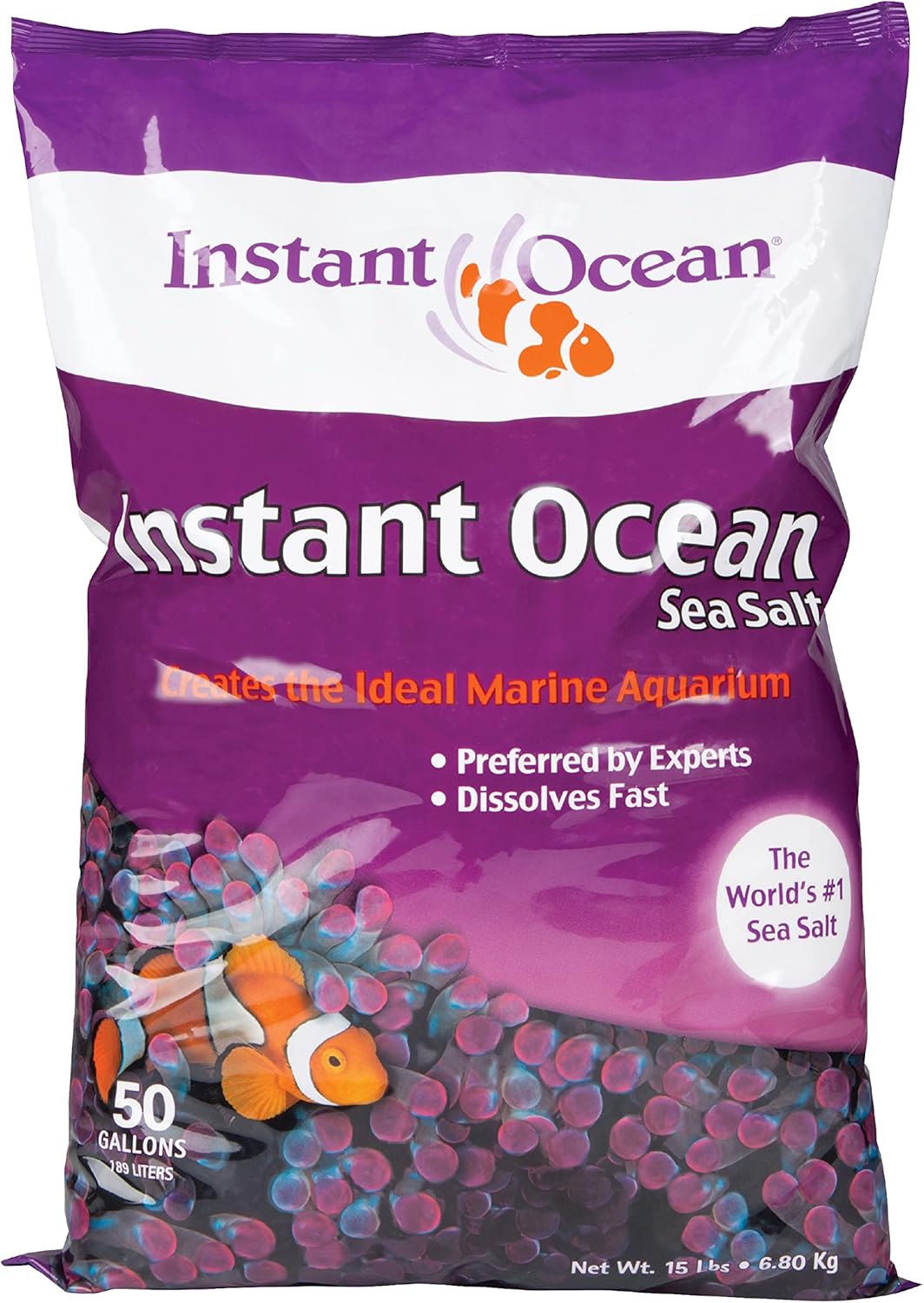
Instant Ocean Sea Salt Mix
$22.99
200-gallon mix for saltwater aquariums. Creates synthetic seawater with proper pH, alkalinity, and essential elements.

Budget Friendly
Image credit: Amazon
NICREW Aquarium LED Light
$39.99
Full spectrum LED light for freshwater planted or saltwater fish-only aquariums. Energy efficient with adjustable brackets.
How ZimuShop Chooses Products
Every guide on ZimuShop is researched against verified owner reviews, product specifications, brand reputation and recall history. We never accept payment for placement, and ZimuShop is not owned by any pet brand, so our picks stay independent. Prices and availability change often, so check the retailer for the latest details.