Affiliate Disclosure: ZimuShop may earn a commission from qualifying purchases — at no extra cost to you.

Betta Fish Care Guide for Beginners 2026: Tank, Water, and Feeding

As an Amazon Associate, ZimuShop earns from qualifying purchases. Learn more
The betta in the pet store cup is one of the most misunderstood pets in the shop. Brilliant colors and flowing fins make bettas look like the easiest pet fish to keep, but the cup tells a different story than the fish deserves: bettas are tropical fish that need warm, clean, filtered water and room to swim.
This betta fish care guide for beginners covers real care, not bowl myths: how big a tank a betta needs, how to set it up, what to feed, which tank mates work, and the warning signs that mean something is wrong. This guide is based on veterinary and animal welfare guidance, including PetMD’s veterinarian-written care sheet and RSPCA guidance. With the right setup, a betta commonly lives 3 to 5 years.
Quick Takeaways
- A single betta needs at least a 5 gallon heated, filtered tank, not a bowl.
- Keep the water between 76 and 81 F, with ammonia and nitrite at 0 ppm.
- Cycle the tank before adding the fish. The process takes weeks, not days.
- Feed small high-protein meals once or twice a day, and only what the fish eats in under two minutes.
- Male bettas must never share a tank. Tank mates need a tank of 10 gallons or more.
How Big a Tank Does a Betta Need?
A single betta needs a tank of at least 5 gallons (about 19 litres). RSPCA Australia recommends tanks of 20 litres or more for a Siamese fighting fish, with 10 litres as the absolute minimum. PetMD calls 5 to 10 gallons ideal for space and more stable water conditions. Five gallons is the floor that welfare guidance agrees on, and a 10 gallon tank is easier to keep stable and gives the fish more room to explore.
Bowls fail on every count. A bowl is too small to hold a heater and a filter, so the temperature swings with the room and waste builds up fast in water with no beneficial bacteria to process it. There is no room to swim and no stable water chemistry. A betta can survive in a bowl for a while, but survival is not thriving, and bowls shorten lives.
The bowl myth comes from a half-truth about the wild. Bettas come from the shallow rice paddies and slow-moving waters of Southeast Asia, and people assume that means they like tiny spaces. A rice paddy is a vast, connected body of shallow water, not a puddle, and the fish can move through it freely. Bettas also have a labyrinth organ that lets them breathe air from the surface, which helps them survive in warm, low-oxygen water. Breathing air does not remove the need for clean water, warmth, and space.
A 5 gallon tank is the smallest setup that holds a heater, a gentle filter, plants, and hiding spots with room left to swim. A 10 gallon tank is more forgiving: water temperature and chemistry change more slowly in a larger volume, which gives you more time to notice and fix a problem.
Betta Tank Setup
Tank, Heater, and Filter
Start with a rectangular tank of at least 5 gallons with a tight-fitting lid. Bettas are excellent jumpers, and an uncovered tank is an escape risk. Leave a small gap between the water surface and the lid so the fish can take in air at the surface. For the full setup walkthrough, see our aquarium setup guide, and browse the gear in our aquarium products hub.
A heater is not optional. Bettas are tropical fish, and PetMD recommends a heater even if your home is usually warm, because temperature swings stress fish. Choose an adjustable heater rated at about 3 to 5 watts per gallon, and pair it with a thermometer.
A filter keeps the water stable and houses the beneficial bacteria that process waste. Bettas come from still water, so pick a gentle filter: a sponge filter or a filter with adjustable low flow is ideal. Strong currents tire long-finned bettas and stress them. We are working on beginner guides to aquarium filters, heaters, and test kits, which will cover how to pick each one in more detail.
Water Temperature and Parameters
Keep the water between 76 and 81 F (about 24 to 27 C). Stability matters more than hitting one exact number: a steady 78 F is better than water that swings between 75 and 82 F. RSPCA Australia gives 24 to 26 C, which sits inside the same range.
For pH, aim near 7. Bettas tolerate about 6.5 to 7.8. Do not chase an exact pH with chemicals: a stable pH near your tap water pH is better than a perfect number that swings after every water change.
Ammonia and nitrite must read 0 ppm in a cycled tank. Both are toxic to fish even at low levels. Nitrate is the end product of the nitrogen cycle and is far less harmful, but keep it low with regular partial water changes: under 20 ppm is a good target.
| Parameter | Target |
|---|---|
| Temperature | 76 to 81 F (24 to 27 C), stable |
| pH | Near 7; tolerates 6.5 to 7.8 |
| Ammonia | 0 ppm |
| Nitrite | 0 ppm |
| Nitrate | Under 20 ppm |
Test the water weekly with a liquid test kit, and change 15 to 25 percent of the water each week, treating the new water with conditioner first. For the wider freshwater picture, see our freshwater aquarium setup guide.
Plants and Hiding Spots
Bettas come from planted, slow-moving waters, and a bare tank stresses them. Plants and hiding spots give the fish cover and make it feel secure, and live plants help use up nitrate between water changes.
Choose soft, smooth plants and decor. Long fins tear easily on sharp plastic edges, rough rock, and flaking painted ornaments. Run a finger over any decoration before it goes in the tank: if it feels rough to you, it can tear a fin. Silk plants are a safer artificial option than stiff plastic ones. For plant ideas that suit a beginner tank, see our guide to easy aquarium plants.
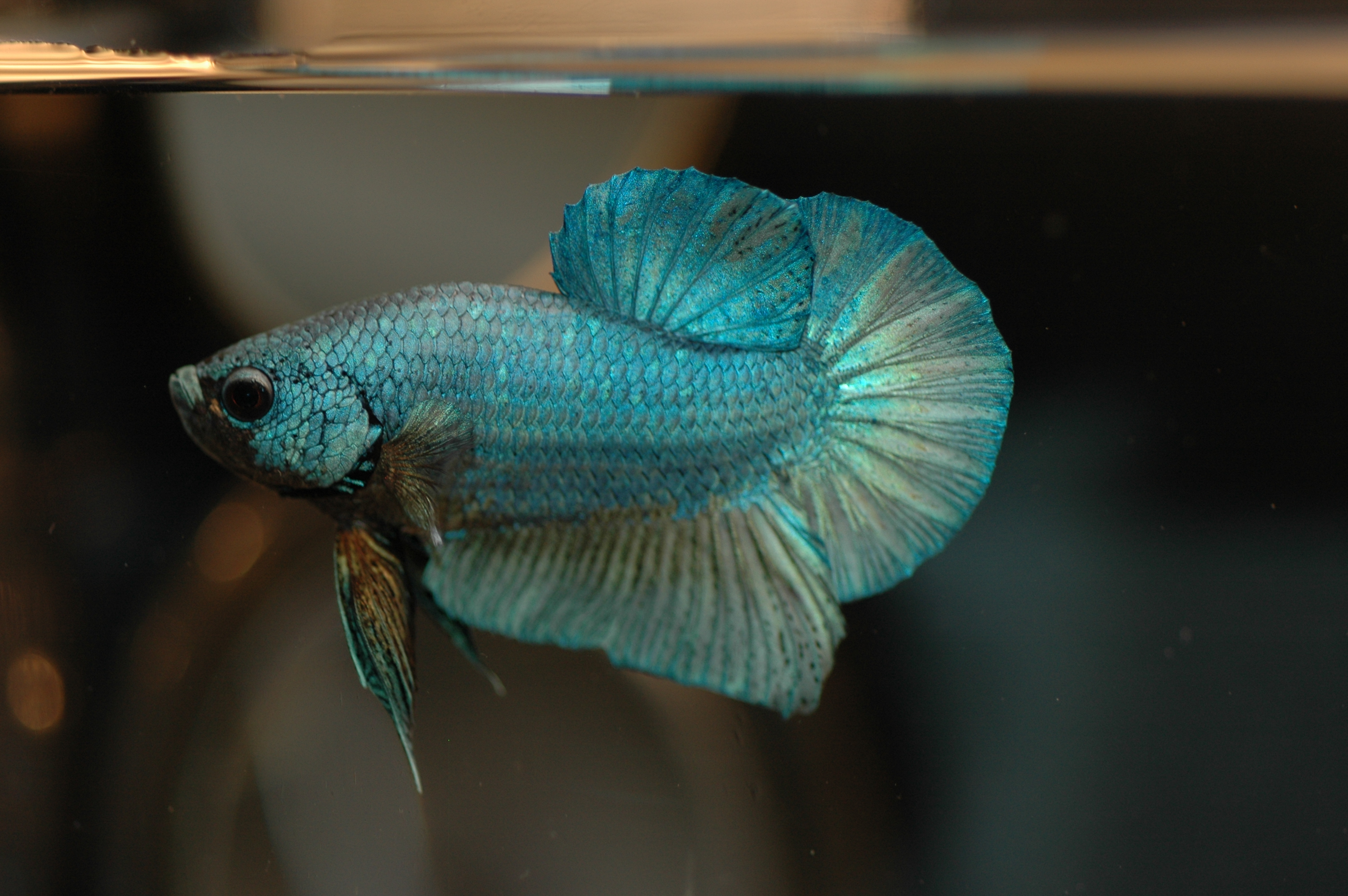
Leave part of the surface open, because bettas rest near the surface and breathe air there. Do not cover the whole surface with floating plants.
Cycling the Tank Before Adding the Fish
Cycling means growing colonies of beneficial bacteria that convert fish waste from toxic ammonia into nitrite, which is also toxic, and then into nitrate, which is far less harmful and is removed by water changes. Without those bacteria, ammonia builds up and poisons the fish. Skipping this step is the leading cause of new fish deaths.
The kindest way to cycle is fishless cycling: you grow the bacteria before any fish enters the tank. The RSPCA recommends fishless cycling when setting up a new tank. The process takes at least two weeks and often four to six weeks, and there is no exact calendar date for it: only test readings prove the bacteria are working.
- Set the tank up completely first: filter running, heater on, substrate in, water treated with conditioner.
- Add a source of ammonia to about 2 ppm, using pure ammonia or ammonium chloride made for aquarium use.
- Test ammonia and nitrite every day or two, and top up the ammonia when it drops toward zero.
- Wait for nitrite to rise and then fall, and for nitrate to appear. This is the slow part: be patient.
- The tank is ready when a dose of ammonia converts fully within 24 hours, with ammonia and nitrite both reading 0 ppm and nitrate present.
- Do a large partial water change to bring nitrate down, then add the fish.
Do not add the fish early because the tank “looks ready.” Clear water is not cycled water. For the full process, see our aquarium cycling guide.
What Do Betta Fish Eat?
Bettas are carnivores. In the wild they eat insects and larvae near the surface, so their diet needs to be high in animal protein. A quality betta pellet is the best staple: it delivers consistent nutrition in a portion you can control.
Feed 2 to 4 small pellets once or twice a day. RSPCA Australia recommends feeding once a day and only what the fish eats in under two minutes, and RSPCA Queensland suggests 2 to 3 pellets per meal. Either way, the portion is small: keepers often say a betta’s stomach is about the size of its eye.
Vary the diet with frozen or freeze-dried treats once or twice a week: bloodworms, brine shrimp, or daphnia. Soak freeze-dried food in a little tank water for a minute before feeding, because dry food can expand in the stomach.
Overfeeding is the most common feeding mistake. It causes bloating, constipation, and swim bladder problems, and uneaten food rots and fouls the water, raising ammonia. If food is still sitting in the tank after two minutes, you fed too much: remove it and feed less next time. Many keepers add one fasting day a week, which gives the digestive tract a rest.
Do not feed mammalian meat such as beef heart: fish digest it poorly, and RSPCA guidance warns against it. Do not use generic tropical flakes as the staple either: they are usually too low in protein for a carnivore.
Betta Behavior and Tank Mates
Male bettas are territorial. In the wild, each male defends a small territory, and two males that meet will fight, often until one is badly hurt or dead. That is why the species is also called the Siamese fighting fish. Never keep two male bettas in the same tank, and do not rely on a divider with holes or mesh: seeing a rival all day stresses the fish even when it cannot reach it.

Flaring, spreading the gills and fins at a rival or a reflection, is normal display behavior. Short flaring sessions are healthy exercise, but a betta that flares all day at its own reflection is stressed: move the tank or cover the reflective side.
A betta does not need company. A single male can live a full, healthy life alone in a well-furnished tank. Tank mates are optional, and they need a bigger tank: a 5 gallon tank is a betta-only setup, and any community needs at least 10 gallons with plenty of plants and hiding spots.
Possible tank mates, named by PetMD, include corydoras catfish, mystery snails, ghost shrimp, and some small tetras or rasboras. Nerite snails are among the safest choices: they eat algae, ignore the betta, and cannot reproduce in freshwater. Shrimp are riskier: amano shrimp are large enough that most bettas leave them alone, but cherry shrimp are often hunted. Every betta is an individual, so watch closely for the first few days and have a backup plan, such as a spare tank, if it does not work.
Avoid other male bettas, fin nippers such as tiger barbs, and long-finned, brightly colored fish such as fancy guppies, which the betta reads as rivals. Female bettas can live in a group called a sorority, but that needs at least 10 gallons, lots of hiding places, and experience: it is not a beginner setup.
Common Betta Health Problems
Most betta illness starts with water quality. Before reaching for any treatment, test the water: ammonia or nitrite above zero, or a temperature swing, is the most common root cause. This section gives general information only. It is not veterinary advice.
Fin Rot
Fin rot is a bacterial infection that makes the fins look frayed, torn, or ragged, often with darkened or reddened edges. It usually follows poor water quality, a fin injury, or stress. Mild cases often improve with clean water alone: daily partial water changes and stable, warm water. If the rot keeps spreading toward the body, or red streaks and sores appear, the fish needs expert help.
Ich (White Spot Disease)
Ich is caused by the parasite Ichthyophthirius multifiliis and shows as tiny white spots like grains of salt on the body and fins. Affected fish often rub against objects, clamp their fins, and lose appetite. It spreads fast and can kill if untreated. Treatment usually combines warmer water with an ich medication, used exactly as the product instructs. Ask a fish veterinarian or a knowledgeable aquatic retailer for guidance before dosing anything.
Bloating
A swollen belly after meals usually means overfeeding. Constipation and swim bladder problems can follow: the fish may float sideways, sink, or struggle to stay level. The first step is to stop feeding for a day or two and review portions. Bloating that does not ease, or comes with raised scales, is a sign to contact a fish veterinarian promptly.
Common Mistakes New Betta Owners Make
- Keeping a betta in a bowl. Use at least a 5 gallon tank with a heater and a filter.
- Adding the fish to an uncycled tank. Cycle the tank first, fishless, for two to six weeks.
- Skipping the heater. Bettas are tropical fish and need water between 76 and 81 F.
- Overfeeding. Feed 2 to 4 pellets once or twice a day, and remove uneaten food.
- Changing all the water at once or scrubbing everything clean. Change 15 to 25 percent weekly, and never rinse filter media under tap water: chlorine kills the beneficial bacteria. Rinse it in old tank water instead.
- Using untreated tap water. Always treat new water with conditioner to remove chlorine and chloramine.
Safety Considerations
Water conditioner: tap water contains chlorine or chloramine, which harm fish and kill filter bacteria. Treat every bucket of new water with conditioner before it goes in the tank.
Temperature stability: keep the tank away from windows, radiators, and air conditioner vents, and check the thermometer daily. Sudden swings stress the fish.
Tank lid: bettas jump, so keep a tight-fitting lid on the tank, with a small air gap under it for surface breathing.
Decor safety: smooth edges only. Avoid sharp plastic, rough rock, rusty metal, and painted ornaments that can flake.
Children: bettas are often a child’s first pet. An adult should handle feeding and water changes, because a well-meaning child can easily overfeed a fish or disturb the heater.
When to Consult a Veterinarian
Fish decline fast, so do not wait and hope. Contact a fish veterinarian or a knowledgeable aquatic retailer if you notice any of these signs: not eating; lethargy or abnormal swimming; fins that look frayed or are getting worse; new spots, growths, or unusual changes in appearance.
First, check water quality and temperature, since water issues are the most common root cause. A partial water change and stable, warm water are often the first steps.
To find a fish veterinarian, use the American Association of Fish Veterinarians directory at fishvets.org. If no fish vet practices near you, ask your local veterinarian whether they will consult with an aquatic veterinarian about the case.
This article gives general information only. It is not veterinary advice. If your pet shows any of the signs above, or if you are unsure, contact your veterinarian.
Frequently Asked Questions
Can betta fish live in a bowl?
No. Bowls cannot hold a heater or a filter, the temperature swings with the room, and waste builds up fast. A betta needs at least a 5 gallon heated, filtered tank. RSPCA Australia recommends 20 litres or more.
How often should I feed my betta fish?
Once or twice a day, 2 to 4 small pellets per meal, and only what the fish eats in under two minutes. Many keepers add one fasting day a week. Overfeeding causes bloating and fouls the water.
Do betta fish need a heater?
Yes. Bettas are tropical fish and need water between 76 and 81 F. Even in a warm home, a heater prevents temperature swings, which stress fish. Use a thermometer to check the real temperature.
Can two male bettas live together?
No. Male bettas are territorial and will fight, often until one is seriously injured or killed. Keep one male per tank, and do not rely on a see-through divider.
How long do betta fish live?
With proper care, a betta commonly lives 3 to 5 years. Bettas kept in bowls or in unheated, unfiltered water usually live far shorter lives.
Final Thoughts
Final Thoughts checklist:
- Set up at least a 5 gallon tank with a heater, a gentle filter, a lid, and a thermometer.
- Cycle the tank before adding the fish, and test the water weekly.
- Keep the water between 76 and 81 F, with ammonia and nitrite at 0 ppm.
- Feed 2 to 4 pellets once or twice a day, and remove uneaten food.
- Give your betta plants and hiding spots, and keep part of the surface open.
- Watch for warning signs, and contact a fish veterinarian early if something looks wrong.
A betta is not a decoration for a desk. It is a tropical fish with real needs: warm, clean water, space to swim, and a routine its owner keeps. Meet those needs and the fish in the cup becomes a bright, curious pet for years.
Sources
- PetMD, Betta Fish Care Sheet, written by Maria Zayas, DVM (updated April 27, 2026): petmd.com/fish/betta-fish-care-sheet
- RSPCA Australia, How should I care for my Siamese fighting fish? (updated May 1, 2024): kb.rspca.org.au
- RSPCA (UK), Keeping Fish as Pets: rspca.org.uk
- American Association of Fish Veterinarians, Find a Fish Vet: fishvets.org
How ZimuShop Chooses Products
Every guide on ZimuShop is researched against verified owner reviews, product specifications, brand reputation and recall history. We never accept payment for placement, and ZimuShop is not owned by any pet brand, so our picks stay independent. Prices and availability change often, so check the retailer for the latest details.