IMMEDIATE EMERGENCY CONTACT
If your cat is experiencing any life-threatening symptoms: Difficulty breathing, severe bleeding, unconsciousness, seizures, or suspected poisoning - DO NOT WAIT.
Call your nearest emergency veterinary hospital immediately or contact the ASPCA Animal Poison Control Center: (888) 426-4435 (24/7, fee may apply).
Find Emergency Hospitals BelowCat emergencies can happen suddenly and require immediate action. Knowing what constitutes an emergency, how to provide basic first aid, and where to find qualified veterinary care can save your cat's life. This comprehensive 2026 guide covers everything from recognizing emergency symptoms to accessing the best emergency cat hospitals across the United States.
Cats are masters at hiding illness and pain, which makes recognizing emergencies particularly challenging. By the time symptoms are obvious, your cat may be in critical condition. This guide will help you identify when immediate veterinary care is needed and provide practical steps to take while transporting your cat to professional care.
Table of Contents

Recognizing Cat Emergencies: Symptoms Checklist
Cats are stoic animals that often hide signs of distress until they're critically ill. The following symptoms require immediate veterinary attention. Use this checklist to assess whether your cat needs emergency care:
CRITICAL EMERGENCY (Go Immediately)
- Difficulty breathing or open-mouth breathing
- Unconsciousness or collapse
- Severe bleeding that doesn't stop
- Seizures or convulsions
- Suspected poisoning
- Trauma (hit by car, fall from height)
URGENT CARE NEEDED (Within 1-2 Hours)
- Straining to urinate with little/no output
- Sudden paralysis or inability to walk
- Continuous vomiting or diarrhea (more than 24 hours)
- Extreme pain (crying, aggression when touched)
- Swollen, hard abdomen
- High fever (over 104°F/40°C)
VETERINARY ATTENTION NEEDED (Within 24 Hours)
- Not eating or drinking for 24+ hours
- Lethargy or depression lasting more than a day
- Repeated coughing or sneezing
- Eye injury or sudden blindness
- Significant weight loss over short period
- Difficulty giving birth
Pro Tip: Know Your Cat's Baseline
The most important tool in recognizing emergencies is knowing what's normal for YOUR cat. Keep track of their normal breathing rate (20-30 breaths per minute), heart rate (140-220 bpm), temperature (100.5-102.5°F), and behavior patterns. Any significant deviation from their normal baseline could indicate a problem needing veterinary attention.
Emergency First Aid for Cats
While first aid is NOT a substitute for veterinary care, it can stabilize your cat during transport to the hospital. Always call the veterinary hospital while en route so they can prepare for your arrival.
Step 1: Assess Safety First
Your safety comes first. Injured or frightened cats may bite or scratch, even if they're normally gentle. Approach calmly and speak softly. If necessary, use a towel or blanket to gently wrap your cat (creating a "cat burrito") to protect yourself while handling them.
Step 2: Check ABCs
Airway, Breathing, Circulation: Gently open the mouth to check for obstructions. Look for chest movement to assess breathing. Feel for a heartbeat by placing your hand behind the front left leg. If no heartbeat, begin CPR (only if trained).
Step 3: Control Bleeding
Apply direct pressure to bleeding wounds with a clean cloth or gauze. Maintain pressure for at least 3-5 minutes. Do NOT remove soaked dressings - add more layers on top. For severe bleeding on limbs, a tourniquet may be needed but should only be applied by someone trained in proper technique.
Step 4: Protect Injuries
If you suspect fractures or spinal injury, immobilize your cat on a rigid surface (board, baking sheet) before moving. Support the head and neck. Cover with a blanket to prevent heat loss and reduce stress.
Step 5: Handle Suspected Poisoning
Do NOT induce vomiting unless instructed by a veterinarian. Bring the suspected poison container with you. If the substance is on the fur or skin, wash with mild soap and water while wearing gloves. Call poison control en route: ASPCA (888) 426-4435.
First Aid DON'Ts
- DO NOT give human medications unless specifically instructed by a veterinarian
- DO NOT apply ointments or creams to wounds without veterinary guidance
- DO NOT attempt to set fractures or dislocations
- DO NOT pull on protruding objects (leave them in place and stabilize)
- DO NOT force food or water on an injured or unconscious cat
- DO NOT waste time - seconds count in true emergencies
Recommended Cat First Aid Kit
Emergency Preparedness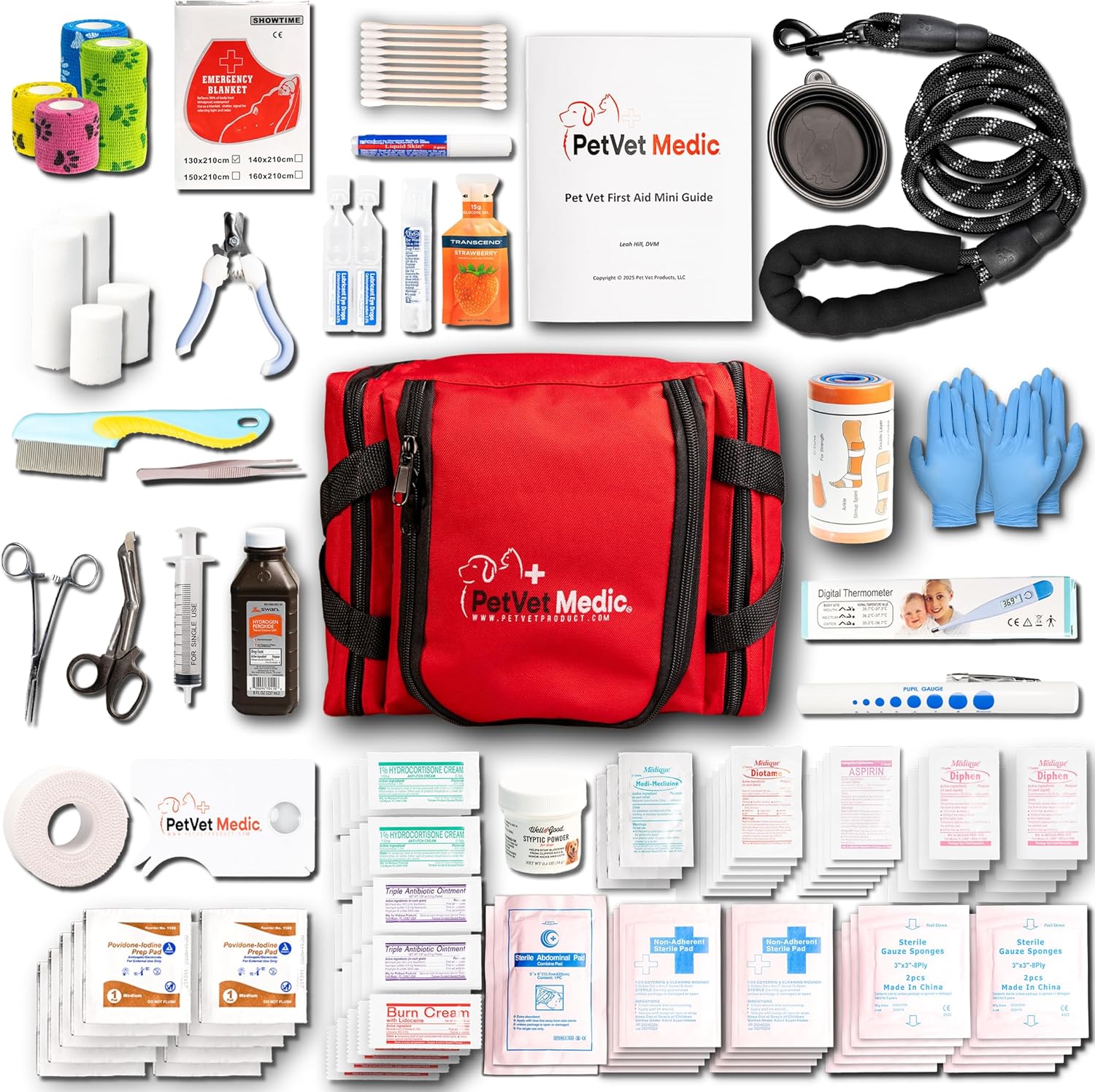
Comprehensive Pet First Aid Kit
230-piece emergency kit with pet-specific supplies including muzzle, thermometer, emergency blanket, wound care supplies, and instructional guide.
Check Amazon PriceEmergency Preparedness Kit
Every cat owner should have an emergency kit prepared. Store it in an easily accessible location and check expiration dates every 6 months.
Medical Supplies
- Sterile gauze pads and rolls
- Self-adhesive bandage (vet wrap)
- Digital pet thermometer
- Styptic powder (for nail bleeding)
- Saline eye wash
- Antiseptic wipes
- Disposable gloves
Documents & Information
- Veterinary clinic contact information
- Emergency hospital addresses/phones
- Poison control number
- Medical records copies
- Current medication list
- Photo of your cat (for identification)
- Microchip information
Comfort & Transport
- Secure carrier (hard-sided preferred)
- Blankets or towels
- Small bag of your cat's regular food
- Bottled water and collapsible bowl
- Favorite treats or toys
- Spare leash and harness
- Cat calming pheromone spray
Emergency Contacts
- Primary veterinarian
- 24-hour emergency clinic
- ASPCA Poison Control: (888) 426-4435
- Pet Poison Helpline: (855) 764-7661
- Trusted friend/family for pet sitting
- Local animal control

Common Cat Emergencies & Immediate Responses
| Emergency Type | Immediate Action | What NOT to Do |
|---|---|---|
| Choking | Open mouth carefully, remove visible object with tweezers if possible. Perform modified Heimlich if trained. | Don't blindly finger sweep (may push object deeper). Don't perform Heimlich unless certain of obstruction. |
| Heat Stroke | Move to cool area. Apply cool (not cold) water to body, especially groin/armpits. Offer small amounts of water. | Don't use ice water (causes shock). Don't force large amounts of water. Don't cover with wet towels. |
| Urinary Blockage | EMERGENCY - go to vet immediately. More common in male cats. Life-threatening within 24-48 hours. | Don't wait "to see if it gets better." Don't try to express bladder yourself unless trained. |
| Eye Injury | Flush with saline if chemical exposure. Prevent rubbing. Cover with damp cloth if protruding. | Don't use eye drops without vet approval. Don't try to remove embedded objects. |
| Seizures | Clear area of hazards. Time seizure. Keep cat on floor. Note details for vet. | Don't restrain or put anything in mouth. Don't try to wake or stimulate during seizure. |
| Fractures | Immobilize on rigid surface. Support injured area. Cover with blanket. | Don't try to set bone. Don't apply splint unless trained. Don't give pain medication. |
Emergency Cat Carrier
Safety Essential
Petmate Two-Door Top-Load Carrier
Sturdy hard-sided carrier with secure locking mechanisms, top and front loading options, and proper ventilation for safe emergency transport.
Check Amazon PriceTop 9 US Cat Emergency Hospitals with Contact Information
These leading veterinary hospitals across the United States offer 24/7 emergency care for cats, with specialized feline emergency teams, advanced diagnostic equipment, and intensive care units. Always call ahead to confirm availability and get specific arrival instructions.
Angell Animal Medical Center
Boston, MAOne of the largest and most advanced animal hospitals in New England with dedicated feline emergency specialists.
Animal Medical Center (AMC)
New York, NYWorld-renowned veterinary center with 24/7 emergency services and board-certified specialists in every discipline.
University of Pennsylvania Ryan Hospital
Philadelphia, PALeading academic veterinary hospital with Level 1 Trauma Center certification and 24/7 emergency care.
BluePearl Specialty + Emergency Pet Hospital
National (Multiple Cities)Nationwide network of emergency and specialty hospitals with locations in over 20 states, all offering 24/7 emergency care.
University of California, Davis Veterinary Medical Teaching Hospital
Davis, CATop-ranked veterinary school hospital with comprehensive 24/7 emergency services and specialty care.
North Carolina State University Veterinary Hospital
Raleigh, NCState-of-the-art teaching hospital with 24/7 emergency service and one of the largest veterinary facilities in the country.
Colorado State University Veterinary Teaching Hospital
Fort Collins, COLeading veterinary hospital with 24/7 emergency care and specialty services including feline-specific medicine.
Animal Emergency & Referral Center of Minnesota
St. Paul, MN24/7 emergency and critical care facility with board-certified specialists in emergency/critical care medicine.
Texas A&M University Small Animal Hospital
College Station, TXComprehensive veterinary teaching hospital offering 24/7 emergency services with specialists in feline medicine.
Finding Local Emergency Care
If you're not near one of these major hospitals, use these resources to find emergency care:
- Veterinary Emergency and Critical Care Society (VECCS): veccs.org - Find certified emergency hospitals
- American Animal Hospital Association (AAHA): aaha.org - Accredited hospital locator
- Local Veterinary Medical Associations: Check your state or county veterinary association website
- Ask Your Regular Veterinarian: They can recommend trusted emergency facilities in your area
Emergency Care Insurance
Financial Protection
Healthy Paws Pet Insurance
Top-rated pet insurance covering emergencies, accidents, and illnesses with fast claim processing and comprehensive coverage options.
Get QuoteSafely Transporting an Injured Cat to Emergency Care
Proper transport can prevent further injury and reduce stress for both you and your cat. Follow these steps:
1. Secure Your Cat
Place your cat in a secure carrier. If no carrier is available, wrap gently in a thick towel or blanket, leaving the head exposed. For suspected spinal injuries, immobilize on a rigid surface first.
2. Prepare Your Vehicle
Place carrier on floor behind front seats (safest spot). Secure with seatbelt. Have a passenger monitor your cat. Keep the car quiet and at a comfortable temperature.
3. Bring Essential Items
Take medical records, list of medications, and any suspected toxins. Bring your cat's favorite blanket or toy for comfort. Have towels ready for accidents.
4. Drive Safely
Drive calmly and obey traffic laws. Sudden stops or sharp turns can cause additional injury. If possible, have someone else drive so you can comfort your cat.
5. Call Ahead
Call the emergency hospital while en route. Describe symptoms so they can prepare. Ask about parking and entrance procedures for after-hours arrivals.

Emergency Care Costs & Pet Insurance Considerations
Emergency veterinary care can be expensive, but preparation can help manage costs:
Average Emergency Costs
Examination fee: $100-$200
Basic diagnostics: $300-$800
Hospitalization (per day):
$800-$2,000
Surgery: $1,500-$5,000+
ICU care: $1,000-$3,000/day
Payment Options
Pet insurance: Best for unexpected
emergencies
CareCredit: Medical credit card for pets
ScratchPay: Payment plans for vet care
Emergency fund: Save $1,000-$5,000
specifically for pet emergencies
Nonprofit assistance: Some organizations
offer financial aid
Pet Insurance Tips
Get insurance early: Before pre-existing
conditions develop
Compare policies: Look at coverage limits,
deductibles, reimbursement rates
Check exclusions: Breed-specific
conditions, hereditary issues
Consider emergency-only plans: Lower cost
option focusing on accidents
Read reviews: Check claim processing speed
and customer satisfaction
Cost-Saving Strategies
Preventive care: Regular checkups catch
issues early
Pet-proof your home: Prevent accidents
before they happen
Learn basic first aid: Reduce severity
before vet visit
Ask about payment plans: Many hospitals
offer financing
Consider pet emergency fund: Automatic
monthly savings
Final Thoughts on Cat Emergency Preparedness
The most important aspect of cat emergency care is preparation and quick action. Knowing what constitutes an emergency, having a plan in place, and acting swiftly can make the difference between life and death for your feline companion.
Remember these key points:
- Trust your instincts: If you think it's an emergency, it probably is
- Call ahead: Always notify the emergency hospital you're coming
- Stay calm: Your cat senses your stress - remaining calm helps them stay calm
- Have a plan: Know your nearest 24/7 emergency facility before you need it
- Prepare financially: Consider pet insurance or start an emergency fund today
For more information on keeping your cat healthy and preventing emergencies, explore our complete cat health guide and home safety tips for cats.