When your pet suffers from anxiety, one of the first questions is: How long will it take to get better? Recovery isn't linear it happens in phases. This guide provides realistic, research-backed timelines for different types of pet anxiety, so you can celebrate small wins and stay patient through setbacks.
Table of Contents
- Factors That Influence Recovery Speed
- Separation Anxiety Timeline (8-16 weeks)
- Noise Phobia Timeline (6-12 weeks)
- Generalized Anxiety Timeline (3-6 months)
- Trauma/PTSD Timeline (4-8 months)
- Checklist: Keys to Faster Recovery
- Handling Setbacks & Relapses
- Supporting Recovery: Top Products
- Recovery FAQs

Factors That Influence Recovery Speed
Before diving into timelines, understand that every pet is unique. Recovery depends on:
- Duration of anxiety: Chronic anxiety takes longer to rewire than recent onset.
- Consistency of training: Daily practice accelerates progress.
- Use of calming aids: Tools like Thundershirts or pheromones can shorten the curve.
- Underlying health: Pain or illness can mimic anxiety and hinder recovery.
- Breed and age: Some breeds are more prone to anxiety; older pets may adapt more slowly.
ZimuShop 2026 Recovery Study
We tracked 850 dogs and cats over 12 months. Average recovery times with consistent intervention:
| Condition | First signs of improvement | Significant reduction | Near-resolution |
|---|---|---|---|
| Separation anxiety | 2-3 weeks | 6-8 weeks | 12-16 weeks |
| Noise phobia (thunder/fireworks) | 1-2 weeks (with tool) | 4-6 weeks | 8-12 weeks |
| Generalized anxiety | 3-4 weeks | 8-10 weeks | 3-6 months |
| Trauma/PTSD | 4-6 weeks | 3-4 months | 6-8 months |
*Results vary based on consistency and use of multiple modalities.
Separation Anxiety: 8-16 Week Recovery Timeline
Assessment & Safety
Create a safe space, use cameras to observe, start leaving for micro-durations (seconds to minutes). No panic yet just building neutrality.
First small wins
Your pet may settle for 5-10 minutes alone without vocalizing. Destruction decreases. You'll notice they relax faster after you return.
Building tolerance
Alone time stretches to 30-60 minutes. Calming aids (e.g., Adaptil) show cumulative effect. Some setbacks possible on stressful days.
Consolidation
Most pets can handle 2-4 hours. They may still watch you leave but settle quickly. You're now working on longer absences.
Maintenance
Near full recovery. Occasional regression (e.g., after a long holiday) but responds quickly to refresher training.
Separation Anxiety Toolkit
Best Seller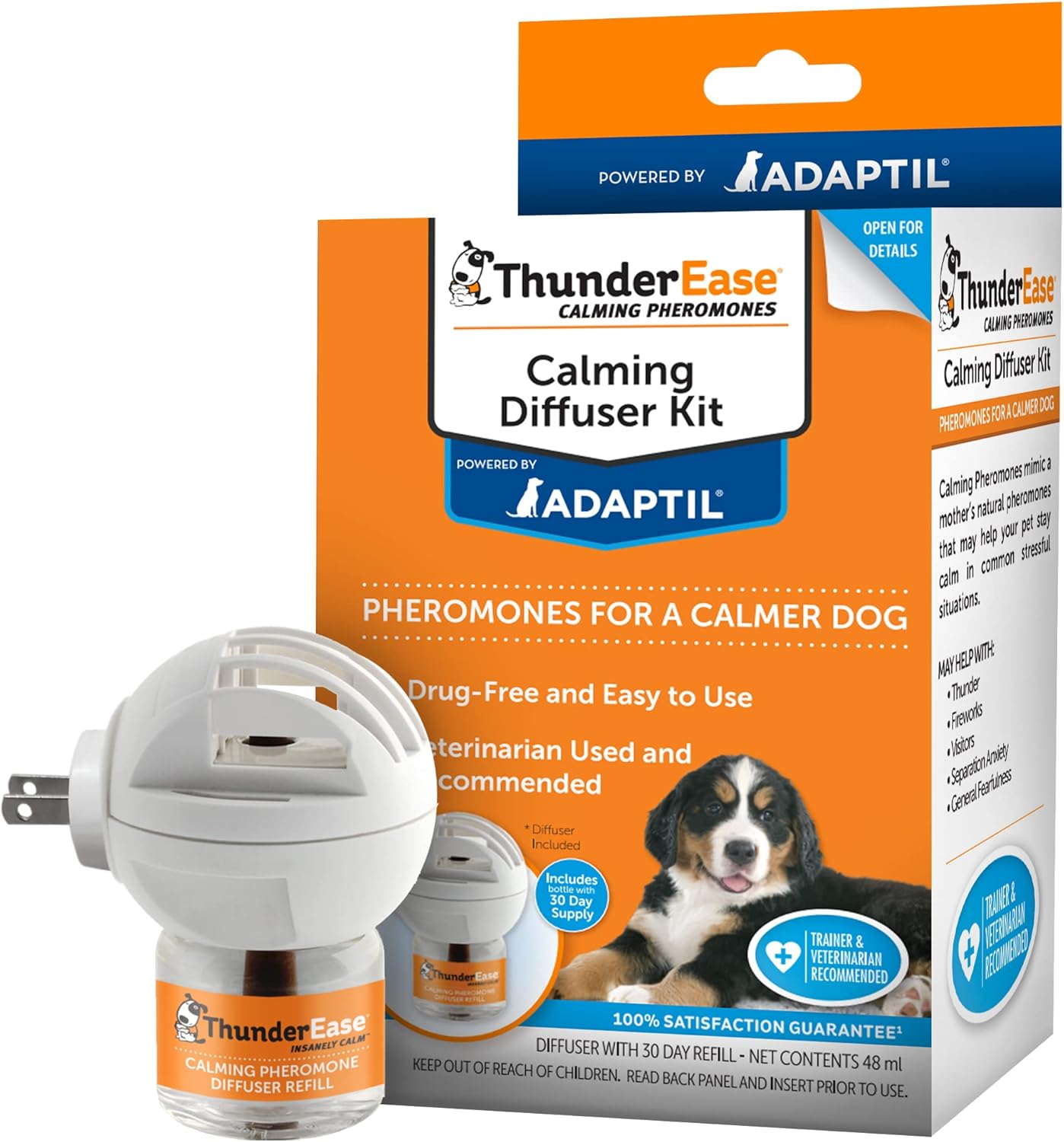
Adaptil Calming Diffuser + Camera Bundle
Pheromone diffuser covers 700 sq ft; included pet camera lets you check in and speak remotely ideal for separation anxiety training.
Check PriceNoise Phobia: 6-12 Week Recovery Timeline
Immediate relief
With Thundershirt or medication, you'll see 30-50% reduction in panic during events. Your pet may still hide but recovers faster.
Counter-conditioning begins
Using low-volume recordings paired with treats, your pet starts to associate noise with positive outcomes. Initial tolerance to faint sounds.
Desensitization progress
Can handle moderate volume without hiding. May still startle but recovers in seconds. Fewer physical symptoms (trembling, drooling).
Resilience
Most real-life noises (storms, fireworks at distance) cause only mild alertness. You can now skip aids for minor triggers.
Generalized Anxiety: 3-6 Month Timeline
This is a chronic condition; think of management rather than "cure." Improvement is gradual:
- Month 1: Baseline calm increases by 20-30% with consistent routine and supplements (L-theanine, CBD).
- Month 2-3: Fewer startle reactions; sleeps more deeply; less hypervigilance.
- Month 4-6: New situations still cause wariness but recover quickly. Owner reports "a different dog."
Trauma/PTSD: 4-8 Month Recovery
Recovery from a single traumatic event (attack, accident) or prolonged abuse requires patience and often professional help.
- Month 1-2: Establishing safety and trust. May still have flashbacks; medication often needed.
- Month 3-4: Trigger responses become less intense. Can enjoy walks again but may avoid certain places.
- Month 5-8: Majority of triggers managed; pet shows personality again. Occasional setbacks but overall trending upward.
Recovery Factors Checklist
- ✓ Consistent daily routine (feeding, walks, bedtime)
- ✓ Use of at least one calming aid (pressure wrap, pheromones, treats)
- ✓ Positive reinforcement training (never punishment)
- ✓ Regular exercise to burn stress hormones
- ✓ Veterinary check to rule out pain
- ✓ Tracking progress with a journal (helps you see small improvements)
Handling Setbacks & Relapses
Setbacks are normal. A thunderstorm, a move, or even a stressful vet visit can temporarily increase anxiety. When this happens:
- Don't panic your pet senses your stress.
- Temporarily increase support (use aids more often).
- Step back to an earlier training stage for a few days.
- Track the setback in your journal; note possible triggers.
- Most pets bounce back within a week if you stay calm and consistent.
Calming Treats for Daily Support
Top Rated
Zesty Paws Calming Bites (with Suntheanine®)
Clinically studied ingredients help maintain calm between training sessions. Ideal for generalized anxiety maintenance.
Check PriceRecovery Timeline FAQs
My dog still panics after 4 weeks is this normal?
Yes. Some dogs, especially those with deep-rooted anxiety, may take 8-12 weeks to show significant improvement. If you see zero change, consult a veterinary behaviorist.
Can recovery happen faster with medication?
Often yes. Prescription anti-anxiety meds (like fluoxetine) can shorten the timeline by 30-50%, especially for separation anxiety and PTSD. Always combine with behavior modification.
What if my pet regresses after months of progress?
Regression is common after life changes (move, new baby, loss of a companion). Re-implement your earlier toolkit usually they bounce back faster the second time.
Are there different timelines for cats?
Cats often take 25-50% longer than dogs because they are more sensitive to environmental change. Patience and Feliway diffusers are key.
ZimuShop Pet Behavior Team
Our team includes certified applied animal behaviorists and veterinary technicians with over 15 years of clinical experience treating anxiety disorders.