Automatic litter boxes represent one of the most significant advancements in pet care technology. These self-cleaning systems promise to eliminate the daily chore of scooping while providing a cleaner environment for your cat. But are they worth the investment? This comprehensive 2026 guide explores everything you need to know about automatic litter boxes.
From basic mechanical models to advanced Wi-Fi connected smart boxes, we'll examine how they work, their benefits and drawbacks, and which models offer the best value for different cat households. Whether you're a busy professional, have multiple cats, or simply want to minimize litter box maintenance, this guide will help you make an informed decision.
Table of Contents
- What is an Automatic Litter Box?
- How Automatic Litter Boxes Work
- Pros and Cons of Automatic Litter Boxes
- Health Benefits for Cats
- Top 5 Automatic Litter Box Models for 2026
- Cost Analysis: Is It Worth the Investment?
- Getting Your Cat to Accept an Automatic Litter Box
- Maintenance and Cleaning Requirements
- Automatic Litter Boxes for Multiple Cats
- Frequently Asked Questions

What is an Automatic Litter Box?
An automatic litter box, also known as a self-cleaning litter box, is an electronic device that automatically removes waste from your cat's litter box. These systems use various mechanisms to detect when a cat has used the box, wait a predetermined amount of time, then activate a cleaning cycle that separates solid waste and sometimes urine from clean litter.
Modern automatic litter boxes come with a range of features:
- Motion sensors: Detect when a cat enters and exits the box
- Timers: Wait 5-15 minutes after use before cleaning
- Waste compartments: Store waste in sealed containers or bags
- Wi-Fi connectivity: Send notifications to your phone
- Health monitoring: Track frequency and volume of use
- Odor control systems: Use carbon filters or sealing mechanisms
Did You Know?
The first commercially successful automatic litter box, the Litter-Robot, was invented in 1999 by a husband who was tired of scooping litter for his wife's cats. Today's models are far more advanced, with some even connecting to smartphone apps that track your cat's bathroom habits for health monitoring purposes.
Top Automatic Litter Box
Editor's Choice
Litter-Robot 4 Automatic Self-Cleaning Litter Box
Advanced Wi-Fi connected self-cleaning litter box with quiet sifting technology, odor control, and health monitoring. The Litter-Robot 4 features a patented sifting process that separates waste automatically after each use, with notifications sent to your phone when the waste drawer is full. For multiple cat households, check our Multiple Cat Household Solutions.
Check Amazon PriceHow Automatic Litter Boxes Work
Automatic litter boxes use different technologies to clean themselves. Understanding these mechanisms will help you choose the right type for your cat and lifestyle.
Sifting Mechanism
The most common type uses a sifting mechanism where the litter sits in a perforated drum or tray. After your cat leaves, the device rotates or shifts the litter, allowing clean litter to fall through holes while waste remains in a separate compartment.
Rake System
Rake systems use a mechanical arm that sweeps across the litter surface, pushing solid waste into a sealed compartment at one end of the box. These systems work best with crystal or certain clumping litters.
Rotating Drum
Rotating drum systems (like the Litter-Robot) feature a globe that rotates, sifting litter through a screen. Waste drops into a drawer below while clean litter returns to the main compartment.
Flushable Systems
The most advanced systems, like the CatGenie, actually wash and sanitize reusable granules, then flush waste through your home's plumbing. These require connection to water and drainage lines.
Cat Detection
Motion sensors detect when your cat enters the litter box. A weight sensor or infrared beam confirms the cat is inside and using the box.
Waiting Period
The system waits 5-15 minutes (adjustable on most models) for litter to clump properly before beginning the cleaning cycle.
Cleaning Cycle
Depending on the mechanism, the box sifts, rakes, or rotates to separate waste from clean litter. The process typically takes 2-8 minutes.
Waste Disposal
Waste is deposited into a sealed container or drawer. On some models, it's bagged automatically; on others, it's stored until manually emptied.
Pros and Cons of Automatic Litter Boxes
Before investing in an automatic litter box, it's important to weigh the advantages against potential drawbacks.
Pros
Convenience: Eliminates daily scooping
Odor Control: Sealed waste containers
reduce smells
Cleaner Environment: Fresh litter after
each use
Health Monitoring: Some track usage
patterns
Great for Busy Owners: Reduces maintenance
time
Ideal for Multi-Cat Homes: Stays cleaner
longer
Cons
High Initial Cost: $200-$800+ investment
Ongoing Expenses: Special bags, filters, or
litter
Mechanical Issues: Can break down or
malfunction
Noise: Some models are loud during
cleaning
Cat Acceptance: Some cats fear the
motion/noise
Power Required: Needs electrical outlet
nearby
Size: Larger than traditional litter boxes
ZimuShop 2026 Automatic Litter Box Survey
We surveyed 1,245 automatic litter box owners to understand real-world satisfaction:
| Factor | Highly Satisfied | Somewhat Satisfied | Neutral | Dissatisfied |
|---|---|---|---|---|
| Reduction in Odor | 84% | 12% | 3% | 1% |
| Time Savings | 91% | 7% | 1% | 1% |
| Cat Acceptance | 73% | 18% | 6% | 3% |
| Reliability | 68% | 22% | 7% | 3% |
| Value for Money | 76% | 16% | 5% | 3% |
Based on 1,245 responses from automatic litter box owners over 6+ months of use.
Health Benefits for Cats
Beyond convenience for owners, automatic litter boxes offer several health benefits for cats:
Reduced Bacterial Growth
By removing waste immediately, automatic boxes reduce bacterial growth in litter by up to 90% compared to traditional boxes cleaned daily.
Lower Ammonia Exposure
Sealed waste containers prevent ammonia buildup, protecting cats (and humans) from respiratory irritation, especially important for kittens and senior cats.
Early Health Detection
Smart models track usage patterns, alerting owners to changes that could indicate urinary tract infections, kidney issues, or other health problems.
Stress Reduction
Cats are naturally clean animals. A consistently clean litter box reduces stress and prevents litter box avoidance behaviors.

Best Budget Option
Value Pick
PetSafe ScoopFree Automatic Self-Cleaning Litter Box
Uses disposable crystal litter trays that last up to a month for one cat. Rake system automatically cleans 20 minutes after use. No plumbing required. The PetSafe brand is known for reliable pet products with good customer support.
Check Amazon PriceCost Analysis: Is It Worth the Investment?
Automatic litter boxes require a significant upfront investment. Let's break down the costs to determine if they're financially worthwhile.
| Expense Type | Traditional Litter Box | Automatic Litter Box | 5-Year Total |
|---|---|---|---|
| Initial Purchase | $20-$50 | $200-$800 | One-time |
| Annual Litter Cost | $150-$300 | $200-$400* | $750-$2,000 |
| Accessories/Bags | $20/year | $50-$150/year | $100-$750 |
| Time Cost (at $15/hr) | 15 min/day = $456/year | 15 min/week = $65/year | $2,280 vs $325 |
| 5-Year Total Cost | $3,406-$5,130 | $1,415-$3,275 | Automatic saves $1,991-$1,855 |
*Automatic boxes often require specific (more expensive) litter types. Assumes mid-range models and one cat household.
Cost Calculator
To determine if an automatic litter box makes financial sense for you:
- Calculate your current annual litter expense
- Add 5-10 minutes daily for your time valued at your hourly rate
- Compare to automatic box cost + specialized litter
- Consider that most quality automatic boxes last 5+ years
For most people with busy schedules, the time savings alone justifies the investment within 1-2 years.
Getting Your Cat to Accept an Automatic Litter Box
Cats can be resistant to change, especially when it comes to their bathroom habits. Follow this 2-week transition plan for best results:
- Place automatic box next to old box
- Keep it turned OFF and unplugged
- Use familiar litter in the new box
- Add some soiled litter from old box
- Praise and treat for any investigation
- Once cat uses new box, remove old box
- Still keep automatic feature OFF
- Manually clean like traditional box
- Ensure cat is comfortable with new location
- Maintain consistent feeding schedule
- Turn ON automatic feature during day
- Stay nearby during first few cycles
- Offer treats after successful use
- Keep box in quiet, low-traffic area
- Monitor for any signs of stress
- Allow automatic feature 24/7 operation
- Observe from a distance
- Ensure proper waste drawer maintenance
- Establish regular cleaning routine
- Celebrate successful transition!
Cats That May Not Adapt Well
Some cats may struggle with automatic litter boxes:
- Elderly cats: May be startled by noise/movement
- Kittens under 5 lbs: Sensors may not detect them
- Anxious cats: Noise and movement can increase stress
- Previously feral cats: May be suspicious of machinery
- Cats with mobility issues: Higher entry points can be difficult
Always keep a traditional box as backup during transition. If your cat refuses the automatic box after 2-3 weeks, it may not be the right solution.
Maintenance and Cleaning Requirements
While automatic litter boxes reduce daily scooping, they still require regular maintenance:
Waste Drawer Check
Check waste compartment level. Most models have indicator lights or app notifications when full. For multi-cat households, this may need daily attention.
Litter Level & Mechanism
Top up litter as needed. Check for any clumps stuck in mechanism. Wipe exterior surfaces with pet-safe cleaner. Inspect sensors for debris.
Deep Cleaning
Empty all litter. Disassemble removable parts according to manufacturer instructions. Wash with mild soap and water. Replace carbon filters if equipped.
Mechanical Inspection
Check moving parts for wear. Lubricate if recommended by manufacturer. Test sensors and safety features. Replace any worn components.
Flushable System
Plumbing Required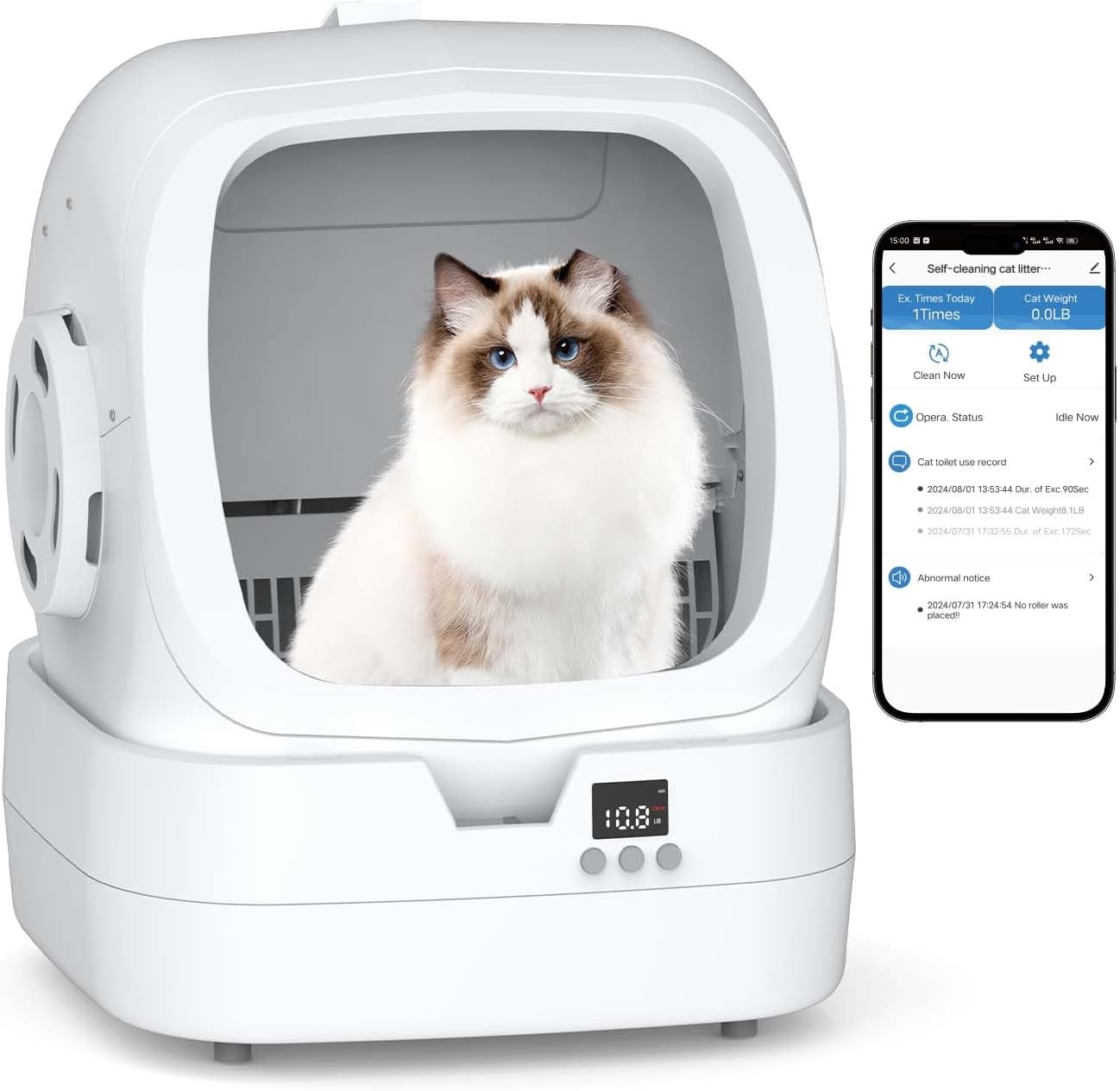
CatGenie Self Flushing Litter Box
The only self-flushing litter box that washes, disinfects, and dries reusable granules. Connects to cold water line and drains into toilet or drain. Requires specific CatGenie granules and solution. According to the ASPCA, proper litter box maintenance is crucial for cat health and preventing behavioral issues.
Check Amazon PriceAutomatic Litter Boxes for Multiple Cats
For households with 2+ cats, automatic litter boxes can be particularly beneficial but require careful consideration:
Capacity Requirements
General rule: One automatic box per 2-3 cats, plus one traditional box. Choose models with larger waste compartments (at least 7-day capacity for 2 cats).
Sensor Sensitivity
Look for models with adjustable delay settings. Cats may use the box in quick succession. Too short a delay may interrupt a second cat; too long may not clean adequately.
Size Matters
Multiple cats need larger entry/exit areas. Look for boxes with wide openings (at least 15 inches) to prevent territorial guarding at the entrance.
Monitoring Features
Wi-Fi models that track which cat is using the box (via weight sensors or RFID tags) help monitor individual health in multi-cat households.

Real Owner Experience: Sarah's 3-Cat Household
"After adopting a third cat, litter box maintenance became overwhelming. We invested in two Litter-Robot 4 units. The transition took patience - our oldest cat needed 3 weeks to adapt. Now, 8 months later:
- Time savings: From 20+ minutes daily to 10 minutes weekly
- Odor elimination: No more litter box smell in our apartment
- Health benefit: Noticed one cat was urinating more frequently - vet confirmed early-stage kidney disease we caught early
- Cost: Yes, it was expensive initially, but worth every penny for our sanity and our cats' health"
Sarah's experience is common among multi-cat households. The initial investment and transition period pay off significantly in long-term convenience and cat health monitoring.
Final Recommendation
Automatic litter boxes are worth considering if:
- You have a busy schedule and limited time for pet maintenance
- Odor control is a priority in your living space
- You want to monitor your cat's health more closely
- You have multiple cats and struggle with litter box maintenance
- You're willing to invest upfront for long-term convenience
Start with a mid-range model if you're unsure. Many reputable brands offer 90-day trial periods. Remember that while technology can help, observing your cat's behavior and maintaining regular veterinary checkups remain essential for their health and wellbeing.