The Foundation of Daily Health
A balanced homemade diet for guinea pigs daily requires three essential components: unlimited grass hay (80% of intake), a variety of fresh vegetables (high in Vitamin C), and a small amount of a homemade grain-herb supplement for variety and healthy fats. This plan eliminates commercial pellets while ensuring your guinea pig gets all necessary nutrients naturally. Follow this guide to create a simple, repeatable daily meal routine.
Table of Contents
Balanced Daily Meal Plan (1 Guinea Pig)
Complete Nutrition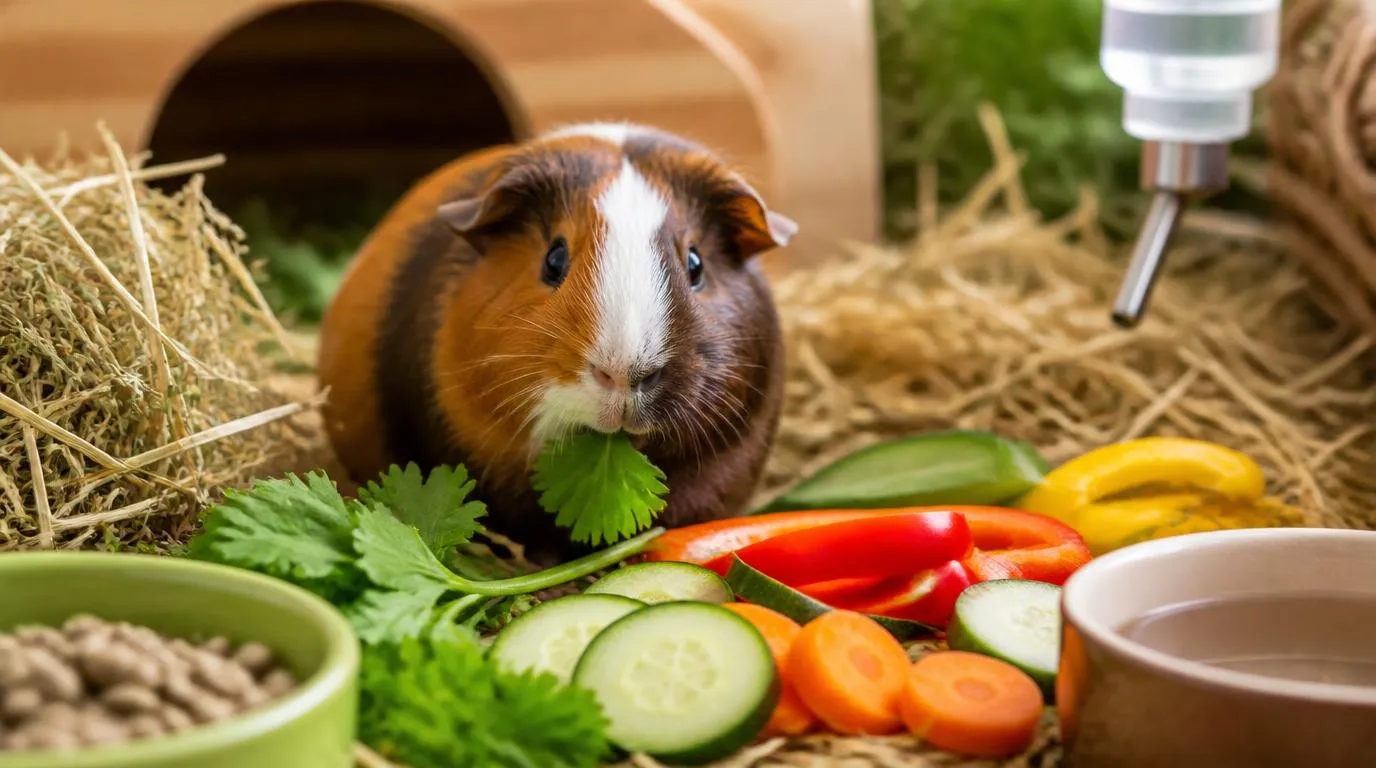
Daily Ingredients
- Timothy or orchard hay unlimited (refill twice)
- Red bell pepper (diced) 1 slice (20g)
- Romaine lettuce 1 large leaf
- Cilantro or parsley 3-4 sprigs
- Cucumber slices 2 rounds
- Zucchini (optional) 2 small pieces
- Homemade grain-herb mix* 1 tbsp
- Fresh water always available
*Grain mix: 1 cup rolled oats + ½ cup barley flakes + 2 tbsp flaxseed meal + 1 tbsp dried herbs (chamomile, dandelion). Store airtight.
Daily Nutritional Snapshot
Daily Feeding Routine (Step by Step)
- Morning (7-8 AM): Refill hay rack with fresh timothy hay. Remove any old hay.
- Prepare fresh vegetables: Wash red bell pepper, romaine, cilantro, cucumber, and zucchini. Dice bell pepper, tear lettuce, slice cucumber.
- Measure grain mix: Take 1 tablespoon of your pre-made grain-herb mix.
- Assemble breakfast bowl: Place vegetables in a clean ceramic bowl, sprinkle grain mix on the side (not mixed into wet veggies).
- Serve and time: Leave the bowl in the cage for 4-6 hours. Remove any uneaten fresh food after that time.
- Evening (6-7 PM): Refresh hay and water. No evening vegetables (to prevent overnight spoilage and maintain healthy grazing patterns).
- Weekly weight check: Weigh your guinea pig weekly to ensure stable weight.
Pro tip: Pre-chop 2 days' worth of vegetables and store in an airtight container in the fridge to save time.
Pros & Cons of a Balanced Homemade Diet
Pros
- Complete control over ingredient quality and freshness.
- No preservatives, fillers, or artificial vitamins that degrade.
- Encourages natural foraging and grazing behavior.
- Supports dental health through constant hay chewing.
- Can be more affordable than premium commercial pellets.
Cons
- Requires daily commitment and consistency.
- Must ensure reliable Vitamin C source every day.
- Not ideal for owners who travel frequently.
- May need vet guidance for special needs guinea pigs.
Daily Nutrient Requirements & How to Meet Them
Key Nutrients & Whole Food Sources
- Vitamin C (10-30mg/day): Red bell pepper (1 slice = ~15mg), cilantro, kale (sparingly), or a small piece of guava.
- Fiber (high): Unlimited timothy hay – essential for gut motility and teeth.
- Protein (16-18%): Hay provides baseline; parsley and alfalfa hay (for young/pregnant).
- Calcium/Phosphorus ratio: Romaine lettuce, cucumber, bell pepper maintain balance. Limit high-calcium greens like spinach.
- Omega-3s: Flaxseed meal in the grain mix supports skin and coat.
- Water: Fresh, changed daily – hydration prevents urinary issues.
Daily Schedule & Portion Guide
Ideal Daily Timeline
- 6:00 AM: Fresh hay top-up.
- 7:30 AM: Breakfast: 1 cup vegetables + 1 tbsp grain mix.
- 12:00 PM: Check and remove any leftover fresh food.
- 6:00 PM: Hay refresh + water change (no evening veggies).
- Portion adjustments: If guinea pig leaves vegetables uneaten, reduce portion. If losing weight, add a small amount of alfalfa hay.
- Treats: Tiny piece of fruit (blueberry, apple slice) once a week maximum.
Weekly Vegetable Rotation for Balanced Nutrition
Sample Weekly Veggie Mix
- Monday: Red bell pepper + cilantro + romaine + cucumber.
- Tuesday: Green bell pepper + parsley (small amount) + radicchio + zucchini.
- Wednesday: Red bell pepper + dill + butter lettuce + small carrot piece.
- Thursday: Yellow bell pepper + mint + romaine + cucumber.
- Friday: Red bell pepper + basil + endive + bell pepper strips.
- Saturday: Mixed bell peppers + cilantro + romaine + zucchini.
- Sunday: Same as Monday or rotate in a new safe veggie (e.g., chard, small amount).
Avoid spinach, kale, and parsley daily due to oxalates/calcium. Rotate them weekly.
Essential Tools for Daily Feeding
Recommended Items
- Small knife & cutting board – Check price on Amazon
- Airtight container for grain mix – Check price on Amazon
- Ceramic food bowl (heavy, tip-proof) – Check price on Amazon
- Digital kitchen scale – Check price on Amazon
- Water bottle or heavy bowl – Check price on Amazon
As an Amazon Associate we earn from qualifying purchases.
Keeping Your Guinea Pig's Food Fresh & Safe
Food Safety Guidelines
- Hay: Store in a dry, breathable bag away from sunlight. Replace if moldy or dusty.
- Vegetables: Refrigerate unwashed in crisper drawer. Pre-chop only 2 days in advance.
- Grain mix: Keep in airtight container in refrigerator or freezer (flaxseed is perishable). Use within 6 weeks.
- Signs of spoilage: Wilting, sliminess, off odor, or mold – discard immediately.
- Daily cleaning: Wash food and water bowls with hot soapy water every day.
Commit to a Balanced Homemade Diet
A balanced homemade diet for guinea pigs daily is achievable with planning and consistency. By providing unlimited hay, a colorful variety of fresh vegetables, and a small grain-herb supplement, you offer optimal nutrition without commercial pellets. Monitor your guinea pig's weight, droppings, and energy levels – they will tell you if adjustments are needed. With this daily routine, your cavy will enjoy a long, healthy, and happy life.
Frequently Asked Questions
Can I feed this diet to a baby guinea pig?
For guinea pigs under 6 months, replace timothy hay with alfalfa hay and add alfalfa-based pellets or extra parsley for calcium/protein. Introduce vegetables slowly.
How do I know if my guinea pig is getting enough Vitamin C?
Signs of deficiency include lethargy, rough coat, swollen joints, or bleeding gums. Feed red bell pepper daily – it's the safest and most reliable source.
Is the grain mix necessary every day?
No, you can offer it 3-4 times per week. The essential daily components are hay and fresh vegetables. The grain mix adds variety and omega-3s but is not critical.
What if my guinea pig refuses certain vegetables?
Introduce one new vegetable at a time, mixed with favorites. Some guinea pigs need 10+ exposures to accept new foods. Be patient and persistent.
How much water should a guinea pig drink daily?
Average is 100-150ml per day, but fresh vegetables provide hydration. Always provide clean water; check bottle daily for blockages.