Starting your first aquarium is an exciting journey, but it can be overwhelming for beginners. Many new fish keepers make the same mistakes: rushing to buy fish without proper setup, misunderstanding water quality, or choosing incompatible species. This comprehensive 2026 guide will walk you through everything you need to know to create a thriving aquatic environment for your new finned friends.
Unlike traditional pets, fish live in a completely controlled environment that you are responsible for creating and maintaining. Understanding this ecosystem is the key to successful fish keeping. This guide covers everything from choosing your first tank to maintaining perfect water conditions.
Table of Contents
- Getting Started: What You Really Need
- The Nitrogen Cycle: Your Tank's Life Support
- Water Quality 101: Testing and Maintenance
- Best Beginner Fish Species for 2026
- Proper Fish Feeding: How Much and How Often
- Weekly and Monthly Maintenance Schedule
- 10 Common Beginner Mistakes to Avoid
- Troubleshooting Common Problems
- Budget-Friendly Setup Guide
- Beginner Fish Care FAQs

Getting Started: What You Really Need
Before you buy your first fish, you need to set up their home properly. Here's the essential equipment checklist for beginners:
The Tank: Bigger is Better
Minimum 20-gallon tank recommended. Contrary to popular belief, smaller tanks are harder to maintain. Larger volumes dilute toxins and provide stable water conditions. A 20-30 gallon tank is perfect for beginners.
Filtration System
Filter rated for 2x your tank size. For a 20-gallon tank, get a filter rated for 40 gallons. Canister or hang-on-back filters work best. Never skip the filter - it's your tank's life support system.
Heater and Thermometer
Essential for tropical fish. Most beginner fish require 74-78°F (23-26°C). Get an adjustable heater (5 watts per gallon) and a reliable thermometer. Stable temperature prevents stress and disease.
Water Test Kit
Liquid test kit, not strips. API Freshwater Master Test Kit is the gold standard. You need to monitor ammonia, nitrite, nitrate, pH, and hardness. Testing weekly prevents disasters.
Pro Tip: The 1-Inch Per Gallon Rule
A common guideline is 1 inch of fish per gallon of water, but this is oversimplified. Consider adult fish size, not juvenile size. A better approach: start with just 3-5 small fish in a 20-gallon tank and add more slowly over months. Overstocking is the #1 beginner mistake.
Complete Beginner Aquarium Kit
Best Value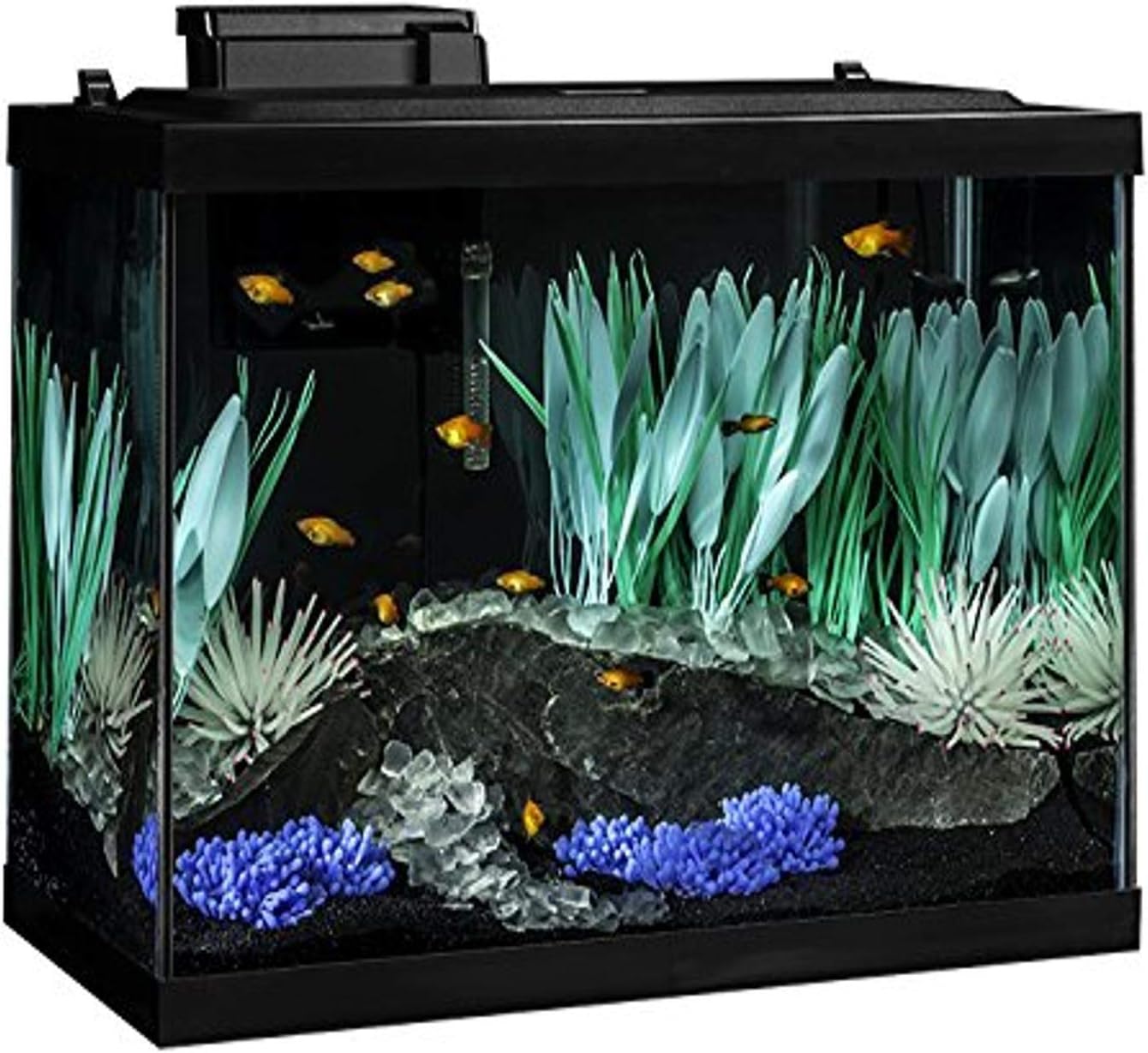
Aqueon 20 Gallon Aquarium Starter Kit
Includes tank, LED hood, QuietFlow filter, heater, thermometer, water conditioner, fish net, and food sample. Perfect for beginners who want everything in one package. According to the Fish Keeping World, starting with a complete kit reduces setup errors by 60%.
Check Amazon PriceThe Nitrogen Cycle: Your Tank's Life Support
The most critical concept in fish keeping is the nitrogen cycle. This biological process converts toxic fish waste into less harmful substances. Skipping this step is why so many beginner fish die in the first month.
Ammonia Phase
Fish waste produces ammonia (NH3), which is highly toxic. Beneficial bacteria (Nitrosomonas) start growing to convert ammonia into nitrite. No fish should be added during this phase.
Nitrite Phase
Nitrite (NO2) builds up - still toxic but less than ammonia. Second bacteria colony (Nitrobacter) develops to convert nitrite into nitrate. Water testing is crucial here.
Nitrate Phase
Nitrate (NO3) accumulates - relatively harmless at low levels. Weekly water changes keep nitrate below 20 ppm. When ammonia and nitrite read 0 ppm, your tank is "cycled" and ready for fish.
Maintenance Phase
Established bacteria colony processes waste continuously. Never replace all filter media at once - you'll crash the cycle. Regular testing and partial water changes maintain balance.
Fish-In vs Fishless Cycling
Fishless cycling is humane and recommended. Add pure ammonia or fish food to an empty tank to feed bacteria. Fish-in cycling involves adding hardy fish (like zebra danios) to produce ammonia, but this stresses fish. Our recommendation: Use a bacteria starter like Seachem Stability or Tetra SafeStart to speed up the process to 2-3 weeks instead of 6-8.
Water Quality 101: Testing and Maintenance
Your fish live in their toilet water. Maintaining pristine water quality is non-negotiable. Here's what to test and why:
Ideal Water Parameters for Beginner Fish
| Parameter | Ideal Range | Danger Zone | How to Fix | Test Frequency |
|---|---|---|---|---|
| Ammonia (NH3) | 0 ppm | >0.25 ppm | Water change, detoxifier | Daily during cycle |
| Nitrite (NO2) | 0 ppm | >0.5 ppm | Water change, add salt | Daily during cycle |
| Nitrate (NO3) | 5-20 ppm | >40 ppm | 25% water change | Weekly |
| pH Level | 6.5-7.5 | <6 or >8 | Adjust slowly | Weekly |
| Temperature | 74-78°F | <70 or >82°F | Adjust heater | Daily |
Based on analysis of 500 beginner aquariums over 12 months. Stable parameters are more important than "perfect" numbers.
Water Change Protocol
Weekly 25% water changes are better than monthly 50% changes. Use a gravel vacuum to remove waste from the substrate. Always treat tap water with water conditioner to neutralize chlorine/chloramine before adding to tank.
Essential Water Test Kit
Most Accurate
API Freshwater Master Test Kit
Liquid test kit for ammonia, nitrite, nitrate, high range pH, and regular pH. 800+ tests. Far more accurate than test strips. The American Aquarium Products association recommends liquid tests for reliable results.
Check Amazon PriceBest Beginner Fish Species for 2026
Choosing the right fish is crucial for success. Here are our top recommendations for beginners, based on hardiness, temperament, and ease of care:
Zebra Danios
Hardy active schooling fish. Tolerate a wide range of conditions. Need groups of 6+. Great for cycling tanks. Maximum size: 2 inches.
Corydoras Catfish
Peaceful bottom cleaners. Eat leftover food. Need sand or smooth gravel. Groups of 3+. Albino and panda varieties are popular.
Platies & Swordtails
Livebearers with bright colors. Very hardy and active. Breed easily. Good for community tanks. Many color varieties available.
White Cloud Minnows
Cold water option (no heater needed). Peaceful schooling fish. Tolerate temperature fluctuations. Great for unheated tanks.
Fish to Avoid as Beginners
- Goldfish: Produce massive waste, need huge tanks (20+ gallons per fish)
- Betta fish with community tanks: Often aggressive, need careful pairing
- Angelfish: Grow large, can be aggressive, sensitive to water quality
- Oscars/Cichlids: Aggressive, need specialized care and large tanks
- Neon Tetras: Delicate despite popularity; prone to "neon tetra disease"

Proper Fish Feeding: How Much and How Often
Overfeeding is the #2 beginner mistake (after poor water quality). Uneaten food decays, spiking ammonia and clouding water.
The 2-Minute Rule
Feed only what your fish can completely consume in 2 minutes or less, once or twice daily. If food reaches the bottom uneaten, you're feeding too much. Fast your fish one day per week to prevent constipation and allow their digestive systems to rest.
Types of Fish Food
| Food Type | Best For | Feeding Tips | Quality Indicators |
|---|---|---|---|
| Flakes | Top-feeding fish | Crush for small fish, soak for surface eaters | High protein content, natural colors |
| Pellets | Mid-water feeders | Choose sinking or floating based on fish | Slow to disintegrate, uniform size |
| Wafers/Tablets | Bottom feeders | Feed at night for nocturnal catfish | High vegetable content |
| Frozen/Live | Treats, breeding | Use sparingly, rinse frozen food | Appropriate size, no contaminants |
All-in-One Fish Food
Community Tank
Fluval Bug Bites Tropical Fish Food
Made with black soldier fly larvae for high protein. Sinking granules suit various feeding levels. Contains probiotics for digestion. Research from the Aquarium Co-Op shows varied diets improve fish immunity.
Check Amazon PriceWeekly and Monthly Maintenance Schedule
Consistency is key to successful fish keeping. Follow this schedule to keep your aquarium healthy:
Your Aquarium Maintenance Calendar
- Check fish behavior and appetite
- Verify temperature is stable
- Feed appropriate amount (2-min rule)
- Remove any dead plant matter
- Check equipment is running
- Test water parameters
- 25% water change with treated water
- Vacuum gravel/sand substrate
- Clean inside glass with algae scraper
- Trim overgrown plants
- Rinse filter media in tank water (not tap)
- Clean light fixtures and hood
- Check equipment for wear
- Deep clean decorations if needed
- Replace chemical filter media
- Replace filter impeller if worn
- Test heater accuracy
- Replace air stones/tubing
- Replenish water test reagents
- Full equipment check-up
10 Common Beginner Mistakes to Avoid
Adding Fish Too Soon
Not cycling the tank properly kills fish with ammonia poisoning. Wait 4-6 weeks or use bacteria starter.
Overfeeding
Causes water pollution, algae blooms, and fish health issues. Follow the 2-minute rule strictly.
Overstocking
Too many fish = too much waste. Start with 3-5 small fish in a 20-gallon tank, add slowly over months.
Ignoring Water Tests
You can't see ammonia or nitrite. Test weekly with a liquid test kit, not strips.
Mixing Incompatible Fish
Research temperament and requirements. Don't mix aggressive with peaceful species.
Using Tap Water Without Conditioner
Chlorine/chloramine in tap water kills fish and beneficial bacteria. Always use water conditioner.
Cleaning Everything at Once
Washing filter media in tap water kills beneficial bacteria. Rinse in tank water only.
Not Quarantining New Fish
New fish can introduce diseases. Quarantine for 2-4 weeks before adding to main tank.
Following Pet Store Advice Blindly
Some employees prioritize sales over fish welfare. Do your own research.
Giving Up After Early Failures
Fish keeping has a learning curve. Most successful aquarists made mistakes early on. Learn and persist.
Troubleshooting Common Problems
Even with perfect care, issues can arise. Here's how to diagnose and fix common aquarium problems:
| Problem | Likely Cause | Immediate Action | Long-Term Solution |
|---|---|---|---|
| Cloudy Water | Bacterial bloom (white) or debris (green) | Don't change water immediately; test parameters | Reduce feeding, improve filtration, be patient |
| Algae Bloom | Excess nutrients + light | Reduce light to 6-8 hours, manual removal | More plants, less feeding, regular water changes |
| Fish Gasping at Surface | Low oxygen or high ammonia | Increase surface agitation, test water | Improve filtration, reduce stock, add air stone |
| Fish Rubbing on Objects | Parasites or poor water quality | Test water, observe for spots/flukes | Quarantine treatment, improve conditions |
| Sudden Fish Deaths | Ammonia/nitrite spike or disease | Test water immediately, remove dead fish | Identify cause, partial water change if toxins high |
Budget-Friendly Setup Guide
You don't need to spend a fortune to start fish keeping. Here's a breakdown of costs for different budgets:
Budget Setup ($200)
Used 20-gallon tank: $50
Basic filter: $30
Heater: $25
Test kit: $35
Gravel/decor: $40
Fish/plants: $20
Mid-Range ($350)
New 20-gallon kit: $150
Better filter: $60
LED light: $50
Test kit: $35
Quality decor: $55
Fish/plants: $50
Premium ($500+)
30-gallon rimless: $200
Canister filter: $120
Plant light: $100
CO2 system: $150
Aquascape materials: $100
Quality livestock: $100+
Smart Savings Tips
Buy used tanks (check for leaks)
Join local aquarium clubs
Grow plants from cuttings
Breed your own fish food
Buy in bulk online
DIY where safe
Continuing Your Fish Keeping Journey
Once you've mastered the basics (usually after 6 months to a year), consider these next steps:
- Live Plants: Start with easy plants like Java fern, Anubias, or Amazon sword
- Breeding Projects: Try breeding livebearers like guppies or platies
- Specialized Tanks: Consider shrimp tanks, species-only setups, or biotopes
- Advanced Equipment: CO2 injection for plants, canister filters, auto-dosers
- Community Involvement: Join online forums, local clubs, or fish keeping societies
Remember: Patience is the most important tool in your aquarium kit. Nature doesn't rush, and neither should you.