Why Indoor Cats Need a Different Formula
An indoor cat burns far fewer calories than one that's climbing fences and chasing prey outside, and it spends more time grooming, which means more swallowed hair. That combination is why food marketed specifically for indoor cats usually runs a bit lower in calorie density and higher in fiber than a standard "all life stages" formula. Below are five widely available picks that are built around that lower-activity, hairball-prone lifestyle, along with what makes each one different.
Jump straight to the comparison table, or scroll through each pick for the full breakdown, pros and cons, and where to buy.
Table of Contents
- Why Indoor Cats Need a Different Formula
- Quick Comparison Table
- #1 Royal Canin Indoor Adult
- #2 Purina ONE +Plus Indoor Advantage
- #3 Hill's Science Diet Adult Indoor
- #4 IAMS Proactive Health Indoor Weight & Hairball Control
- #5 Blue Buffalo Indoor Health
- Buying Guide: What to Look For
- Further Reading
- Frequently Asked Questions
Quick Comparison Table
| Rank | Product | Best For | First Ingredient |
|---|---|---|---|
| #1 | Royal Canin Indoor Adult (7 lb.) | Overall indoor formula | Chicken meal |
| #2 | Purina ONE +Plus Indoor Advantage (7 lb.) | Budget-friendly everyday option | Turkey |
| #3 | Hill's Science Diet Adult Indoor (7 lb.) | Vet-formulated digestive support | Chicken |
| #4 | IAMS Proactive Health Indoor Weight & Hairball Control (7 lb.) | Weight management | Chicken |
| #5 | Blue Buffalo Indoor Health (7 lb.) | Natural ingredients | Deboned chicken |
#1 Royal Canin Indoor Adult Dry Cat Food
Royal Canin Feline Health Nutrition Indoor Adult Dry Cat Food (7 lb. Bag)
Vet-Formulated Image credit: Amazon
Royal Canin's indoor line is built around cats aged 1-7 who are less active by nature, with a calorie profile aimed at helping them hold a healthy weight and a fiber blend meant to help move swallowed hair through the digestive tract instead of back up. The kibble shape is also designed to encourage chewing rather than gulping, which can help with dental tartar over time.
Ideal for: adult indoor cats (1-7 years) without a specific medical condition, whose owners want a formula purpose-built for the indoor lifestyle rather than a general "all life stages" kibble.
Pros
- Calorie level tuned for lower-activity cats
- Fiber blend supports hairball control
- Kibble shape encourages chewing over gulping
- Formulated with input from veterinary nutritionists
- Widely stocked at pet specialty retailers
Cons
- Priced above most grocery-store kibble
- Age range (1-7) means it isn't meant for kittens or seniors
- Chicken meal as the first ingredient isn't a novel protein for cats needing an elimination diet
As an Amazon Associate, we earn from qualifying purchases.
#2 Purina ONE +Plus Indoor Advantage Dry Cat Food
Purina ONE +Plus Indoor Advantage Adult Dry Cat Food, Turkey Formula (7 lb. Bag)
Budget Pick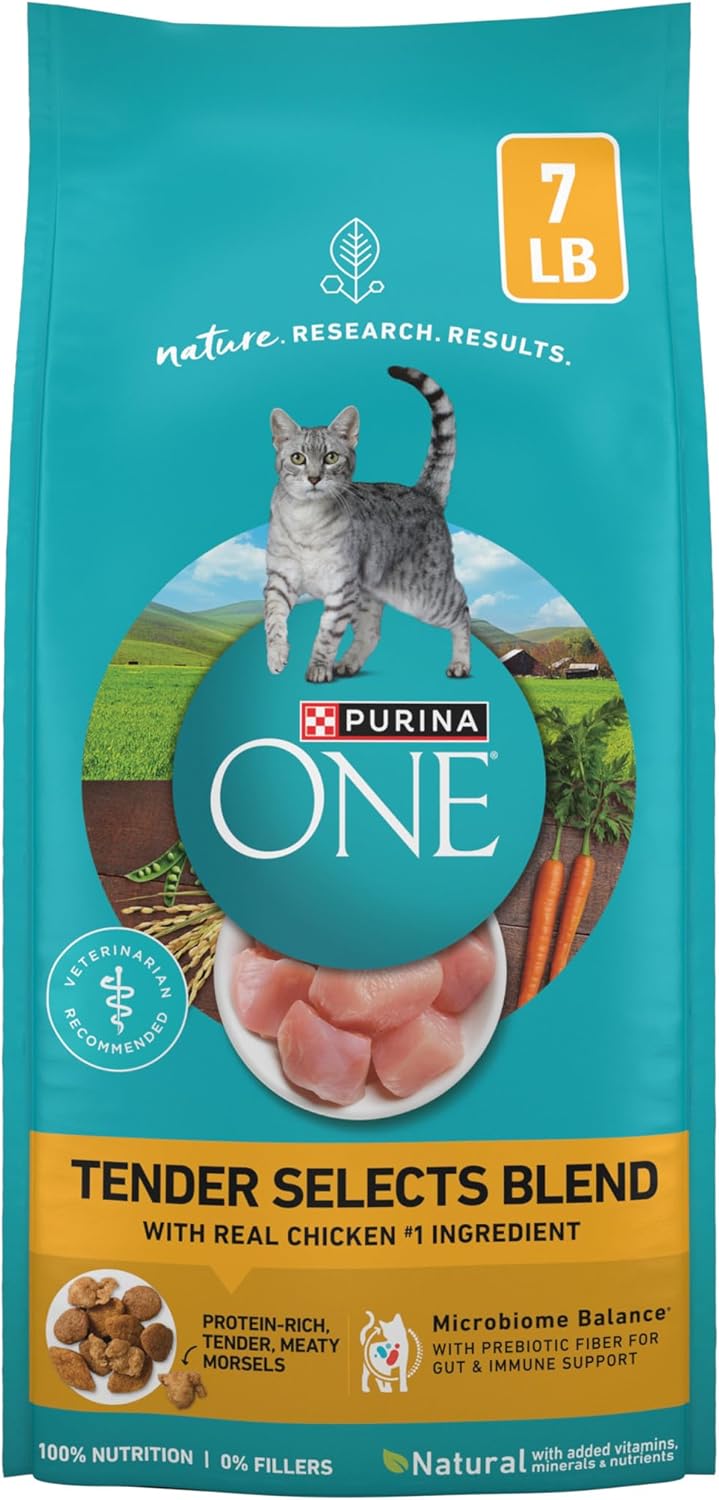 Image credit: Amazon
This everyday formula leads with real turkey and adds a fiber blend for hairball control, at a price point closer to mainstream grocery-store kibble than the specialty brands. It's a reasonable middle ground for owners who want an indoor-specific formula without paying premium-brand prices.
Ideal for: owners who want indoor-formula basics - named protein, fiber for hairballs, moderate calories - without a premium price tag.
Pros
- Real turkey as the first ingredient
- Fiber blend aimed at reducing hairballs
- Lower cost per pound than specialty brands
- Widely available at grocery and pet stores
- Crunchy texture that supports dental health
Cons
- Contains corn and grain-based fillers
- Not a specialty formula for medical conditions
- Smaller bag size than bulk budget options
As an Amazon Associate, we earn from qualifying purchases.
#3 Hill's Science Diet Adult Indoor Dry Cat Food
Hill's Science Diet Adult Indoor Chicken Recipe Dry Cat Food (7 lb. Bag)
Vet Favorite Image credit: Amazon
Hill's Science Diet is one of the brands most consistently recommended by veterinarians, and the indoor formula focuses on lean protein for muscle maintenance alongside fiber for digestive health and hairball reduction. It's a solid choice if you want a research-backed formula from a brand with veterinary nutritionists on staff.
Ideal for: owners who prioritize a brand with a strong research and veterinary-formulation track record over other factors.
Pros
- Chicken listed as the first ingredient
- Formulated with veterinary nutritionist input
- Supports digestive health and easier litter box cleanup
- Backed by published feeding research
- Consistent, well-established formula
Cons
- Priced above mainstream grocery-store kibble
- Not a grain-free or limited-ingredient formula
- Smaller bag sizes cost more per pound than bulk bags
As an Amazon Associate, we earn from qualifying purchases.
#4 IAMS Proactive Health Indoor Weight & Hairball Control
IAMS Proactive Health Indoor Weight & Hairball Control Adult Dry Cat Food (7 lb. Bag)
Weight Focus Image credit: Amazon
This formula leads with real chicken and adds L-carnitine, an amino-acid derivative associated with fat metabolism, alongside a beet-pulp fiber blend specifically aimed at hairball reduction. It's one of the more directly weight-focused options on this list, which makes it worth a look if your indoor cat already tends to carry extra weight.
Ideal for: indoor cats prone to weight gain, or households dealing with frequent hairballs that want a formula targeting both issues at once.
Pros
- Real chicken as the first ingredient
- Contains L-carnitine to support fat metabolism
- Beet-pulp fiber blend targets hairball reduction
- Omega fatty acids for skin and coat
- Competitively priced for a specialty formula
Cons
- Not a substitute for a vet-supervised weight-loss plan in overweight cats
- Contains grain-based carbohydrate sources
- Portion control still matters even on a "weight management" formula
As an Amazon Associate, we earn from qualifying purchases.
#5 Blue Buffalo Indoor Health Dry Cat Food
Blue Buffalo Indoor Health Chicken Recipe Adult Dry Cat Food (7 lb. Bag)
Natural Pick Image credit: Amazon
Blue Buffalo's Indoor Health line leads with deboned chicken and adds the brand's antioxidant-rich "LifeSource Bits," while avoiding artificial preservatives, colors, and flavors. It's a good fit if ingredient sourcing matters more to you than finding the lowest price per pound.
Ideal for: owners who prioritize real-meat-first ingredient lists and want to avoid artificial additives, and who are open to a grain-free version if their cat needs one.
Pros
- Deboned chicken as the first ingredient
- No artificial preservatives, colors, or flavors
- Includes an antioxidant-rich bit blend
- Grain-free version available for sensitive cats
- Fiber blend supports hairball control
Cons
- Priced above mainstream grocery-store kibble
- Richer formula may cause loose stool during a fast transition
- Has been part of past voluntary pet-food recalls industry-wide, so it's worth checking current recall status before buying
As an Amazon Associate, we earn from qualifying purchases.
Buying Guide: What to Look For
Reading an Indoor Cat Food Label
- Calorie density: Indoor formulas typically run lower in calories per cup than "all life stages" kibble - useful, but portion control still matters more than the label on the bag.
- Fiber source: Look for added fiber (cellulose, beet pulp, or similar) aimed at moving swallowed hair through the digestive tract.
- Named protein first: "Chicken," "turkey," or "chicken meal" as the first ingredient is preferable to a vague "meat by-product" term.
- AAFCO statement: Confirm the food is labeled "complete and balanced" for adult maintenance.
- Talk to your vet if weight is already a concern: An "indoor" label helps prevent weight gain, but an already-overweight cat may need a dedicated veterinary weight-loss diet instead.
Our Bottom Line
There isn't one formula that's automatically "best" for every indoor cat, but a few patterns hold up across this list: look for a named protein first, added fiber for hairball control, and a calorie level suited to a lower-activity lifestyle. Royal Canin Indoor Adult is a strong all-around pick for most healthy adult indoor cats, Purina ONE Indoor Advantage is the more budget-friendly everyday option, and if weight gain is already a concern for your cat, IAMS Proactive Health Indoor Weight & Hairball Control is worth a closer look. As always, a cat that's already overweight, vomiting frequently, or losing weight unexpectedly should see a veterinarian rather than relying on a food switch alone.
Further Reading
Additional Resources on Cat Nutrition
Frequently Asked Questions
Do indoor cats actually need special food?
Not strictly - any complete and balanced diet can meet an indoor cat's core nutritional needs. But because indoor cats are typically less active and groom more, an indoor-formulated food's lower calorie density and added hairball-control fiber can make weight management easier day to day.
My indoor cat is already overweight - will switching food fix it?
An indoor formula can help prevent future weight gain, but an already-overweight cat usually needs a veterinarian-guided weight-loss plan with measured portions, not just a different bag of food.
How do I switch my cat to a new dry food?
Transition gradually over 7-10 days, mixing increasing amounts of the new food with the old food. A sudden switch can cause digestive upset even with a high-quality product.
Does indoor cat food help with hairballs?
Many indoor formulas add extra fiber intended to help move swallowed hair through the digestive tract, which can reduce how often a cat vomits up hairballs. Regular brushing also helps by reducing how much hair your cat swallows in the first place.
How much should I feed my indoor cat daily?
Start with the feeding guide on the package, then adjust based on your cat's body condition and activity level. Indoor cats often need less than the package guide suggests since it's typically written for an average activity level. Your veterinarian can help set a target amount.