Water is the essence of life for all living creatures, but for cats, hydration health is particularly critical and often overlooked. Unlike dogs, cats have a low thirst drive inherited from their desert-dwelling ancestors, making them prone to chronic dehydration. This comprehensive 2026 guide explores everything you need to know about cat hydration health, from recognizing dehydration to implementing practical strategies that could extend your cat's life by years.
Understanding feline hydration needs is not just about filling a bowl. It is about preventing life-threatening conditions like chronic kidney disease (CKD), urinary tract infections, and bladder stones. Whether you have a playful kitten or a senior cat, this guide will provide evidence-based strategies to optimize your cat's water intake. For specific dietary recommendations, check out our wet cat food nutrition guide.
Table of Contents
- Why Cat Hydration Health Matters
- The Evolutionary Background of Feline Thirst
- How Much Water Do Cats Need Daily?
- Signs of Dehydration in Cats
- Health Risks of Chronic Dehydration
- Proven Methods to Increase Water Intake
- Cat Hydration Calculator
- Special Cases: Senior Cats and Medical Conditions
- Top 3 Recommended Hydration Products
- Common Hydration Myths Debunked
- Frequently Asked Questions

Why Cat Hydration Health Matters
Cat hydration health is the cornerstone of feline wellness. Water constitutes approximately 60-70% of an adult cat's body weight and is essential for virtually every biological function, from temperature regulation to waste elimination. Yet studies show that up to 60% of domestic cats live in a state of chronic mild dehydration, setting the stage for serious health complications later in life.
Proper hydration supports:
- Kidney Function: Flushes toxins and prevents chronic kidney disease (the leading cause of death in cats over 5)
- Urinary Health: Dilutes urine concentration, preventing crystal formation and urinary blockages
- Digestion: Aids in nutrient absorption and prevents constipation
- Circulation: Maintains blood volume and supports cardiovascular health
- Temperature Regulation: Essential for thermoregulation, especially in long-haired breeds
- Joint Health: Maintains synovial fluid for smooth joint movement
The American Association of Feline Practitioners (AAFP) emphasizes that proactive hydration management is one of the most impactful preventive care measures cat owners can implement. Unlike dogs who drink reactively to thirst, cats require environmental manipulation to meet their physiological needs.
Did You Know?
Cats evolved from desert-dwelling African wildcats (Felis lybica) and developed highly efficient kidneys to maximize water retention from prey. This evolutionary adaptation means domestic cats have a naturally low thirst drive and often will not drink until they are already 3-5% dehydrated. For cats with kidney issues, early detection is crucial.
Recommended Hydration Product
Best Seller
PetSafe Drinkwell Platinum Fountain
168 oz capacity with free-falling stream entices cats to drink more. Carbon filter removes bad tastes and odors. Adjustable flow control for sensitive drinkers.
Check Amazon PriceThe Evolutionary Background of Feline Thirst
Understanding why cats don't drink enough requires examining their evolutionary history. Unlike dogs who were domesticated relatively recently (15,000-40,000 years ago), cats began their relationship with humans around 10,000 years ago when agriculture created grain stores that attracted rodents.
Water Conservation Adaptations
African wildcats (Felis lybica), the ancestors of domestic cats, inhabited arid environments where water was scarce. They evolved to derive moisture from prey (70-75% water content) rather than drinking standing water.
Concentrated Urine Production
Cats possess extraordinarily efficient kidneys that can produce urine twice as concentrated as humans. While this helped desert survival, it masks dehydration until significant damage has occurred.
Stagnant Water Aversion
Evolutionarily, stagnant water sources harbored bacteria and parasites. Cats instinctively prefer moving water, explaining why they often drink from faucets but ignore bowls.
Dry Food Dilemma
Commercial dry kibble contains only 6-10% moisture versus 70-75% in natural prey. This dramatic discrepancy creates a hydration deficit that cats' low thirst drive cannot compensate for.
This evolutionary disconnect means domestic cats cannot rely on thirst to maintain hydration when consuming processed dry foods. Intervention is not optional; it is essential for longevity.
How Much Water Do Cats Need Daily?
Determining your cat's specific water needs involves several factors. While general guidelines exist, individual requirements vary based on diet, activity level, and health status.
Daily Water Requirements by Weight
ZimuShop 2026 hydration analysis based on veterinary clinical data:
| Cat Weight | Dry Food Only | Wet Food Only | Mixed Diet | High Activity/Heat |
|---|---|---|---|---|
| 5 lbs (2.3 kg) | 7-9 oz/day | 3-4 oz/day | 5-6 oz/day | +20% increase |
| 10 lbs (4.5 kg) | 12-16 oz/day | 5-7 oz/day | 9-11 oz/day | +20% increase |
| 15 lbs (6.8 kg) | 18-24 oz/day | 8-11 oz/day | 13-16 oz/day | +20% increase |
*Based on NRC Nutrient Requirements of Cats and Dogs and AAHA Fluid Therapy Guidelines 2025.
Interactive Hydration Calculator
Calculate Your Cat's Daily Water Needs
Your cat needs approximately:
of additional water daily (depending on food moisture content)
Signs of Dehydration in Cats
Recognizing dehydration early can prevent emergency situations. Cats are masters at hiding illness, so subtle signs require vigilant observation.
Physical Indicators
- Skin tenting: Pull up skin at scruff; if it stays elevated >2 seconds, dehydration is present
- Sticky gums: Should be moist and slick, not tacky
- Sunken eyes: Eyes appear recessed in sockets
- Dry nose: Though not always reliable alone
- Decreased elasticity: Poor skin turgor overall
Behavioral Red Flags
- Lethargy: Unusual fatigue or weakness
- Loss of appetite: Refusing food, especially dangerous in cats
- Panting: Cats rarely pant; indicates distress
- Decreased urination: Small, infrequent clumps in litter
- Depression: Hiding, reduced interaction

Health Risks of Chronic Dehydration
Chronic low-grade dehydration creates cumulative organ stress that manifests as serious disease. Understanding these risks motivates proactive hydration management.
1. Chronic Kidney Disease (CKD)
Kidney tissue requires constant high-volume blood flow. Dehydration reduces renal perfusion, causing irreversible nephron damage over time. By the time bloodwork shows elevated creatinine, 75% of kidney function is already lost. Research from the International Renal Interest Society (IRIS) confirms that optimal hydration is the single most important factor in delaying CKD progression.
2. Feline Lower Urinary Tract Disease (FLUTD)
Concentrated urine promotes crystal formation (struvite, oxalate) and bladder inflammation. Male cats are particularly at risk for life-threatening urethral blockages costing $1,500-$4,000 in emergency veterinary care.
3. Constipation and Megacolon
Insufficient moisture leads to hard, dry stools that stretch the colon wall. Repeated stretching damages nerve function, potentially requiring surgical removal of the colon ($3,000-$6,000).
Proven Methods to Increase Water Intake
Transforming your cat from a dehydrated state to optimal hydration requires multi-modal intervention. Single solutions often fail; successful strategies combine environmental, dietary, and behavioral modifications.
1. Water Fountains: The Movement Solution
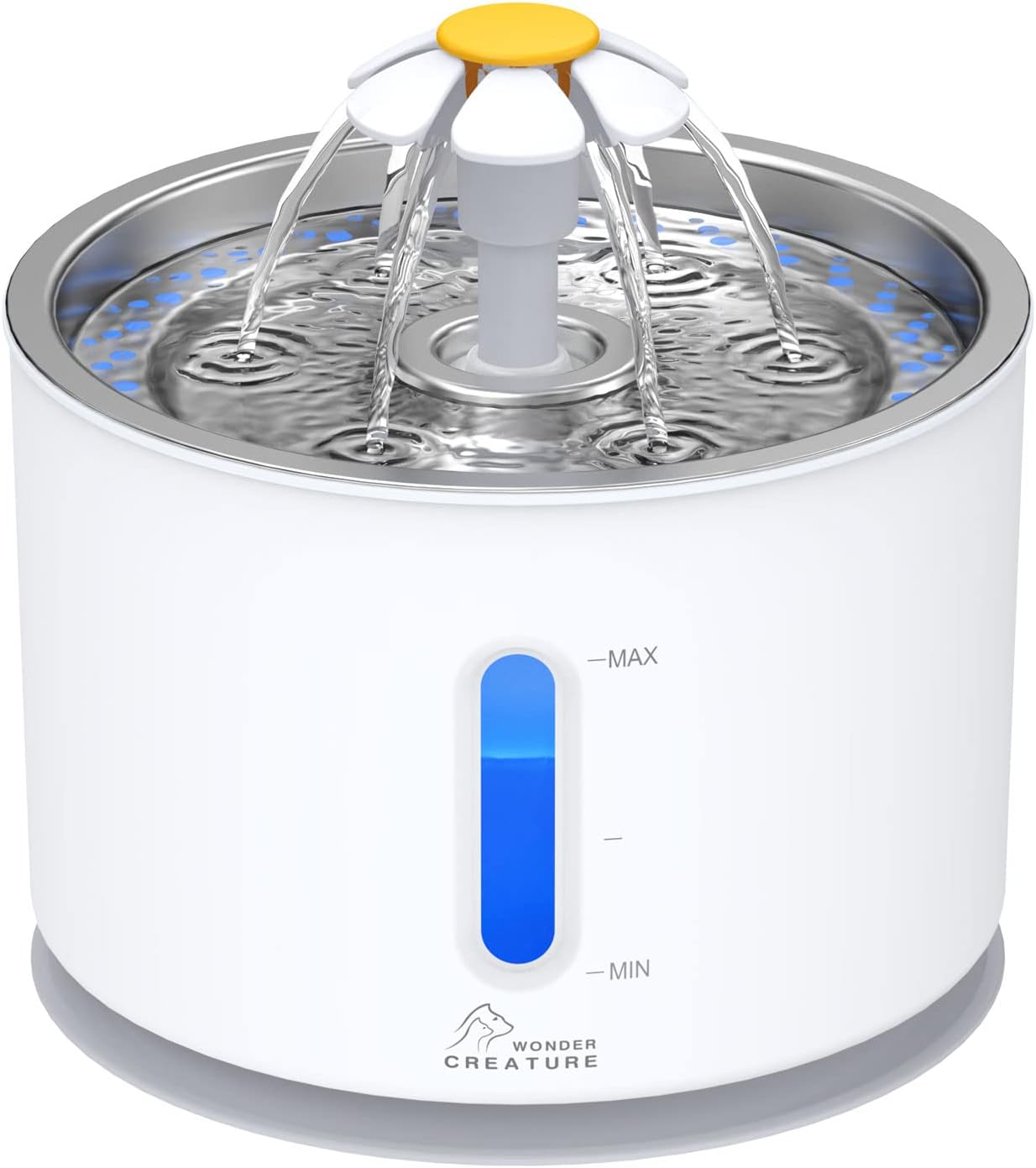
Cats instinctively distrust stagnant water. Pet water fountains that recirculate and oxygenate water can increase consumption by 50-70% compared to bowls. Key features to look for:
- Carbon filtration: Removes chlorine and debris that deter drinking
- Adjustable flow: Some cats prefer gentle trickles, others robust streams
- Stainless steel or ceramic: Plastic can cause feline acne and flavor tainting
- Large capacity: 60+ ounces to maintain freshness
- Quiet pumps: Noise-sensitive cats avoid loud motors
Premium Ceramic Fountain
Vet Recommended
Cepheus 360 Ceramic Pet Fountain
Porcelain construction prevents acne and is dishwasher safe. 70 oz capacity with whisper-quiet pump. Three flow settings accommodate picky drinkers.
Check Amazon Price2. Dietary Moisture: Wet Food Strategies
Transitioning from dry to wet food is the most effective hydration intervention. Canned food contains 75-85% moisture versus 6-10% in kibble. For a 10-pound cat, wet food provides approximately 4-5 ounces of water daily.
Transition Tips
- Mix wet and dry initially (75/25 ratio), gradually increasing wet portion
- Warm wet food slightly (body temperature) to enhance aroma
- Add water or broth to wet food to create "soup"
- Offer multiple small meals rather than free-feeding dry kibble
- Try different textures (pate, chunks, gravy) to find preferences
3. Strategic Water Station Placement
Cats have specific environmental preferences regarding water location:
- Separation from food: Instinct drives cats to avoid water near kill sites (contamination risk)
- Multiple locations: Place bowls on every floor, away from litter boxes
- Wide, shallow dishes: Prevents whisker fatigue; ceramic or stainless steel preferred
- Elevated positions: Some cats prefer drinking from heights
- Fresh daily: Replace water every 12 hours; wash bowls every 2 days
Your 4-Week Hydration Improvement Plan
- Measure current daily water consumption
- Perform skin tenting test to establish baseline
- Count and observe litter box clumps
- Identify current water bowl locations
- Photograph water stations for reference
- Install water fountain in preferred location
- Add 2-3 additional water stations
- Separate water from food bowls
- Switch to wide, shallow ceramic dishes
- Change water twice daily religiously
- Replace 25% of dry food with wet food
- Add water to wet food to create gravy
- Offer unsalted broth as treat
- Remove free-choice dry kibble
- Schedule timed feedings to encourage drinking
- Increase wet food to 50-75% of diet
- Try different fountain flow settings
- Ice cubes in water (some cats love them)
- Track litter box visits and clump size
- Repeat skin turgor test for improvement
Special Cases: Senior Cats and Medical Conditions
Certain populations require intensified hydration protocols:
Senior Cats (10+ years)
Aging kidneys lose concentrating ability, requiring 20-30% more water intake. Senior cats also experience reduced thirst sensation and mobility issues that prevent reaching water sources. Solutions include:
- Multiple water stations on every floor (no stairs required)
- Raised water bowls to reduce neck strain
- Subcutaneous fluid supplementation (discuss with veterinarian)
- Wet food exclusively; add extra water to create soup consistency
Chronic Kidney Disease (CKD)
Renal failure cats cannot concentrate urine, losing water rapidly. These cats need:
- Unlimited access to fresh, flowing water
- Prescription renal diets with enhanced palatability
- Phosphate binders mixed into food (requires adequate hydration)
- Possible at-home subcutaneous fluid therapy (100-200ml daily)
Common Hydration Myths Debunked
| Myth | Reality | Risk Level |
|---|---|---|
| "Cats self-regulate hydration fine" | Cats have low thirst drive; by the time they drink, they're already dehydrated | High |
| "Dry food cleans teeth" | Kibble shatters on contact; provides no significant dental benefit but dehydrates | High |
| "Milk is good for cats" | Most adult cats are lactose intolerant; causes diarrhea and worsens dehydration | Medium |
| "Cats don't like water" | Cats love water just moving, fresh water. Fountains prove this daily | Low |
| "Tap water is unsafe" | Most tap water is fine; some cats prefer filtered to remove chlorine taste | Low |
High-Moisture Wet Food
Hydration Boost
Purina Pro Plan Canned Cat Food
High protein content with 78% moisture. Available in multiple textures for picky eaters. Fortified with taurine and omega fatty acids for overall health.
Check Amazon PriceAdditional Resources
Final Thoughts on Cat Hydration
Cat hydration health is not a luxury consideration it is fundamental preventive medicine. Given that 1 in 3 cats will develop kidney disease in their lifetime, and given that proper hydration can delay this by years while preventing painful urinary issues, investing in fountains, wet food, and strategic water placement is the most cost-effective veterinary care available.
Your cat depends on you to overcome their evolutionary limitations. By implementing the strategies in this guide the fountains, the dietary changes, the environmental modifications you quite literally extend their lifespan and improve their daily comfort. That is the true meaning of responsible pet ownership.