Why Make Your Own Mix?
Creating a DIY guinea pig food mix at home lets you avoid preservatives, fillers, and sugary additives found in some commercial blends. This whole‑grain and herb mixture is designed to be served in small amounts alongside unlimited timothy hay and fresh, Vitamin C‑rich vegetables. It provides variety, essential fatty acids from flaxseed, and gentle fiber from oats and barley.
Table of Contents
Homemade Guinea Pig Grain & Herb Mix
Preservative‑Free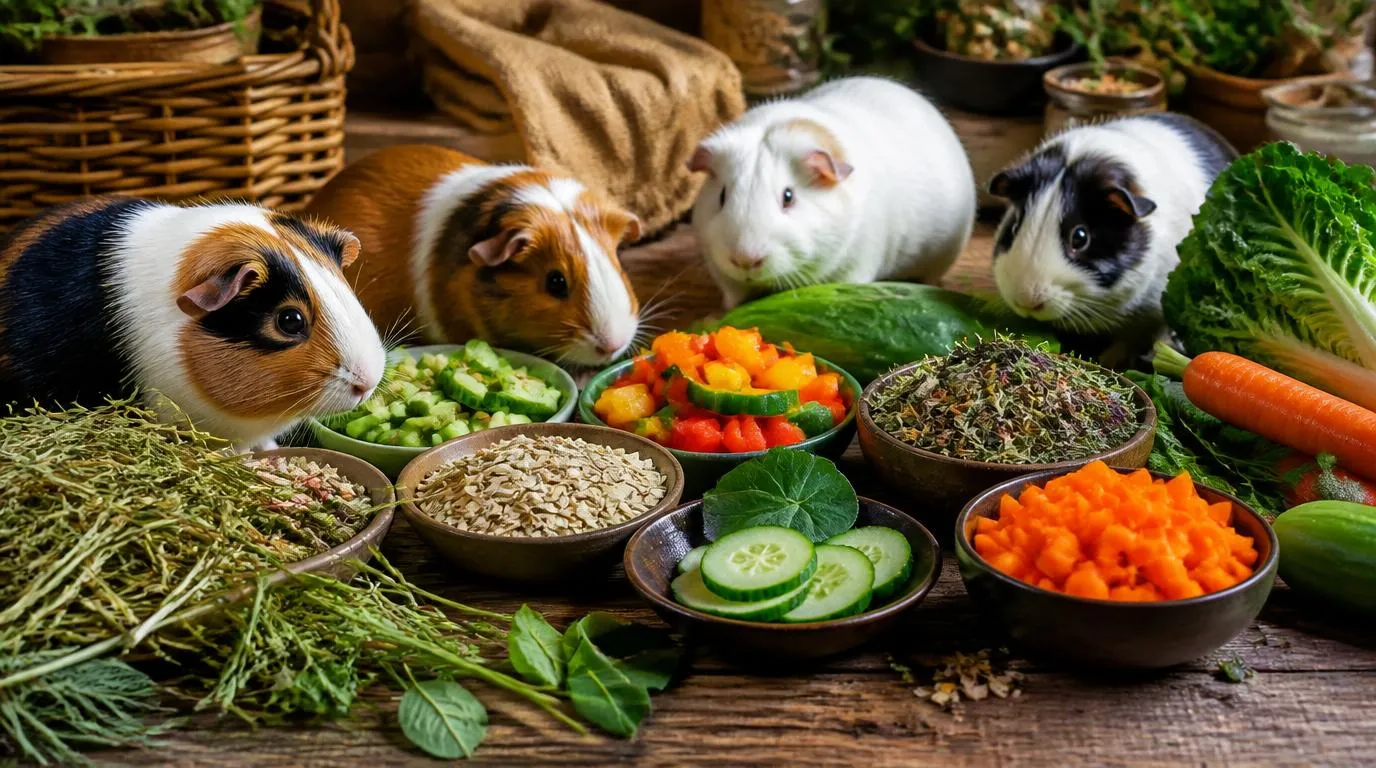
Dry Mix Ingredients
- Rolled oats (old‑fashioned) 1 cup
- Barley flakes ½ cup
- Flaxseed meal (ground flax) 2 tbsp
- Dried chamomile flowers 1 tbsp
- Dried dandelion leaves 1 tbsp
- Dried parsley (crumbled) 1 tsp
- Optional: crushed unsalted sunflower seeds 1 tsp max
No dried fruit, no nuts, no added sugars.
Approx. Nutrition (per 1 tbsp mix)
Step‑by‑Step Instructions
- Combine dry grains: In a large mixing bowl, combine rolled oats and barley flakes. Stir well.
- Add flaxseed meal: Sprinkle flaxseed meal over the grains and mix thoroughly to distribute evenly.
- Incorporate dried herbs: Crush chamomile, dandelion, and parsley slightly between your fingers, then stir into the mixture.
- Optional seeds: If using sunflower seeds, crush them and add no more than 1 teaspoon per 2 cups of mix. (Sunflower seeds are high in fat – use sparingly.)
- Store properly: Transfer the mix to an airtight glass jar or container. Keep in a cool, dark cupboard or refrigerator.
- Serve daily: Offer 1 tablespoon of dry mix per guinea pig per day, alongside unlimited hay and a generous portion of fresh vegetables (especially bell pepper for Vitamin C).
Pro tip: This mix is a supplement, not a complete diet. Hay and fresh veggies must always be the main foods.
Pros & Cons of a DIY Dry Mix
Pros
- No artificial colors, preservatives, or binders.
- Cost‑effective when buying grains in bulk.
- Customizable – adjust herbs based on your guinea pig's preferences.
- Flaxseed provides essential omega‑3 fatty acids.
Cons
- Does not contain added Vitamin C – you must provide fresh veggies daily.
- Grains can become rancid if stored improperly.
- Not a standalone diet; requires hay and vegetables.
Why These Ingredients Work
Ingredient Benefits
- Rolled oats: Gentle, digestible fiber and energy.
- Barley flakes: Adds texture and variety; supports gut health.
- Flaxseed meal: Rich in omega‑3s for skin and coat health.
- Chamomile: Calming properties, supports digestion.
- Dandelion & parsley: Natural source of Vitamin K and antioxidants (parsley high in calcium – use in moderation).
⚠️ Always serve this mix alongside a Vitamin C source like red bell pepper or cilantro.
How to Incorporate the DIY Mix
- Portion: 1 tablespoon per adult guinea pig, once daily (morning or evening).
- With fresh food: Place the dry mix in a separate small bowl or sprinkle over vegetables.
- Hay first: Ensure unlimited timothy hay is available at all times – it should be 80% of the diet.
- Vegetables: Provide 1 cup of mixed guinea‑safe veggies daily (bell pepper, romaine, cilantro, cucumber).
- Water: Fresh, clean water in a heavy bowl or sipper bottle.
Customizing Your DIY Mix
Try These Swaps & Additions
- Grain alternatives: Replace barley flakes with quinoa flakes or spelt flakes (soak before feeding if hard).
- Herb blends: Add dried mint, lemon balm, or plantain leaf for variety.
- For senior pigs: Soak the mix in a little water for 10 minutes to soften grains.
- For weight gain: Add a tiny amount (¼ tsp) of crushed sunflower seeds temporarily.
Must‑Have Items for Making the Mix
Recommended Tools
- Large mixing bowl & spoon – Check price on Amazon
- Airtight glass jar – Check price on Amazon
- Kitchen scale (optional) – Check price on Amazon
- Small ceramic serving bowl – Check price on Amazon
As an Amazon Associate we earn from qualifying purchases.
Keeping Your DIY Mix Fresh & Safe
Storage Do's & Don'ts
- Do store in an airtight container in a cool, dark pantry or refrigerator.
- Do use within 6 weeks for optimal freshness (flaxseed can go rancid).
- Do not leave the mix in direct sunlight or near heat sources.
- Do not feed if you notice a musty smell, clumping, or signs of mold.
- Do not add fresh vegetables to the bulk container – they will cause spoilage.
Start Your DIY Guinea Pig Food Mix Today
Making your own DIY guinea pig food mix at home is rewarding, economical, and gives you full control over ingredients. Remember that this mix is a supplement – unlimited hay and fresh, Vitamin C‑rich vegetables are non‑negotiable for a healthy guinea pig. With proper storage and portion control, your cavy will enjoy the variety and you'll have peace of mind knowing exactly what they're eating.
Frequently Asked Questions
Can this DIY mix replace pellets entirely?
This mix can be part of a pellet‑free diet, but you must provide a reliable daily source of Vitamin C (bell pepper, cilantro) and ensure variety in vegetables. Some owners still include a small amount of high‑quality pellets for guaranteed vitamin balance.
How much of this mix should I feed per day?
1 tablespoon per adult guinea pig, once daily. Reduce to ½ tablespoon if your guinea pig is overweight or sedentary.
Is flaxseed safe for guinea pigs?
Yes, ground flaxseed (flaxseed meal) is safe in small amounts. It provides beneficial omega‑3 fatty acids. Do not feed whole flaxseeds as they are hard to digest.
Can I add dried fruit to the mix?
No. Dried fruit is concentrated in sugar and can lead to obesity and diabetes. Stick to fresh fruit as an occasional treat (once a week).
How long does the mix last in the fridge?
Refrigerated in an airtight container, the mix stays fresh for up to 8 weeks. For longer storage, freeze in a sealed bag for up to 4 months.