Teaching your dog essential commands is one of the most important responsibilities of dog ownership. Beyond simple obedience, these commands establish communication, ensure safety, and strengthen the bond between you and your canine companion. In this comprehensive 2026 guide, we will cover everything from basic commands to advanced training techniques, providing you with the knowledge to effectively communicate with your dog.
Whether you are training a new puppy or working with an older dog, understanding proper command training methods can transform your relationship. Well-trained dogs are happier, safer, and more confident. This guide incorporates the latest positive reinforcement techniques and scientific understanding of canine learning behavior.
Table of Contents

Why Command Training Matters
Command training goes far beyond simple obedience. It establishes a common language between you and your dog, creating clearer communication and preventing misunderstandings. Research shows that dogs trained with consistent commands experience less stress and exhibit fewer behavioral problems.
The benefits of proper command training include:
- Safety: Commands like "come," "stay," and "leave it" can prevent dangerous situations
- Bonding: Training builds trust and strengthens your relationship
- Mental Stimulation: Learning commands challenges your dog's mind
- Socialization: Well-trained dogs are more welcome in public spaces
- Behavior Management: Commands provide alternatives to unwanted behaviors
- Confidence: Dogs gain confidence through successful learning
Training Tip
The optimal time for training sessions is when your dog is slightly hungry (before meals) and moderately energetic. Keep sessions short 5-15 minutes and always end on a positive note with a successful command and reward. Research shows that dogs learn best through short, frequent sessions rather than long, infrequent ones.
Recommended Training Tool
Editor's Choice
PetSafe Clik-R Dog Training Clicker
Professional-grade training clicker with wrist strap. Perfect for marker training, which speeds up command learning by 40-60%. The clear, consistent sound helps dogs associate behaviors with rewards more quickly than voice commands alone.
Check Amazon Price2026 Training Methods: What Works
Training methodologies have evolved significantly. While traditional methods relied on correction and dominance, modern science supports positive reinforcement as the most effective and humane approach. Here are the methods backed by current canine behavioral research:
Positive Reinforcement
Reward desired behaviors with treats, praise, or play. This method builds trust and enthusiasm for learning. Studies show dogs trained with positive reinforcement learn faster and retain commands longer.
Marker Training
Using a clicker or verbal marker to precisely mark desired behaviors. The marker tells the dog exactly what they did right, making learning more efficient. This method is particularly effective for complex commands.
Alpha/Dominance Theory
Outdated and disproven. Based on flawed wolf studies, this approach can damage trust and increase aggression. Modern behavioral science shows dogs respond better to leadership based on mutual respect.
Shaping
Rewarding successive approximations toward a desired behavior. Break complex commands into small steps, rewarding progress at each stage. This method is excellent for teaching advanced tricks and behaviors.
7 Essential Basic Commands Every Dog Should Know
These foundational commands provide the basis for all further training and ensure basic safety and control. Master these before moving to more advanced training.
| Command | Purpose | Difficulty | Average Training Time |
|---|---|---|---|
| Sit | Basic control, prevents jumping | Easy | 1-3 days |
| Stay | Safety, impulse control | Easy-Medium | 3-7 days |
| Come | Safety recall, off-leash control | Medium | 1-2 weeks |
| Down | Calming, settling behavior | Easy-Medium | 3-7 days |
| Leave It | Prevents picking up dangerous items | Medium-Hard | 1-3 weeks |
| Drop It | Release objects from mouth | Medium | 1-2 weeks |
| Heel | Proper leash walking | Medium-Hard | 2-4 weeks |
How to Teach "Sit"
The "sit" command is usually the first taught because it is natural for dogs and easy to capture. Follow these steps:
- Hold a treat close to your dog's nose
- Slowly move the treat upward and slightly back over their head
- As their head follows the treat, their bottom will naturally lower
- The moment their bottom touches the ground, say "Yes!" or click your clicker
- Immediately give the treat and praise
- Repeat 5-10 times per session, 2-3 sessions daily
How to Teach "Stay"
"Stay" teaches impulse control and is crucial for safety. Start with short durations and distances:
- Ask your dog to sit
- Show your palm like a stop sign and say "Stay" clearly
- Take one step back, pause for 1 second, then return
- If they remained in position, reward immediately
- Gradually increase duration (seconds to minutes) and distance (steps to rooms)
- Always release with a release word like "Okay!" or "Free!"
How to Teach "Come"
The recall command ("come") is potentially life-saving. Make it the most rewarding command:
- Start indoors with minimal distractions
- Say your dog's name followed by "Come!" in an excited, happy tone
- When they come to you, reward with high-value treats and enthusiastic praise
- Never use "come" for negative things (baths, nail trims, scolding)
- Practice with a long leash outdoors before trying off-leash
- Gradually increase distance and distractions

5 Intermediate Commands for Better Control
Once your dog has mastered the basics, these intermediate commands provide additional control and mental stimulation:
Place/Bed
Teaches your dog to go to a specific mat or bed and settle there. Excellent for managing guests, mealtimes, or when you need your dog out of the way.
Wait
Different from "stay" - teaches your dog to pause at doors, before crossing streets, or before eating. Creates impulse control in specific situations.
Off
Teaches your dog to get off furniture, people, or counters. More effective than "no" because it tells the dog what to do instead.
Find It
Mental stimulation game where your dog searches for hidden treats or toys. Builds nose work skills and provides enrichment.
Touch
Teaching your dog to touch their nose to your hand or a target stick. Useful for teaching other behaviors, building focus, and gentle redirection.
High-Value Training Treats
Best Seller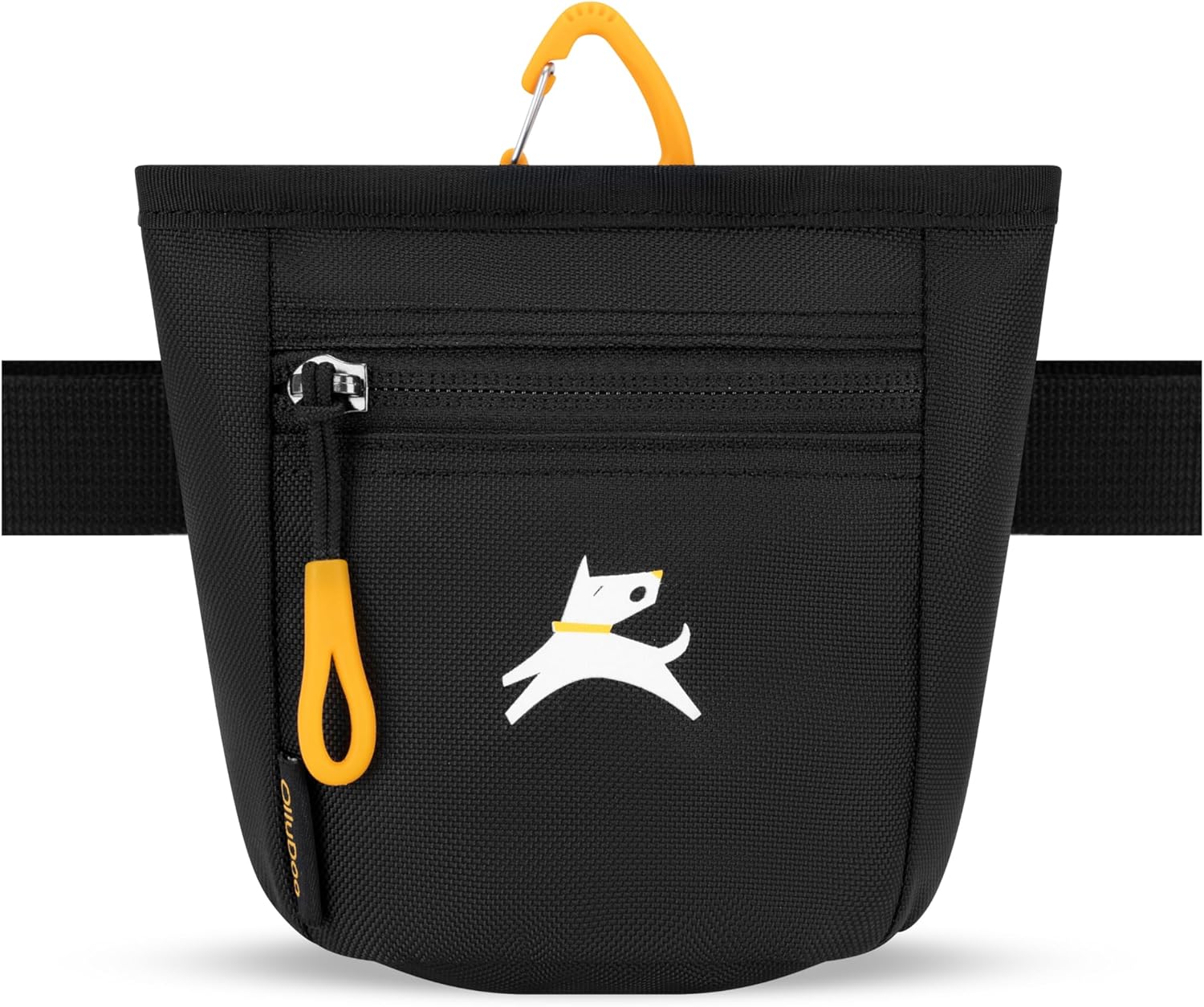
Zuke's Mini Naturals Training Treats
Soft, moist treats perfect for training sessions. Small size allows for frequent rewards without overfeeding. Made with real meat as first ingredient and no artificial preservatives. Available in multiple protein options for dogs with sensitivities.
Check Amazon Price8-Week Command Training Timeline
This progressive timeline shows what you can realistically achieve with consistent training. Remember that every dog learns at their own pace adjust as needed.
Foundation Building
Focus: Name recognition, attention, and
"sit" command
Daily practice: 2-3 sessions of 5-10
minutes
Goal: Dog responds to name and sits
reliably indoors with minimal distractions
Core Commands
Focus: "Down," "stay" (short duration),
"come" (short distance)
Daily practice: 3 sessions of 5-15
minutes
Goal: All basic commands reliable indoors,
beginning outdoor practice
Proofing & Distractions
Focus: Increasing duration/distance, adding
mild distractions
Daily practice: 2-3 sessions, vary
locations
Goal: Commands reliable in backyard, with
family distractions
Advanced & Real-World
Focus: "Leave it," "drop it," "heel,"
public practice
Daily practice: Incorporate into daily
activities
Goal: Reliable commands in public spaces
with moderate distractions
Common Training Mistakes to Avoid
- Inconsistent cues: Using different words for the same command
- Training when frustrated: Dogs sense emotions; stay patient
- Too long sessions: Short, frequent sessions are more effective
- Lack of proofing: Not practicing in different environments
- No gradual progression: Increasing difficulty too quickly
- Negative associations: Using commands for unpleasant activities
- Expecting perfection: All dogs make mistakes; focus on progress
Breed-Specific Training Considerations
Different breeds have different learning styles and motivations. Understanding your dog's breed characteristics can make training more effective:
Herding Breeds
Examples: Border Collies, Australian
Shepherds
Training approach: High mental stimulation,
complex tasks
Motivation: Work satisfaction, praise, toys
Scent Hounds
Examples: Beagles, Basset Hounds
Training approach: Scent-based games,
high-value treats
Challenge: Distractibility by smells
Companion Breeds
Examples: Cavaliers, Pugs, Maltese
Training approach: Gentle, reward-based,
short sessions
Motivation: Affection, praise, soft treats
Guardian Breeds
Examples: German Shepherds, Rottweilers
Training approach: Clear leadership,
consistent rules
Motivation: Purpose-driven tasks,
structured work
Pro Training Tip
For stubborn or independent breeds (like Shiba Inus, Huskies, or Afghan Hounds), make training a game. Use their natural curiosity and make commands seem like their idea. These breeds respond better to "what's in it for me" motivation rather than wanting to please. High-value treats and making training sessions fun and unpredictable works best.

Dog Command Training FAQs
How old should my puppy be to start command training?
You can start basic training as early as 8 weeks old. Focus on short, positive sessions (2-5 minutes) teaching name recognition, gentle handling, and simple commands like "sit." Socialization is equally important at this age. Formal obedience training typically begins around 3-4 months when puppies have better focus and bladder control.
Can you teach an old dog new commands?
Absolutely! Older dogs can learn new commands, though they may take slightly longer than puppies. The key is patience, consistency, and using high-value rewards. Senior dogs often have better focus than puppies and can learn complex behaviors. Adjust training to accommodate any physical limitations like arthritis or hearing/vision loss.
What if my dog doesn't respond to treats during training?
Try different motivators: higher-value treats (cheese, chicken, hot dogs), toys, or praise/physical affection. Ensure your dog isn't full train before meals. Some dogs are more play-motivated than food-motivated. If treats still don't work, consult your veterinarian to rule out medical issues affecting appetite.
How many commands should I teach at once?
Start with one command at a time. Once your dog responds reliably (80-90% success rate) in low-distraction environments, you can begin introducing a second command. Typically, focus on mastering 1-2 commands before adding more. Too many at once can confuse your dog and slow overall progress.
Should I use hand signals with verbal commands?
Yes! Hand signals enhance communication and are especially helpful for dogs with hearing loss or in noisy environments. Dogs naturally pay attention to body language. Use consistent, clear hand signals paired with verbal commands. Many dogs learn hand signals faster than verbal cues.
How do I train my dog without treats?
Use other rewards: praise, petting, play with a favorite toy, or life rewards (going for a walk, opening a door). The key is finding what motivates your specific dog. You can also phase out treats gradually once a behavior is learned by switching to intermittent reinforcement (rewarding randomly rather than every time).
What's the most important command for safety?
"Come" (reliable recall) is the most important safety command. A dog that comes when called can be prevented from running into traffic, approaching aggressive dogs, or getting lost. "Leave it" is a close second for preventing ingestion of dangerous items. Both should be practiced regularly throughout your dog's life.
How long does it take to fully train a dog?
Basic obedience (7 essential commands) typically takes 4-8 weeks with consistent daily training. However, training is an ongoing process. Dogs need continued practice and "proofing" (practicing in different environments) throughout their lives. Advanced training and perfecting reliability can take several months to a year.
What should I do if my dog knows commands but ignores them?
This is usually a motivation or proofing issue. Go back to basics in a low-distraction environment with high-value rewards. Ensure you're not giving commands you can't enforce. If the issue persists, consider whether your dog understands the command in that context (dogs don't generalize well) or if there are medical issues affecting behavior.
Are group classes or private training better?
Group classes are excellent for socialization, learning around distractions, and basic obedience. Private training is better for specific behavior issues, shy/fearful dogs, or if you want personalized attention. Many owners do both: group classes for foundation and private sessions for specific challenges.
Final Thoughts on Dog Command Training
Teaching your dog commands is about more than obedience it is about building a language through which you can communicate, ensuring safety, and deepening your bond. Remember that every dog learns at their own pace, and consistency is more important than perfection.
The most successful training happens when it is integrated into daily life, not just during formal sessions. Use commands during walks, before meals, when guests arrive, and during play. This helps your dog understand that commands are part of your shared life, not just arbitrary exercises.
Celebrate small victories, be patient with setbacks, and always end training sessions on a positive note. The time you invest in training will pay dividends in a happier, safer, and better-behaved companion for years to come.