A dog harness is more than just an alternative to a collar. It is a crucial piece of equipment that can improve your dog's comfort, safety, and walking experience. But with so many types available, how do you choose the right one? In this comprehensive 2026 guide, we will explore everything you need to know about dog harnesses, from the different types and their purposes to proper sizing and essential safety features.
Understanding dog harness types and learning to select the right fit could prevent injuries, improve control during walks, and make outings more enjoyable for both you and your dog. Whether you have a small puller, a large escape artist, or a senior dog with mobility issues, this guide will help you find the perfect harness solution.
Table of Contents
- Why Use a Dog Harness: Benefits Over Collars
- Types of Dog Harnesses Explained
- How to Measure and Fit a Harness Properly
- Choosing the Right Harness for Your Dog
- Essential Safety Features in 2026 Harnesses
- Top 3 Recommended Harnesses for Different Needs
- Common Harness Mistakes to Avoid
- Harness Maintenance and Care
- Harnesses for Special Needs Dogs
- Frequently Asked Questions

Why Use a Dog Harness: Benefits Over Collars
While collars have their place for identification purposes, harnesses offer significant advantages for walking and control:
Reduced Neck Strain
Traditional collars put pressure on the trachea, which can cause coughing, gagging, and in severe cases, tracheal collapse. Harnesses distribute pressure across the chest and shoulders.
Better Control
Front-clip harnesses provide gentle steering control without choking. This is especially helpful for training pullers or managing reactive dogs.
Escape Prevention
Properly fitted harnesses are much harder to escape from than collars. This is crucial for breeds like Greyhounds or dogs with narrow heads.
Comfort and Safety
Well-padded harnesses prevent chafing and provide comfortable support. They're also safer for car travel when used with proper attachments.
Did You Know?
According to veterinary studies, dogs walked on harnesses show 30% less stress behavior during walks compared to those walked on traditional collars. The American Veterinary Medical Association recommends harnesses for dogs with respiratory issues or neck injuries.
Editor's Choice: Best All-Around Harness
Top Rated
Kurgo Tru-Fit Smart Harness
Versatile 5-point adjustment harness with front and back clip options. Crash-tested for car safety and made with durable, padded materials. Includes seatbelt tether for safe car travel.
Check Amazon PriceTypes of Dog Harnesses Explained
Understanding the different harness types is key to choosing the right one for your dog's needs. Here are the main categories:
Harness Type Comparison
| Type | Best For | Clip Position | Control Level |
|---|---|---|---|
| Front-Clip | Pullers, training, steering control | Chest area | High |
| Back-Clip | Calm walkers, comfort, car safety | Between shoulder blades | Medium |
| Dual-Clip | Versatility, training transitions | Front and back | Adjustable |
| Step-In | Dogs who dislike overhead harnesses | Usually back | Medium |
| No-Pull | Strong pullers, training | Front (often with martingale) | Very High |
| Vest/H-style | Even pressure distribution, comfort | Back or dual | Medium-High |
Note: The best type depends on your dog's size, behavior, and your training goals.
Front-Clip Harnesses
When your dog pulls, the front attachment turns them gently toward you, discouraging pulling. Excellent for training but can cause some dogs to twist if not fitted properly.
Car Safety Harnesses
Specifically crash-tested to protect dogs during car travel. Look for certifications from the Center for Pet Safety.
Adventure/Activity Harnesses
Built for durability with multiple attachment points for gear. Often include handle for assistance over obstacles or water rescue.
Reflective/Safety Harnesses
High-visibility designs with reflective strips or LED lights for nighttime walks. Essential for urban areas or low-light conditions.
Best No-Pull Training Harness
Training Recommended
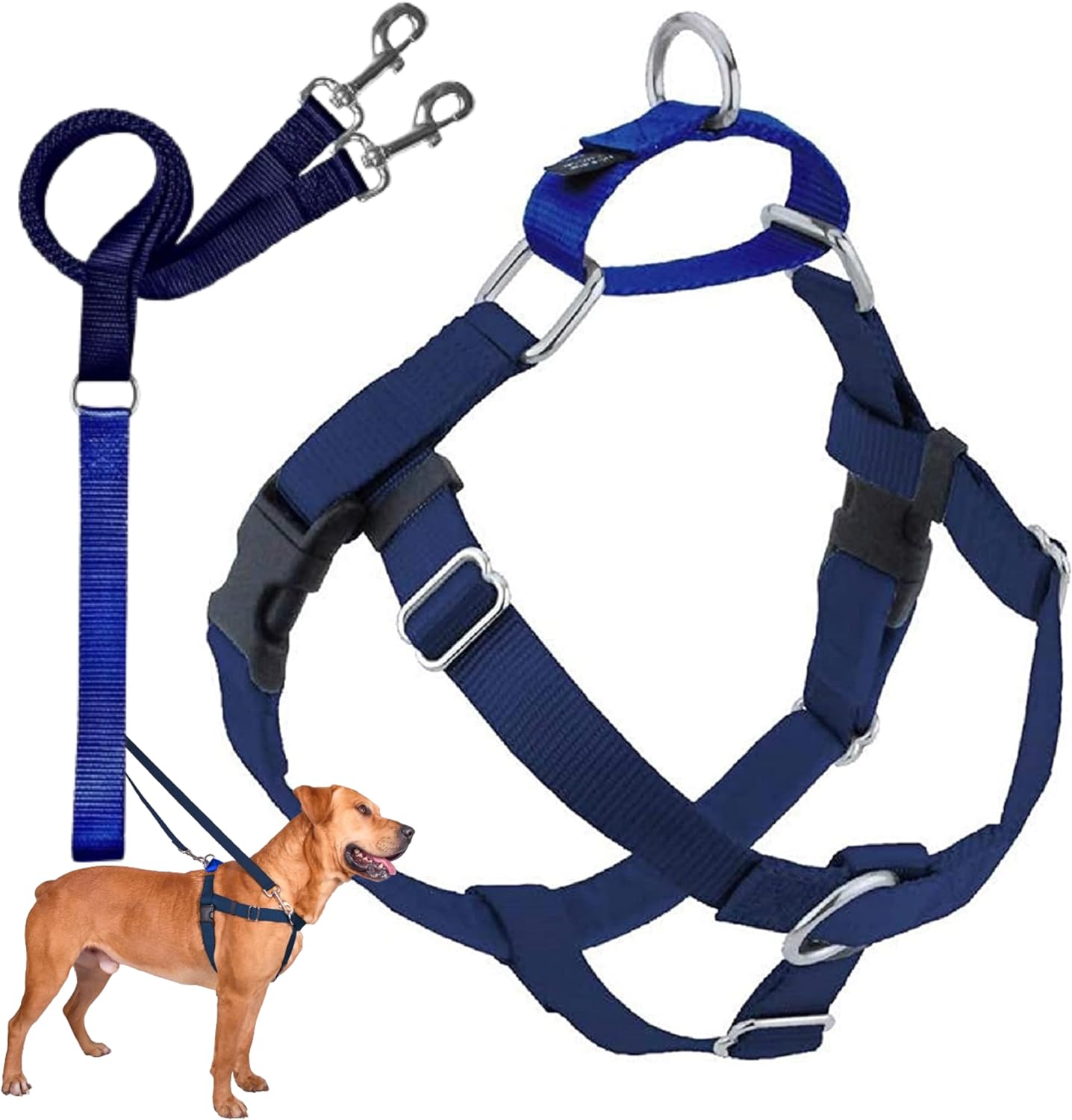
PetSafe Easy Walk No-Pull Harness
Front-clip design gently discourages pulling by steering dogs to the side. Martingale-style chest strap prevents chafing. Quick-snap buckles make it easy to put on and remove.
Check Amazon PriceHow to Measure and Fit a Harness Properly
A harness that doesn't fit properly can be uncomfortable, ineffective, or even dangerous. Follow these steps for perfect fitting:
Measure Your Dog
Use a soft measuring tape to measure around the widest part of your dog's chest (right behind the front legs). Add 1-2 inches for comfort. Also measure the neck circumference if the harness goes over the head.
Check Size Charts
Every brand has different sizing. Compare your dog's measurements to the manufacturer's size chart. If between sizes, size up for comfort or down for better control, depending on your needs.
Test the Fit
You should be able to fit two fingers comfortably under any strap. The harness shouldn't restrict shoulder movement or breathing. Check for chafing points at the armpits and chest.
Adjust for Growth
Puppies and younger dogs need frequent size checks. Adjustable harnesses with multiple buckle points are ideal for growing dogs. Re-measure every 3-6 months for puppies.
Dog Harness Sizing Guide
| Size | Chest Measurement | Weight Range | Common Breeds |
|---|---|---|---|
| X-Small | 10-15 inches | 2-10 lbs | Chihuahua, Yorkie, Pomeranian |
| Small | 15-20 inches | 10-25 lbs | Beagle, Cocker Spaniel, French Bulldog |
| Medium | 20-26 inches | 25-50 lbs | Border Collie, Australian Shepherd, Bulldog |
| Large | 26-32 inches | 50-80 lbs | Labrador, Golden Retriever, German Shepherd |
| X-Large | 32-40 inches | 80-120+ lbs | Great Dane, Mastiff, Saint Bernard |
Fitting Tips for Unique Body Types
- Deep-chested breeds (Greyhounds, Dobermans): Look for harnesses with longer chest pieces and adjustable girth straps
- Broad-chested breeds (Bulldogs, Pugs): Wide, padded chest plates work best to distribute pressure evenly
- Small dogs with delicate frames (Toy breeds): Lightweight, soft harnesses prevent strain on delicate bones
- Dogs with lots of fur (Huskies, Malamutes): Measure over the fur, and look for harnesses that won't mat or pull hair

Choosing the Right Harness for Your Dog
Selecting the perfect harness involves considering your dog's size, behavior, and your specific needs:
For Training & Pullers
Best options: Front-clip harnesses, no-pull
designs with martingale loops
Key features: Front attachment, gentle
steering action, escape-proof design
Recommended: PetSafe Easy Walk, Freedom
No-Pull Harness
For Car Safety
Best options: Crash-tested harnesses with
seatbelt attachments
Key features: Center for Pet Safety
certified, reinforced stitching, padded straps
Recommended: Kurgo Tru-Fit, Sleepypod
Clickit Sport
For Active Dogs
Best options: Adventure harnesses with
handles and gear loops
Key features: Durable materials, multiple
attachment points, padded handles
Recommended: Ruffwear Front Range, Hurtta
Adventure Harness
For Special Needs
Best options: Support harnesses, wheelchair
compatible, step-in designs
Key features: Extra handles, weight
distribution, easy on/off
Recommended: Help 'Em Up Harness,
GingerLead Support Harness
Essential Safety Features in 2026 Harnesses
Modern harnesses include innovative safety features. Here is what to look for:
High-Visibility Materials
Reflective strips or entire panels that shine when headlights hit them. Some have LED lights or glow-in-the-dark elements for maximum visibility.
Escape-Proof Design
Multiple adjustment points, martingale-style tightening, and strategic strap placement prevent clever escape artists from backing out of their harnesses.
Crash Test Certification
Independent testing by organizations like the Center for Pet Safety ensures the harness will protect your dog in a car accident.
Quick-Release Buckles
Easy-to-use buckles that can be opened with one hand, crucial in emergencies or if your dog gets tangled.
Safety Warning: Harness Dangers to Avoid
- Poorly fitting harnesses: Can cause chafing, restrict movement, or allow escape
- Cheap materials: Weak buckles or stitching can break under stress
- Front-clip misuse: Can cause shoulder strain if dog constantly twists against it
- Car safety false claims: Only use crash-tested harnesses for car travel
- All-day wear: Remove harness when not walking to prevent matting and skin irritation
Always supervise your dog when first using a new harness and check regularly for signs of wear or discomfort.
Best Car Safety Harness
Crash Tested
Sleepypod Clickit Sport Harness
Center for Pet Safety certified crash-tested harness. Reinforced webbing and aerospace-grade aluminum buckles. Includes seatbelt tether and padded chest plate for comfort.
Check Amazon PriceCommon Harness Mistakes to Avoid
Even with the right harness, improper use can cause problems. Watch out for these common errors:
| Mistake | Consequence | Solution |
|---|---|---|
| Too loose | Dog can escape, straps can get caught on objects | Adjust to fit two fingers comfortably under straps |
| Too tight | Chafing, restricted movement, breathing issues | Check for red marks after removal, ensure full range of motion |
| Wrong clip position | Reduced control or unnatural pressure points | Use front clip for training, back clip for casual walks |
| Wearing 24/7 | Matting, skin irritation, hidden injuries | Remove harness when not walking, check skin regularly |
| Ignoring wear and tear | Sudden failure during use, potential injury | Inspect regularly, replace worn harnesses immediately |
Harness Maintenance and Care
Proper care extends your harness's life and ensures continued safety:
- Check stitching for fraying or unraveling
- Test buckles for smooth operation
- Look for metal corrosion or plastic cracking
- Inspect webbing for wear or damage
- Perform inspections weekly
- Follow manufacturer's cleaning instructions
- Most nylon harnesses: Hand wash in mild detergent
- Air dry completely before storing
- Never use bleach or harsh chemicals
- Clean monthly or when visibly soiled
- Store in dry, cool place away from sunlight
- Hang or lay flat to maintain shape
- Avoid storing in car where temperatures fluctuate
- Keep away from chewing hazards (other pets)
- Consider seasonal storage for specialized harnesses
- Replace every 1-2 years with regular use
- Immediate replacement if any damage detected
- Upgrade when dog outgrows current size
- Consider new harness for changing needs
- Retire car safety harnesses after any accident
Eco-Friendly Harness Options
Sustainable harness materials are becoming more common in 2026:
- Recycled materials: Harnesses made from recycled plastic bottles or ocean plastic
- Natural fibers: Hemp, organic cotton, or bamboo blends
- Biodegradable components: Buckles and hardware that break down more easily
- Repair programs: Brands that offer repair services instead of replacement
- Take-back programs: Companies that recycle old harnesses when you buy new ones

Harnesses for Special Needs Dogs
Specialized harnesses can dramatically improve quality of life for dogs with specific challenges:
Mobility Support
Harnesses with extra handles help lift dogs with arthritis, hip dysplasia, or recovering from surgery. Look for even weight distribution and padded handles.
Blind/Deaf Dogs
Bright colors and "Do Not Pet" patches help communicate your dog's needs. Handle attachments provide gentle guidance for navigation assistance.
Anxious/Reactive Dogs
Front-clip harnesses provide better control. Bright yellow or red harnesses can signal other owners to give space. Some include calming pressure points.
Brachycephalic Breeds
Special designs for flat-faced breeds avoid pressure on the trachea. Wide, padded chest plates distribute force away from the neck entirely.
Luna's Story: How the Right Harness Changed Everything
When Luna, a 9-year-old German Shepherd, developed severe arthritis in her hips, her owners thought her walking days were over. She struggled to stand up and refused to go on walks.
After consulting with a veterinary physiotherapist, they invested in a proper support harness with front and rear handles. The transformation was remarkable:
- Week 1: Luna could stand with assistance from the rear handle
- Month 1: Short walks around the block became possible
- Month 3: She regained muscle tone and showed improved mobility even without the harness
- Month 6: While she still needed assistance for longer walks, her quality of life had dramatically improved
Luna's story shows how the right equipment, combined with proper veterinary care, can extend a dog's active years and improve their wellbeing.
Additional Resources
Final Checklist Before You Buy
Before purchasing any harness, ask yourself these questions:
- ✅ Does it fit my dog's current measurements (with room for adjustment)?
- ✅ Is it designed for my primary use (training, car safety, hiking)?
- ✅ Does it have the necessary safety features (reflective, sturdy buckles)?
- ✅ Is it made from quality materials with good stitching?
- ✅ Can my dog move naturally without restriction?
- ✅ Is it easy for me to put on and take off?
- ✅ Does it address my dog's specific needs or challenges?
- ✅ Is it from a reputable brand with good customer reviews?
If you can answer "yes" to all these questions, you've likely found a great harness for your dog!