Why Fresh Vegetables Are Essential
Guinea pigs cannot produce their own Vitamin C, making fresh vegetables a daily necessity. A healthy homemade guinea pig food with vegetables provides natural hydration, fiber, and essential nutrients that prevent scurvy and support digestion. This recipe combines a simple dry mix with a rainbow of guinea‑safe veggies for optimal health.
Table of Contents
Veggie‑Rich Guinea Pig Bowl
High Vitamin C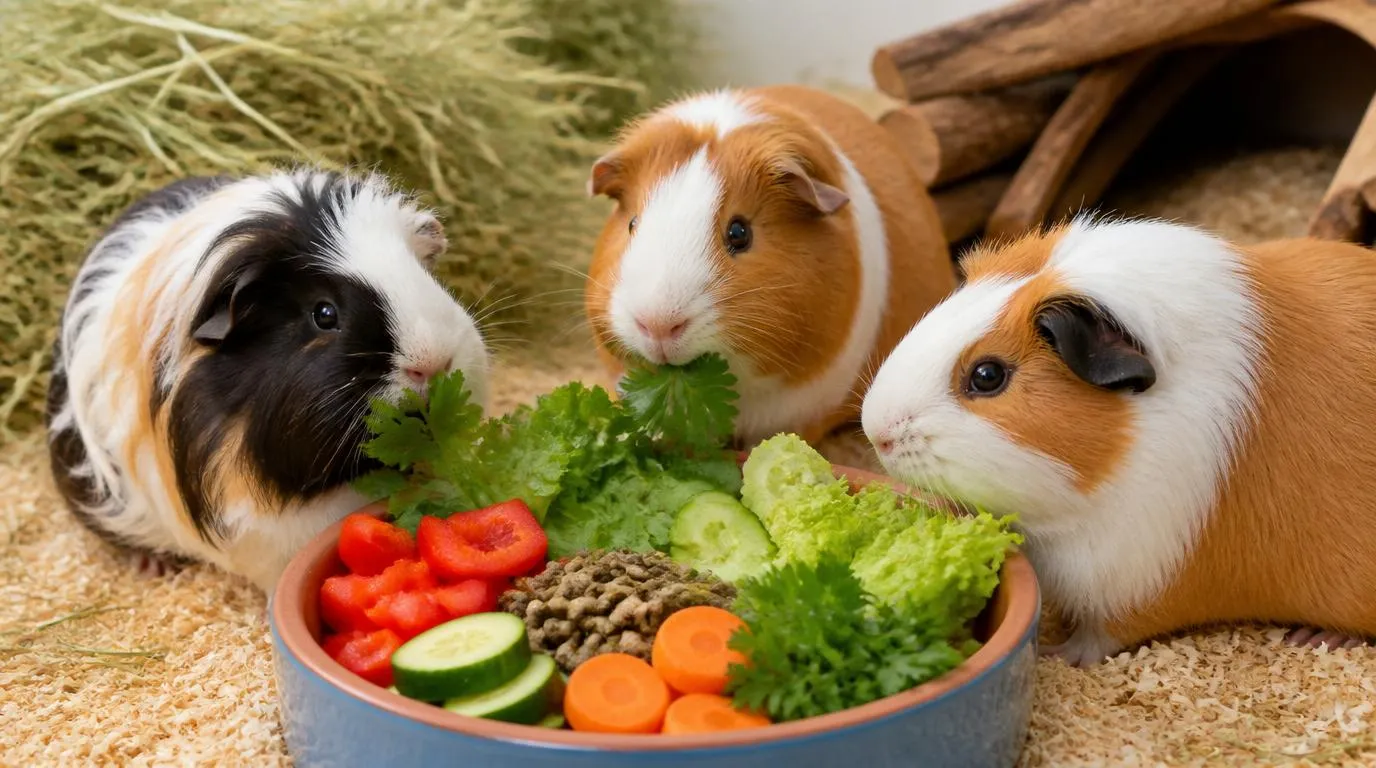
Ingredients (Daily Portion)
- Red bell pepper (diced) 1 small slice
- Cilantro or parsley 4-5 sprigs
- Cucumber (sliced) 2 thin rounds
- Romaine lettuce 1 medium leaf
- Plain guinea pig pellets (fortified) 2 tbsp
- Timothy hay unlimited
Optional: zucchini, carrot (small piece), dandelion greens. Avoid spinach/kale daily due to oxalates.
Nutritional Highlights (per bowl)
Step‑by‑Step (Fresh Veggie Focus)
- Wash all vegetables thoroughly under cool running water.
- Chop into small, bite‑sized pieces – remove seeds from bell pepper, peel cucumber if desired.
- Combine in a clean ceramic bowl: pellets on one side, veggies on the other.
- Serve immediately and remove any uneaten fresh food after 4‑6 hours.
- Always provide unlimited timothy hay in a separate rack.
- Fresh water daily in a heavy bowl or sipper bottle.
Pros & Cons of a Vegetable‑Rich Diet
Pros
- Prevents scurvy with natural Vitamin C.
- Increases hydration and urinary health.
- Encourages natural foraging behavior.
- Variety reduces picky eating.
Cons
- Requires daily preparation and removal of leftovers.
- Some veggies are high in calcium/oxalates (moderation needed).
- Cost of organic produce can add up.
Top 5 Healthiest Vegetables for Guinea Pigs
Best Veggie Choices
- Red Bell Pepper – Highest Vitamin C content (double green peppers).
- Cilantro / Parsley – Antioxidants and digestive aid (parsley high in calcium, use moderate).
- Cucumber – Hydrating and low in calories.
- Romaine Lettuce – Safe daily green; never iceberg.
- Zucchini – Great source of potassium and fiber.
⚠️ Limit fruits (high sugar) to once a week. Avoid onion, garlic, avocado, rhubarb.
Daily Feeding Guidelines for Adults
- Hay: Unlimited timothy or meadow hay (80% of diet).
- Fresh vegetables: 1 cup per guinea pig per day, divided into two meals.
- Pellets: 1/8 to 1/4 cup (choose plain, no seeds/dried fruit).
- Vitamin C supplement: Only if vet recommends; fresh veggies usually suffice.
- Transition slowly: Introduce new vegetables one at a time to monitor digestion.
Seasonal & Special Need Variations
Mix It Up
- Summer: Add fresh dill, summer squash, and a small piece of watermelon rind.
- Winter: Increase bell pepper and offer winter squash (steamed slightly).
- Pregnant/nursing: Add alfalfa hay and extra parsley for calcium/protein.
- Senior guinea pigs: Finely chop vegetables to make them easier to eat.
Must‑Have Items for Fresh Veggie Prep
Recommended Tools
- Large mixing bowl & spoon – Check price on Amazon
- Airtight glass jar – Check price on Amazon
- Kitchen scale (optional) – Check price on Amazon
- Small ceramic serving bowl – Check price on Amazon
As an Amazon Associate we earn from qualifying purchases.
Keeping Vegetables Fresh & Safe
Food Safety
- Refrigerate produce in crisper drawer; use within 3‑5 days.
- Never feed wilted or moldy vegetables – can cause bloat.
- Remove uneaten fresh food after 4‑6 hours to prevent bacterial growth.
- Wash hands and tools before each feeding to avoid cross‑contamination.
Start Serving Veggie Meals Today
Providing healthy homemade guinea pig food with vegetables is one of the best things you can do for your cavy. With this easy guide, you can create balanced, colorful meals that support immunity, digestion, and overall happiness. Remember to rotate veggies for variety, always offer hay, and enjoy watching your guinea pig thrive.
Frequently Asked Questions
Can guinea pigs eat vegetables every day?
Yes, fresh vegetables are required daily. Aim for 1 cup per pig per day, focusing on Vitamin C rich options like bell pepper and cilantro.
What vegetables are toxic to guinea pigs?
Never feed onions, garlic, leeks, chives, raw potatoes, rhubarb, or avocado. Iceberg lettuce is safe but offers little nutrition.
How do I introduce new vegetables?
Offer a tiny piece, wait 24 hours to check for diarrhea or bloating. Gradually increase portion over a week.
Can I feed frozen vegetables?
Thawed frozen vegetables (without additives) are acceptable, but fresh is best for texture and nutrient retention.
How much bell pepper can I give daily?
One small slice (approx. 1/8 of a pepper) daily provides sufficient Vitamin C. Rotate with other veggies for balance.