Recipe Introduction
Alfalfa hay is a nutritional powerhouse for horses, offering higher protein (15–20%), calcium, and energy than grass hays. It's an excellent choice for horses with elevated nutritional demands: growing youngsters, broodmares in late gestation or lactation, and hard‑working performance horses. This homemade horse feed with alfalfa combines alfalfa hay (or pellets) with a ration balancer and optional grain to create a complete, balanced diet.
Because alfalfa is so nutrient‑dense, it must be fed carefully. Overfeeding can lead to obesity, metabolic issues, or calcium imbalances. This guide will help you determine the right amount for your horse's specific needs.
Table of Contents
Alfalfa Feed Ration (per 500 lb horse)
High protein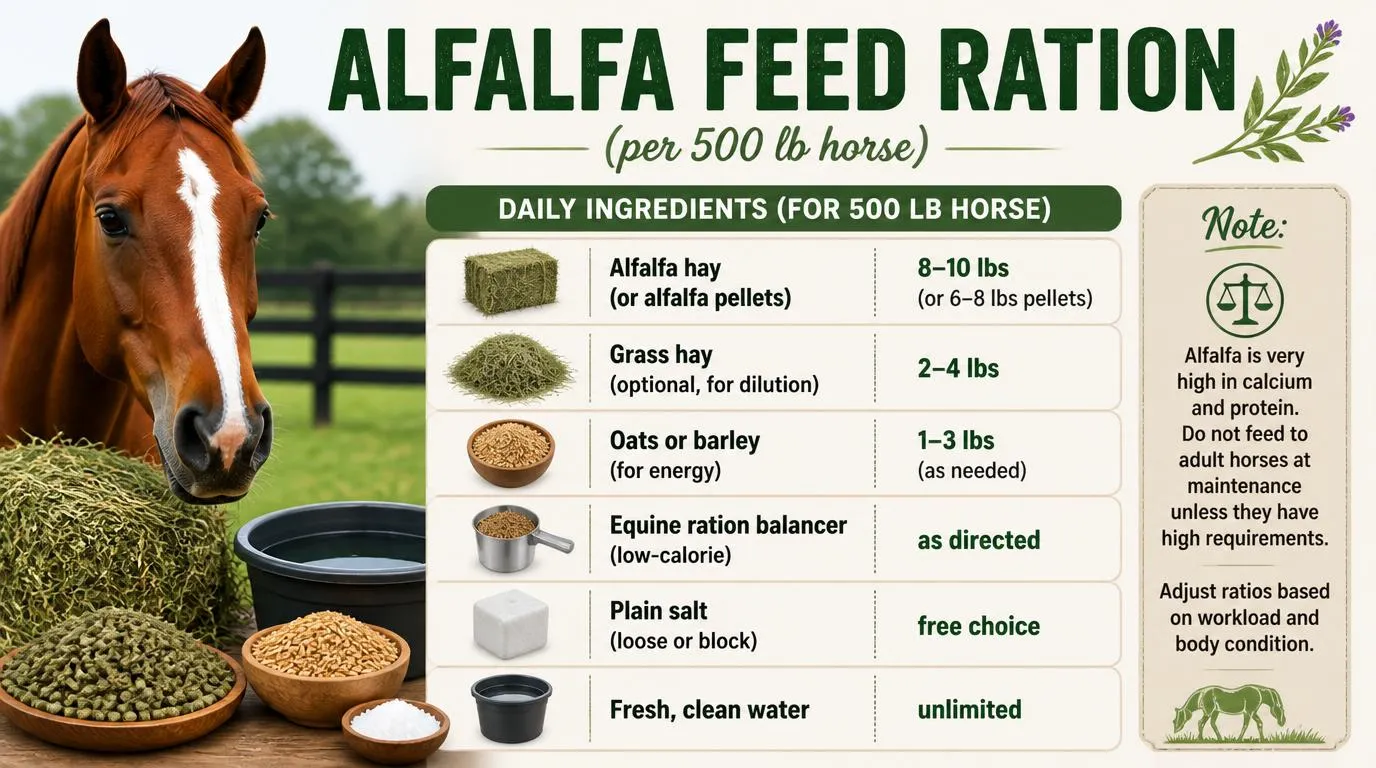
Daily Ingredients (for 500 lb horse)
- Alfalfa hay (or alfalfa pellets) 8–10 lbs (or 6–8 lbs pellets)
- Grass hay (optional, for dilution) 2–4 lbs
- Oats or barley (for energy) 1–3 lbs (as needed)
- Equine ration balancer (low‑calorie) as directed
- Plain salt (loose or block) free choice
- Fresh, clean water unlimited
Note: Alfalfa is very high in calcium and protein. Do not feed to adult horses at maintenance unless they have high requirements. Adjust ratios based on workload and body condition.
Approximate Nutritional Profile (per lb of alfalfa hay)
Alfalfa has an inverted Ca:P ratio (high calcium, low phosphorus). A balancer is essential to provide phosphorus and trace minerals.
Step-by-Step Feeding Instructions
- Choose high‑quality alfalfa: Look for leafy, green bales with fine stems and no mold. Avoid dusty or discolored hay.
- Measure alfalfa: For a 500 lb horse, start with 8–10 lbs of alfalfa hay daily. If using pellets, rehydrate or feed dry according to manufacturer guidelines.
- Add grass hay (optional): To reduce overall protein/calcium, mix alfalfa with grass hay (e.g., 50/50). This is recommended for most adult horses.
- Add grain if needed: For horses requiring more energy, add 1–3 lbs of oats or barley. Introduce slowly.
- Mix in balancer: Follow label instructions for a low‑calorie ration balancer to supply phosphorus, copper, zinc, selenium, and vitamins.
- Provide salt and water: Offer free‑choice plain salt and unlimited fresh water.
- Feed in multiple meals: Divide hay and grain into 2–3 feedings daily to support digestive health.
Pros and Cons of Alfalfa for Horses
Pros
- High protein – supports muscle development in young, growing, and athletic horses.
- Excellent calcium source – critical for bone growth and lactation.
- Palatable – most horses love the taste.
- Good for horses with poor teeth – alfalfa pellets are easy to chew.
- Can reduce grain needs – its energy density may replace some concentrates.
Cons
- High calcium:phosphorus ratio – can lead to bone disorders if not balanced with phosphorus.
- Can cause obesity and metabolic issues – not suitable for easy keepers or horses with EMS/PPID.
- May contribute to enteroliths (intestinal stones) in prone horses due to high mineral content.
- More expensive than grass hay in many regions.
- Can cause loose stools if introduced too quickly.
Nutritional Tips – Why Alfalfa Is Special
Alfalfa Benefits & Cautions
- Protein quality: Alfalfa provides essential amino acids, especially lysine, which is often lacking in grass hays.
- Calcium alert: The high calcium can interfere with phosphorus absorption. Always provide a phosphorus source (e.g., grain, balancer) to maintain a Ca:P ratio between 1.5:1 and 2:1.
- Ideal candidates: Weanlings, yearlings, pregnant/lactating mares, performance horses in heavy work, and some geriatric horses with trouble maintaining weight.
- Horses that should NOT get alfalfa: Adult idle horses, those with a history of urinary stones (enteroliths), horses with chronic laminitis, and those with kidney issues.
Feeding Guidelines for Alfalfa-Based Diets
- Forage amount: Feed at least 1.5–2% of body weight as total hay daily. If using alfalfa exclusively, start with 1.5% and monitor body condition.
- Balancing calcium: For every 10 lbs of alfalfa hay, add approximately 1–2 oz of a phosphorus‑rich supplement or feed a balancer formulated for alfalfa‑based diets.
- Introduce gradually: Transition from grass hay to alfalfa over 7–10 days to avoid digestive upset.
- Monitor urine color: Alfalfa can cause dark yellow or orange urine due to plant pigments – this is normal, but check with a vet if you see blood.
- Water intake: Alfalfa has a diuretic effect; ensure unlimited fresh water to prevent impaction.
Recipe Variations by Horse Type
Customize for Your Horse
- For growing horses (weanlings/yearlings): Feed 50% alfalfa + 50% grass hay, plus a growth‑formulated balancer. Limit oats to 0.5% body weight.
- For lactating mares: Free‑choice alfalfa (up to 2.5% body weight) plus a mare/foal balancer. Add oats or barley if weight loss occurs.
- For performance horses (eventing, racing): Replace 30–50% of grass hay with alfalfa. Add vegetable oil (½–1 cup) and a high‑fat, high‑protein balancer.
- For senior horses: Use alfalfa pellets soaked in water to form a mash. Add a senior balancer and probiotic.
- For horses with gastric ulcers: Alfalfa has a buffering effect on stomach acid. Offer small, frequent alfalfa meals alongside a digestive supplement.
Always consult an equine nutritionist before making major dietary changes, especially for horses with health conditions.
Must‑Have Items
Recommended Tools & Supplies
- Feed Scale or Scoop – to measure alfalfa and grain accurately. Check price on Amazon
- Heavy Rubber Feed Tub – durable and tip‑resistant. Check price on Amazon
- Airtight Grain Bin – for storing oats, pellets, and balancer. Check price on Amazon
- Hay Net or Slow Feeder – to reduce waste and extend feeding time. Check price on Amazon
- Water Bucket (galvanized or plastic) – clean, fresh water at all times. Check price on Amazon
We participate in the Amazon Services LLC Associates Program, an affiliate advertising program designed to provide a means for us to earn fees by linking to Amazon.com and affiliated sites. As an Amazon Associate, we earn from qualifying purchases.
Storage and Safety Tips
Keep Alfalfa Feed Safe
- Store hay off the ground: Keep alfalfa bales in a dry, well‑ventilated area. Discard any bales with white dust (mold) or musty smell.
- Check for blister beetles: Alfalfa can sometimes contain toxic blister beetles. Inspect hay before feeding, and buy from reputable sources.
- Keep pellets dry: Alfalfa pellets absorb moisture quickly; store in sealed containers.
- Clean feeders daily: Remove leftover grain and wet hay to prevent mold.
- Monitor for enteroliths: If your horse is prone to intestinal stones, avoid or severely limit alfalfa.
Conclusion
Alfalfa is a valuable forage for horses with elevated nutritional needs, but it must be fed with knowledge and care. When used appropriately – as part of a balanced ration that includes a phosphorus source and proper mineral supplementation – it can support growth, performance, and lactation without causing harm. For the average pleasure horse at maintenance, grass hay is usually a safer, more appropriate choice.
If you decide to incorporate alfalfa into your horse's diet, start slowly, monitor body condition and manure consistency, and consult your veterinarian or an equine nutritionist to fine‑tune the ration. With mindful feeding, alfalfa can be an excellent tool in your horse's nutritional toolbox.
Happy and healthy feeding from ZimuShop!
Frequently Asked Questions
Can I feed straight alfalfa hay to my horse?
Only if your horse has high nutritional demands (growing, lactating, or intense performance). For most adult horses at maintenance, straight alfalfa can lead to obesity and calcium imbalances. Mixing with grass hay (50/50) is safer.
Is alfalfa safe for horses with laminitis?
Generally no. Alfalfa is energy‑dense and can worsen insulin resistance. Horses with a history of laminitis or EMS should avoid alfalfa and eat low‑sugar grass hay instead.
How do I balance the calcium in alfalfa?
Provide a phosphorus source. You can feed oats or barley (which have a higher phosphorus content) or use a ration balancer specifically formulated for alfalfa‑based diets. Aim for a Ca:P ratio between 1.5:1 and 2:1.
Can alfalfa cause kidney stones in horses?
Alfalfa's high calcium and magnesium can contribute to the formation of enteroliths (intestinal stones) in predisposed horses. If your horse has a history of stones, avoid alfalfa.
How much alfalfa pellets equal a flake of hay?
One pound of alfalfa pellets is roughly equivalent to one pound of alfalfa hay. A typical 2‑lb coffee can holds about 1.5 lbs of pellets. Weigh your feed for accuracy.
Can senior horses eat alfalfa?
Yes, many seniors benefit from the easy‑to‑chew alfalfa pellets or chopped hay. However, monitor for weight gain and ensure they still have adequate long‑stem fiber (grass hay) for hindgut health.