Recipe Introduction
Barley and corn are traditional high‑energy grains used to fuel performance horses in heavy work. Both are more energy‑dense than oats, making them useful when you need to pack calories into a smaller volume. This homemade horse feed with barley and corn is designed for healthy horses in intense training, racing, or other demanding disciplines.
⚠️ Important: Barley and corn are high in starch (50–70%). They must be processed (rolled, cracked, or steam‑flaked) to improve digestibility. Whole corn or whole barley can pass through the digestive tract undigested, increasing colic risk. This recipe is not suitable for easy keepers, insulin‑resistant horses, or those with a history of laminitis.
Table of Contents
Barley & Corn Grain Mix
High energy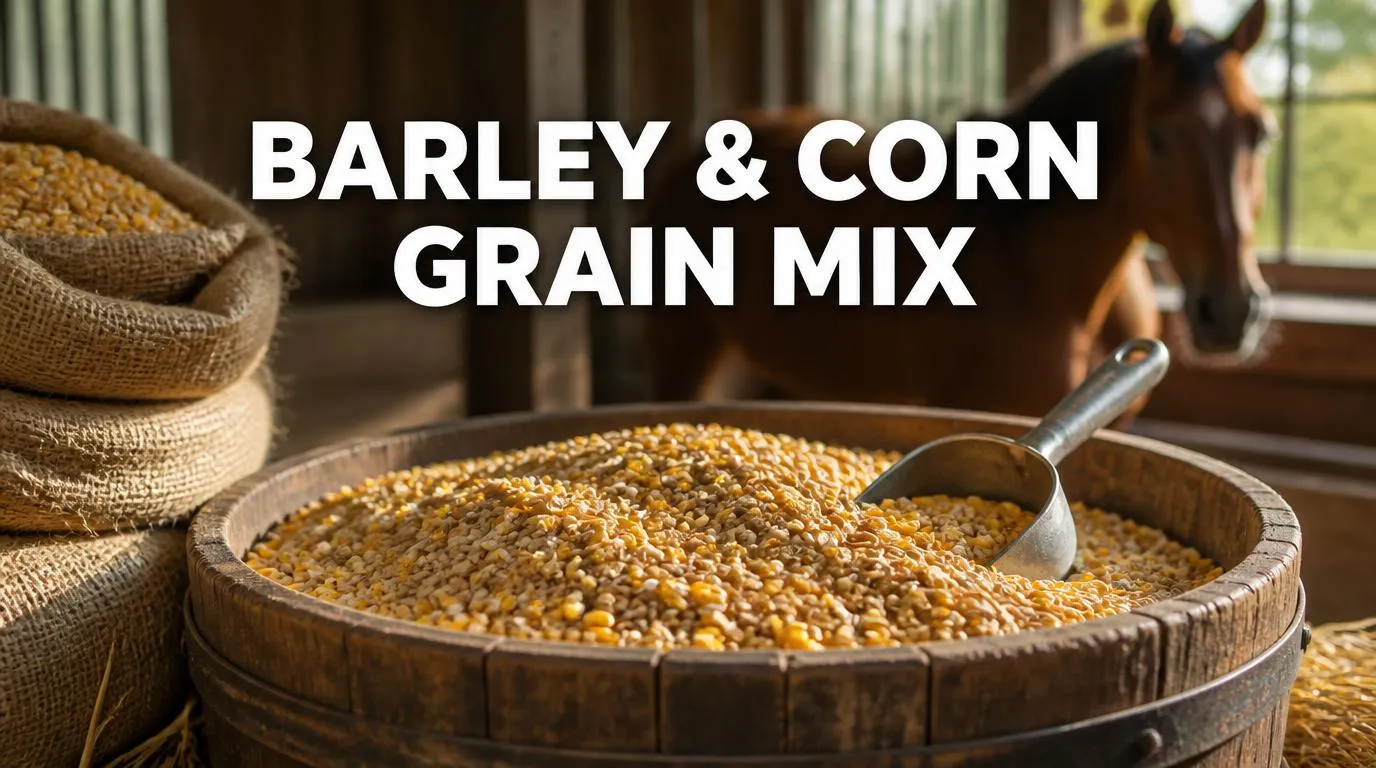
Daily Ingredients (for 1,000 lb horse in heavy work)
- Grass hay (timothy/orchard) 15–20 lbs (free choice)
- Cracked or rolled corn 3–5 lbs (6–10 cups)
- Rolled or steam‑flaked barley 2–4 lbs (4–8 cups)
- Equine ration balancer (low‑starch) as directed
- Plain salt (loose or block) free choice
- Fresh, clean water unlimited
Note: Corn and barley are very high in starch. Start with small amounts (2 lbs total grain per day) and increase slowly. Never feed whole corn or whole barley.
Approximate Nutritional Profile (per lb of mixed grain – 50% corn, 50% barley)
Starch content is very high. Monitor for signs of hindgut upset or laminitis.
Step-by-Step Feeding Instructions
- Source processed grains: Buy cracked or rolled corn and rolled or steam‑flaked barley. Never use whole kernels.
- Start with a small amount: For a 1,000 lb horse new to this mix, begin with 2 lbs total grain per day (split into 2–3 meals).
- Mix grains: Combine equal parts by weight (e.g., 1 lb corn + 1 lb barley). Adjust ratio based on horse's response (corn is more energy‑dense).
- Add balancer: Follow label instructions for a low‑starch ration balancer to provide protein, vitamins, and minerals (especially phosphorus and trace minerals).
- Feed with hay: Always feed grain after or alongside hay to buffer stomach acid. Never feed grain on an empty stomach.
- Increase gradually: Over 2–3 weeks, increase to desired level (max 0.5–0.75% body weight in grain for most horses).
- Monitor closely: Watch for signs of colic, laminitis (heat in hooves, reluctance to move), or behavioral changes.
Pros and Cons of Barley and Corn for Horses
Pros
- High digestible energy – excellent for weight gain and hard work.
- Cost‑effective – often cheaper per calorie than oats.
- Corn provides “quick” energy – good for sprint or race horses.
- Barley is cooling – less “fizzy” than corn for some horses.
- Smaller feed volume – horses with limited appetite can get enough calories.
Cons
- Very high starch – risk of colic, laminitis, and hindgut acidosis.
- Must be processed – whole grains are poorly digested and dangerous.
- Not for easy keepers or metabolic horses – can cause rapid weight gain and insulin spikes.
- Requires careful balancing – corn is low in calcium and high in phosphorus.
- May cause “hot” behavior – some horses become excitable on corn.
Nutritional Tips – Barley vs. Corn
Grain Comparison
- Cracked/rolled corn: Very high in starch (70%), low in fiber. Excellent energy source but can cause digestive upset if overfed. Has a poor calcium:phosphorus ratio (1:10), so a balancer is critical.
- Rolled or steam‑flaked barley: Slightly lower starch (60%), higher fiber than corn. Barley is often considered “cooler” energy. Must be processed – whole barley is very hard.
- Always feed with hay: The fiber in hay slows starch digestion and reduces the risk of hindgut issues.
- Add a balancer: A low‑starch ration balancer will provide missing calcium, copper, zinc, and vitamin E.
- Consider fat supplementation: To reduce starch load, replace up to 20% of grain calories with vegetable oil (e.g., ½ cup oil replaces ~1 lb of grain).
Feeding Guidelines for Barley/Corn Mixes
- Maximum grain intake: Do not exceed 0.75% of body weight in grain per day (7.5 lbs for a 1,000 lb horse). Most horses will do well on 0.5%.
- Split into multiple meals: Feed at least 2–3 grain meals per day, with no more than 5 lbs of grain per meal.
- Transition slowly: Introduce over 14–21 days, starting with a 1:3 mix with oats or existing feed.
- Monitor body condition score: Aim for BCS 5–6. If gaining too fast, reduce grain and increase hay.
- Watch for signs of starch overload: Diarrhea, gas, colic, or laminitic stance (leaning back, sore feet).
Recipe Variations by Horse Type
Customize for Your Horse
- For racehorses or sprinters: Use a 75% corn / 25% barley mix for quick energy. Add a high‑fat supplement (rice bran or vegetable oil).
- For endurance horses: Reduce corn and increase barley; consider adding beet pulp for sustained energy. Feed a higher‑fat, lower‑starch diet.
- For horses prone to tying‑up (ER/ PSSM): Avoid high‑starch grains entirely. Use oil, beet pulp, and a commercial low‑starch feed instead.
- For underweight horses: Increase grain up to 0.75% body weight, plus add ½–1 cup vegetable oil per day.
- For horses with gastric ulcers: Never feed grain without hay. Alfalfa hay before grain can buffer stomach acid. Consider adding an ulcer supplement.
Always consult your veterinarian before feeding high‑starch grains to any horse with health concerns.
Must‑Have Items
Recommended Tools & Supplies
- Feed Scale or Scoop – to measure alfalfa and grain accurately. Check price on Amazon
- Heavy Rubber Feed Tub – durable and tip‑resistant. Check price on Amazon
- Airtight Grain Bin – for storing oats, pellets, and balancer. Check price on Amazon
- Hay Net or Slow Feeder – to reduce waste and extend feeding time. Check price on Amazon
- Water Bucket (galvanized or plastic) – clean, fresh water at all times. Check price on Amazon
We participate in the Amazon Services LLC Associates Program, an affiliate advertising program designed to provide a means for us to earn fees by linking to Amazon.com and affiliated sites. As an Amazon Associate, we earn from qualifying purchases.
Storage and Safety Tips
Keep Grain Safe
- Store in cool, dry place: Corn and barley can mold quickly in damp conditions. Moldy grain can cause colic or mycotoxin poisoning.
- Check for spoilage: Discard any grain that smells musty, looks discolored, or has visible mold.
- Protect from rodents: Use metal bins or heavy‑duty plastic with tight lids.
- Clean feeders daily: Remove uneaten grain to prevent spoilage and attract pests.
- Never feed whole grains: Whole corn and barley pass through undigested and increase impaction risk.
Conclusion
Barley and corn can be valuable components of a high‑energy diet for performance horses, but they come with significant risks if not fed correctly. The high starch content requires careful management: processed grains only, gradual introduction, splitting into multiple meals, and always feeding with plenty of hay. This mix is not appropriate for idle horses, easy keepers, or any horse with metabolic issues.
If you choose to feed barley and corn, work closely with an equine nutritionist to balance the ration and monitor your horse's health. For many horses, lower‑starch options like oats, beet pulp, and fat supplements may be safer while still providing ample energy.
Always prioritize forage first, and when in doubt, choose a commercial feed formulated by experts. Your horse's long‑term digestive health is worth the extra care.
Frequently Asked Questions
Can I feed whole corn to horses?
No. Whole corn is very hard and passes through the digestive tract largely undigested, offering little nutritional value and increasing the risk of impaction colic. Always feed cracked, rolled, or steam‑flaked corn.
Is barley better than corn for horses?
Barley has slightly less starch and more fiber than corn. Some horses are less excitable on barley. However, both are high‑starch grains and should be used with caution. Oats are generally safer for most horses.
How much corn can I feed my horse per day?
For a 1,000 lb horse, start with 1 lb per day and increase slowly to a maximum of 0.5–0.75% body weight (5–7.5 lbs total grain). Never feed more than 5 lbs of grain in a single meal.
Can this recipe cause laminitis?
Yes, especially in insulin‑resistant or easy keeper horses. The high starch content can trigger laminitis. Do not feed this mix to any horse with a history of laminitis, EMS, or PPID (Cushing's).
Why do I need a balancer with corn and barley?
Corn is very low in calcium and has an inverted calcium:phosphorus ratio. A balancer provides the missing calcium, as well as copper, zinc, selenium, and vitamin E. Long‑term deficiencies can cause bone problems and poor immune function.
Can I soak barley or corn before feeding?
Soaking can help with hydration and may reduce dust, but it does not significantly improve starch digestibility. Processed grains are still required. Soaked grain should be fed immediately and not left to ferment.