Recipe Introduction
Bran – typically wheat bran – has long been used in horsekeeping as a high‑fiber supplement and gentle laxative. A warm bran mash is often given to horses after hard work, during cold weather, or to help relieve mild constipation. However, bran has significant nutritional drawbacks: it is very high in phosphorus and low in calcium, which can upset the critical calcium‑phosphorus balance if fed regularly.
This homemade horse feed with bran is designed as an occasional supplement (1–2 times per week) rather than a daily ration. When fed properly, it can be a palatable, digestible treat that supports hindgut health. We'll show you how to make a classic bran mash and how to balance it with calcium to prevent mineral imbalances.
Table of Contents
Classic Bran Mash
Occasional treat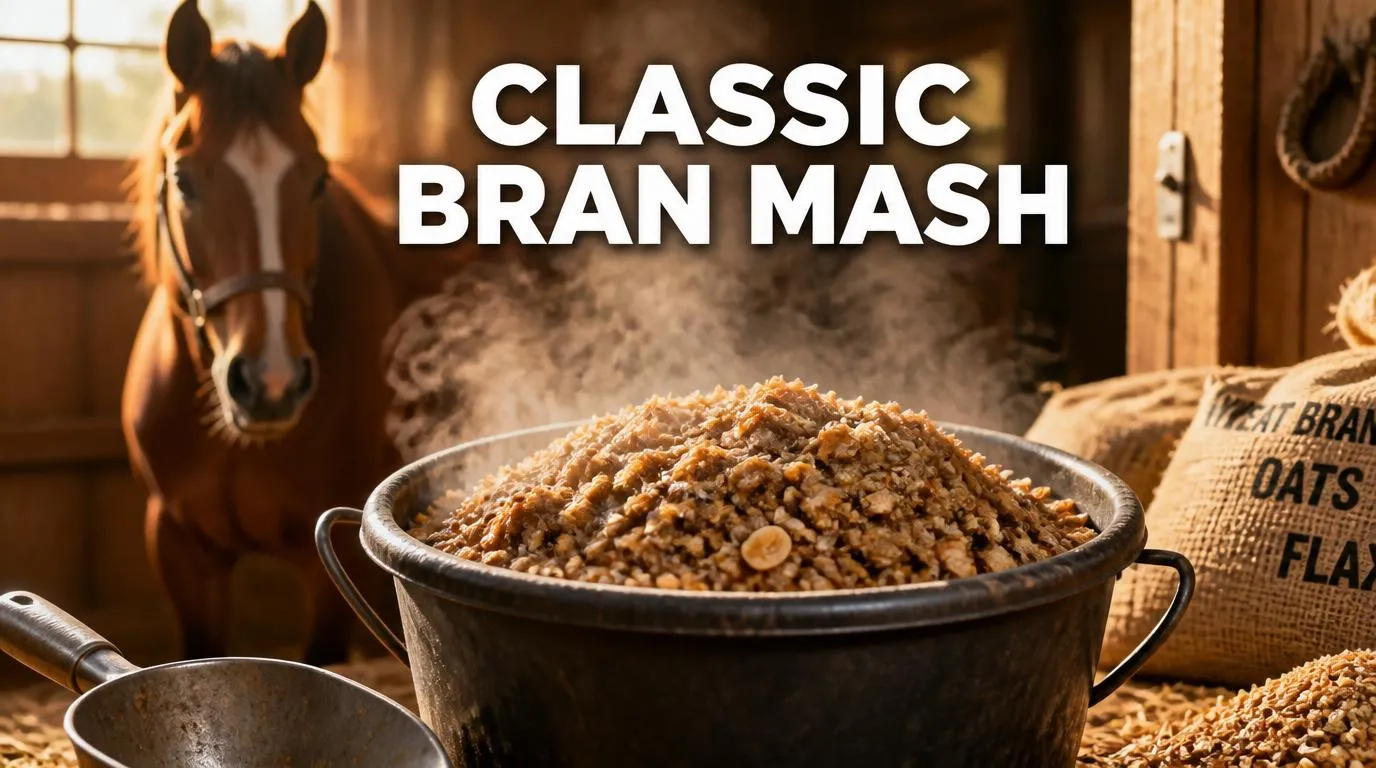
Ingredients (per serving)
- Wheat bran 1–2 lbs (2–4 cups)
- Hot water (not boiling) enough to moisten
- Calcium source: ground limestone (calcium carbonate) 1–2 tablespoons
- Plain salt 1 tablespoon (optional)
- Optional: apple, carrot, or molasses for flavor
Important: Bran is very high in phosphorus. To balance, add a calcium source (ground limestone, or feed alfalfa hay alongside). Do not feed bran more than 2–3 times per week.
Approximate Nutritional Profile (per lb of wheat bran)
The inverted Ca:P ratio makes calcium supplementation essential when feeding bran.
Step-by-Step Instructions
- Measure bran: For a 1,000 lb horse, use 1–2 lbs (2–4 cups) of wheat bran. Do not exceed this amount.
- Add calcium: Mix in 1–2 tablespoons of ground limestone (calcium carbonate) or feed the mash alongside a flake of alfalfa hay.
- Moisten with hot water: Pour hot (not boiling) water over the bran until it reaches a porridge‑like consistency. Stir well.
- Let cool: Allow the mash to cool to a safe temperature (test on your wrist). Hot mash can burn the mouth.
- Add flavor (optional): Stir in a chopped apple, carrot, or a tablespoon of unsulphured molasses for palatability.
- Serve: Offer in a clean feed tub. Remove any uneaten mash after 30–60 minutes to prevent spoilage.
Pros and Cons of Feeding Bran to Horses
Pros
- High fiber content – supports digestive health and may help with mild constipation.
- Palatable – most horses enjoy a warm bran mash.
- Good for post‑exercise hydration – the warm, wet mash encourages water intake.
- Provides B vitamins – bran is a source of several B‑complex vitamins.
- Can help maintain weight – for hard keepers, as a supplemental feed.
Cons
- Very high phosphorus, low calcium – can lead to bone demineralization if fed regularly without balancing.
- Not a complete feed – cannot replace hay or a balanced grain ration.
- Can cause diarrhea if overfed – due to its laxative effect.
- May contribute to enteroliths (intestinal stones) if calcium is not properly balanced.
- Should be fed only occasionally – not a daily feed.
Nutritional Tips – Why Bran Needs Balancing
Understanding the Calcium‑Phosphorus Ratio
- Wheat bran: Contains about 0.1% calcium and 1.1% phosphorus – a ratio of roughly 1:11. The ideal Ca:P ratio for horses is between 1.5:1 and 2:1.
- Why it matters: Excess phosphorus interferes with calcium absorption, leading to weak bones, developmental orthopedic disease in young horses, and can contribute to urinary calculi (stones).
- How to balance: Add 1–2 tablespoons of ground limestone (calcium carbonate) per pound of bran, or feed the mash with alfalfa hay (which is high in calcium). A ration balancer can also offset the imbalance.
- Don't rely on bran for laxative effect: Adequate forage and water are far more important for preventing constipation.
Feeding Guidelines for Bran
- Frequency: Limit bran to 1–3 times per week at most. Daily feeding can lead to mineral imbalances.
- Amount: For a 1,000 lb horse, 1–2 lbs of bran per feeding is sufficient. Smaller ponies should get proportionally less.
- Always balance calcium: Add calcium carbonate or feed with alfalfa hay. Do not skip this step.
- Feed after work or in cold weather: A warm bran mash is a comforting treat after exercise or on chilly days.
- Not for horses with HYPP: Bran is low in potassium, so it is safe for HYPP horses, but always check with your vet.
- Monitor manure: If stools become too loose, reduce or stop bran feeding.
Recipe Variations & Alternatives
Customize Your Bran Mash
- For picky eaters: Add 1–2 tablespoons of unsulphured molasses, a grated apple, or a handful of peppermints.
- For extra nutrition: Stir in a serving of your horse's regular ration balancer or a scoop of beet pulp.
- For electrolyte replacement: Add 1 tablespoon of plain salt (sodium chloride) to the mash after heavy sweating.
- Rice bran alternative: Stabilized rice bran is higher in fat and lower in phosphorus than wheat bran. It can be fed daily in small amounts (0.5–1 lb) but still requires calcium balancing.
- For horses with dental issues: Bran mash is easy to eat and can be mixed with soaked pellets.
Always consult your veterinarian before adding new supplements, especially for horses with metabolic or digestive conditions.
Must‑Have Items
Recommended Tools & Supplies
- Feed Scale or Scoop – to measure alfalfa and grain accurately. Check price on Amazon
- Heavy Rubber Feed Tub – durable and tip‑resistant. Check price on Amazon
- Airtight Grain Bin – for storing oats, pellets, and balancer. Check price on Amazon
- Hay Net or Slow Feeder – to reduce waste and extend feeding time. Check price on Amazon
- Water Bucket (galvanized or plastic) – clean, fresh water at all times. Check price on Amazon
We participate in the Amazon Services LLC Associates Program, an affiliate advertising program designed to provide a means for us to earn fees by linking to Amazon.com and affiliated sites. As an Amazon Associate, we earn from qualifying purchases.
Storage and Safety Tips
Keep Bran Fresh & Safe
- Store in a cool, dry place: Wheat bran can go rancid if exposed to heat and humidity. Use within 3–6 months.
- Check for spoilage: Discard any bran with a musty smell, clumps, or signs of insects.
- Never feed moldy bran: Mycotoxins can cause colic, respiratory issues, or toxicity.
- Prepare fresh mash: Do not leave wet mash in the bucket for more than an hour. Bacteria grow quickly.
- Clean feeders after use: Rinse tubs thoroughly to prevent residue from spoiling.
Conclusion
Bran can be a useful addition to your horse's diet when used occasionally and balanced properly. A warm bran mash is a time‑honored treat that can aid hydration, provide a palatable fiber source, and offer comfort after work or in cold weather. However, its high phosphorus content means it must never become a daily feed. Always supplement with calcium or alfalfa to maintain the crucial calcium‑phosphorus balance.
Remember that the foundation of equine nutrition should always be high‑quality forage (hay or pasture). Bran is a supplement, not a replacement for hay or a balanced grain ration. When in doubt, consult your veterinarian or an equine nutritionist to ensure your horse's diet meets all its needs.
Happy and healthy feeding from ZimuShop!
Frequently Asked Questions
Can I feed bran to my horse every day?
No. Daily feeding can cause a serious calcium‑phosphorus imbalance, leading to bone problems and potential urinary stones. Limit bran to 1–3 times per week and always balance with calcium.
What is the best calcium source to balance bran?
Ground limestone (calcium carbonate) is inexpensive and effective. Add 1–2 tablespoons per pound of bran. Alternatively, feed the mash alongside a flake of alfalfa hay, which is naturally high in calcium.
Is rice bran better than wheat bran?
Rice bran is higher in fat and lower in phosphorus than wheat bran, making it more suitable for daily use in small amounts (0.5–1 lb). It still requires calcium balancing. Stabilized rice bran is preferred to prevent rancidity.
Can a bran mash help with colic?
No. If your horse shows signs of colic (rolling, pawing, not passing manure), call your veterinarian immediately. A bran mash is not a treatment for colic and may delay necessary medical care.
How much bran should I feed my pony?
Scale down by weight. For a 500 lb pony, use 0.5–1 lb of bran per feeding. Always balance with calcium proportionally.
Can bran cause laminitis?
Bran is not typically a laminitis trigger because it is low in sugar and starch. However, adding molasses or feeding large amounts could contribute to obesity or insulin issues in susceptible horses. Use plain bran and limit sugar additions.