Recipe Introduction
Carrots and apples are classic horse treats – sweet, crunchy, and almost universally loved. When fed in moderation, they make excellent rewards for training, a tasty addition to a grain meal, or a simple way to bond with your horse. This homemade horse feed with carrots and apples focuses on using these natural treats safely, with portion guidelines and creative ways to serve them.
However, both carrots and apples contain natural sugars, so they must be limited, especially for horses prone to laminitis, insulin resistance, or obesity. Always remove apple seeds (they contain trace amounts of cyanide) and cut treats into manageable pieces to prevent choking. This guide will help you incorporate these healthy snacks into your horse's diet responsibly.
Table of Contents
Carrot & Apple Treat Mix
Healthy snack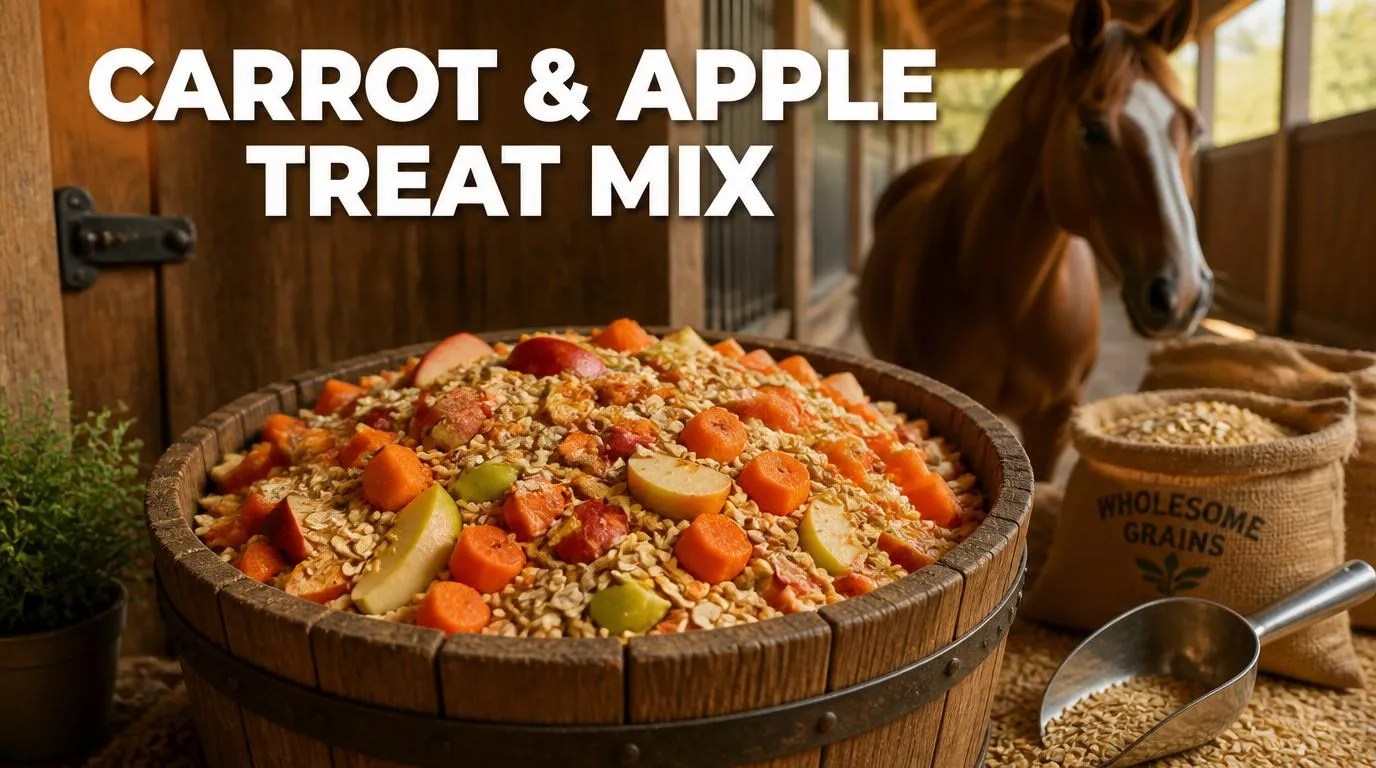
Ingredients (per serving)
- Fresh carrots 1–2 medium, sliced
- Fresh apple (any variety) 1 small, cored and sliced
- Optional: handful of oats or alfalfa pellets for a treat mash
- Optional: 1 tbsp unsulphured molasses for extra appeal
⚠️ Critical safety: Remove all apple seeds and core. Apple seeds contain amygdalin, which can release cyanide. Also slice treats into pieces no larger than a golf ball to prevent choking.
Approximate Nutritional Profile (1 carrot + 1 small apple)
Treats should make up no more than 10% of daily caloric intake. For a 1,000 lb horse, that's about 2 lbs of carrots/apples maximum.
Step-by-Step Instructions
- Select fresh produce: Choose firm carrots without soft spots. Pick crisp apples without bruises or mold.
- Wash thoroughly: Scrub carrots and rinse apples to remove dirt and residues. Peeling is optional but removes wax.
- Remove seeds and core: Cut apples in quarters, remove the core and all seeds. Discard seeds safely.
- Slice into safe pieces: Cut carrots and apples into slices or chunks no larger than a golf ball (about 1–1.5 inches). This prevents choking.
- Serve as is or mix: Offer the slices in a clean feed tub, by hand as a reward, or mix with a handful of oats or pellets for a special treat mash.
- Store leftovers: Refrigerate unused cut produce in an airtight container for up to 2 days.
Pros and Cons of Carrots and Apples for Horses
Pros
- Excellent for training rewards – highly palatable and safe in moderation.
- Source of vitamins – carrots provide beta‑carotene (vitamin A), apples add vitamin C and antioxidants.
- Hydrating – high water content can help with moisture intake.
- Natural enrichment – chewing whole carrots mimics grazing behavior.
- Bonding tool – hand‑feeding treats builds trust.
Cons
- High in sugar – can cause weight gain, insulin spikes, or laminitis in sensitive horses.
- Choking hazard – large pieces can lodge in the esophagus.
- Apple seeds are toxic – must be removed.
- Can cause digestive upset if fed in large quantities (diarrhea, colic).
- Not a complete feed – never replace hay or balanced grain with treats.
Nutritional Tips – Carrots vs. Apples
Nutritional Comparison & Benefits
- Carrots: Low in calories (about 25 kcal per medium carrot), high in beta‑carotene (converted to vitamin A), good source of fiber. Carrots contain about 4–5 g sugar per medium carrot.
- Apples: Slightly higher in sugar (about 15–20 g per medium apple), provide pectin (a soluble fiber), and contain quercetin (antioxidant).
- Sugar content warning: One large apple can contain as much sugar as a handful of grain. For insulin‑resistant horses, avoid apples entirely or offer only a thin slice occasionally.
- Vitamin A toxicity? Carrots are rich in beta‑carotene, which is safe because the body converts only what it needs. Overfeeding carrots will not cause hypervitaminosis A.
Feeding Guidelines for Carrots and Apples
- Maximum daily amount: No more than 2 lbs (about 4–5 medium carrots or 2 small apples) for a 1,000 lb horse. Treats should not exceed 10% of total daily calories.
- For insulin‑resistant or laminitis‑prone horses: Avoid apples entirely. Carrots may be offered in very limited amounts (1–2 baby carrots) only if the horse is stable and under veterinary supervision.
- Cut into safe pieces: Always slice or chop to prevent choking. Do not feed whole carrots or whole apples.
- Introduce slowly: If your horse is not used to treats, start with a few small pieces and monitor for loose stool.
- Use as training rewards: Break treats into tiny pieces (pea‑sized) for frequent rewards during training without overfeeding sugar.
Recipe Variations & Creative Ways to Serve
Fun & Healthy Treat Ideas
- Frozen treats: Slice carrots and apples, place in ice cube trays with water, and freeze. Offer as a cooling summer snack.
- Treat mash: Finely grate carrots and apples, mix with a small amount of soaked alfalfa pellets or oats, and serve as a warm mash on cold days.
- Baked treats: Combine grated carrot, apple, oats, and a little molasses, form into small cookies, and bake at 350°F for 15–20 minutes. Cool completely before feeding.
- Hidden surprises: Stuff carrot and apple chunks into a treat ball or hang in a hay net for enrichment.
- Holiday treats: Carve carrots into festive shapes or core an apple and fill with a small amount of peanut butter (unsalted, no xylitol) for a special occasion.
Always avoid added sugar, artificial sweeteners, and any ingredients toxic to horses (xylitol, chocolate, etc.).
Must‑Have Items
Recommended Tools & Supplies
- Feed Scale or Scoop – to measure alfalfa and grain accurately. Check price on Amazon
- Heavy Rubber Feed Tub – durable and tip‑resistant. Check price on Amazon
- Airtight Grain Bin – for storing oats, pellets, and balancer. Check price on Amazon
- Hay Net or Slow Feeder – to reduce waste and extend feeding time. Check price on Amazon
- Water Bucket (galvanized or plastic) – clean, fresh water at all times. Check price on Amazon
We participate in the Amazon Services LLC Associates Program, an affiliate advertising program designed to provide a means for us to earn fees by linking to Amazon.com and affiliated sites. As an Amazon Associate, we earn from qualifying purchases.
Storage and Safety Tips
Keep Treats Fresh & Safe
- Refrigerate cut produce: Store sliced carrots and apples in an airtight container in the refrigerator. Use within 2 days.
- Do not leave treats in the paddock: Remove uneaten fresh food after 30–60 minutes to prevent spoilage and attract pests.
- Check for mold: Discard any apples with soft spots, bruises, or visible mold. Moldy produce can cause colic or mycotoxin poisoning.
- Never feed rotten or fermented fruit: Ethanol from fermentation can cause alcohol poisoning.
- Store whole carrots and apples in a cool, dry place: They last several weeks in a root cellar or refrigerator.
Conclusion
Carrots and apples are wholesome, natural treats that can strengthen the bond between you and your horse when used responsibly. They offer nutritional benefits beyond simple sugar, including vitamins, fiber, and hydration. However, moderation is key – too many treats can lead to obesity, metabolic issues, or digestive upset. Always remove apple seeds, cut into safe pieces, and limit treats to no more than 10% of your horse's daily caloric intake.
For horses with metabolic conditions, consult your veterinarian before offering any treats. With mindful feeding, carrots and apples can be a delightful part of your horse's life. Happy treating!
Frequently Asked Questions
Can horses eat apple seeds?
No. Apple seeds contain amygdalin, which can release cyanide when chewed. While a few seeds may not cause immediate harm, it's safest to remove all seeds and the core before feeding.
How many carrots can I give my horse per day?
For a 1,000 lb horse, up to 2 lbs (about 4–5 medium carrots) is safe. For smaller ponies or easy keepers, reduce to 1–2 carrots. Always cut into slices.
Can horses with laminitis have carrots or apples?
Generally, it's best to avoid both. Apples are very high in sugar. Some vets may allow a few thin carrot slices if the horse is stable, but always consult your veterinarian first.
Are baby carrots safer than whole carrots?
Baby carrots are already small, but they should still be sliced lengthwise to prevent choking. They are just as nutritious as regular carrots.
Can I feed my horse apple cores?
No. The core contains seeds and is tough. Remove the entire core before offering apple pieces.
My horse choked on a carrot – what should I do?
Signs of choking include coughing, nasal discharge, stretching the neck, and distress. Call your veterinarian immediately. Do not attempt to remove the obstruction yourself. Prevention: always slice treats into small pieces.