Recipe Introduction
Fresh vegetables can be a wonderful, nutritious addition to your horse's diet – offering variety, hydration, and valuable vitamins. Unlike fruits, many vegetables are lower in sugar, making them safer for horses with metabolic concerns when fed in moderation. This homemade horse feed with fresh vegetables combines several horse‑safe veggies into a colorful, appealing snack or a topper for grain meals.
Not all vegetables are safe for horses. This recipe focuses on well‑tolerated options like carrots, celery, bell peppers, and zucchini. Always introduce new vegetables slowly, chop them into bite‑sized pieces to prevent choking, and remember that vegetables are treats, not a substitute for high‑quality hay or a balanced ration.
Table of Contents
Fresh Vegetable Treat Mix
Healthy snack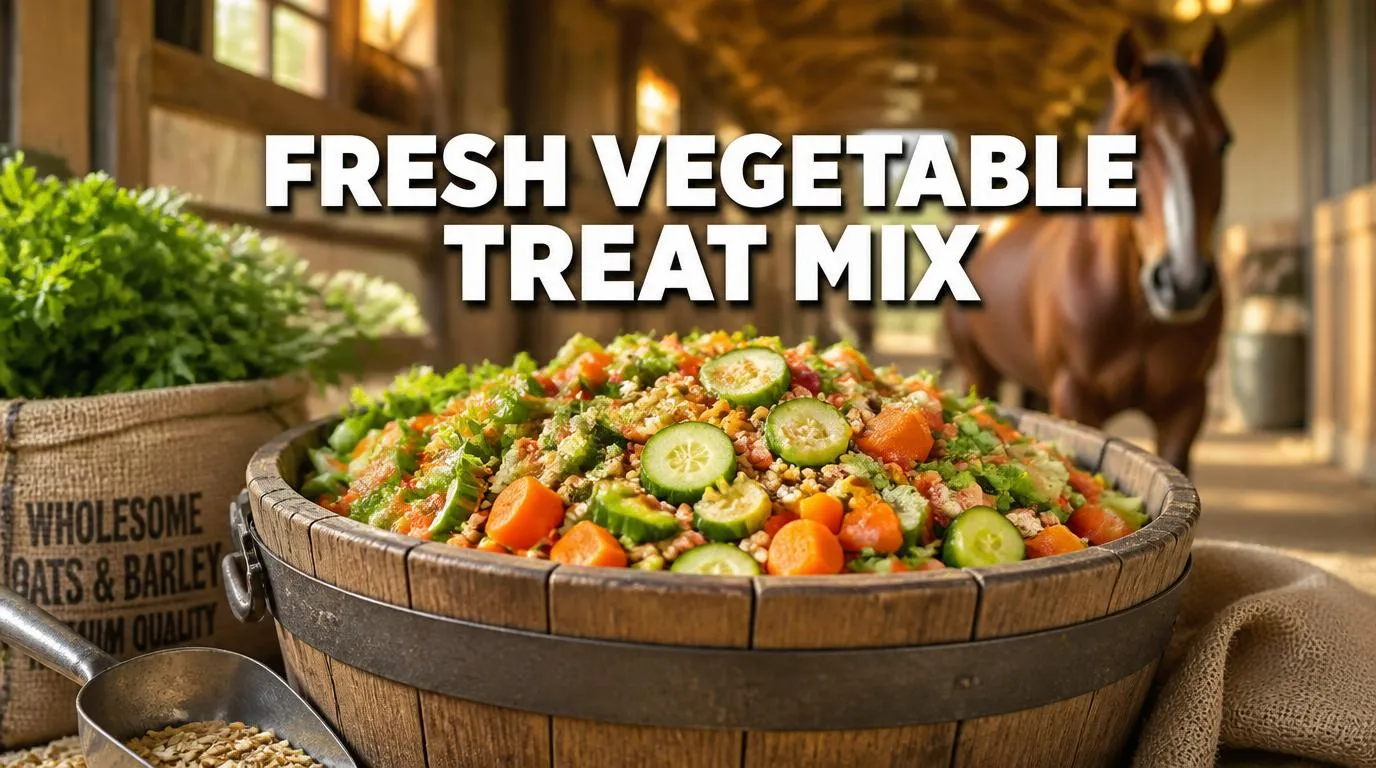
Ingredients (per serving for 1,000 lb horse)
- Carrots 1 medium, sliced
- Celery stalks 1–2, chopped into 1‑inch pieces
- Bell pepper (any color) ½, deseeded and sliced
- Zucchini or cucumber ½ cup, sliced
- Optional: small handful of fresh parsley or mint for garnish
⚠️ Safety: Always wash vegetables thoroughly. Remove seeds from bell peppers. Cut into pieces no larger than a golf ball to prevent choking. Never feed onions, garlic, potatoes, or rhubarb.
Approximate Nutritional Profile (per serving)
Vegetables are low‑sugar treats. Feed no more than 1–2 lbs total fresh produce per day for a 1,000 lb horse.
Step-by-Step Instructions
- Select fresh, firm vegetables: Choose produce without soft spots, mold, or bruises. Organic is ideal but not required.
- Wash thoroughly: Rinse all vegetables under cool running water, scrubbing carrots and celery to remove dirt.
- Prepare each vegetable: Peel carrots if desired. Remove seeds and white pith from bell peppers. Cut into bite‑sized pieces (about 1–1.5 inches).
- Combine in a clean bowl: Mix the vegetables together. Do not add any seasonings, oils, or dressings.
- Serve as a treat: Offer the vegetable mix by hand as a reward, in a feed tub, or scattered in a treat ball for enrichment.
- Store leftovers: Refrigerate unused mix in an airtight container for up to 2 days.
Pros and Cons of Feeding Vegetables to Horses
Pros
- Low in sugar – safer for insulin‑resistant horses than fruits.
- High in water – aids hydration, especially in hot weather.
- Provides vitamins and antioxidants – supports overall health.
- Adds variety and enrichment – encourages natural foraging.
- Great for training rewards – healthy alternative to sugary treats.
Cons
- Choking hazard – if not chopped properly.
- Can cause digestive upset – if introduced too quickly or fed in large amounts.
- Some vegetables are toxic – onions, potatoes, rhubarb, etc.
- Not a complete feed – cannot replace hay or balanced grain.
- Short shelf life – must be used within a few days.
Nutritional Tips – Safe Vegetables & Their Benefits
Vegetable Guide for Horses
- Carrots: Rich in beta‑carotene (vitamin A). Feed in moderation due to sugar content (still lower than apples).
- Celery: High water content, low calorie. Chop into small pieces to avoid stringy fibers.
- Bell peppers: Excellent source of vitamin C and antioxidants. Remove seeds and white pith.
- Zucchini & cucumber: Very low in sugar, high in water – great for hydration.
- Parsley & mint: Aromatic herbs that can be used sparingly as a garnish.
Vegetables to AVOID: Onions, garlic, leeks, chives (can cause anemia), potatoes (solanine), rhubarb (oxalates, toxic), and any moldy or spoiled produce.
Feeding Guidelines for Fresh Vegetables
- Daily limit: No more than 1–2 lbs of fresh vegetables per day for a 1,000 lb horse. This is about 2–3 cups of chopped veggies.
- Introduce slowly: Start with a few pieces of one vegetable and monitor for loose stool or signs of discomfort over 24 hours.
- Chop into safe pieces: Cut into 1‑inch cubes or slices to prevent choking. Do not feed whole carrots or large chunks.
- Feed with hay: Offer vegetables after the horse has eaten some hay to buffer stomach acid.
- Remove uneaten vegetables: Take away any fresh food left in the feeder after 30–60 minutes to prevent spoilage.
Recipe Variations & Creative Serving Ideas
Fun Ways to Offer Vegetables
- Frozen veggie cubes: Chop vegetables finely, mix with water, freeze in ice cube trays. Offer as a refreshing summer treat.
- Hidden in hay: Tuck veggie pieces into a hay net or scatter in a slow feeder to encourage foraging.
- Veggie mash: Finely grate carrots and zucchini, mix with a small amount of soaked alfalfa pellets or beet pulp.
- Treat ball: Place chopped vegetables in a treat ball or foraging toy for mental stimulation.
- Seasonal mix: Summer – add cucumber and bell pepper. Winter – use more carrots and celery.
Always ensure treats are fresh and properly prepared. Avoid added sugars, syrups, or seasonings.
Must‑Have Items
Recommended Tools & Supplies
- Feed Scale or Scoop – to measure alfalfa and grain accurately. Check price on Amazon
- Heavy Rubber Feed Tub – durable and tip‑resistant. Check price on Amazon
- Airtight Grain Bin – for storing oats, pellets, and balancer. Check price on Amazon
- Hay Net or Slow Feeder – to reduce waste and extend feeding time. Check price on Amazon
- Water Bucket (galvanized or plastic) – clean, fresh water at all times. Check price on Amazon
We participate in the Amazon Services LLC Associates Program, an affiliate advertising program designed to provide a means for us to earn fees by linking to Amazon.com and affiliated sites. As an Amazon Associate, we earn from qualifying purchases.
Storage and Safety Tips
Keep Vegetables Fresh & Safe
- Refrigerate cut vegetables: Store in an airtight container in the crisper drawer. Use within 2 days.
- Do not leave treats in the paddock: Remove uneaten fresh food after 30–60 minutes to prevent spoilage and attract pests.
- Check for mold: Discard any vegetables with soft spots, slime, or mold.
- Wash before serving: Even pre‑washed produce should be rinsed to remove residues.
- Know toxic plants: Never feed onions, garlic, potatoes, rhubarb, or any unfamiliar plant.
Conclusion
Fresh vegetables are a healthy, low‑sugar way to add variety to your horse's diet and strengthen your bond. When prepared safely – washed, chopped into small pieces, and fed in moderation – they provide hydration, essential vitamins, and enrichment. This vegetable mix is a wonderful alternative to high‑sugar commercial treats, especially for horses with metabolic concerns.
Remember that vegetables should never replace the foundation of your horse's diet: high‑quality hay and a balanced ration. Treats of any kind should make up no more than 10% of daily caloric intake. With mindful feeding, your horse can enjoy the crunch and flavor of fresh vegetables safely.
Happy and healthy feeding from ZimuShop!
Frequently Asked Questions
What vegetables are safe for horses?
Safe vegetables include carrots, celery, bell peppers, zucchini, cucumber, pumpkin, and squash. Also safe: fresh parsley, mint, and small amounts of broccoli or cauliflower. Always introduce slowly and in small pieces.
Can horses eat tomatoes?
Ripe tomatoes are safe in small amounts, but the green parts (leaves, stems, unripe fruit) contain solanine and are toxic. Many veterinarians recommend avoiding tomatoes altogether to be safe.
How much vegetables can I feed my horse daily?
For a 1,000 lb horse, up to 1–2 lbs (about 2–3 cups) of fresh vegetables per day is safe. Adjust for smaller horses or ponies. Treats should not exceed 10% of total daily calories.
Can I feed my horse broccoli?
Yes, in small amounts. Broccoli is safe but can cause gas in some horses. Start with a few florets and monitor.
Are onions toxic to horses?
Yes. Onions, garlic, and related plants can cause hemolytic anemia (destruction of red blood cells) and should never be fed to horses.
My horse refuses vegetables – what should I do?
Some horses are naturally cautious about new foods. Start with a single, familiar vegetable like carrot, cut into small pieces and mixed with a small amount of grain. Be patient and persistent. Never force‑feed.