Recipe Introduction
For centuries, horses have thrived on simple diets of forage and grains. This homemade horse feed with oats and hay provides a natural, cost‑effective alternative to commercial concentrates. Whole or crimped oats are an excellent energy source for pleasure and performance horses, while high‑quality grass or alfalfa hay forms the foundation of the diet.
This recipe is designed for healthy adult horses at maintenance or light work. It combines oats with a vitamin/mineral balancer to ensure nutritional completeness. Always consult your equine veterinarian before making significant diet changes.
Table of Contents
Basic Oats & Hay Feed (per 500 lb horse)
For maintenance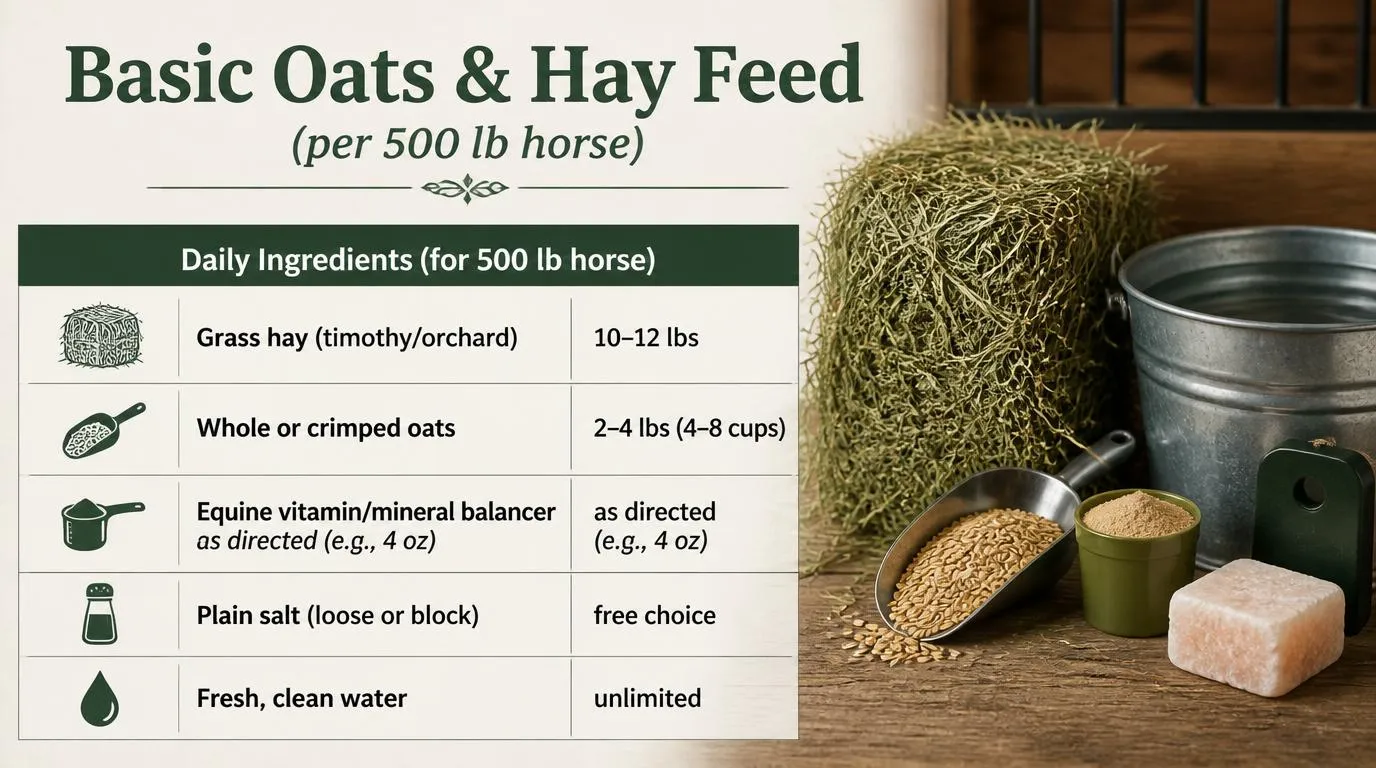
Daily Ingredients (for 500 lb horse)
- Grass hay (timothy/orchard) 10–12 lbs
- Whole or crimped oats 2–4 lbs (4–8 cups)
- Equine vitamin/mineral balancer as directed (e.g., 4 oz)
- Plain salt (loose or block) free choice
- Fresh, clean water unlimited
Note: Adjust hay and grain amounts based on horse’s weight, workload, metabolism, and hay quality. Always introduce diet changes gradually over 7–10 days.
Approximate Nutritional Profile (per lb of oats + hay base)
Values vary with hay type and oat variety. A balancer is essential to prevent deficiencies.
Step-by-Step Feeding Instructions
- Weigh or measure hay: Provide high‑quality grass hay (timothy, orchard, or mixed). For a 500 lb horse, start with 10–12 lbs daily, split into 2–3 feedings.
- Measure oats: Use a scoop to measure 2–4 lbs of whole or crimped oats. Do not feed dusty or moldy grain.
- Add balancer: Mix the recommended amount of equine vitamin/mineral balancer into the oats. Follow label instructions based on your horse’s weight.
- Offer salt and water: Provide free‑choice plain salt (loose or block) and unlimited fresh, clean water.
- Feed in a clean bucket: Serve the oat/balancer mix in a feeder. Feed hay separately or together, depending on your setup.
- Adjust as needed: Monitor body condition score (BCS) and energy level. Increase oats for weight loss or heavy work; decrease for easy keepers.
Pros and Cons of Oat‑Based Horse Feed
Pros
- Natural energy source – oats are highly digestible and provide “cool” energy.
- Cost‑effective – often cheaper than pelleted feeds.
- No molasses or additives – good for horses with metabolic issues.
- Simple and customizable – you control ingredients.
- Promotes chewing and saliva production – aids digestion.
Cons
- Nutritionally incomplete alone – requires a balancer to add minerals/vitamins.
- Lower in fiber than hay – must be fed with adequate forage.
- Risk of improper balance – can lead to deficiencies if not formulated correctly.
- Storage concerns – oats can attract rodents and spoil.
Nutritional Tips – Why Oats and Hay Work Well Together
Ingredient Benefits
- Grass hay (timothy/orchard): Provides essential long‑stem fiber for hindgut health, plus protein and calcium.
- Whole or crimped oats: Highly digestible starch (about 40–50%), good B‑vitamin profile, and a favorable calcium:phosphorus ratio (1:1) compared to corn.
- Vitamin/mineral balancer: Supplies copper, zinc, selenium, vitamin E, and other micronutrients lacking in oats and hay.
- Plain salt: Sodium and chloride for nerve function and sweat replacement.
⚠️ Important: Do NOT feed oats without a balancer for more than a few weeks. Long‑term deficiencies (especially copper and selenium) can cause serious health issues.
Feeding Guidelines for Oats & Hay
- Hay first: Forage should be at least 1.5–2% of body weight daily (e.g., 7.5–10 lbs for a 500 lb pony). For most horses, offer free‑choice hay.
- Grain amount: Start with 0.5% of body weight in oats (2.5 lbs for 500 lb horse) and adjust based on workload and condition. Do not exceed 1% body weight from grain.
- Divide meals: Feed 2–3 small grain meals per day rather than one large meal to reduce digestive upset risk.
- Monitor body condition: Use the Henneke Body Condition Scoring system (ideal 5–6). Adjust calories by changing hay type (alfalfa vs. grass) and oat amount.
- Always provide water: Horses need 5–10 gallons of fresh water daily, more in hot weather or with exercise.
Recipe Variations by Horse Type
Customize for Your Horse
- For easy keepers / metabolic syndrome: Replace oats with a low‑starch alternative (soybean hulls, beet pulp) or feed only hay and a ration balancer.
- For performance horses: Increase oats to 0.75–1% body weight, add vegetable oil (¼–½ cup per day), and ensure balancer provides adequate selenium and vitamin E.
- For growing horses: Use a commercial junior feed instead of plain oats; or add a protein source (soybean meal) and a growth‑specific balancer.
- For senior horses: Soak oats or feed crimped/rolled oats for easier chewing; consider adding a probiotic.
- Alfalfa hay substitute: Replace up to half of grass hay with alfalfa for extra protein and calcium (good for growing or lactating mares).
Always consult an equine nutritionist or veterinarian before making major changes.
Must‑Have Items
Recommended Tools & Supplies
- Feed Scale or Scoop – to measure alfalfa and grain accurately. Check price on Amazon
- Heavy Rubber Feed Tub – durable and tip‑resistant. Check price on Amazon
- Airtight Grain Bin – for storing oats, pellets, and balancer. Check price on Amazon
- Hay Net or Slow Feeder – to reduce waste and extend feeding time. Check price on Amazon
- Water Bucket (galvanized or plastic) – clean, fresh water at all times. Check price on Amazon
We participate in the Amazon Services LLC Associates Program, an affiliate advertising program designed to provide a means for us to earn fees by linking to Amazon.com and affiliated sites. As an Amazon Associate, we earn from qualifying purchases.
Storage and Safety Tips
Keep Feed Fresh & Safe
- Store hay off the ground: Keep in a dry, well‑ventilated barn or shed. Discard any moldy or dusty bales.
- Keep oats in a sealed container: Use a metal or heavy‑duty plastic bin to deter rodents and prevent moisture.
- Check for spoilage: Oats should smell fresh, not sour or musty. Hay should be free of mold, weeds, and debris.
- Clean feeders daily: Remove uneaten grain and hay to prevent mold and bacteria.
- Gradual diet changes: Any change in hay or grain should be done over 7–10 days to avoid colic or laminitis.
- Know your hay analysis: For optimal balance, test your hay for nutrient content and adjust the balancer accordingly.
Conclusion
Feeding a simple diet of high‑quality hay and oats, balanced with a vitamin/mineral balancer, can be a healthy and economical choice for many adult horses. This traditional approach allows you to see exactly what your horse is eating and adjust ratios based on individual needs. However, it requires careful attention to detail – especially regarding forage quality and micronutrient balance.
Always monitor your horse's body condition, energy, and manure consistency. If you are unsure about formulating a balanced diet, consult an equine nutritionist. With proper management, homemade oat‑based feed can keep your horse happy and healthy for years to come.
Happy feeding from ZimuShop!
Frequently Asked Questions
Can I feed only oats and hay without a balancer?
Not for more than a few weeks. Oats and hay are deficient in several essential minerals (copper, zinc, selenium) and vitamins (E). A balancer is necessary for long‑term health.
Are whole oats or crimped oats better?
Both are good. Whole oats are less processed but require good teeth for chewing. Crimped or rolled oats are slightly more digestible for seniors or horses with dental issues.
How much hay does a horse need daily?
Horses should eat 1.5–2.5% of their body weight in forage daily. For a 1,000 lb horse, that's 15–25 lbs of hay. Provide free‑choice hay whenever possible.
Can this recipe cause laminitis?
Oats have less starch than corn or barley but can still trigger laminitis in susceptible horses (e.g., those with EMS or Cushing's). For at‑risk horses, replace oats with low‑starch alternatives like beet pulp or soy hulls.
How do I know if my horse needs more or less oats?
Monitor body condition score (ideal 5/9) and energy level. If ribs are easily visible, increase oats gradually. If fat pads develop, reduce oats and consider a lower‑energy forage.
Can I use this recipe for a pregnant or lactating mare?
Not without modification. Pregnant and lactating mares have higher protein, calcium, and mineral requirements. Consult your vet; you may need to add alfalfa hay, soybean meal, and a specific mare/foal balancer.