As a veterinarian with over 12 years of experience in pet nutrition, I've witnessed firsthand the profound impact that proper homemade puppy nutrition can have on a dog's lifelong health. This comprehensive 2026 puppy food guide provides scientifically-backed recipes and nutritional strategies for raising healthy puppies through their critical growth phases. Whether you have a large breed puppy requiring controlled growth or a small breed puppy needing nutrient-dense meals, this guide covers essential puppy development nutrition principles.
Preparing balanced homemade puppy food requires understanding specific nutritional needs that differ dramatically from adult dogs. Puppies need approximately twice the calories per pound compared to adults, along with precise calcium-phosphorus ratios for proper bone development. This guide will walk you through creating complete and balanced puppy meals that support optimal growth while preventing common developmental issues.
Table of Contents
Understanding Puppy Growth Stages & Nutritional Needs
Puppies progress through distinct growth phases with unique nutritional requirements. As a veterinarian, I emphasize that puppy developmental nutrition isn't one-size-fits-all it must adapt to their changing needs.
Puppy Growth Phases & Nutritional Focus
Neonatal (0-2 weeks)
Mother's milk only. Colostrum provides essential antibodies. If supplementing, use veterinary-formulated milk replacer only.
Weaning (3-8 weeks)
Introduction to solid food. Start with gruel consistency. High protein (28-32%) and fat (18-22%) for brain development.
Rapid Growth (2-6 months)
Maximum nutritional demand. Calorie-dense meals. Critical period for bone development precise calcium:phosphorus ratio (1.2:1 to 1.4:1).
Adolescent (6-12 months)
Growth rate slows. Adjust calories to prevent obesity. Continue high-quality protein for muscle development. Large breeds continue growing until 18-24 months.
Veterinary Insight
In my practice, I've seen that large breed puppies are particularly sensitive to overnutrition. Excessive calories or improper calcium levels during rapid growth can predispose them to developmental orthopedic diseases like hip dysplasia. For large breeds, I recommend slightly lower fat content (14-16%) compared to small breeds (18-22%) to promote steady, controlled growth.
Puppy Daily Calorie Calculator
Use this calculator to estimate your puppy's daily calorie needs. Remember: individual needs vary based on metabolism, activity level, and growth rate.
Your Puppy's Estimated Daily Calorie Needs:
Note: This is an estimate. Monitor your puppy's body condition and adjust as needed. Puppies typically need 2-3 times more calories per pound than adult dogs of the same breed.
Breed Size Nutritional Differences
Understanding breed-specific puppy nutrition is crucial for proper development. Different breed sizes have distinct growth patterns and nutritional requirements.
Small Breeds
(<20 lbs adult)
Growth complete: 9-12 months
Calorie density: High (nutrient-dense meals)
Meal frequency: 3-4x daily (prevents hypoglycemia)
Special needs: Small kibble size, easy-to-chew textures
Medium Breeds
(20-50 lbs adult)
Growth complete: 12-15 months
Calorie density: Moderate
Meal frequency: 3x daily until 6 months, then 2x
Special needs: Balanced growth, moderate protein (22-26%)
Large/Giant Breeds
(>50 lbs adult)
Growth complete: 18-24 months
Calorie density: Controlled (prevent rapid growth)
Meal frequency: 3x daily, smaller meals
Special needs: Precise calcium:phosphorus (1.2:1), lower fat (14-16%)
Critical Warning for Large Breed Puppies
Large and giant breed puppies require special attention to prevent developmental orthopedic diseases. Key precautions:
- Avoid overfeeding: Rapid weight gain stresses developing joints
- Control calcium: Excessive calcium can disrupt bone development
- Monitor growth: Aim for steady growth, not maximum growth
- Supplement carefully: Only add supplements under veterinary guidance
Consult with a veterinary nutritionist or your regular veterinarian before starting any homemade diet for large breed puppies.
Essential Puppy Nutrients in Homemade Food
Creating balanced homemade puppy food requires understanding these critical nutrients. Missing any can have serious consequences for development.
High-Quality Protein
Puppies need 22-32% protein (dry matter basis) for tissue growth and development. Sources: chicken, turkey, beef, fish, eggs. Animal proteins provide complete amino acid profiles essential for puppies.
Calcium & Phosphorus
Critical for bone development. Ratio should be 1.2:1 to 1.4:1 calcium:phosphorus. Must be supplemented in homemade diets never guess amounts. Consult your vet for proper supplementation.
DHA (Omega-3 Fatty Acids)
Essential for brain and vision development. Particularly important during first 16 weeks. Sources: fish oil, salmon, sardines. Supplement with DHA-rich fish oil designed for puppies.
Complete Vitamin-Mineral Profile
Homemade diets require supplementation of vitamins A, D, E, B-complex, zinc, copper, and iron. Use a balanced puppy supplement or work with a veterinary nutritionist to formulate proper amounts.
Large Breed Puppy Growth Formula
Veterinary Approved
Large Breed Puppy Growth Formula - Controlled Development
Formulated for controlled growth to support proper joint development in large breed puppies. Contains precise calcium:phosphorus ratio and moderate fat content.
Ingredients
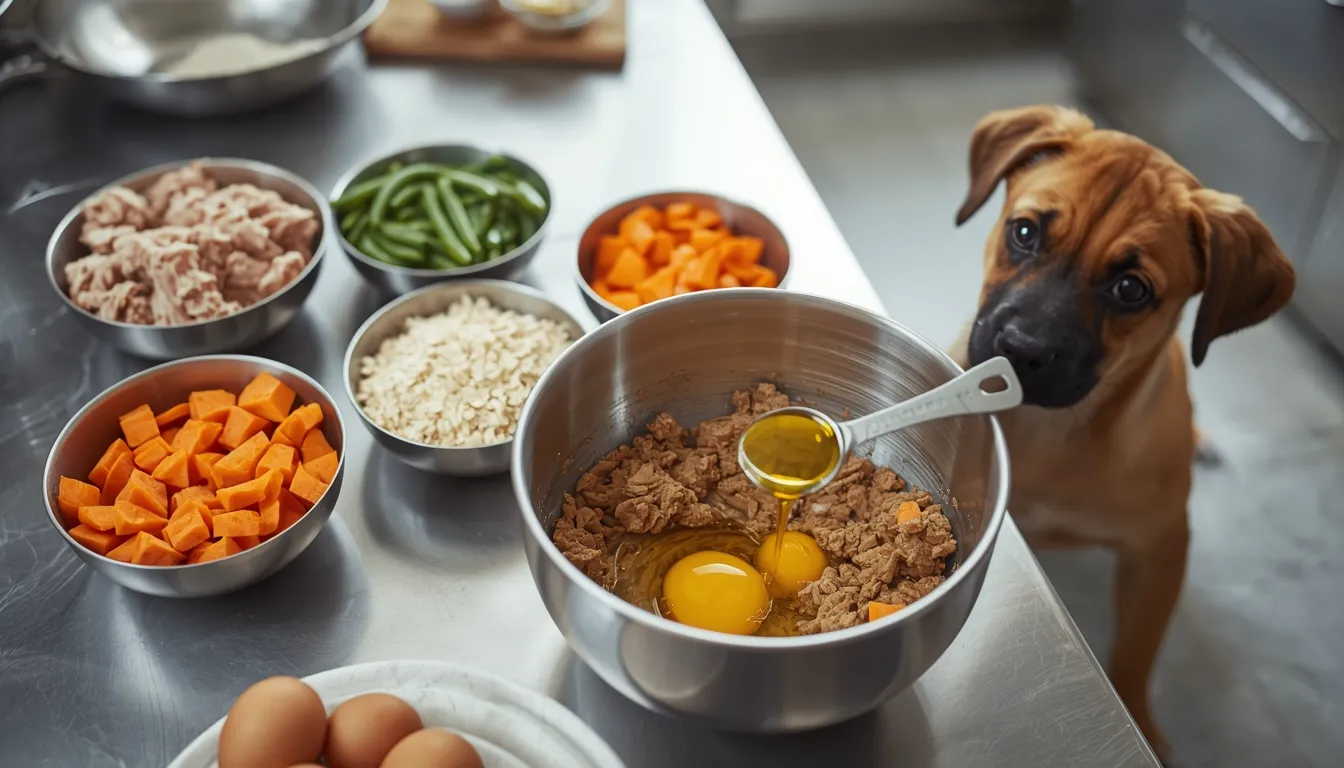
- Lean ground turkey 1.5 lbs (680g)
- Cooked oatmeal 2 cups
- Sweet potatoes, cooked & mashed 1.5 cups
- Carrots, finely grated 1 cup
- Green beans, chopped 1 cup
- Eggs, hard-boiled & chopped 3
- Salmon oil (with DHA) 1 tbsp
- Large breed puppy supplement As directed
- Water or low-sodium broth 2 cups
Instructions
- Cook ground turkey in a large pot until no longer pink. Drain excess fat.
- Add cooked oatmeal, mashed sweet potatoes, grated carrots, and chopped green beans.
- Pour in water or broth, bring to simmer, and cook for 15-20 minutes until vegetables are tender.
- Remove from heat and let cool to room temperature.
- Add chopped hard-boiled eggs and salmon oil. Mix thoroughly.
- Once completely cool, add large breed puppy supplement according to package directions.
- Portion into daily servings based on your puppy's calorie needs.
- Refrigerate for up to 3 days or freeze individual portions.
Nutritional Profile (per cup)
Essential Puppy Supplements for Homemade Diets
Homemade puppy food requires supplementation to be complete and balanced. Even with high-quality ingredients, certain nutrients are insufficient in homemade meals.
Mandatory Supplements for Homemade Puppy Food
Based on veterinary nutrition guidelines, these supplements are non-negotiable for homemade puppy diets:
- Calcium supplement: Ground eggshells (½ tsp per pound of food) or veterinary calcium supplement
- Omega-3 fatty acids: Fish oil specifically formulated for puppies (with DHA for brain development)
- Complete vitamin-mineral mix: Commercial puppy supplement or custom formulation from a veterinary nutritionist
- Taurine (for certain breeds): Particularly important for breeds prone to taurine deficiency
- Probiotics: Supports developing digestive system, especially during dietary transitions
Warning: Never use human supplements or guess amounts. Incorrect supplementation can cause serious health issues. Consult resources from acvn.org (American College of Veterinary Nutrition) or work with a board-certified veterinary nutritionist.
Small Breed Puppy Energy Formula
Nutrient-Dense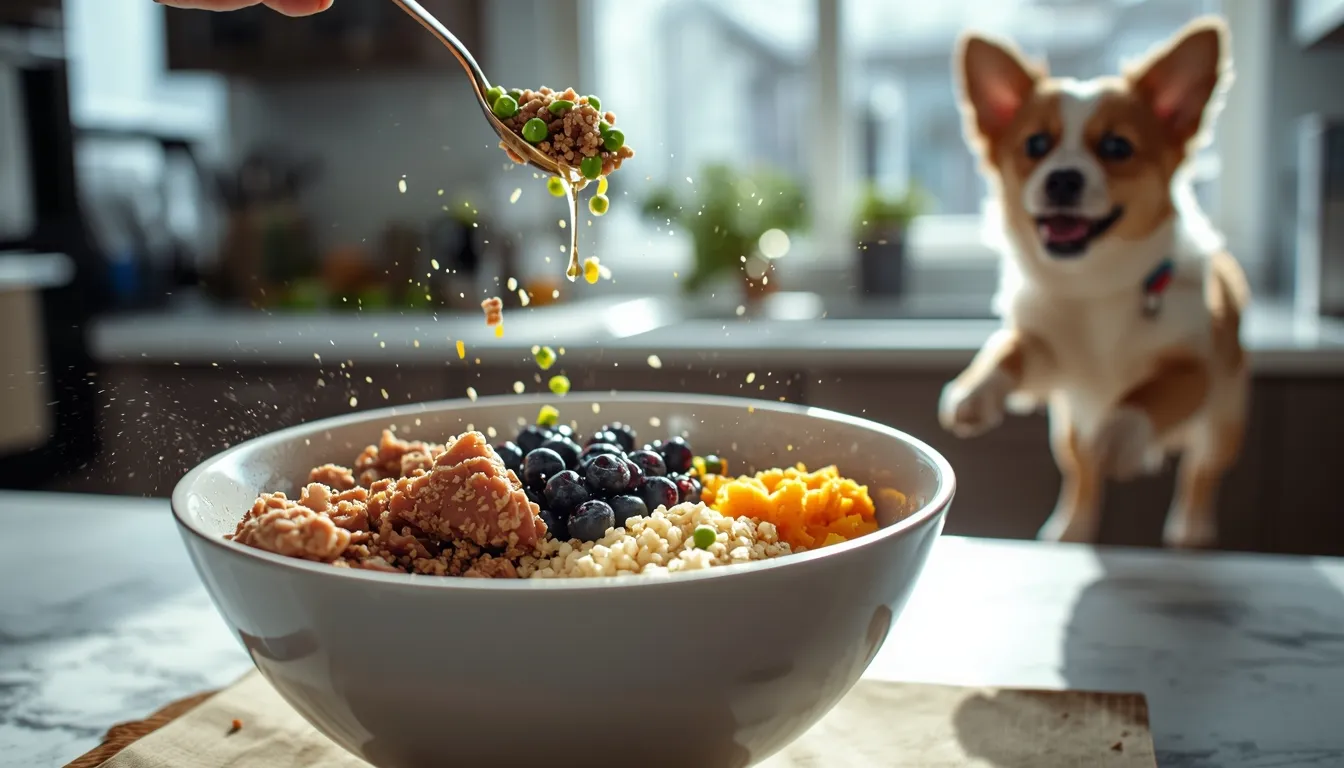
Small Breed Puppy Energy Formula - High Calorie Density
Formulated for high metabolic rate of small breed puppies. Nutrient-dense to prevent hypoglycemia and support rapid growth in limited stomach capacity.
Ingredients
- Ground chicken breast 1 lb (450g)
- Cooked quinoa 1.5 cups
- Pumpkin puree (unsweetened) 1 cup
- Peas, mashed ½ cup
- Chicken liver, cooked & finely chopped ¼ lb (115g)
- Coconut oil 1 tbsp
- Blueberries, mashed ½ cup
- Small breed puppy supplement As directed
- Goat's milk or water 1.5 cups
Instructions
- Cook ground chicken in a skillet until no longer pink. Drain if necessary.
- In a food processor, blend cooked quinoa, pumpkin puree, peas, and blueberries until smooth.
- Combine chicken mixture with pureed vegetable mixture in a large pot.
- Add finely chopped chicken liver and coconut oil. Mix well.
- Add goat's milk or water and simmer for 10-15 minutes, stirring frequently.
- Allow to cool completely to room temperature.
- Once cooled, mix in small breed puppy supplement according to package directions.
- For very small puppies, blend to a smoother consistency.
- Portion into tiny servings (1-2 tablespoons for toy breeds).
Nutritional Profile (per ¼ cup)
Puppy Feeding Schedule & Portion Control
Proper puppy feeding frequency is as important as the food itself. Puppies have small stomachs and high energy needs, requiring frequent meals.
4 Meals Daily
Critical weaning to solid food period. Small, frequent meals prevent hypoglycemia and support rapid growth. Feed at 7am, 11am, 3pm, and 7pm. Portions: ¼ to ½ cup per meal depending on breed size.
3 Meals Daily
Rapid growth phase continues. Reduce to three meals as stomach capacity increases. Feed at 7am, 1pm, and 7pm. Monitor body condition weekly adjust portions if puppy becomes too thin or overweight.
2-3 Meals Daily
Growth rate slows. Most puppies can transition to 2 meals daily. Small breeds may benefit from continuing 3 meals if prone to hypoglycemia. Large breeds: continue 3 smaller meals to prevent bloat risk.
Adult Feeding Schedule
Transition to adult maintenance. Most dogs do well with 2 meals daily. Large/giant breeds may continue growing until 18-24 months continue puppy nutrition until growth plates close (confirmed by vet).
Monitoring Puppy Growth & Body Condition
As a veterinarian, I teach clients to use the Body Condition Score (BCS) system rather than relying solely on weight. A healthy puppy should have:
- Visible waist when viewed from above
- Ribs easily felt with slight fat covering (not visible)
- Abdominal tuck when viewed from side
- Steady weight gain on growth curve for breed
Weigh your puppy weekly and track on a growth chart. Sudden weight changes may indicate health issues or need for dietary adjustment.
All-Size Balanced Puppy Formula
Versatile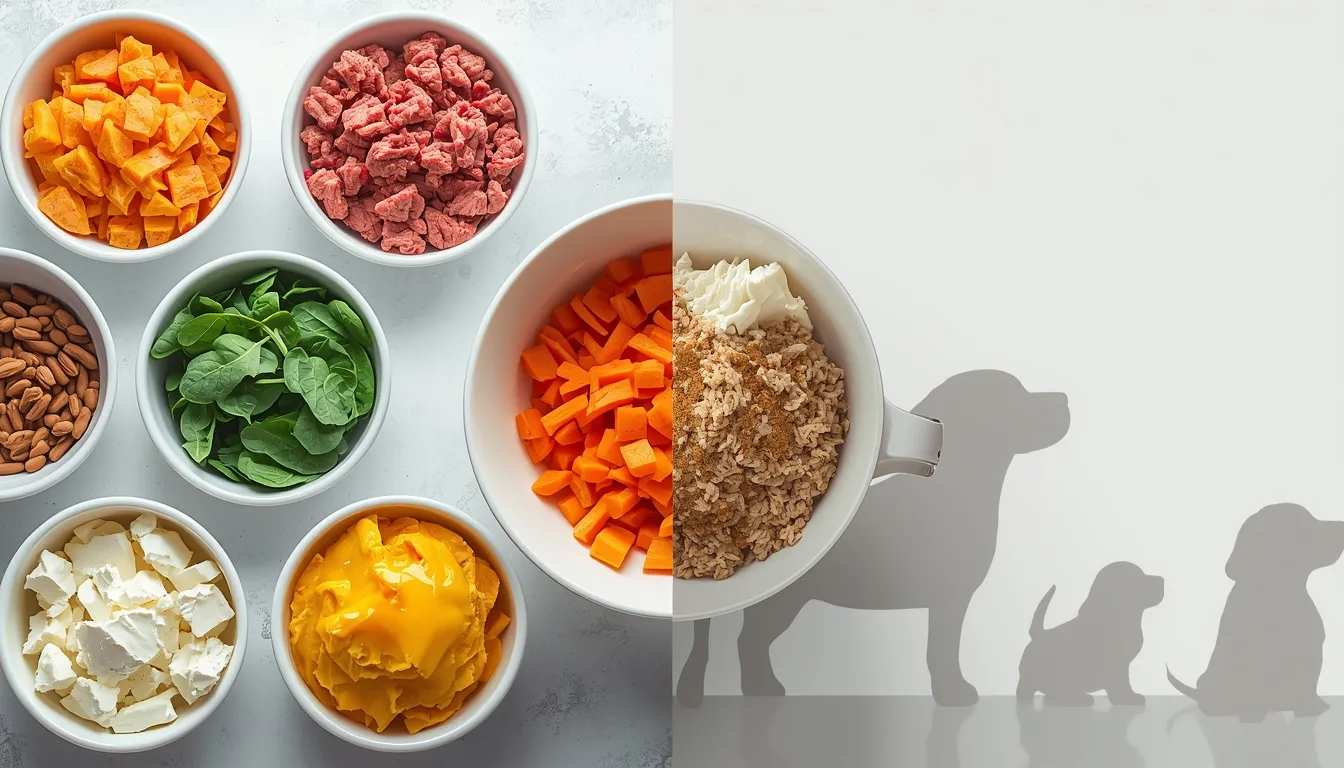
All-Size Balanced Puppy Formula - Adjustable for Any Breed
Versatile base recipe that can be adjusted for different breed sizes by modifying fat content and portion sizes. Contains all essential nutrients for puppy development.
Ingredients
- Lean ground beef or lamb 1.5 lbs (680g)
- Brown rice, cooked 3 cups
- Sweet potatoes, cooked & mashed 2 cups
- Spinach, finely chopped 1 cup
- Carrots, grated 1 cup
- Cottage cheese (low-fat) 1 cup
- Eggs, beaten 2
- Flaxseed oil 1 tbsp
- Complete puppy supplement As directed
- Water or bone broth 3 cups
Instructions
- Brown ground beef/lamb in a large pot. Drain excess fat (remove more fat for large breeds).
- Add cooked brown rice, mashed sweet potatoes, spinach, and grated carrots.
- Pour in water or bone broth and bring to a simmer. Cook for 20-25 minutes.
- In a separate bowl, mix beaten eggs and cottage cheese. Slowly add to the pot while stirring.
- Cook for additional 5-7 minutes until eggs are cooked through.
- Remove from heat and allow to cool completely.
- Once cooled, mix in flaxseed oil and complete puppy supplement.
- Adjust consistency: add more broth for thinner gruel (young puppies) or less for thicker food.
- Portion according to breed size and age.
Nutritional Profile (per cup)
Breed-Specific Adjustments
- Large breeds: Use leanest meat, reduce fat to 12-14% by using less oil
- Small breeds: Increase calorie density by adding 1 tbsp coconut oil
- All breeds: Adjust portion sizes based on age, weight, and activity level
- Texture: Blend for younger puppies, keep chunky for older puppies
Transitioning Puppies to Homemade Food
A gradual transition is essential when introducing homemade puppy food to prevent digestive upset. Follow this 10-14 day transition plan.
Step-by-Step Transition Guide
Days 1-3: 25% new food, 75% old food. Mix thoroughly. Monitor stool consistency.
Days 4-7: 50% new food, 50% old food. Continue monitoring appetite and energy levels.
Days 8-10: 75% new food, 25% old food. Watch for any signs of digestive upset.
Days 11-14: 100% homemade puppy food. Complete transition if no issues.
Special considerations: Puppies with sensitive stomachs may need a slower transition (14-21 days). If diarrhea occurs, return to previous ratio for 2-3 days before advancing.
Puppy Nutrition FAQs
When can I start feeding homemade food to my puppy?
Weaning period (3-4 weeks) is the earliest, but I recommend starting at 8 weeks when puppies typically go to their new homes. Begin with a smooth gruel consistency and gradually thicken as they grow. The transition from mother's milk to solid food should be gradual over 3-4 weeks. Always consult your veterinarian before starting homemade food, especially for puppies with special health considerations. Resources from avma.org provide additional guidance on puppy weaning.
How do I know if my homemade puppy food is balanced?
From a veterinary perspective, these are signs of balanced puppy nutrition:
- Steady growth along breed-appropriate growth curve
- Good energy levels and normal activity patterns
- Healthy coat - shiny, minimal shedding
- Firm, regular stools - not too hard or too soft
- Normal development - teeth, bones, muscle tone
- Regular veterinary check-ups showing good health metrics
For scientific validation, consider having your recipes analyzed by a veterinary nutritionist or using pre-formulated supplements from reputable companies. The aafco.org provides nutritional standards for puppy food.
What supplements are absolutely essential for homemade puppy food?
Based on veterinary nutrition standards, these supplements are non-negotiable:
- Calcium source: Ground eggshell (½ tsp per pound of food) or veterinary calcium supplement
- Omega-3 fatty acids: Fish oil with DHA (for brain/vision development)
- Complete vitamin-mineral mix: Commercial puppy supplement or custom formulation
- Probiotics: Especially during dietary transitions
- Taurine: For breeds prone to deficiency (consult your vet)
Warning: Do not guess supplement amounts. Incorrect calcium supplementation can cause serious bone development issues. Work with a veterinary nutritionist or use pre-formulated puppy supplements from reputable brands.
How much should I feed my growing puppy?
Puppy feeding amounts depend on multiple factors:
- Breed size: Small breeds need more calories per pound than large breeds
- Age: Calorie needs peak around 4-6 months, then gradually decrease
- Activity level: Active puppies need more calories than sedentary ones
- Individual metabolism: Some puppies naturally burn more calories
As a general guideline, puppies need approximately 50-55 calories per pound of body weight for small breeds, 40-45 calories per pound for medium breeds, and 30-35 calories per pound for large breeds. However, these are estimates. The most reliable method is to monitor body condition and adjust portions accordingly. Use the calorie calculator earlier in this article as a starting point.
Can I feed my puppy raw homemade food?
From a veterinary standpoint, I generally do not recommend raw diets for puppies due to:
- Immune system vulnerability: Puppies have developing immune systems
- Bacterial risk: Higher susceptibility to Salmonella, E. coli, etc.
- Nutritional imbalance risk: More challenging to balance properly
- Parasite risk: Potential exposure to parasites in raw meat
- Bone hazards: Raw bones can splinter and cause injury
If you choose a raw diet despite these risks, work with a veterinary nutritionist to formulate a balanced recipe, use human-grade ingredients, practice strict food safety, and have your puppy tested regularly for parasites and bacterial pathogens. The cdc.gov provides information on risks associated with raw pet food.
How do I store homemade puppy food safely?
Proper storage is crucial for puppy food safety:
- Refrigeration: Store in airtight containers for up to 3 days
- Freezing: Portion into daily servings and freeze for up to 3 months
- Thawing: Thaw in refrigerator overnight, never at room temperature
- Portion sizes: Use small containers appropriate for puppy meal sizes
- Labeling: Always label with date prepared and contents
- Hygiene: Wash all preparation surfaces and utensils thoroughly
- Discard uneaten food: Remove uneaten food after 30 minutes
Puppies are more susceptible to foodborne illnesses than adult dogs. When in doubt, throw it out. Never feed spoiled or questionable food to your puppy.