As a veterinarian specializing in exotic pets for over 12 years, I've seen how proper homemade nutrition can dramatically improve the health and longevity of small mammals. This comprehensive guide will teach you how to prepare species-appropriate homemade food for rabbits, guinea pigs, hamsters, ferrets, chinchillas, and other small pets. Discover balanced small mammal recipes with proper nutrient ratios, safe ingredients, and preparation methods that support optimal health for your tiny companions.
Small mammals have unique digestive systems and nutritional requirements that differ significantly from dogs and cats. In my practice, I've helped hundreds of pet owners transition to healthy homemade diets that address specific needs like a rabbit's requirement for constant hay, a guinea pig's need for vitamin C, or a ferret's obligate carnivore status. This guide covers everything you need to know about preparing safe, nutritious homemade food for your small pets.
Table of Contents
Why Homemade Food Benefits Small Mammals
Choosing to prepare homemade food for small mammals provides control over ingredient quality and freshness that commercial pellets often lack. From my veterinary experience, species-specific nutrition is crucial for preventing common health issues like dental problems, obesity, digestive stasis, and urinary issues in small pets.
Veterinary Perspective
In my practice, I've observed that small mammals fed varied, fresh homemade diets have fewer dental issues, healthier coats, and better digestive function. Commercial pellets often contain fillers and preservatives that can trigger allergies or digestive upset in sensitive small pets. Homemade food allows you to eliminate problematic ingredients and tailor meals to your pet's specific health needs.
- Freshness Control: Maximize nutrient retention with freshly prepared meals
- Allergy Management: Easily eliminate ingredients that cause sensitivities
- Dental Health: Customize texture to support proper tooth wear
- Hydration Support: Fresh foods have higher moisture content than dry pellets
- Variety & Enrichment: Different textures and flavors provide mental stimulation
- Cost Effective: Can be more economical than premium commercial diets
- Quality Assurance: You control ingredient sourcing and quality
Species-Specific Nutritional Requirements
Understanding small mammal dietary classifications is essential for creating appropriate homemade meals. This guide categorizes common small pets by their natural feeding strategies:
Herbivores
Rabbits, Guinea Pigs, Chinchillas: Require unlimited hay (80-90% of diet), fresh vegetables (10-15%), and limited pellets/fruits. Need high fiber for digestive health and dental wear.
Omnivores
Hamsters, Rats, Mice, Gerbils: Balanced mix of grains, seeds, vegetables, and occasional protein. Require varied diet with controlled fat intake to prevent obesity.
Carnivores
Ferrets: Obligate carnivores requiring 30-40% protein, 20-30% fat, minimal carbohydrates. Need animal-based proteins and fats for optimal health.
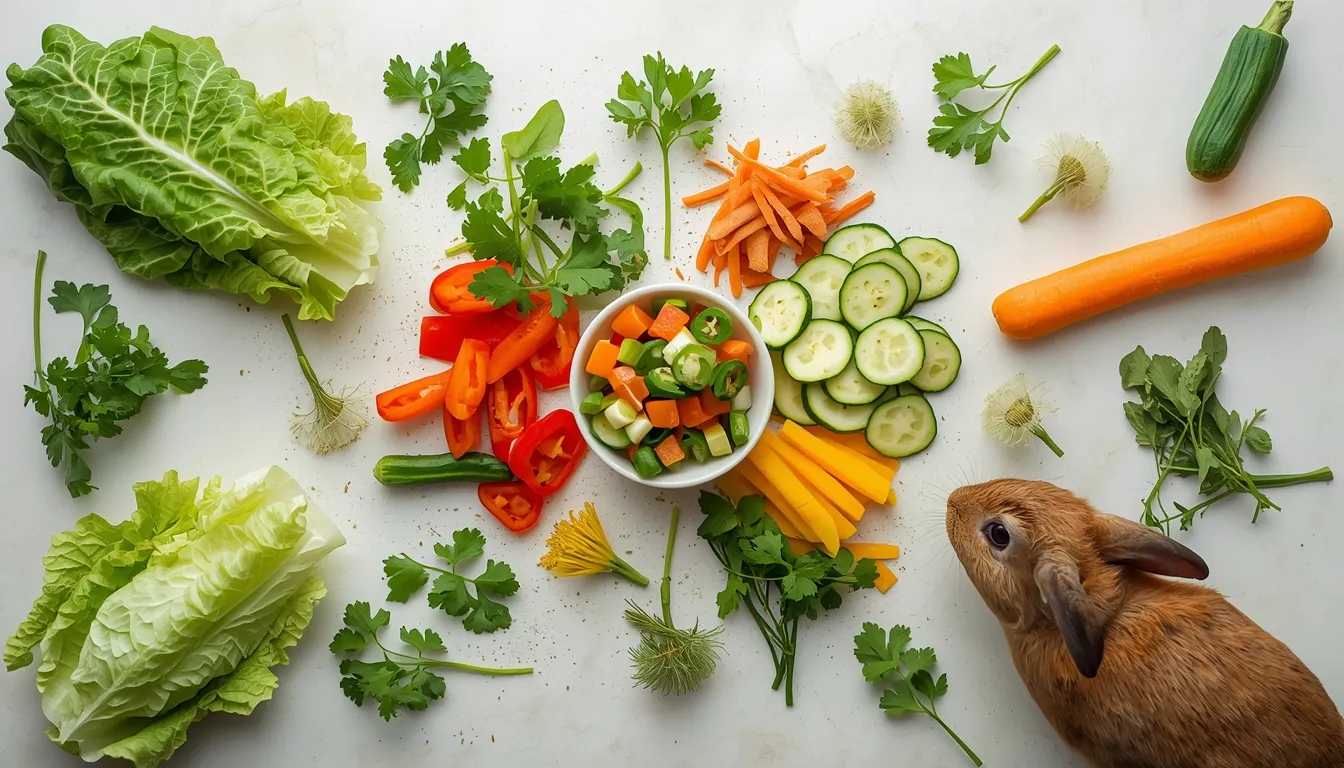
Fresh Herbivore Salad for Rabbits & Guinea Pigs
High Fiber
Fresh Herbivore Salad - Perfect for Rabbits & Guinea Pigs
Best for: Herbivorous small mammals who need high-fiber, low-calcium vegetables. Always serve alongside unlimited hay.
Ingredients (Daily serving for 2lb rabbit)
- Romaine lettuce 1 cup chopped
- Bell peppers (any color) ¼ cup diced
- Cilantro or parsley 2-3 sprigs
- Zucchini 2 thin slices
- Carrot tops (not carrots) small handful
- Dandelion greens 3-4 leaves
- Vitamin C supplement (for guinea pigs) as directed
Instructions
- Wash all vegetables thoroughly under cold running water to remove pesticides.
- Chop romaine lettuce, bell peppers, and zucchini into bite-sized pieces.
- Tear dandelion greens and carrot tops into smaller pieces.
- Combine all ingredients in a large bowl and mix gently.
- For guinea pigs, sprinkle vitamin C supplement over the salad (consult your vet for dosage).
- Serve immediately, storing any extra in an airtight container in the refrigerator.
- Remember: This salad supplements but doesn't replace unlimited hay.
Nutritional Benefits
Hay is Essential
For herbivorous small mammals (rabbits, guinea pigs, chinchillas), unlimited access to high-quality hay is non-negotiable. Hay provides essential fiber for digestive health, wears down continuously growing teeth, and prevents serious conditions like GI stasis. Timothy hay is ideal for most adult herbivores, while younger animals may benefit from alfalfa hay (higher in calcium and protein).
Safe vs. Dangerous Ingredients for Small Mammals
Knowing which foods are safe for small mammals and which are toxic is crucial for homemade food preparation. This guide separates ingredients by safety categories:
Safe Vegetables
For herbivores/omnivores: Romaine lettuce, bell peppers, zucchini, cucumber, broccoli (in moderation), carrot tops, dandelion greens, basil, cilantro, parsley.
Dangerous Foods
Avoid completely: Iceberg lettuce (low nutrient), onions, garlic, potatoes, rhubarb, avocado, chocolate, caffeine, alcohol, sugary treats.
Safe Grains/Seeds
For omnivores: Oats, barley, millet, flax seeds (ground), pumpkin seeds (unsalted), sunflower seeds (limited due to high fat).
Safe Proteins (Carnivores)
For ferrets: Chicken, turkey, duck, rabbit, eggs, organ meats (heart, liver in moderation). Always cooked to eliminate bacteria.
Critical Safety Note
Species differences matter: Foods safe for one species may be dangerous for another. For example, fruits are okay in moderation for hamsters but can cause deadly digestive issues in rabbits if fed incorrectly. Always research species-specific guidelines before introducing new foods. Consult resources from the Humane Society or your exotic pet veterinarian.
Balanced Omnivore Mix for Hamsters & Mice
Complete Diet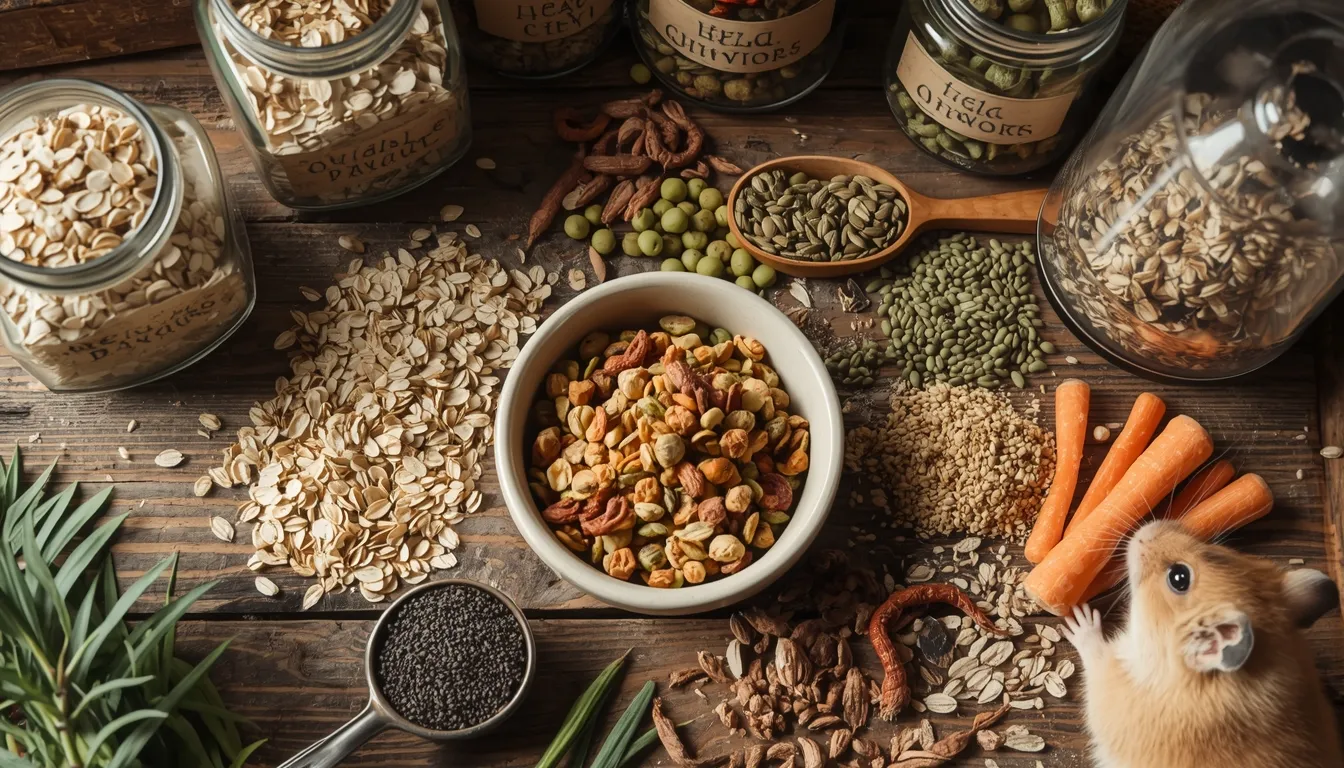
Balanced Omnivore Mix - Perfect for Hamsters, Mice & Gerbils
Best for: Omnivorous small mammals who need balanced grains, seeds, and vegetables. Provides complete nutrition when combined with fresh vegetables.
Dry Mix Ingredients
- Rolled oats 1 cup
- Barley ½ cup
- Millet ½ cup
- Flax seeds (ground) ¼ cup
- Dried mealworms (for protein) 2 tbsp
- Dried peas ¼ cup
- Unsalted sunflower seeds 2 tbsp
- Dried carrot pieces ¼ cup
Instructions
- Combine all dry ingredients in a large mixing bowl.
- Mix thoroughly to ensure even distribution of all components.
- Store in an airtight container in a cool, dark place for up to 3 weeks.
- Serve 1-2 tablespoons daily per hamster, supplemented with fresh vegetables.
- Fresh supplement ideas: small piece of broccoli, slice of cucumber, spinach leaf.
- Always provide fresh, clean water daily.
- Monitor your pet's weight and adjust portions if needed.
Nutritional Profile
Preparation & Safety Guidelines
Essential Preparation Tools
Digital Scale
For precise portion control, especially important for small pets
Sharp Knives/Cutting Board
For chopping vegetables into appropriate sizes
Airtight Containers
For storing dry mixes and prepared foods
Veggie Wash
To remove pesticides from fresh produce
Food Safety Protocols
Based on my veterinary experience, follow these safety protocols for homemade small mammal food:
- Wash thoroughly: Rinse all fruits and vegetables under running water
- Organic preferred: Choose organic when possible to reduce pesticide exposure
- Proper storage: Refrigerate fresh foods and store dry mixes in airtight containers
- Remove uneaten food: Discard fresh food after 4-6 hours to prevent spoilage
- Cook proteins: Always cook meat thoroughly for ferrets to eliminate bacteria
- Avoid seasoning: Never add salt, sugar, spices, or oils to small mammal food
- Gradual introduction: Introduce new foods slowly over 7-10 days
Homemade Ferret Food Patties
High Protein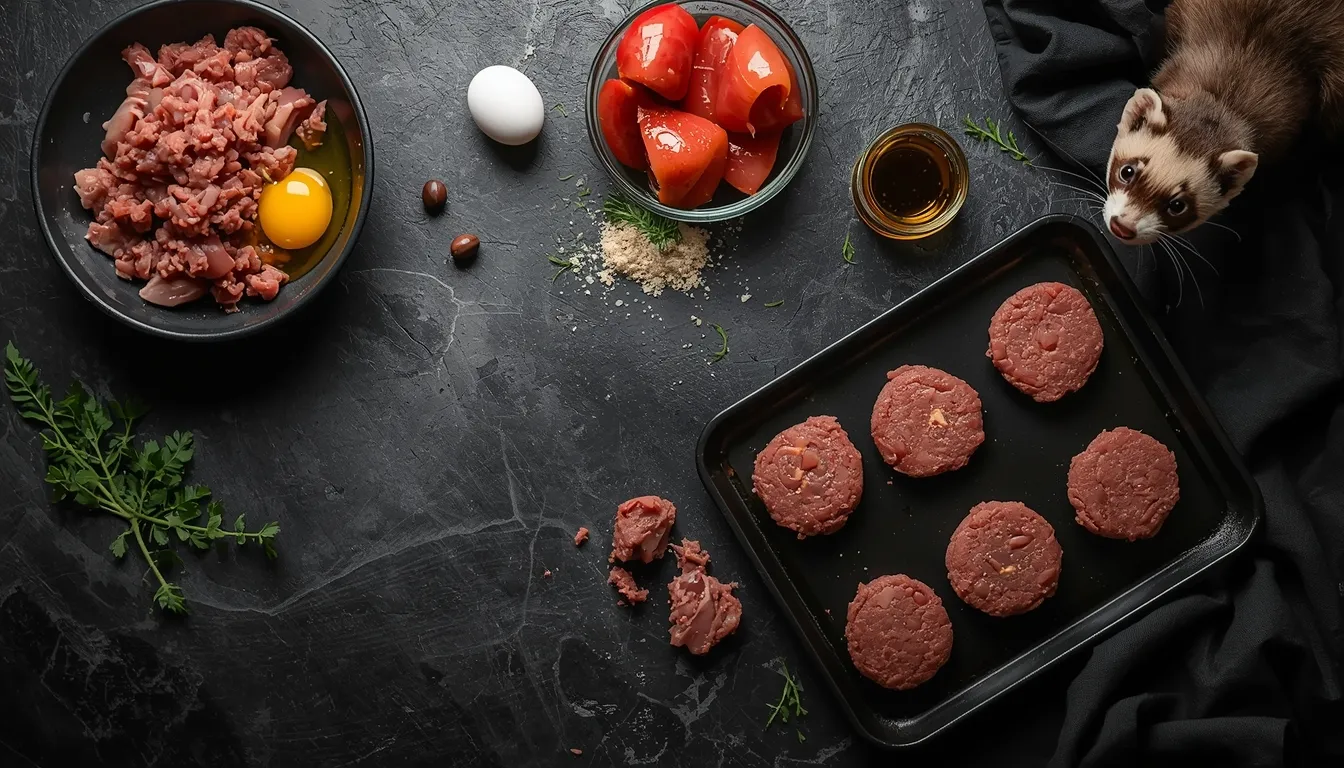
Homemade Ferret Food Patties - Complete Carnivore Diet
Best for: Ferrets who require high-protein, high-fat, low-carbohydrate diets. Mimics their natural prey-based nutrition.
Ingredients
- Ground chicken (with organs if possible) 1 lb (450g)
- Chicken hearts ¼ lb (115g)
- Chicken liver 2 oz (60g)
- Egg (with shell) 1 large
- Salmon oil 1 tsp
- Taurine supplement as directed
Instructions
- Grind chicken hearts and liver in a food processor until finely minced.
- Combine ground chicken, minced organs, and whole egg (including crushed shell for calcium) in a bowl.
- Mix thoroughly until well combined. Add salmon oil and taurine supplement during mixing.
- Form mixture into small patties (about 1 tablespoon each).
- Cook patties in a skillet over medium heat until fully cooked (internal temperature 165°F/74°C).
- Allow to cool completely before serving. Store cooked patties in refrigerator for up to 3 days or freeze.
- Serve 2-3 patties daily for an average adult ferret, adjusted for weight and activity level.
Nutritional Profile (per patty)
Food Storage & Handling Guidelines
Storage Recommendations
Based on my veterinary practice, proper storage is critical for homemade small mammal food safety:
- Fresh vegetables: Store in airtight containers in refrigerator for up to 3 days
- Dry mixes: Store in airtight containers in cool, dark place for up to 3 weeks
- Cooked foods (ferret patties): Refrigerate for up to 3 days or freeze for 2 months
- Freezing tips: Portion food before freezing for easy thawing
- Thawing: Thaw frozen food in refrigerator overnight, never at room temperature
- Discard uneaten food: Remove fresh food from cage after 4-6 hours to prevent spoilage
- Label everything: Date all stored food and use oldest first
I recommend preparing a week's worth of fresh food at a time and freezing individual portions of cooked foods. This ensures freshness while minimizing daily preparation time.
Transitioning to Homemade Food
Follow this gradual transition plan over 10-14 days to prevent digestive upset in sensitive small mammals:
25% New Food, 75% Old Food
Mix small amounts of homemade food with your pet's regular diet. Monitor closely for any changes in appetite, behavior, or stool consistency. Small mammals have sensitive digestive systems that need gradual adaptation.
50% New Food, 50% Old Food
Equal parts old and new food. Continue monitoring stool quality and overall health. Some species like rabbits need constant access to hay throughout the transition.
75% New Food, 25% Old Food
Mostly homemade food with small amount of old food. Watch for positive changes like improved coat quality, increased energy, or healthier stools.
100% Homemade Small Mammal Food
Complete transition. Continue monitoring weight weekly and adjust portions as needed. Remember that hay should remain available at all times for herbivorous species.
My Transition Monitoring Checklist
During any dietary transition, monitor these key health indicators:
- Stool consistency: Should remain formed and consistent
- Appetite: Should remain normal or improve
- Water consumption: Monitor for changes (increase or decrease)
- Weight: Weigh weekly to ensure proper weight maintenance
- Coat quality: Should improve with better nutrition
- Energy levels: Should remain normal or improve
If you notice any negative changes (diarrhea, reduced appetite, lethargy), slow the transition or consult your veterinarian. Some species like guinea pigs should never completely stop eating, as this can indicate serious health issues.
Small Mammal Food FAQs
Can I feed my rabbit only vegetables without hay?
Absolutely not. Hay is essential for rabbits (and other herbivores like guinea pigs and chinchillas) for several reasons. It provides the necessary fiber for proper digestive function, wears down their continuously growing teeth, and prevents serious health issues like GI stasis. Vegetables should supplement, not replace unlimited access to high-quality hay. Resources from the House Rabbit Society provide excellent guidance on proper rabbit nutrition ratios.
How do I ensure my guinea pig gets enough vitamin C?
Guinea pigs cannot synthesize their own vitamin C and require dietary sources. In homemade diets, include vitamin C-rich vegetables daily such as bell peppers (especially red and yellow), kale, broccoli, and parsley. You can also provide a vitamin C supplement designed for guinea pigs, either in liquid form added to water or tablets. Fresh vegetables lose vitamin C over time, so feed them soon after preparation. Signs of vitamin C deficiency include rough coat, swollen joints, and decreased appetite. Guidelines from guineapigmanual.com provide specific dosage recommendations.
What fruits are safe for small mammals and how often?
Fruits should be considered treats due to their high sugar content. Safe fruits in moderation include: apples (no seeds), bananas (tiny amounts), berries, melons, and pears. Frequency depends on species:
- Rabbits/Guinea pigs: 1-2 teaspoons 2-3 times per week
- Hamsters/Mice/Gerbils: Pea-sized piece 1-2 times per week
- Ferrets: Avoid fruits entirely (carnivores)
Always remove seeds/pits and introduce new fruits gradually. Monitor for digestive upset and adjust accordingly.
Can I feed my small mammal human food scraps?
Generally no, with specific exceptions. Most human food contains seasonings, oils, salt, or sugar that are harmful to small mammals. However, plain, fresh vegetable scraps prepared specifically for your pet can be safe. For example: the outer leaves of lettuce, bell pepper tops and seeds, carrot tops (not carrots themselves for rabbits), and broccoli stems. Never feed cooked foods with any seasoning, dairy products, grains (except for omnivores), or anything containing onion/garlic. When in doubt, consult species-specific resources or your veterinarian.
How do I know if my homemade diet is nutritionally complete?
From my veterinary experience, these signs indicate a nutritionally complete homemade diet:
- Healthy weight maintenance: Your pet maintains ideal body condition
- Good energy levels: Species-appropriate activity and behavior
- Healthy coat and skin: Shiny fur, minimal shedding, no dry/flaky skin
- Regular digestion: Consistent, well-formed stools appropriate for species
- Good dental health: Properly worn teeth, no overgrowth issues
- Regular vet checkups: Annual exams show good overall health
For complete assurance, consider having your recipes analyzed by a veterinarian specializing in exotic pets or using balanced recipe formulations from trusted sources.
My small mammal is picky how can I encourage eating homemade food?
In my practice, I recommend these strategies for picky small mammals:
- Gradual introduction: Mix new foods with familiar favorites
- Texture variety: Offer both chopped and whole pieces of vegetables
- Foraging enrichment: Hide small pieces in hay or foraging toys
- Freshness matters: Offer food soon after preparation when most aromatic
- Timing: Offer new foods when your pet is most active and hungry
- Patience: Some species need 10-15 exposures to accept new foods
- Consult your vet: Sudden pickiness can indicate health issues
For herbivores, ensure they're eating adequate hay even if they're reluctant about new vegetables. Never withhold hay to encourage vegetable consumption.