
Recipe Introduction
Backyard birds bring life and color to any garden. From the bright red of a cardinal to the cheerful song of a chickadee, these feathered visitors are a joy to watch. Making your own homemade bird food for backyard birds is an easy, rewarding way to attract a variety of species while ensuring they get wholesome, natural ingredients without fillers.
This all‑purpose recipe combines the seeds and grains that backyard birds love most – black oil sunflower seeds, millet, cracked corn, and peanuts – into a simple mix that can be served in platform feeders, hopper feeders, or even scattered on the ground. For winter, we'll also show you how to turn the same ingredients into high‑energy suet cakes that help birds survive cold nights. With just a few pantry staples, you can create a bird buffet that will keep your backyard buzzing with activity year‑round.
Table of Contents
Backyard Bird Seed Mix & Suet Cakes
All‑Season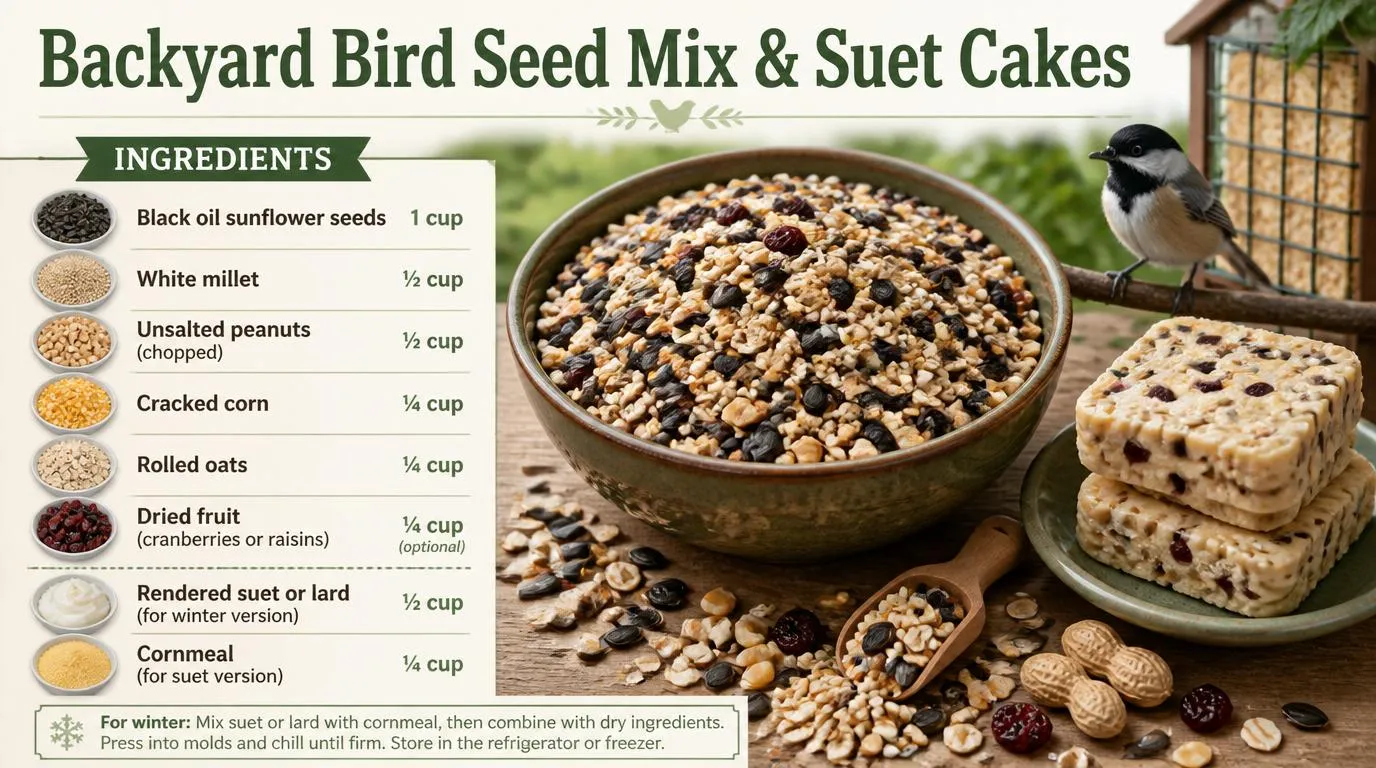 Image Credit: AI Generated
Ingredients
- Black oil sunflower seeds 1 cup
- White millet ½ cup
- Unsalted peanuts (chopped) ½ cup
- Cracked corn ¼ cup
- Rolled oats ¼ cup
- Dried fruit (cranberries or raisins) ¼ cup (optional)
- Rendered suet or lard (for winter version) ½ cup
- Cornmeal (for suet version) ¼ cup
Tip: Use only unsalted, unflavored ingredients. Avoid any products with artificial sweeteners (xylitol is toxic to birds).
Approximate Nutritional Profile (per tablespoon of dry mix)
Values are approximate. This mix provides a balanced diet for most backyard birds.
Step-by-Step Instructions
- Prepare dry mix: In a large bowl, combine sunflower seeds, millet, peanuts, cracked corn, oats, and dried fruit (if using). Stir until evenly mixed. Store in an airtight container.
- Serve dry: Pour into a platform feeder, hopper feeder, or scatter on a clean patch of ground away from hiding spots for predators.
- For winter suet cakes: Melt suet or lard in a small saucepan over low heat. Stir in cornmeal until smooth. Add 1½ cups of the dry mix and stir well to coat.
- Mold and chill: Spoon into suet cake molds or a small loaf pan lined with parchment. Press down firmly. Refrigerate for 2‑3 hours until firm.
- Serve suet cakes: Place in a suet cage feeder and hang from a tree or pole. Best offered when temperatures are consistently below 70°F.
- Store leftovers: Keep dry mix in a cool, dry place. Suet cakes can be refrigerated for up to 2 months or frozen for up to 6 months.
Pros and Cons of Homemade Backyard Bird Food
Pros
- Attracts a variety of species – cardinals, chickadees, finches, jays, sparrows, and more.
- No fillers – every ingredient is eaten, reducing waste.
- Customizable – adjust seeds to target specific birds.
- Cost‑effective – bulk ingredients are cheaper than premium blends.
- Year‑round feeding – dry mix for warm months, suet for winter.
Cons
- May attract squirrels and other pests – use baffles or cayenne pepper.
- Requires proper storage – seed can spoil if damp.
- Ground feeding can be messy – may attract rodents if not cleaned up.
- Not suitable for all birds – hummingbirds and orioles need specialized food.
Nutritional Tips – Why These Ingredients Are Great for Backyard Birds
Ingredient Benefits
- Black oil sunflower seeds: High in fat and protein; a favorite of cardinals, chickadees, and finches.
- White millet: Small seed loved by sparrows, juncos, and doves.
- Unsalted peanuts: Excellent source of protein and fat; attracts jays, woodpeckers, and titmice.
- Cracked corn: Carbohydrate source for doves, quail, and larger birds; use sparingly.
- Rolled oats: Easy‑to‑digest carbohydrates and fiber.
- Dried fruit: Natural sugars for energy; attracts fruit‑eating birds like robins and mockingbirds.
- Suet: Concentrated fat essential for winter survival; provides long‑lasting energy.
Feeding Guidelines for Backyard Birds
Follow these best practices to keep birds healthy and your yard inviting:
- Choose the right feeder: Platform feeders for ground‑feeding birds, tube feeders for finches, suet cages for woodpeckers and nuthatches.
- Place feeders near cover: Trees and shrubs provide safety from predators, but keep feeders far enough away to prevent ambush.
- Provide fresh water: A birdbath with clean water is just as important as food, especially in winter.
- Keep feeders clean: Wash with hot soapy water every 2‑4 weeks; rinse thoroughly to prevent mold and disease.
- Offer food year‑round: Birds rely on feeders during migration, nesting, and winter when natural food is scarce.
- Adjust for seasons: Use suet in cold weather; dry mixes work well in warmer months.
Recipe Variations for Specific Backyard Birds
Customize for Your Favorite Species
- For cardinals and jays: Increase sunflower seeds and peanuts; offer in a platform feeder.
- For finches and siskins: Replace millet with nyjer (thistle) seed and add a little more sunflower.
- For chickadees and titmice: Include chopped peanuts and suet; they love suet cages.
- For woodpeckers: Increase suet and peanuts; serve in a suet cage or smear onto tree bark.
- For sparrows and juncos: Increase millet and cracked corn; scatter on the ground or use a low tray.
- For fruit‑eating birds (robins, mockingbirds): Add dried cranberries, cherries, or chopped apple.
Experiment with different blends and observe which birds visit. Keeping a journal helps you refine your mix over time.
Must‑Have Items
Recommended Tools & Supplies
- Large Mixing Bowl & Spoon – for combining ingredients. Check price on Amazon
- Suet Cake Molds or Small Loaf Pan – for shaping winter suet cakes. Check price on Amazon
- Suet Cage Feeder – to hold suet cakes. Check price on Amazon
- Platform Feeder or Hopper Feeder – for dry seed mix. Check price on Amazon
- Airtight Storage Container – to keep dry mix fresh. Check price on Amazon
We participate in the Amazon Services LLC Associates Program, an affiliate advertising program designed to provide a means for us to earn fees by linking to Amazon.com and affiliated sites. As an Amazon Associate, we earn from qualifying purchases.
Storage and Safety Tips
Keep It Fresh & Safe
- Dry mix: Store in an airtight container in a cool, dry place for up to 3 months.
- Suet cakes: Refrigerate for up to 2 months; freeze for up to 6 months.
- Outdoor use: Replace dry mix every 2‑3 days in wet weather to prevent mold. Suet cakes last 1‑2 weeks in cool weather.
- Clean up spilled food: Discard old seed to avoid attracting rodents and prevent mold.
- Prevent disease: Wash feeders regularly with a 10% bleach solution (1 part bleach to 9 parts water), rinse thoroughly, and dry before refilling.
- Watch for pests: Use baffles to deter squirrels; if bears are present, follow local guidelines for feeding.
Conclusion
Feeding backyard birds is a simple pleasure that connects us with nature. With just a few ingredients, you can create a custom seed mix that attracts the birds you love most. Whether you're offering dry seeds in summer or energy‑packed suet cakes in winter, your homemade food will be a welcome addition to any yard.
Take time to observe the visitors that come – you'll soon learn their preferences and habits. By providing healthy, fresh food and maintaining clean feeders, you'll enjoy a vibrant backyard bird community for years to come.
Happy birding!
Frequently Asked Questions
What is the best bird food for backyard birds?
Black oil sunflower seeds are the most popular choice because they attract a wide variety of birds. A mix of sunflower seeds, millet, cracked corn, and peanuts offers balanced nutrition and appeals to many species.
Can I feed bread to backyard birds?
Bread provides little nutritional value and can fill birds up without giving them essential nutrients. It's best to avoid bread and offer seeds, nuts, and suet instead.
How often should I clean my bird feeders?
Clean feeders every 2‑4 weeks, or more often if you see mold or sick birds. Use hot soapy water or a 10% bleach solution, rinse thoroughly, and dry before refilling.
Will this recipe attract squirrels?
Yes, squirrels love seeds and nuts. Use a squirrel‑proof feeder, add a baffle to the pole, or mix cayenne pepper into the food (birds are not affected). If bears are present, follow local guidelines for feeding.
What birds eat suet?
Woodpeckers, nuthatches, chickadees, titmice, and sometimes jays and warblers enjoy suet. It's especially important in winter when insects are scarce.
Can I use this recipe year‑round?
Yes. Serve the dry mix in spring, summer, and fall. In winter, use the same ingredients to make suet cakes for extra energy. For hot summer days, avoid suet (it can melt) and stick to dry seed mixes.