Recipe Introduction
Feeding wild birds is a wonderful way to connect with nature and support local wildlife. This homemade bird food for wild birds is designed to appeal to a wide range of species, from seed‑loving finches and sparrows to insect‑eating woodpeckers and nuthatches. The recipe combines high‑energy suet, protein‑rich seeds, and nutrient‑dense grains into a versatile mix that can be served in various forms throughout the year.
Commercial bird foods can be expensive and sometimes contain fillers that birds ignore. By making your own, you control the quality of ingredients and can tailor the recipe to attract the birds you want to see. This all‑purpose blend works well in platform feeders, suet cages, or simply scattered on the ground. It's especially valuable during migration and winter when natural food sources are scarce.
Table of Contents
All‑Purpose Wild Bird Food
Year‑Round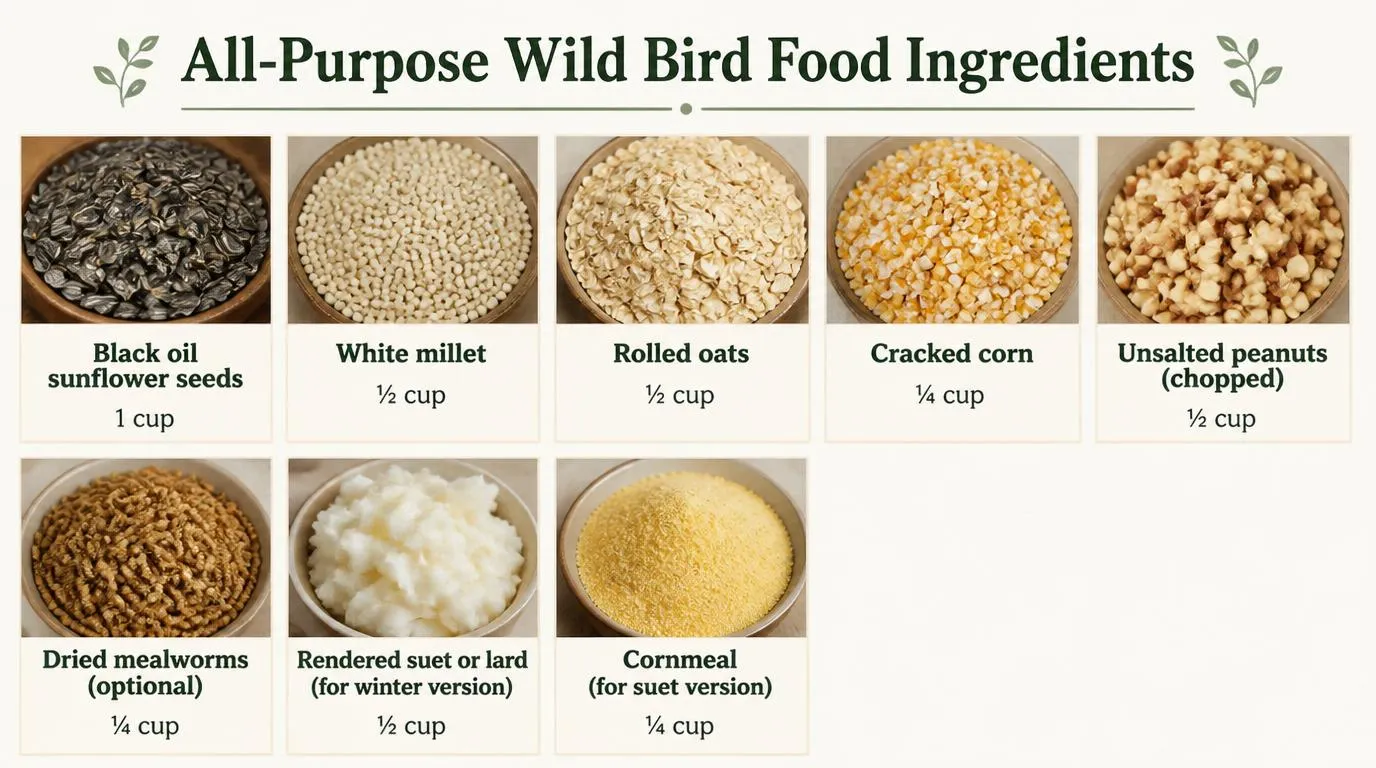 Image Credit: AI Generated
Ingredients
- Black oil sunflower seeds 1 cup
- White millet ½ cup
- Rolled oats ½ cup
- Cracked corn ¼ cup
- Unsalted peanuts (chopped) ½ cup
- Dried mealworms (optional) ¼ cup
- Rendered suet or lard (for winter version) ½ cup
- Cornmeal (for suet version) ¼ cup
Tip: This recipe can be served as a dry mix or turned into high‑energy suet cakes for cold weather.
Approximate Nutritional Profile (per tablespoon of dry mix)
Values vary with ingredients. This mix provides a balance of fats, proteins, and carbohydrates suitable for most backyard birds.
Step-by-Step Instructions
- Prepare dry mix: In a large bowl, combine sunflower seeds, millet, oats, cracked corn, peanuts, and mealworms (if using). Stir until evenly blended. Store in an airtight container.
- To serve dry: Pour the mix into a platform feeder, hopper feeder, or scatter on the ground in a clean area away from predators.
- For suet cakes (winter version): Melt suet or lard in a saucepan over low heat. Stir in cornmeal until smooth. Add the dry mix (about 2 cups) and stir until everything is well coated.
- Mold and chill: Spoon the mixture into suet cake molds or a small loaf pan lined with parchment. Press down firmly. Refrigerate for 2‑3 hours until solid.
- Serve: Remove from molds and place in a suet cage feeder. Hang from a tree or pole.
- Store: Keep dry mix in a cool, dry place. Suet cakes can be refrigerated for up to 2 months or frozen for up to 6 months.
Pros and Cons of Homemade Wild Bird Food
Pros
- Attracts diverse species – finches, sparrows, woodpeckers, jays, chickadees, nuthatches, and more.
- Cost‑effective – bulk ingredients are cheaper than premium commercial blends.
- Customizable – adjust ingredients to attract specific birds.
- No fillers – birds eat every ingredient, reducing waste.
- Year‑round use – dry mix for warm months, suet cakes for winter.
Cons
- May attract unwanted animals – squirrels, raccoons, and rodents.
- Requires storage management – dry mix must be kept dry; suet can go rancid.
- Messy if scattered on ground – can attract pests if not cleaned up.
- Not suitable for all birds – hummingbirds, orioles, and some warblers need specialized food.
Nutritional Tips – Why These Ingredients Are Good for Wild Birds
Ingredient Benefits
- Black oil sunflower seeds: High in fat and protein; a favorite of many birds.
- White millet: Small seed preferred by ground‑feeding birds like sparrows and juncos.
- Rolled oats: Carbohydrates for energy; easy to digest.
- Cracked corn: Carbohydrate source for doves, quail, and larger birds; use sparingly.
- Peanuts: Excellent protein and fat; loved by woodpeckers, jays, and titmice.
- Mealworms: High‑protein treat for insect‑eating birds; especially valuable for nesting birds.
- Suet: Concentrated energy source critical for winter survival; provides essential fats.
Feeding Guidelines for Wild Birds
Follow these best practices to keep birds healthy and your yard clean:
- Use appropriate feeders: Platform feeders for ground‑feeding birds, tube feeders for finches, suet cages for woodpeckers and chickadees.
- Place feeders strategically: Near cover (trees, shrubs) for safety, but far enough to avoid hiding predators.
- Keep feeders clean: Wash feeders every 2‑4 weeks with hot soapy water to prevent disease.
- Provide fresh water: A birdbath with clean water is as important as food.
- Offer food year‑round: Birds rely on feeders in winter, but also during migration and nesting season.
- Adjust for seasons: Use suet cakes in cold weather; switch to dry mix in warm months.
Recipe Variations for Different Bird Species
Customize for Your Backyard Birds
- For finches and siskins: Replace millet with nyjer (thistle) seed and add a little more sunflower.
- For woodpeckers and nuthatches: Increase peanuts and suet; offer in a suet cage.
- For ground‑feeding birds (sparrows, juncos, doves): Increase millet and cracked corn; scatter on ground or use a low tray.
- For bluebirds and insect‑eaters: Add more mealworms; offer in a shallow dish or suet cage.
- For jays and larger birds: Include whole peanuts (unsalted) and larger chunks of cracked corn.
Observe which birds visit your yard and adjust the mix to encourage them.
Must‑Have Items
Recommended Tools & Supplies
- Large Mixing Bowl & Spoon – for combining ingredients. Check price on Amazon
- Suet Cake Molds or Small Loaf Pan – for shaping suet cakes. Check price on Amazon
- Suet Cage Feeder – for winter suet cakes. Check price on Amazon
- Platform Feeder or Hopper Feeder – for dry mix. Check price on Amazon
- Airtight Storage Container – for keeping dry mix fresh. Check price on Amazon
We participate in the Amazon Services LLC Associates Program, an affiliate advertising program designed to provide a means for us to earn fees by linking to Amazon.com and affiliated sites. As an Amazon Associate, we earn from qualifying purchases.
Storage and Safety Tips
Keep It Fresh & Safe
- Dry mix: Store in an airtight container in a cool, dry place for up to 3 months.
- Suet cakes: Refrigerate for up to 2 months; freeze for up to 6 months.
- Outdoor use: Replace dry mix every 2‑3 days in wet weather to prevent mold. Suet cakes last 1‑2 weeks in cool weather.
- Clean up spilled food: Discard old seed to prevent mold and rodent attraction.
- Prevent disease: Regularly clean feeders with a 10% bleach solution (1 part bleach to 9 parts water), rinse thoroughly, and dry before refilling.
- Watch for pests: Use baffles to deter squirrels; bring feeders in at night if raccoons or bears are a concern.
Conclusion
Making your own wild bird food is a simple, rewarding way to support the birds that visit your yard. This all‑purpose recipe provides the energy and nutrients birds need throughout the year, and the flexibility to switch between dry mix and suet cakes ensures you're prepared for any season. With fresh ingredients and proper feeder maintenance, you'll soon enjoy a lively, diverse backyard bird community.
Experiment with different add‑ins based on the birds in your area, and take time to observe and appreciate the visitors that come to your feeders. Happy birding!
Frequently Asked Questions
What is the best bird food for wild birds?
A mix of black oil sunflower seeds, white millet, cracked corn, and peanuts attracts the widest variety of birds. This recipe is designed to appeal to seed‑eating and insect‑eating species alike.
Can I feed wild birds bread?
Bread offers little nutritional value and can fill birds up without providing essential nutrients. It's best to avoid offering bread and instead use quality seeds, nuts, and suet.
How often should I refill bird feeders?
Refill when feeders are low, typically every few days to a week. In wet weather, check more often to ensure food hasn't become moldy. Clean feeders every 2‑4 weeks.
Can I use this recipe year‑round?
Yes. Serve the dry mix in warm weather. In winter, use the same ingredients to make high‑energy suet cakes that provide essential fats for cold nights.
How do I keep suet from melting in summer?
Traditional suet melts in temperatures above 70°F. Use a no‑melt suet blend (like peanut butter mixed with cornmeal) or switch to dry seed mixes during summer months.