Recipe Introduction
Suet cakes are a winter staple for backyard bird enthusiasts. Packed with fat, protein, and calories, suet provides the concentrated energy birds need to survive cold nights and harsh weather. Woodpeckers, nuthatches, chickadees, titmice, and even some warblers flock to suet feeders.
Making your own homemade bird food suet cakes is easy, cost‑effective, and allows you to control the ingredients. You can customize the recipe with seeds, nuts, dried fruit, or mealworms to attract your favorite species. This recipe uses rendered beef suet (or lard/vegetable shortening as alternatives) and a blend of bird‑friendly add‑ins.
Table of Contents
Classic Winter Suet Cakes
High Energy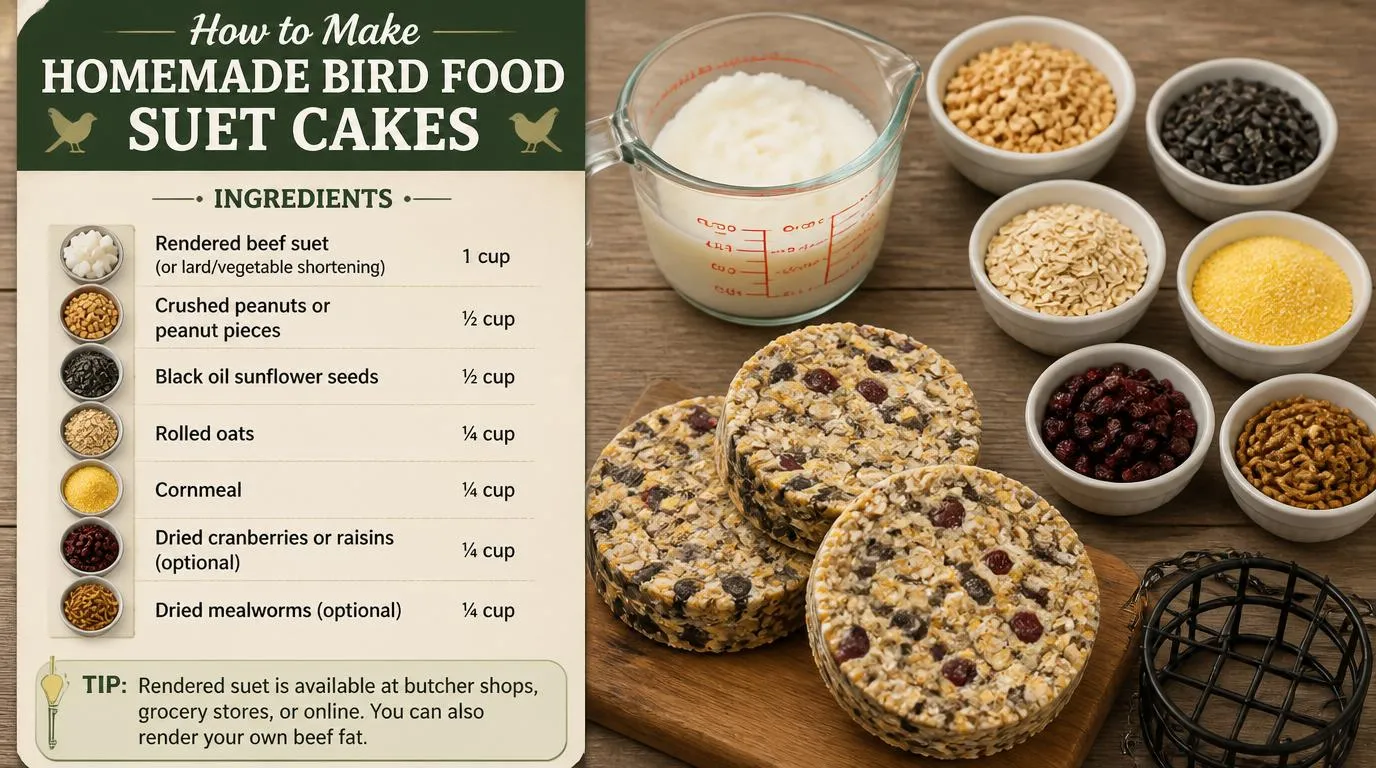 Image Credit: AI Generated
Ingredients
- Rendered beef suet (or lard/vegetable shortening) 1 cup
- Crushed peanuts or peanut pieces ½ cup
- Black oil sunflower seeds ½ cup
- Rolled oats ¼ cup
- Cornmeal ¼ cup
- Dried cranberries or raisins (optional) ¼ cup
- Dried mealworms (optional) ¼ cup
Tip: Rendered suet is available at butcher shops, grocery stores, or online. You can also render your own beef fat.
Approximate Nutritional Profile (per cake)
Suet provides essential fats for winter survival. Offer in cool weather only.
Step-by-Step Instructions
- Melt the fat: Place suet, lard, or shortening in a saucepan over low heat. Stir occasionally until completely melted and liquid. Do not overheat.
- Combine dry ingredients: In a large bowl, mix peanuts, sunflower seeds, oats, cornmeal, and any optional ingredients (fruit, mealworms).
- Mix fat and dry ingredients: Pour the melted fat over the dry mixture. Stir thoroughly until all dry ingredients are coated and the mixture holds together when pressed.
- Pour into molds: Spoon the mixture into suet cake molds, small loaf pans, or silicone molds. Press down firmly to compact. If using a standard suet cage, you can also pour into a plastic container lined with parchment.
- Chill to set: Place molds in the refrigerator for at least 2 hours, or until completely firm.
- Remove and store: Pop the cakes out of the molds. Wrap individually in wax paper or store in an airtight container in the refrigerator or freezer.
- Place in suet feeder: When ready to use, place a cake in a suet cage feeder and hang in a tree or on a pole.
Pros and Cons of Suet Cakes
Pros
- Excellent winter food – high fat content provides essential energy.
- Attracts specialized birds – woodpeckers, nuthatches, chickadees, titmice.
- Customizable – add seeds, nuts, fruit, or mealworms.
- Long‑lasting – suet cakes last several days in cool weather.
- Easy to make – simple ingredients and no special equipment.
Cons
- Only suitable in cool weather – melts in heat, can become rancid.
- May attract unwanted animals – raccoons, squirrels, and even bears.
- Can be messy – if cakes melt or crumble.
- Not a complete diet – best as a supplement to other bird foods.
Nutritional Tips – Why Suet Is Great for Birds
Ingredient Benefits
- Beef suet (or lard): High in saturated fat, which provides concentrated energy for cold‑weather survival. Helps birds maintain body heat.
- Peanuts: Excellent source of protein and healthy fats; a favorite of woodpeckers and jays.
- Black oil sunflower seeds: High in oil and vitamin E; attracts a wide range of birds.
- Rolled oats & cornmeal: Provide carbohydrates and fiber; help bind the mixture.
- Dried fruit: Natural sugars for quick energy; attracts fruit‑eating birds.
- Mealworms: High‑protein addition that appeals to insect‑eating birds like bluebirds and warblers.
Feeding Guidelines for Suet Cakes
Suet is best offered during fall, winter, and early spring when temperatures are consistently below 70°F (21°C). Follow these tips:
- Use a suet cage or feeder: Wire cages hold suet cakes securely and allow clinging birds to feed easily.
- Place in shaded areas: Even in winter, direct sun can soften suet. Hang feeders in shade.
- Replace regularly: In cool weather, suet cakes last about 1‑2 weeks. Replace if they become moldy, rancid, or infested.
- Clean feeders: Wash suet cages with hot soapy water between fillings to prevent disease.
- Watch for pests: If raccoons or squirrels become a problem, use a feeder with a baffle or bring feeders in at night.
Recipe Variations for Different Birds
Customize Your Suet Cakes
- Woodpecker blend: Increase peanuts and add extra crushed nuts. Woodpeckers love nuts and high‑fat suet.
- Bluebird & warbler treat: Add dried mealworms and omit large seeds. Many insect‑eating birds will visit suet with mealworms.
- Fruit lover's suet: Add dried cranberries, cherries, or chopped apple. Attracts orioles, tanagers, and mockingbirds in spring.
- No‑melt summer suet: Use a no‑melt suet dough recipe (peanut butter, cornmeal, oats) that stays firm in warm weather.
- Squirrel‑resistant: Add cayenne pepper or red pepper flakes – birds are not affected, but mammals avoid it.
Experiment to see what birds in your area prefer. Keep a journal of which recipes attract the most species.
Must‑Have Items
Recommended Tools & Supplies
- Saucepan & Mixing Bowlfor melting suet and mixing. Check price on Amazon
- Suet Cake Molds or Small Loaf Pansfor shaping cakes. Check price on Amazon
- Suet Cage Feederto hold the cakes. Check price on Amazon
- Parchment Paper or Wax Paperfor wrapping finished cakes. Check price on Amazon
- Storage Containerairtight for refrigerator/freezer. Check price on Amazon
We participate in the Amazon Services LLC Associates Program, an affiliate advertising program designed to provide a means for us to earn fees by linking to Amazon.com and affiliated sites. As an Amazon Associate, we earn from qualifying purchases.
Storage and Safety Tips
Keep It Fresh & Safe
- Refrigerator: Store finished suet cakes in an airtight container for up to 2 months.
- Freezer: Freeze for up to 6 months. Thaw before placing in feeder.
- Outdoor storage: Replace cakes every 1‑2 weeks in cool weather. Discard if they become moldy, rancid, or attract insects.
- Summer caution: Do not offer traditional suet in temperatures above 70°F – it can melt, go rancid, and harm birds. Use no‑melt alternatives.
- Keep away from pets: Suet is high in fat; store safely away from dogs or other pets that might be tempted.
- Clean feeders: Wash suet cages regularly with hot soapy water to prevent mold and bacterial growth.
Conclusion
Homemade suet cakes are a fantastic way to support backyard birds through the winter months. The high fat content gives birds the energy they need to survive cold nights, and the customizable recipe means you can attract a wide variety of species. Once you try making your own, you'll never go back to store‑bought suet!
Experiment with different add‑ins, observe which birds visit, and enjoy the lively activity around your suet feeder. Happy birding!
Frequently Asked Questions
Can I use lard instead of suet?
Yes, plain lard (unsalted) works well as a substitute for suet. It has a slightly lower melting point, so it's best used in cooler weather. Avoid bacon grease or other flavored fats, as they may contain salt or additives harmful to birds.
How long do suet cakes last in the feeder?
In cool weather (below 50°F), a suet cake can last 1‑2 weeks. In warmer weather, it will soften and spoil faster. Always check for mold or rancidity before refilling.
Can I make suet cakes without melting fat?
Traditional suet cakes require melted fat to bind the ingredients. However, you can make no‑melt suet dough using peanut butter, cornmeal, and oats – this stays firm in warmer weather and doesn't require melting.
What birds eat suet?
Woodpeckers (downy, hairy, red‑bellied), nuthatches, chickadees, titmice, jays, and sometimes warblers, kinglets, and even mockingbirds will visit suet feeders. In winter, suet is a critical food source for many insect‑eating birds.
How do I render my own suet?
Ask your butcher for beef fat (kidney fat is best). Chop into small pieces and place in a slow cooker or saucepan over very low heat. Cook until fat melts and solids crisp up (about 2‑4 hours). Strain through cheesecloth into a container and refrigerate. The rendered fat is ready to use in suet cakes.