Recipe Introduction
Cornmeal is a pantry staple that doubles as an excellent ingredient for homemade bird food. It's inexpensive, easy to work with, and loved by many ground‑feeding birds. This homemade bird food with cornmeal can be made as a simple dry mix or transformed into baked treats that are perfect for platform feeders or scattering on the ground.
Birds like sparrows, juncos, doves, towhees, and even cardinals will visit when you offer cornmeal‑based food. The fine texture is easy for small birds to eat, and when mixed with seeds or suet, it becomes a high‑energy meal that helps birds thrive, especially during cold months.
Table of Contents
Cornmeal Bird Food (Dry & Baked Versions)
Ground‑Feeder Favorite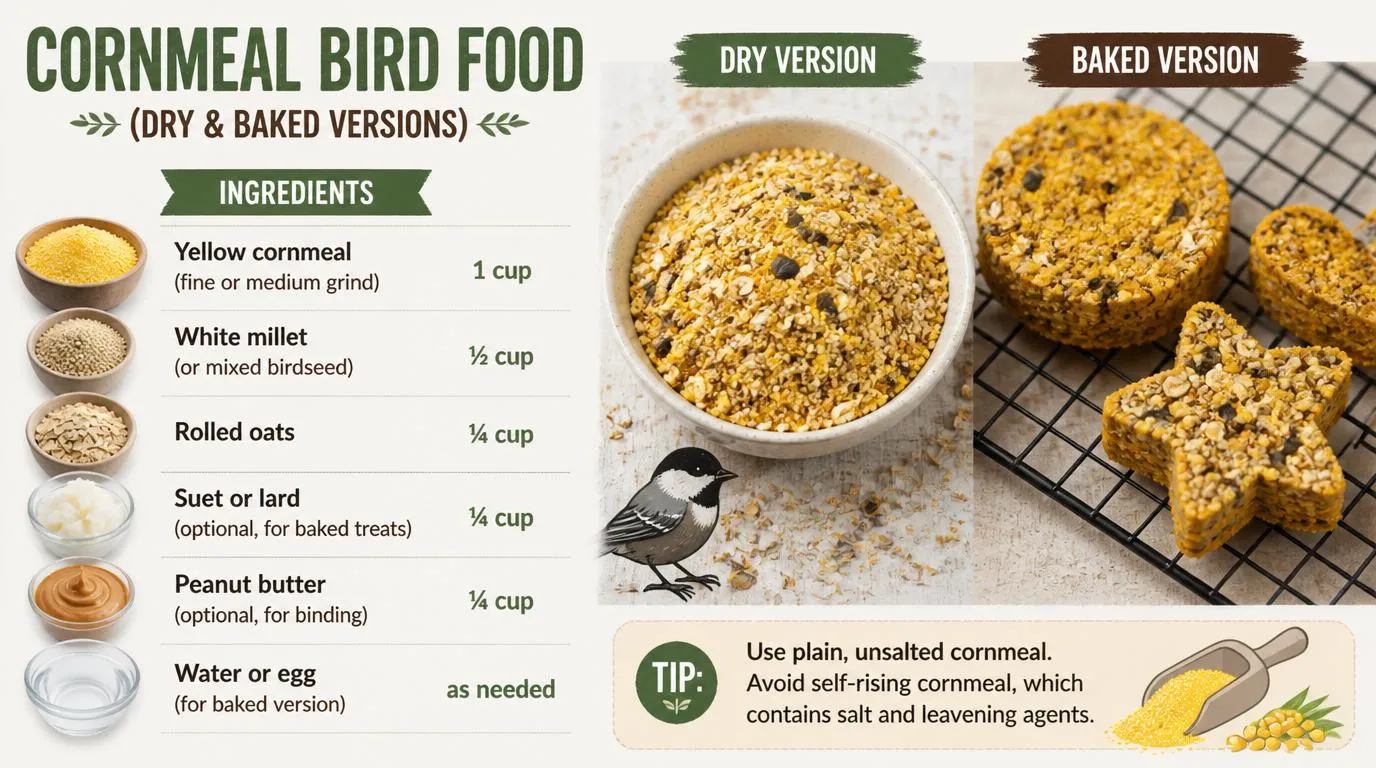 Image Credit: AI Generated
Ingredients
- Yellow cornmeal (fine or medium grind) 1 cup
- White millet (or mixed birdseed) ½ cup
- Rolled oats ¼ cup
- Suet or lard (optional, for baked treats) ¼ cup
- Peanut butter (optional, for binding) ¼ cup
- Water or egg (for baked version) as needed
Tip: Use plain, unsalted cornmeal. Avoid self‑rising cornmeal, which contains salt and leavening agents.
Approximate Nutritional Profile (per tablespoon of dry mix)
Cornmeal provides carbohydrates; add suet or seeds for extra fat and protein.
Step-by-Step Instructions
- Dry mix (no‑bake): Combine cornmeal, millet, and oats in a bowl. Stir well. Serve directly in a platform feeder or scatter on the ground in a clean area.
- Baked cornmeal treats: Preheat oven to 350°F (175°C). In a bowl, mix cornmeal, millet, and oats. If using suet or lard, melt it and stir into the dry mixture until crumbly. Add a tablespoon of water or beaten egg if needed to form a dough.
- Shape and bake: Press the mixture into small cookie shapes, or press into a greased baking dish to cut into squares later. Bake for 10‑15 minutes until lightly golden and firm. Cool completely.
- Suet‑style cornmeal blocks: Melt suet or lard, mix with cornmeal and seeds, then pour into molds. Refrigerate until firm. These are especially good in winter.
- Serve: Place treats in a platform feeder, on a tree stump, or on the ground. For dry mix, use a shallow dish or ground feeder.
- Store: Keep dry mix in an airtight container. Baked treats can be refrigerated for up to 2 weeks or frozen for 3 months.
Pros and Cons of Cornmeal Bird Food
Pros
- Affordable – cornmeal is inexpensive and easy to find.
- Attracts ground‑feeding birds – sparrows, juncos, doves, towhees.
- Easy to make – no cooking required for dry mix.
- Versatile – can be used as dry mix, baked treats, or suet blocks.
- Good carbohydrate source – provides energy, especially in winter.
Cons
- Can spoil if wet – cornmeal absorbs moisture; keep dry.
- May attract less desirable birds – pigeons, starlings.
- Low in protein/fat alone – best combined with seeds or suet.
- Not ideal for hanging feeders – best for ground or platform feeding.
Nutritional Tips – Why Cornmeal Is Good for Birds
Ingredient Benefits
- Yellow cornmeal: Provides carbohydrates for quick energy, plus fiber, iron, and B vitamins. Easy to digest.
- White millet: Small seed favored by ground‑feeding birds; adds protein and variety.
- Rolled oats: Additional carbohydrates and fiber; helps bind the mixture.
- Suet/lard (optional): High‑fat addition essential for winter energy; helps birds maintain body heat.
- Peanut butter (optional): Adds protein and healthy fats; also helps bind.
Feeding Guidelines for Cornmeal Bird Food
Cornmeal is best offered on the ground or in low platform feeders. Follow these tips:
- Ground feeding: Scatter small amounts in open areas where birds can see predators approaching. Keep away from dense shrubs.
- Platform feeders: Use a shallow tray or platform feeder to keep the mix dry and prevent mold.
- Keep dry: Cornmeal absorbs moisture quickly. Only put out as much as birds will eat in a day or two, especially in wet weather.
- Mix with seeds: Combine cornmeal with millet, sunflower seeds, or cracked corn to increase protein and fat content.
- Seasonal use: In winter, cornmeal mixed with suet is excellent. In summer, use dry mix and replace frequently to avoid spoilage.
Recipe Variations for Different Birds
Customize for Your Backyard Birds
- For ground‑feeding birds (sparrows, juncos, towhees): Increase millet and add cracked corn. Serve as a dry mix on the ground.
- Winter energy boost: Melt suet and mix with cornmeal, oats, and sunflower seeds. Pour into molds to make high‑fat cakes.
- No‑melt summer version: Use peanut butter as a binder instead of suet, and shape into balls or press into pine cones. Keep in shade.
- For cardinals and jays: Add black oil sunflower seeds and peanuts to the cornmeal mix. Serve in a platform feeder.
- For insect‑eating birds: Add dried mealworms to the mix. This attracts bluebirds, robins, and warblers.
Experiment with ratios to find what local birds prefer. Observe and adjust accordingly.
Must‑Have Items
Recommended Tools & Supplies
- Mixing Bowl & Spoon – for combining ingredients. Check price on Amazon
- Baking Sheet or Mold – for baked treats. Check price on Amazon
- Platform Feeder or Ground Feeder – to serve the mix. Check price on Amazon
- Airtight Container – for storing dry mix. Check price on Amazon
- Seed Scoop – for easy dispensing. Check price on Amazon
We participate in the Amazon Services LLC Associates Program, an affiliate advertising program designed to provide a means for us to earn fees by linking to Amazon.com and affiliated sites. As an Amazon Associate, we earn from qualifying purchases.
Storage and Safety Tips
Keep It Fresh & Safe
- Dry mix: Store in an airtight container in a cool, dry place for up to 3 months.
- Baked treats: Refrigerate for up to 2 weeks, or freeze for up to 3 months.
- Outdoor use: Replace dry mix every 1‑2 days if it gets damp. Baked treats last 3‑5 days in cool weather.
- Prevent mold: Never offer moldy cornmeal – it can cause respiratory illness in birds.
- Clean feeders: Wash platform feeders and ground feeding areas regularly to prevent disease.
- Rodent control: If rodents become a problem, bring feeders in at night and clean up spilled food.
Conclusion
Cornmeal is a versatile, budget‑friendly ingredient that belongs in every backyard birder's pantry. Whether you use it as a simple dry mix, bake it into treats, or combine it with suet for winter energy, your local ground‑feeding birds will thank you. It's an excellent way to use up leftover cornmeal and provide nourishment to the birds that visit your yard.
Experiment with different add‑ins and feeding methods, and enjoy watching the sparrows, juncos, and doves gather. Happy birding!
Frequently Asked Questions
Is cornmeal safe for birds?
Yes, plain, unsalted yellow cornmeal is safe and nutritious for birds. Avoid self‑rising cornmeal, which contains salt and baking powder. Always offer it dry and fresh.
What birds eat cornmeal?
Cornmeal is especially popular with ground‑feeding birds: sparrows, juncos, towhees, doves, and sometimes cardinals and jays. When mixed with suet, it also attracts woodpeckers and chickadees.
Can I use cornmeal as a standalone bird food?
While birds will eat plain cornmeal, it's best mixed with seeds, oats, or suet to provide a balanced diet. Cornmeal alone is low in protein and fat, which are essential, especially in winter.
How do I keep cornmeal from getting moldy?
Only put out small amounts that birds will consume in a day or two. Use a covered platform feeder to protect from rain, and avoid scattering directly on damp ground. Store unused cornmeal in an airtight container in a cool, dry place.
Can I use cornmeal in suet cakes?
Absolutely! Cornmeal is a common ingredient in homemade suet cakes. It helps absorb excess fat and adds carbohydrates. Mix melted suet with cornmeal, oats, and seeds, then pour into molds and chill.