Recipe Introduction
Oats are a wonderful, budget‑friendly ingredient for backyard bird food. They provide carbohydrates for energy, fiber, and essential nutrients that many seed‑eating birds love. When combined with a mix of birdseed, you create a simple yet nutritious treat that attracts finches, sparrows, juncos, doves, and other ground‑feeding birds.
This homemade bird food with oats and seeds is incredibly easy to make – no cooking required! You can serve it as a loose mix in a platform feeder or shape it into blocks using a simple binder like peanut butter or suet. It's a great way to use up leftover oats and create a custom blend that appeals to the birds in your area.
Table of Contents
Simple Oat & Seed Bird Food
No‑Bake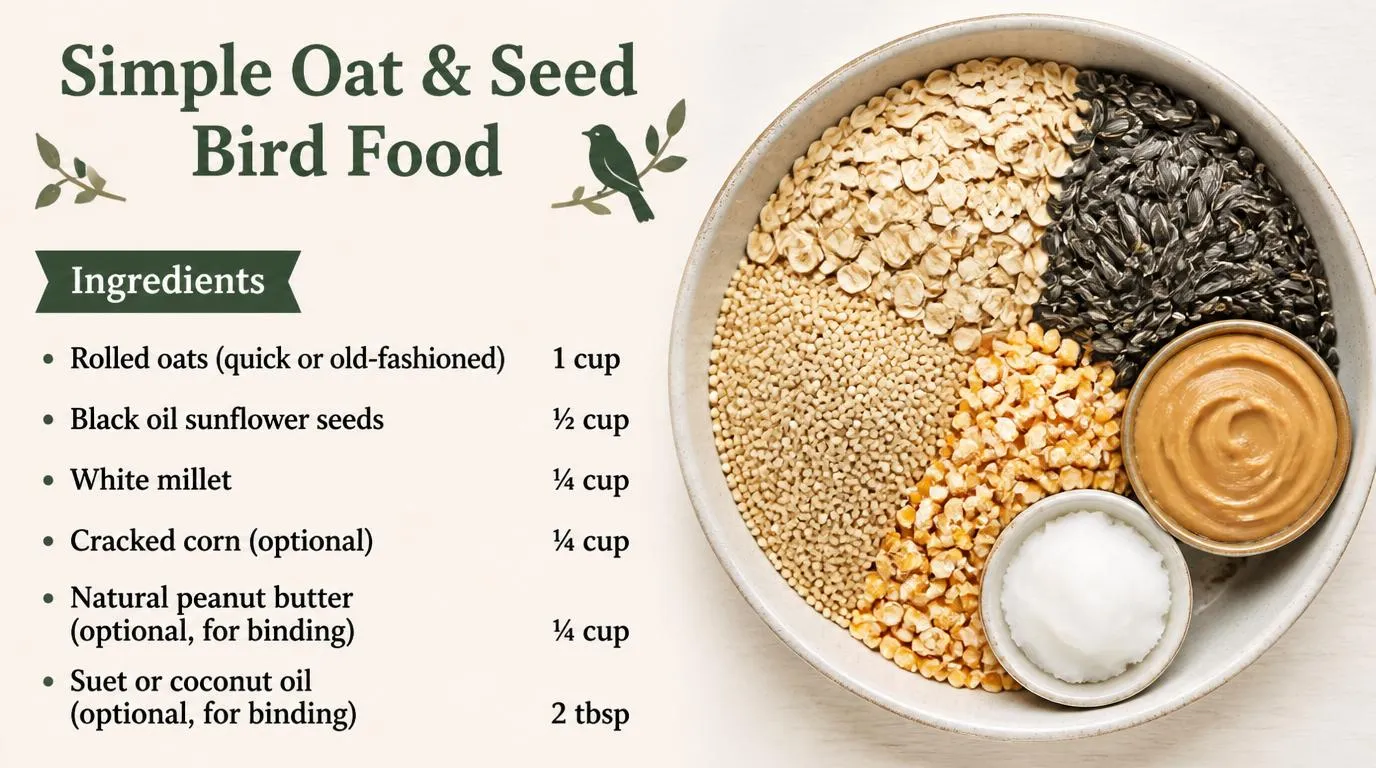 Image Credit: AI Generated
Ingredients
- Rolled oats (quick or old‑fashioned) 1 cup
- Black oil sunflower seeds ½ cup
- White millet ¼ cup
- Cracked corn (optional) ¼ cup
- Natural peanut butter (optional, for binding) ¼ cup
- Suet or coconut oil (optional, for binding) 2 tbsp
Tip: You can serve this as a loose mix in a platform feeder, or bind with peanut butter or suet to form blocks or balls.
Approximate Nutritional Profile (per tablespoon of mix)
Oats provide sustained energy; sunflower seeds add healthy fats. Adjust ratios to suit local birds.
Step-by-Step Instructions
- Combine dry ingredients: In a large bowl, mix rolled oats, black oil sunflower seeds, white millet, and cracked corn (if using). Stir until evenly blended.
- Serve as loose mix: Pour the mixture into a platform feeder, tray feeder, or sprinkle directly on the ground (away from predators).
- For shaped treats: If you prefer to bind the mix, warm peanut butter or suet until soft. Stir into the dry mixture until everything is coated and sticks together when pressed.
- Shape and set: Press the mixture into silicone molds, small cups, or stuff into pine cones. Refrigerate for 30 minutes to firm up.
- Place outdoors: Hang or place the treats in a suet cage, platform feeder, or on tree branches. In cold weather, they can be placed directly on the ground.
- Store leftovers: Keep unused dry mix in an airtight container in a cool, dry place for up to 3 months.
Pros and Cons of Oat & Seed Bird Food
Pros
- Budget‑friendly – oats are inexpensive and easy to find.
- Attracts a variety of birds – finches, sparrows, juncos, doves, and more.
- Simple to make – no cooking required.
- Customizable – add different seeds, nuts, or dried fruit.
- Good for ground‑feeding birds – juncos, sparrows, and towhees love oats.
Cons
- Can become moldy if left wet – keep feeders dry.
- May attract less desirable species – pigeons, starlings, or rodents.
- Loose mix can be messy – may scatter from feeders.
- Not a complete diet – best as part of a varied offering.
Nutritional Tips – Why Oats and Seeds Are Good for Birds
Ingredient Benefits
- Rolled oats: Excellent source of carbohydrates for energy, plus fiber, iron, and B vitamins. Easy to digest.
- Black oil sunflower seeds: High in healthy fats, protein, and vitamin E; a favorite of many backyard birds.
- White millet: Small seed preferred by ground‑feeding birds like sparrows, juncos, and doves.
- Cracked corn: Provides carbohydrates and is enjoyed by pigeons, doves, and larger birds (use sparingly).
- Peanut butter/suet (optional): Adds protein and fat for energy, especially valuable in winter.
Feeding Guidelines for Oat & Seed Mix
This recipe can be offered in several ways. Follow these tips for best results:
- Platform or tray feeders: Ideal for loose mix; many birds prefer to feed on a flat surface.
- Ground feeding: Scatter small amounts on the ground in open areas away from shrubs where predators might hide.
- Suet cages: If you bind the mix with peanut butter or suet, you can place it in a suet feeder for woodpeckers, chickadees, and nuthatches.
- Keep dry: Oats can become moldy if they get wet. Cover feeders during rain or bring them in during wet weather.
- Replace regularly: Offer fresh food every few days, and remove any old or damp food to prevent disease.
Recipe Variations for Different Birds
Customize for Your Backyard Birds
- For finches: Add nyjer (thistle) seed and reduce millet. Finches also enjoy small pieces of dried fruit.
- For cardinals and jays: Add more sunflower seeds and a few whole peanuts.
- For ground‑feeding birds (sparrows, juncos, towhees): Increase millet and add cracked corn. Serve loose on the ground or in a low tray.
- For woodpeckers and nuthatches: Bind the mix with peanut butter or suet and place in a suet cage.
- Summer version: Omit peanut butter and serve dry mix only to avoid melting. Add dried mealworms for insect‑eating birds.
Observe which birds visit and adjust the recipe to attract your favorites.
Must‑Have Items
Recommended Tools & Supplies
- Mixing Bowl & Spoon – for combining ingredients. Check price on Amazon
- Silicone Molds or Ice Cube Trays – for shaping bound treats. Check price on Amazon
- Platform Feeder or Suet Cage – for offering the food. Check price on Amazon
- Storage Container – airtight for keeping dry mix fresh. Check price on Amazon
- Seed Scoop – for easy dispensing. Check price on Amazon
We participate in the Amazon Services LLC Associates Program, an affiliate advertising program designed to provide a means for us to earn fees by linking to Amazon.com and affiliated sites. As an Amazon Associate, we earn from qualifying purchases.
Storage and Safety Tips
Keep It Fresh & Safe
- Dry mix: Store in an airtight container in a cool, dry place for up to 3 months.
- Bound treats: Refrigerate for up to 2 weeks, or freeze for up to 3 months. Thaw before serving.
- Outdoor storage: Replace loose mix every 2‑3 days in dry weather, more frequently if wet. Bound treats last 3‑5 days in cool weather.
- Prevent mold: Never offer moldy food – it can cause respiratory illness in birds.
- Clean feeders: Wash feeders regularly with hot soapy water to prevent disease spread.
- Rodent control: If rodents become a problem, bring feeders in at night and clean up spilled seed.
Conclusion
Oats and seeds are a simple, nutritious combination that appeals to many backyard birds. Whether you serve them loose or bound into treats, this recipe is easy to make and highly customizable. It's a great way to use up leftover oats and create a custom blend that attracts your favorite species.
Experiment with different seed ratios and serving methods to see what your local birds prefer. With a little effort, you'll soon have a lively, colorful backyard bird community visiting regularly.
Happy birding!
Frequently Asked Questions
Are oats safe for birds?
Yes, rolled oats (quick or old‑fashioned) are safe and nutritious for birds. Avoid instant oatmeal with added sugar, flavorings, or artificial ingredients. Uncooked oats are fine; you can also offer cooked oats (without milk or sugar) as a treat.
What birds eat oats?
Many birds enjoy oats, including sparrows, juncos, finches, doves, towhees, and even some woodpeckers. Oats are especially popular with ground‑feeding birds.
Can I use steel‑cut oats?
Steel‑cut oats are harder and larger; they may be less appealing to small birds. Rolled oats are preferred because they're easier to eat. If you have steel‑cut oats, you can pulse them in a food processor to make smaller pieces.
How do I keep oats from getting moldy in the feeder?
Oats can absorb moisture and mold quickly. Use a feeder with a roof to keep rain out, offer only small amounts at a time, and replace the food every 2‑3 days. In wet weather, bring feeders inside overnight or use a covered hopper feeder.
Can I add other ingredients to this mix?
Absolutely! You can add dried fruit (raisins, cranberries), chopped nuts, mealworms, or other birdseed like nyjer or safflower. Just ensure all ingredients are unsalted and free of additives.