Recipe Introduction
Peanut butter is a favorite among many backyard birds because it's packed with protein, healthy fats, and calories – exactly what birds need to survive cold winters or fuel migration. This homemade bird food with peanut butter is easy to make, uses simple ingredients, and attracts a variety of species including woodpeckers, chickadees, nuthatches, titmice, and even jays.
Commercial suet and peanut butter blends can be expensive and sometimes contain additives. By making your own, you control the quality of ingredients and can customize the recipe to suit the birds in your area. This no‑bake recipe comes together in minutes and can be shaped into balls, pressed into pine cones, or smeared onto tree bark for natural feeding stations.
Table of Contents
No‑Bake Peanut Butter Bird Treats
High Energy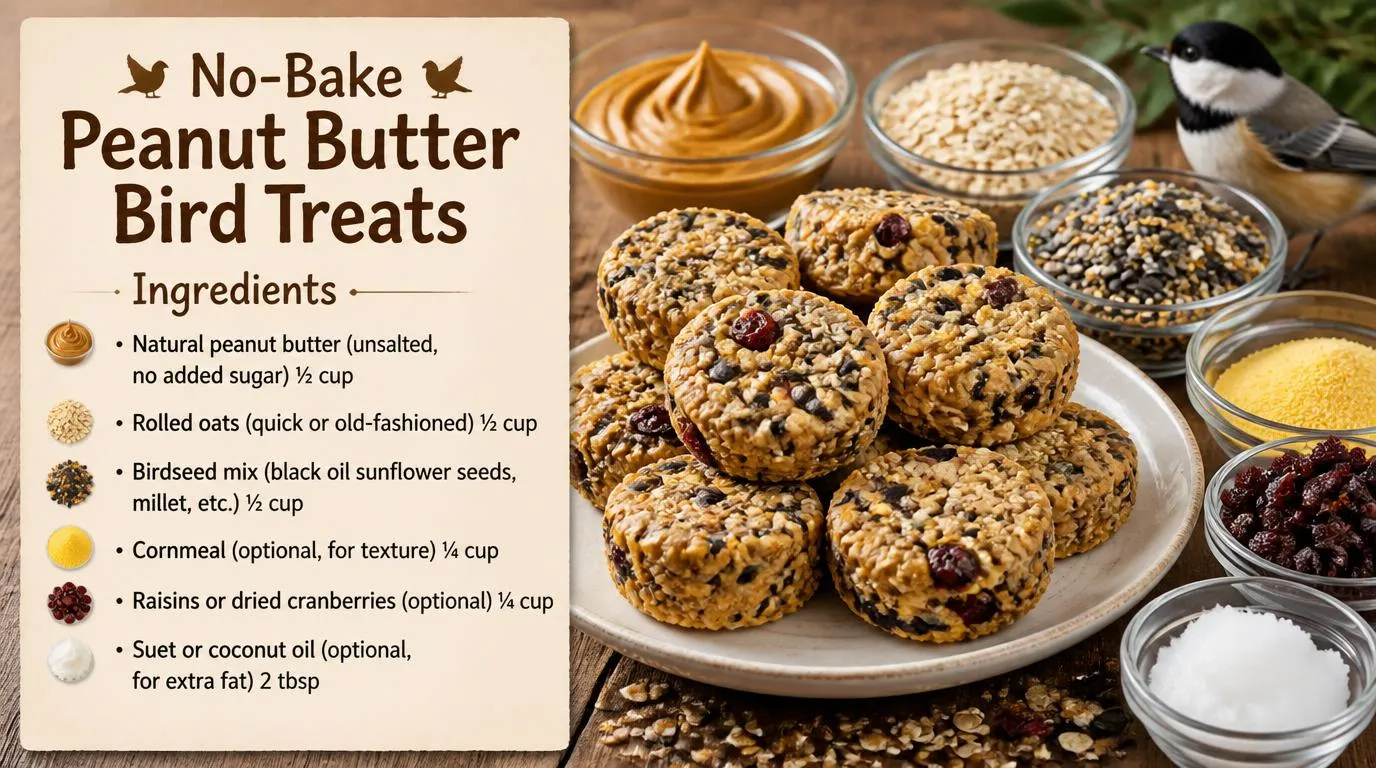 Image Credit: AI Generated
Ingredients
- Natural peanut butter (unsalted, no added sugar) ½ cup
- Rolled oats (quick or old‑fashioned) ½ cup
- Birdseed mix (black oil sunflower seeds, millet, etc.) ½ cup
- Cornmeal (optional, for texture) ¼ cup
- Raisins or dried cranberries (optional) ¼ cup
- Suet or coconut oil (optional, for extra fat) 2 tbsp
Important: Use only natural peanut butter without xylitol (toxic to birds) or added salt/sugar. Unsalted is best for birds.
Approximate Nutritional Profile (per treat)
High‑energy treat ideal for cold weather. Offer as a supplement to regular birdseed, not a replacement.
Step-by-Step Instructions
- Combine dry ingredients: In a mixing bowl, combine oats, birdseed, cornmeal (if using), and dried fruit (if using). Stir well.
- Add peanut butter: Add the natural peanut butter to the dry mixture. If using suet or coconut oil, warm it slightly and add as well. Mix until everything is well combined and the mixture holds together when pressed. If too dry, add a little more peanut butter or a teaspoon of water. If too wet, add a little more cornmeal or oats.
- Shape the treats: Roll the mixture into small balls (about 1 inch in diameter) or press into silicone molds. Alternatively, you can press the mixture into pine cones, stuff into drilled logs, or smear directly onto tree bark.
- Chill to set: Place the shaped treats on a parchment‑lined tray and refrigerate for at least 1 hour until firm. This helps them hold together when placed outside.
- Serve: Place the treats in a suet feeder, on a platform feeder, or wedge into tree bark. In cold weather, they can be placed directly on a tree branch or a bird table.
- Store leftovers: Keep unused treats in an airtight container in the refrigerator for up to 2 weeks, or freeze for up to 3 months.
Pros and Cons of Peanut Butter Bird Food
Pros
- High energy – perfect for winter feeding and migration.
- Attracts a variety of birds – woodpeckers, chickadees, nuthatches, titmice, jays.
- Easy to make – no baking required.
- Customizable – add different seeds, nuts, or fruits.
- Cost‑effective – cheaper than commercial suet cakes.
Cons
- Can get messy in warm weather – peanut butter softens and can stick to feathers.
- May attract unwanted animals – raccoons, squirrels, and bears may be drawn to peanut butter.
- Not suitable for birds that prefer seeds only – some species may ignore it.
- Requires refrigeration – fresh ingredients need cool storage.
Nutritional Tips – Why These Ingredients Are Great for Birds
Ingredient Benefits
- Natural peanut butter: High in protein, healthy fats, and vitamin E. Provides essential calories for energy and warmth.
- Rolled oats: Good source of carbohydrates and fiber; easy for birds to digest.
- Birdseed mix: Black oil sunflower seeds are especially high in oil and calories; millet and other seeds add variety.
- Cornmeal: Adds texture and helps bind the mixture; provides additional carbohydrates.
- Dried fruit (raisins/cranberries): Natural sugars for quick energy; attracts fruit‑eating birds.
- Suet or coconut oil: Adds extra fat for high‑energy needs during cold weather.
Feeding Guidelines for Peanut Butter Treats
Use these treats as a supplement to regular birdseed, especially during cold months or migration. Follow these tips for best results:
- Seasonal use: Best offered in fall, winter, and early spring. In warm weather, peanut butter can become soft and messy.
- Placement: Use a suet cage, platform feeder, or wedge into tree bark. Avoid placing directly on the ground where it may attract pests.
- Freshness: Replace treats every few days to ensure they remain fresh and free from mold.
- Clean feeders regularly: Peanut butter can go rancid; wash feeders with soap and water between refills.
- Monitor for unwanted visitors: If squirrels or raccoons become a problem, use baffles or place feeders away from climbing access.
Recipe Variations for Different Birds
Customize for Your Backyard Birds
- Woodpecker blend: Add crushed peanuts, dried mealworms, and extra suet. Peanut butter is a favorite of downy, hairy, and red‑bellied woodpeckers.
- Chickadee & nuthatch mix: Use black oil sunflower seeds and add a little extra cornmeal. These birds love clinging to suet cages.
- Fruit lover's treat: Add dried blueberries, cherries, or chopped apple. Attracts orioles, tanagers, and mockingbirds.
- No‑melt summer version: Replace peanut butter with solid suet or use a peanut butter powder mixed with a little water to reduce mess.
- Squirrel‑resistant: Add cayenne pepper or red pepper flakes. Birds are not affected by capsaicin, but mammals avoid it.
Always introduce new ingredients gradually and observe which birds visit.
Must‑Have Items
Recommended Tools & Supplies
- Mixing Bowl & Spoon – for combining ingredients. Check price on Amazon
- Silicone Molds or Cookie Cutters – for shaping treats. Check price on Amazon
- Suet Feeder or Cage – for hanging treats. Check price on Amazon
- Pine Cones (optional) – natural feeders; press mixture into cone scales. Check price on Amazon
- Parchment Paper – for easy cleanup. Check price on Amazon
We participate in the Amazon Services LLC Associates Program, an affiliate advertising program designed to provide a means for us to earn fees by linking to Amazon.com and affiliated sites. As an Amazon Associate, we earn from qualifying purchases.
Storage and Safety Tips
Keep It Fresh & Safe
- Refrigerator: Store unused treats in an airtight container for up to 2 weeks.
- Freezer: Freeze for up to 3 months. Thaw before serving.
- Outdoor storage: Replace treats every 3‑5 days in cool weather, more frequently if wet or mold appears.
- Avoid xylitol: Never use peanut butter containing xylitol – it is toxic to birds and pets.
- Clean feeders: Wash suet cages and feeders regularly with hot soapy water to prevent mold and disease spread.
- Watch for spoilage: Discard any treats that become moldy, rancid, or infested with insects.
Conclusion
Making your own peanut butter bird food is a fun, inexpensive way to support backyard birds, especially during cold months when natural food is scarce. The simple combination of peanut butter, oats, and seeds creates a high‑energy treat that will attract a variety of species to your yard.
Experiment with different add‑ins to see what your local birds prefer. Place feeders where you can watch from a window, and enjoy the show! With a little effort, you'll soon have a lively, colorful backyard bird community visiting regularly.
Happy birding!
Frequently Asked Questions
Is peanut butter safe for birds?
Yes, natural, unsalted peanut butter without xylitol is safe and nutritious for birds. Avoid peanut butter with added sugar, salt, or artificial sweeteners. Peanut butter is high in protein and healthy fats, making it an excellent winter food.
What birds eat peanut butter?
Many backyard birds love peanut butter, including woodpeckers (downy, hairy, red‑bellied), chickadees, nuthatches, titmice, jays, and sometimes warblers and finches. It's especially popular in winter.
Can I use crunchy peanut butter?
Yes, crunchy peanut butter adds extra nuts, which many birds enjoy. Just ensure it's still natural and unsalted. Avoid brands with added sugar or xylitol.
How long does homemade peanut butter bird food last outside?
In cool weather (below 50°F), treats can last 3‑5 days. In warmer weather, they may become soft and should be replaced after 1‑2 days to prevent spoilage. Always remove any moldy or spoiled food.
Can I feed this to birds in summer?
It's best to offer peanut butter treats in fall, winter, and early spring. In hot weather, the peanut butter can become very soft, stick to feathers, and spoil quickly. If you want to offer peanut butter in summer, use a peanut butter powder mixed with water or solid suet instead.