Recipe Introduction
Kittens have unique nutritional needs: they require higher protein, fat, and specific nutrients like DHA for brain development and taurine for heart and vision. This homemade kitten food recipe is carefully balanced to meet those demands using real chicken, liver, egg yolk, and a kitten-friendly supplement blend. It's smooth, palatable, and perfect for weaning kittens or supplementing orphaned litters.
Always consult your veterinarian before switching to a homemade diet, especially for growing kittens. This recipe is designed to be used alongside commercial kitten food or as a complete diet with proper supplementation.
Table of Contents
Homemade Kitten Food (Chicken & Liver)
Growth Formula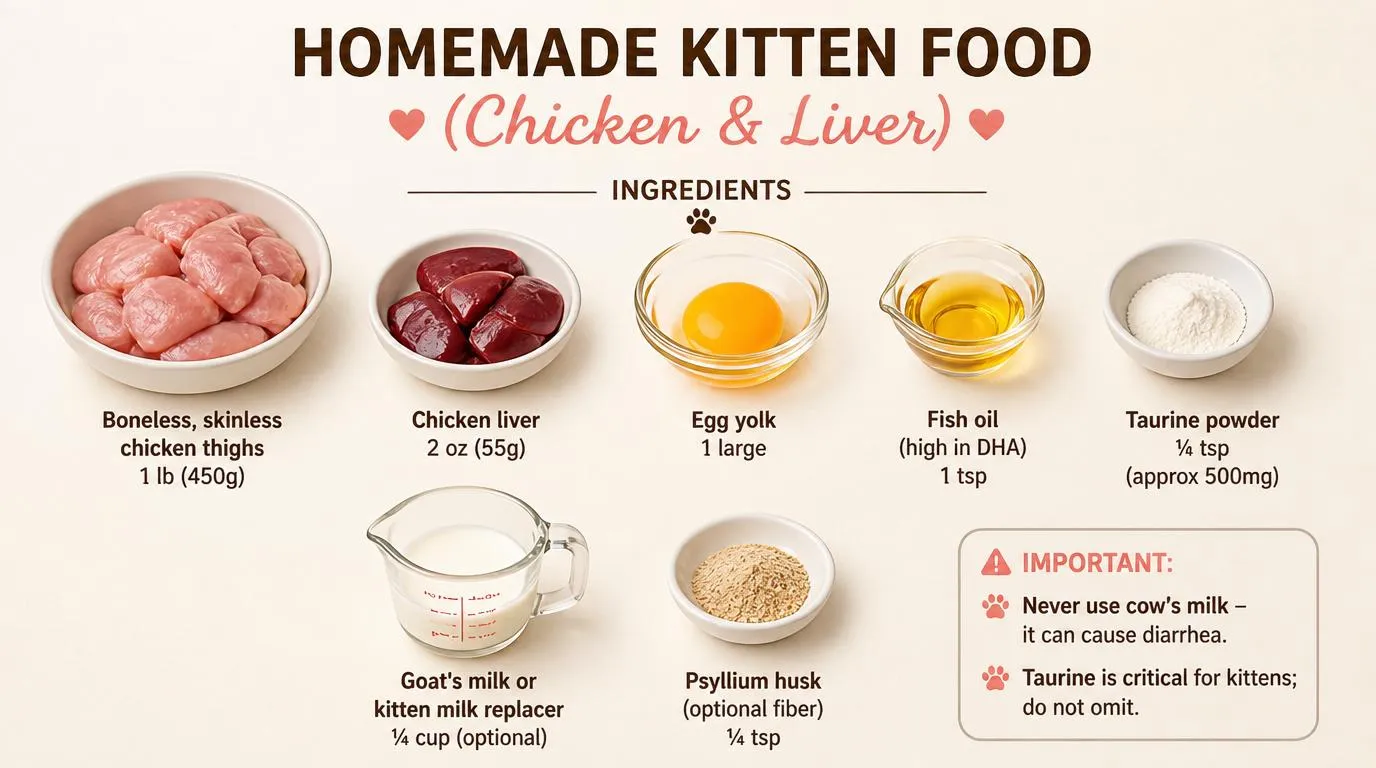
Ingredients
- Boneless, skinless chicken thighs 1 lb (450g)
- Chicken liver 2 oz (55g)
- Egg yolk 1 large
- Fish oil (high in DHA) 1 tsp
- Taurine powder ⅛ tsp (approx 500mg)
- Goat's milk or kitten milk replacer ¼ cup (optional)
- Psyllium husk (optional fiber) ¼ tsp
⚠️ Important: Never use cow's milk – it can cause diarrhea. Taurine is critical for kittens; do not omit.
Approximate Nutritional Profile (per ¼ cup)
Values are approximate. This recipe provides high energy and essential nutrients for growing kittens.
Step-by-Step Instructions
- Cook chicken & liver: Rinse chicken thighs and liver. Place in a saucepan, cover with water (about 1½ cups). Simmer on low-medium for 20 minutes until chicken is fully cooked (internal 165°F).
- Reserve broth: Remove meat, save ½ cup of the cooking liquid. Let cool for 10 minutes.
- Blend: In a food processor, combine cooked chicken, liver, reserved broth, egg yolk, fish oil, taurine powder, and goat's milk (if using). Pulse until smooth, pâté-like consistency. Add psyllium if desired.
- Portion & store: Spoon into small glass containers (or ice cube trays for single servings). Refrigerate up to 3 days or freeze up to 3 months.
- Serving: Bring to room temperature. Feed kittens 4-6 times daily, offering small amounts (1-2 tablespoons per meal, depending on age and size).
Pros and Cons of Homemade Kitten Food
Pros
- Tailored nutrition – can adjust for growth stages.
- High moisture content – supports hydration and kidney health.
- No fillers or artificial additives – pure, real ingredients.
- Palatable for picky eaters – fresh food often preferred.
Cons
- Requires precise supplementation – must include taurine, DHA, and calcium/phosphorus balance.
- Time-intensive – requires regular preparation.
- Risk of nutritional imbalances if not formulated correctly.
- Must be fresh – short refrigerator life.
Nutritional Benefits – Why This Recipe Supports Healthy Growth
Key Ingredients for Kittens
- Chicken thighs: High-quality protein and essential amino acids for muscle development.
- Chicken liver: Rich in vitamin A, iron, and B vitamins – crucial for rapid growth.
- Egg yolk: Provides healthy fats, biotin, and choline for brain development.
- Fish oil (DHA): Omega-3 fatty acids support cognitive and visual development.
- Taurine: Absolutely essential for heart, vision, and immune function.
- Goat's milk: Easier to digest than cow's milk; adds calcium and probiotics.
Feeding Guidelines for Growing Kittens
- Age 3-6 weeks (weaning): Start with a smooth, soupy consistency. Offer small amounts 4-6 times daily.
- 6 weeks to 4 months: Feed 3-4 meals per day. Portions increase as kitten grows.
- 4-12 months: Gradually reduce to 2-3 meals per day, maintaining high protein and energy density.
- Always provide fresh water – kittens need constant access.
- Transition slowly: Mix with current food over 7-10 days to avoid digestive upset.
- Monitor weight and body condition: Kittens should gain weight steadily; consult vet if concerned.
Recipe Variations for Different Needs
Customize for Your Kitten
- For orphaned kittens (under 4 weeks): Use a commercial kitten milk replacer instead of water; blend to a thin consistency and bottle-feed.
- For sensitive stomachs: Omit liver and use only chicken; add a probiotic supplement.
- For extra calcium: Add a pinch of bone meal powder or use a kitten-specific vitamin premix.
- Multi-protein blend: Replace half the chicken with turkey or rabbit, maintaining organ meat ratio.
- Pumpkin boost: Add 1 tsp pure pumpkin puree to aid digestion during weaning.
Must‑Have Items
Recommended Tools & Supplies
- Food processor or blender – for smooth pâté. Check price on Amazon
- Kitchen scale – for precise portions. Check price on Amazon
- Small glass containers or ice cube trays – for easy portioning. Check price on Amazon
- Taurine powder & kitten vitamin premix – essential supplements. Check price on Amazon
We participate in the Amazon Services LLC Associates Program, an affiliate advertising program designed to provide a means for us to earn fees by linking to Amazon.com and affiliated sites. As an Amazon Associate, we earn from qualifying purchases.
Storage and Safety Tips
Keep It Fresh & Safe
- Refrigerate: Store in sealed glass containers for up to 3 days.
- Freeze: Portion into ice cube trays; once frozen, transfer to freezer bags. Use within 3 months.
- Thaw safely: Defrost in the refrigerator overnight – never at room temperature.
- Discard uneaten food: After 30 minutes at room temperature, throw away leftovers to prevent bacterial growth.
- Clean bowls daily: Wash feeding bowls with hot soapy water after each meal.
- Watch for spoilage: If food smells off, shows mold, or kitten refuses it, discard immediately.
Conclusion
Raising a healthy kitten starts with proper nutrition. This homemade kitten food recipe gives you control over ingredients while meeting the high demands of growth. Always work with your veterinarian to ensure your kitten receives a complete and balanced diet, and enjoy watching your little one thrive on wholesome, home-cooked meals.
Frequently Asked Questions
Can I feed this recipe to newborn kittens?
No. Newborns (0-4 weeks) require a commercial kitten milk replacer. This recipe is for weaning kittens (4+ weeks) and older.
Do I need to add calcium?
Yes, if feeding exclusively homemade for more than a few weeks, a calcium source (like bone meal or a premix) is essential for bone development. Consult your vet for proper ratios.
How often should I feed a 8-week-old kitten?
Feed 3-4 meals daily, offering about 2-3 tablespoons per meal. Adjust based on appetite and growth.
Can I use this recipe for adult cats?
Yes, but adult cats need fewer calories and less fat. You can feed it occasionally, but a balanced adult formula is better for long-term use.
What if my kitten has diarrhea after switching?
Slow the transition, add a probiotic, and ensure you're not overfeeding. If diarrhea persists, consult your veterinarian.