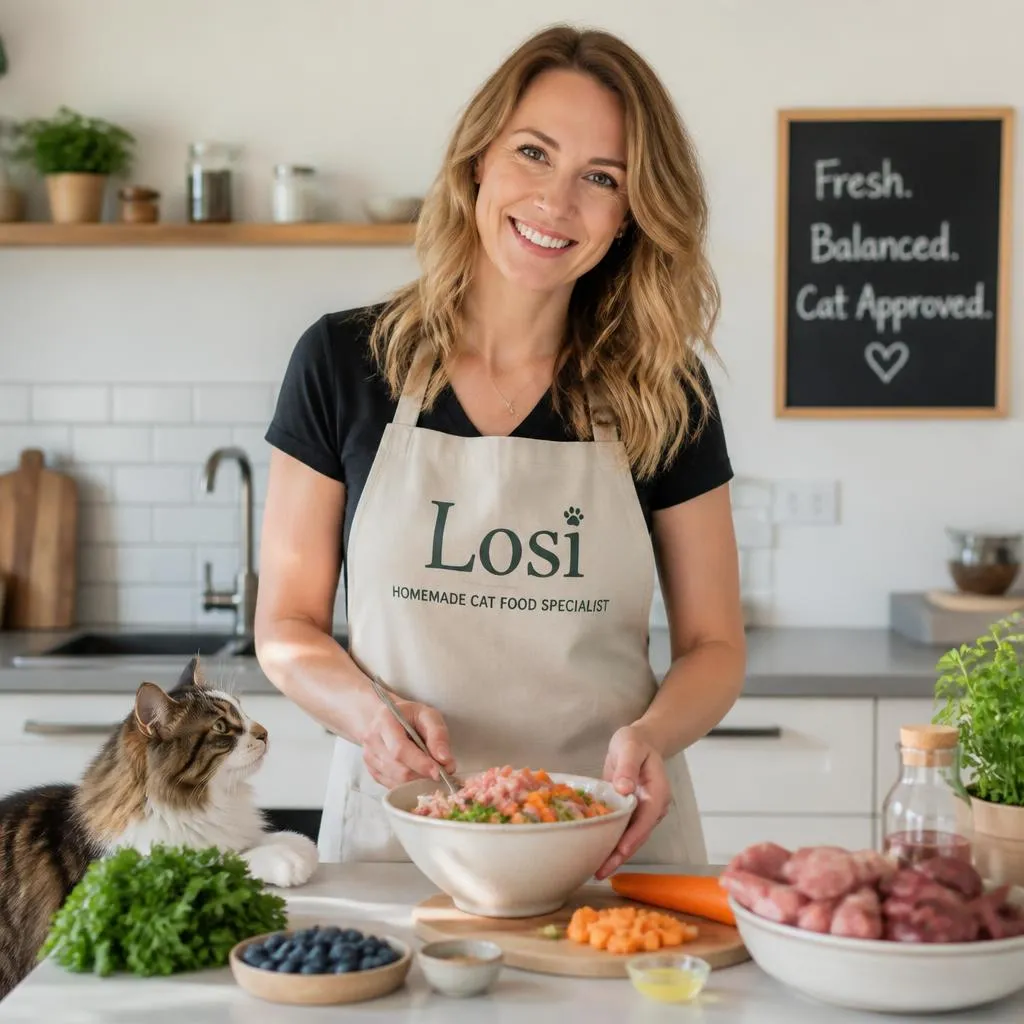
Recipe Introduction
Salmon is a fantastic source of high‑quality protein and omega‑3 fatty acids, which help reduce inflammation, support joint health, and give cats a glossy coat. This homemade cat food with salmon is crafted with vet‑approved ingredients: fresh salmon, digestible rice, and gentle veggies, plus added taurine — an essential amino acid for feline heart and eye health. Making your own cat food ensures you control every ingredient, avoiding preservatives and fillers.
Table of Contents
Homemade Salmon & Rice Cat Food
Vet‑inspired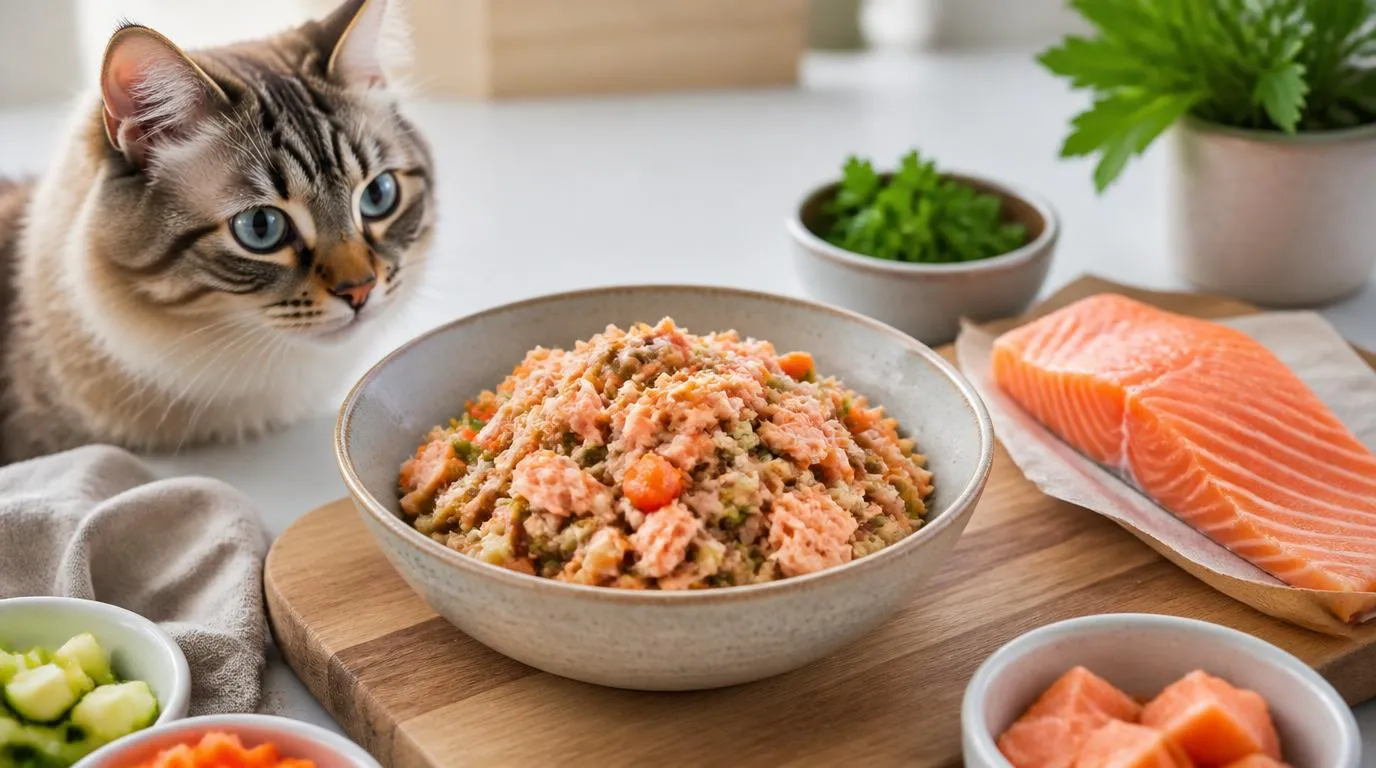
Ingredients
- Fresh salmon (boneless, skinless) 1 lb (450g)
- Cooked white or brown rice ½ cup
- Steamed carrots, finely chopped ¼ cup
- Steamed peas (optional) ¼ cup
- Fish oil (salmon oil preferred) 1 tsp
- Taurine powder (essential) 500 mg
- Eggshell powder (calcium) ½ tsp
- Water or low‑sodium broth ¼ cup
⚠️ Important: No onions, garlic, or xylitol. Always cook salmon thoroughly to avoid parasites.
Approx. Nutrition (per ½ cup serving)
Values are estimates; taurine added separately.
Step-by-Step Instructions
- Cook salmon: Poach or bake salmon until fully opaque (internal temp 145°F). Remove any bones and skin, then flake into small pieces.
- Prepare veggies & rice: Steam carrots and peas until tender, then finely chop. Cook rice according to package directions if not pre‑made.
- Combine ingredients: In a large bowl, mix salmon, rice, carrots, peas, fish oil, taurine powder, and eggshell powder. Add water or broth for desired consistency.
- Cool & portion: Let mixture cool completely before serving. Divide into meal‑sized portions and refrigerate or freeze.
- Serve: Offer as a complete meal (if balanced with supplementation) or as a topper. Always provide fresh water.
Pros and Cons of Homemade Cat Food with Salmon
Pros
- Fresh, whole ingredients – no artificial additives.
- Rich in omega‑3 for skin/coat health.
- Customizable for allergies or preferences.
- Ideal for cats who dislike commercial food.
- Supports hydration when moisture‑rich.
Cons
- Requires taurine supplementation to meet AAFCO standards.
- Time‑consuming to prepare regularly.
- Nutritional balancing needed for long‑term feeding.
- Raw salmon carries risks – must be cooked.
Why Salmon & Taurine Matter for Cats
Key Benefits
- Salmon: High in omega‑3 fatty acids (EPA/DHA) that reduce inflammation and support kidney function.
- Taurine: Cats cannot synthesize it; deficiency leads to heart disease and blindness. Always add pure taurine powder.
- Eggshell powder: Natural calcium source for bone health.
- Rice & carrots: Easily digestible carbohydrates and fiber for gentle digestion.
Feeding Guidelines for Homemade Cat Food
- Transition slowly: Mix with current food over 5‑7 days to avoid digestive upset.
- Portion size: Adult cats typically need 4‑6 oz per day (split into 2 meals). Adjust based on weight/activity.
- Veterinary consultation: For long‑term feeding, work with a vet to ensure complete nutrition.
- Fresh water: Always provide clean water alongside homemade meals.
Customize the Recipe
Try These Twists
- For kittens: Increase taurine to 700 mg per batch and add kitten‑safe multivitamin.
- Grain‑free: Replace rice with steamed zucchini or pumpkin puree.
- Fish‑free alternative: Substitute salmon with cooked chicken or turkey, keeping taurine supplement.
- Boost omega‑3: Add a few drops of wild salmon oil daily.
Must‑Have Items
Recommended Tools & Supplies
- Food Steamer or Pot – for perfectly cooked salmon. Check price on Amazon
- Digital Kitchen Scale – precise ingredient portions. Check price on Amazon
- Taurine Powder & Eggshell Grinder – essential supplements. Check price on Amazon
- Food Storage Containers – airtight for fridge/freezer. Check price on Amazon
We earn from qualifying purchases as an Amazon Associate.
Storage & Safety Tips
Keep It Fresh
- Refrigerate: Store in sealed container for up to 3 days.
- Freeze: Portion and freeze for up to 3 months. Thaw overnight in fridge.
- Never leave out: Discard any uneaten food after 30 minutes to prevent bacterial growth.
- Always debone: Fish bones are a choking hazard; double‑check salmon for small bones.
Conclusion
Making homemade cat food with salmon gives you complete control over your feline’s diet while delivering delicious, nutrient‑dense meals. This recipe balances protein, healthy fats, and essential supplements like taurine. Whether used as a rotational diet or a tasty treat, your cat will relish the freshness. Always consult your veterinarian to ensure the diet meets your cat’s individual needs. Happy cooking!
Frequently Asked Questions
Can I feed raw salmon to my cat?
No. Raw salmon may contain parasites and bacteria (Neorickettsia helminthoeca) that cause salmon poisoning disease. Always cook salmon thoroughly.
Is this recipe nutritionally complete for everyday feeding?
It includes taurine, calcium, and key nutrients, but long‑term exclusive feeding should be reviewed by a vet to ensure balance. Rotating proteins is recommended.
How much taurine should I add?
For this recipe (approx. 3 cups), 500 mg taurine powder. For kittens, increase to 700 mg. Use a reputable feline supplement.
Can I use canned salmon?
Yes, choose canned salmon packed in water with no salt added. Remove bones carefully.