Recipe Introduction
Turkey is an excellent protein source for cats – it's lean, highly digestible, and often well‑tolerated even by felines with chicken sensitivities. This homemade cat food with turkey is a simple recipe that can be used as a short‑term bland diet or as the foundation for a complete, balanced meal when supplemented properly.
As obligate carnivores, cats require animal‑based protein to thrive. Turkey provides high‑quality protein with a slightly different amino acid profile than chicken, making it a great alternative for rotation or for cats who need a novel protein. Because this recipe alone is not nutritionally complete for long‑term feeding, we'll cover how to add taurine, vitamins, and other supplements to make it a balanced diet under veterinary guidance.
Table of Contents
Lean Turkey Cat Food
Novel Protein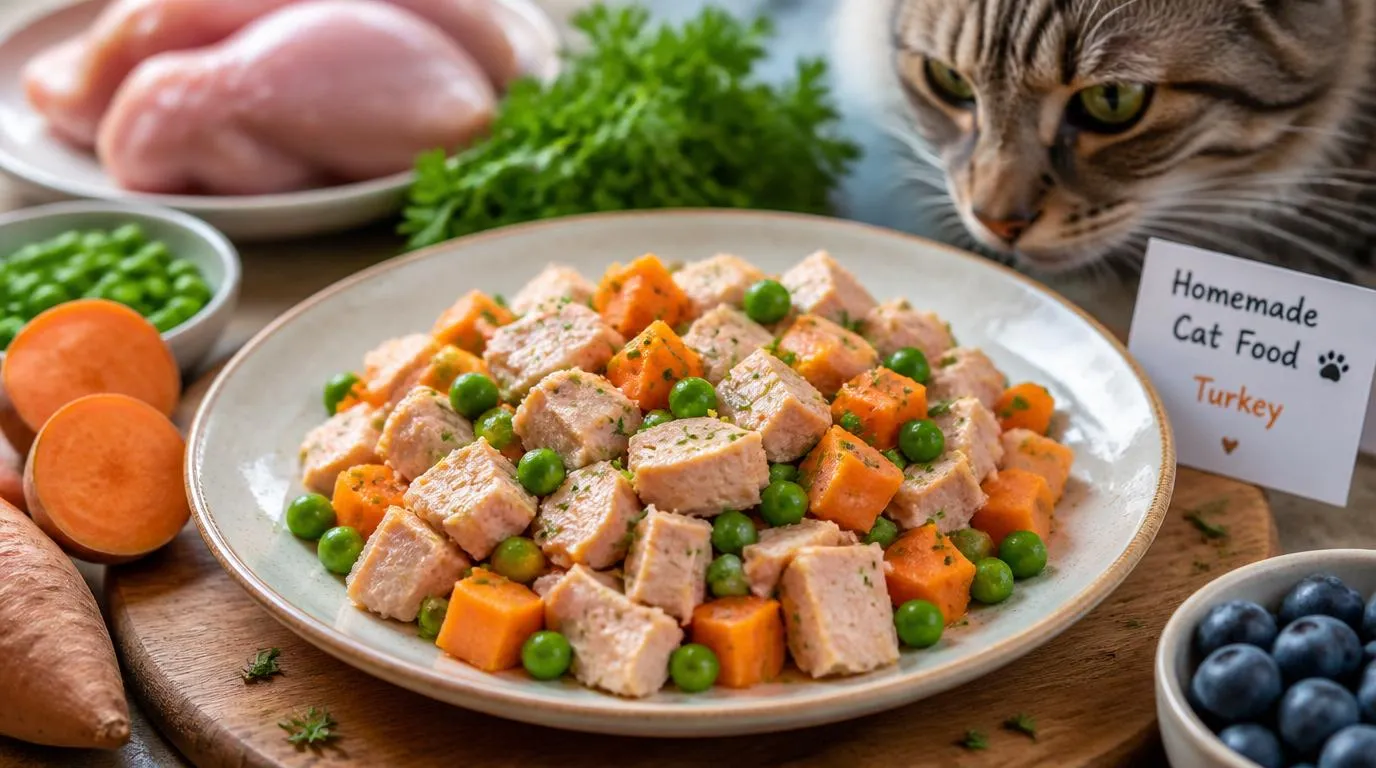
Ingredients
- Ground turkey (93% lean or higher) 1 lb
- Water or low‑sodium turkey/chicken broth 1 cup
- Fish oil (for omega‑3s) 1 tsp
- Taurine supplement as directed
- Feline multivitamin (optional for long‑term) as directed
Important: This recipe is a foundation. For long‑term feeding, you must add taurine, a balanced feline multivitamin, and consult your veterinarian to ensure nutritional completeness.
Nutritional Info (per ¼ cup serving, without supplements)
Cats are obligate carnivores. This recipe alone is not nutritionally complete. Always add a feline taurine supplement and consult your vet.
Step-by-Step Instructions
- Cook the turkey: In a skillet or saucepan over medium heat, cook the ground turkey until no longer pink, breaking it into small pieces. Drain any excess fat (if using a higher fat percentage).
- Add liquid: Stir in water or low‑sodium broth. Simmer for 5 minutes to combine and ensure the meat is fully cooked. Remove from heat.
- Cool and add supplements: Let the mixture cool to room temperature. Once cooled, stir in fish oil and the recommended amount of taurine supplement. Add a feline multivitamin if using for long‑term feeding.
- Adjust consistency: If the mixture is too dry, add a little more water or broth. The food should be moist but not soupy.
- Portion and store: Divide into meal‑sized portions (about ¼‑½ cup per meal depending on cat size) and refrigerate or freeze.
- Serve: Warm slightly to room temperature before serving. Do not feed hot food.
Pros and Cons of Homemade Turkey Cat Food
Pros
- Lean protein – supports muscle maintenance without excess fat.
- Novel protein option – good for cats with chicken allergies.
- Gentle on digestion – highly digestible and often well‑tolerated.
- No fillers or preservatives – you control the ingredients.
- Customizable – can be used as a base for balanced meals.
Cons
- Nutritionally incomplete alone – must add taurine and supplements for long‑term feeding.
- Higher fat if not lean – choose lean ground turkey to avoid excess fat.
- Requires careful storage – shorter shelf life than commercial food.
- May need additional taurine – turkey is lower in taurine than dark meats.
Nutritional Tips – Why Turkey Is Great for Cats
Ingredient Benefits
- Ground turkey (lean): High‑quality protein with essential amino acids. A great alternative for cats with chicken sensitivities.
- Fish oil: Omega‑3 fatty acids for skin, coat, and joint health.
- Taurine: An essential amino acid that cats cannot produce. Critical for heart health, vision, and reproduction. Always supplement when feeding homemade food.
- Feline multivitamin: Ensures adequate levels of vitamins A, D, E, and B‑complex when feeding homemade for extended periods.
Serving Suggestions
Portion sizes depend on your cat's weight, age, and activity level. Use these guidelines as a starting point, and adjust based on body condition. Always split into 2‑3 meals per day.
- Kittens (under 1 year): Up to twice the adult amount per pound of body weight; feed 3‑4 times daily.
- Adult cats (8‑12 lbs): ¼ to ½ cup per day, split into two meals.
- Senior cats: Slightly less if activity decreases; monitor weight closely.
- Active/outdoor cats: May need 20‑30% more.
Serve at room temperature. If this is a temporary bland diet, feed for 2‑3 days, then gradually transition back to regular food. For long‑term use, add a complete feline supplement and consult your veterinarian.
Recipe Variations for Cats
Try These Swaps
- Add organ meats: For long‑term feeding, include 5‑10% cooked turkey liver or heart to provide natural vitamins and additional taurine.
- Pumpkin for fiber: Add 1 tablespoon of plain canned pumpkin (not pie filling) to aid digestion.
- Include rice: For a bland diet, add ¼ cup cooked white rice to the mixture.
- Use turkey thighs: If your cat needs extra calories, use ground turkey thigh (dark meat) for slightly more fat and natural taurine.
- Bone broth: Replace water with unsalted, onion‑free bone broth for added minerals and flavor.
Always introduce new ingredients gradually and watch for any signs of allergies or digestive upset.
Must‑Have Kitchen Items
Recommended Tools
- Digital Kitchen Scale – for precise portioning. Check price on Amazon
- Medium Skillet or Saucepan – for cooking ground turkey. Check price on Amazon
- Spatula or Wooden Spoon – for breaking up meat. Check price on Amazon
- Portion Storage Containers – freezer‑safe for meal prep. Check price on Amazon
- Food Thermometer – ensures meat is cooked safely. Check price on Amazon
We participate in the Amazon Services LLC Associates Program, an affiliate advertising program designed to provide a means for us to earn fees by linking to Amazon.com and affiliated sites. As an Amazon Associate, we earn from qualifying purchases.
Storage and Safety Tips
Keep It Fresh
- Refrigerator: Store in an airtight container for up to 4 days.
- Freezer: Portion into individual servings and freeze for up to 3 months.
- Thawing: Thaw frozen portions in the refrigerator overnight. Never leave at room temperature.
- Signs of spoilage: Sour smell, mold, or if it's been in the fridge more than 4 days – discard immediately.
- Hygiene: Wash hands and utensils thoroughly after handling raw turkey.
Conclusion
Homemade turkey cat food is a wonderful option for cats who need a lean, digestible protein or for those with sensitivities to chicken. It's simple to prepare and gives you complete control over the ingredients. Whether you're using it as a short‑term bland diet or as the foundation for a nutritionally balanced meal plan, your cat will likely appreciate the taste. Remember, for long‑term feeding, supplementation with taurine and a balanced feline multivitamin is essential, and working with your veterinarian ensures your cat's specific needs are met.
Observe your cat's response and adjust portions or ingredients as needed. With proper care, you can enjoy the satisfaction of feeding your feline friend a wholesome, homemade diet.
Frequently Asked Questions
Is turkey good for cats?
Yes, turkey is an excellent source of lean protein for cats. It's highly digestible and often recommended for cats with food sensitivities or digestive issues. Always cook it thoroughly and serve plain.
Can I feed my cat turkey every day?
Turkey alone is not a complete diet. If you want to feed turkey daily, you must add taurine, a balanced feline multivitamin, and other nutrients to meet your cat's requirements. Consult your veterinarian before switching to a homemade diet.
How much taurine should I add?
Follow the dosage instructions on your taurine supplement. A common recommendation is 250‑500 mg per day for an average adult cat, but always consult your veterinarian for precise amounts based on your cat's size and health.
Can I use turkey breast instead of ground turkey?
Absolutely. You can use boneless, skinless turkey breast. Cook it by boiling or baking, then shred or chop finely. Ground turkey is often easier for cats to eat and digest, especially for kittens or seniors.
Is raw turkey safe for cats?
Raw turkey poses risks of bacterial contamination (Salmonella, Campylobacter) for both cats and humans. It is safer to cook turkey thoroughly before feeding to your cat.
My cat has a chicken allergy – is turkey a good alternative?
Turkey is often well‑tolerated by cats with chicken allergies because it's a different protein source. However, some cats may still react. Introduce turkey slowly and monitor for any signs of allergy such as itching, vomiting, or diarrhea.