Recipe Introduction
Puppies have unique nutritional requirements – they need higher levels of protein, fat, and specific minerals like calcium and phosphorus to support rapid growth and development. This homemade dog food for puppies is formulated with those needs in mind, using lean protein, digestible carbohydrates, and puppy‑safe vegetables to give your little one the best start in life.
When my own Golden Retriever was a puppy, I wanted to feed her fresh, wholesome meals but was nervous about getting the nutrition right. After consulting with my veterinarian and a canine nutritionist, I developed this recipe that balances protein, fat, and essential nutrients. It's been a favorite in our house for years, and I've watched dozens of puppies thrive on similar formulations.
Important: Puppies have delicate systems and specific growth requirements. Always introduce homemade food gradually, monitor your puppy's growth carefully, and work with your veterinarian to ensure the diet meets all nutritional needs.
Table of Contents
Puppy Growth Formula (Chicken & Rice)
Vet‑approved*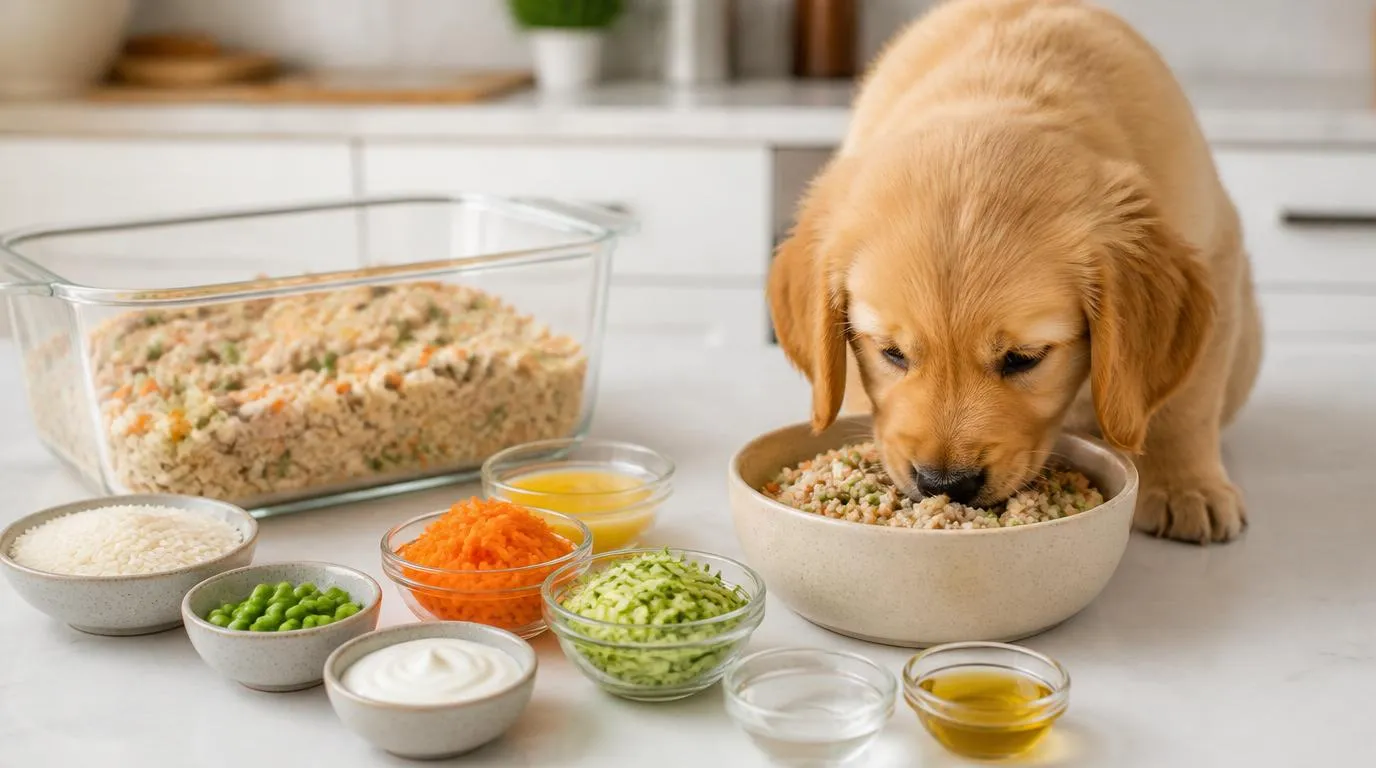
Ingredients
- Lean ground chicken or turkey 1 lb
- White rice (uncooked) ½ cup
- Carrot, finely grated 1 small
- Zucchini, finely grated ½ small
- Peas (fresh or frozen), lightly mashed ¼ cup
- Egg, lightly beaten (optional, for extra protein) 1 large
- Plain yogurt (unsweetened) – for probiotics 2 tbsp
- Olive oil or salmon oil 1 tsp
- Water 2½ cups (divided)
*Important: This recipe provides a foundation. For long‑term feeding, a puppy‑specific multivitamin and calcium supplement are strongly recommended. Always consult your veterinarian before switching a puppy to homemade food.
Nutritional Info (per ½ cup serving)
Approximate values. Puppies need carefully balanced calcium:phosphorus ratios. Do not use this as a complete diet without veterinary guidance.
Step-by-Step Cooking Instructions
- Cook the rice: Rinse white rice under cool water. In a small pot, combine rice with 1 cup of water. Bring to a boil, then reduce heat, cover, and simmer for 15 minutes. Remove from heat and let stand covered.
- Brown the meat: In a skillet, cook ground chicken or turkey over medium heat until fully cooked and no pink remains. Drain any excess fat.
- Add vegetables: Add the grated carrot, zucchini, and peas to the skillet. Pour in 1½ cups of water and simmer for 5‑7 minutes until vegetables are soft.
- Combine with rice: Add the cooked rice to the skillet and stir well. If using egg, push mixture to one side, scramble the egg in the pan, then mix everything together.
- Cool and add yogurt/oil: Remove from heat. Let cool until warm (not hot), then stir in plain yogurt and olive oil. The yogurt provides probiotics beneficial for young digestive systems.
- Cool completely: Allow the food to reach room temperature before serving. Spread on a baking sheet to speed up cooling.
- Portion: Divide into meal‑sized portions (½ cup for small puppies, up to 1 cup for large breeds) and refrigerate or freeze.
Pros and Cons of Homemade Food for Puppies
Pros
- Fresh, whole ingredients – no preservatives or fillers.
- Customizable – you can adjust for allergies or preferences.
- High palatability – puppies often love the taste.
- Supports healthy development – when properly balanced.
- Bonding experience – preparing meals for your puppy is rewarding.
Cons
- Risk of nutritional imbalance – especially calcium and phosphorus.
- Requires veterinary oversight – essential for growing dogs.
- Time‑consuming – preparing fresh meals takes effort.
- Higher cost – quality ingredients add up.
- Transition challenges – sudden changes can upset a puppy's stomach.
Nutritional Tips – Why These Ingredients Support Puppy Growth
Ingredient Benefits
- Lean ground chicken/turkey: High‑quality protein for muscle development. Easily digestible for young stomachs.
- White rice: Gentle carbohydrate that provides energy without overwhelming digestion.
- Carrot & zucchini: Provide beta‑carotene, vitamins, and fiber. Grated form ensures easy digestion.
- Peas: Plant‑based protein and fiber. Lightly mashed to prevent whole peas from passing through.
- Egg: Excellent source of complete protein, healthy fats, and DHA for brain development.
- Plain yogurt: Probiotics support a healthy gut microbiome, which is especially important during the weaning and early growth phases.
- Olive or salmon oil: Omega‑3 fatty acids (salmon oil) support brain and eye development; olive oil provides healthy fats.
Serving Suggestions by Age & Size
Puppies need frequent, smaller meals. Use these guidelines as a starting point, always adjusting based on body condition and veterinary advice. Split the daily amount into 3‑4 meals for puppies under 6 months, then gradually reduce to 2 meals after 6 months.
- Small breeds (2‑10 lbs at maturity): ¼ to ½ cup per day at 8‑12 weeks, increasing to ½‑¾ cup by 6 months.
- Medium breeds (10‑50 lbs): ½ to 1 cup per day at 8‑12 weeks, increasing to 1‑2 cups by 6 months.
- Large breeds (50‑100 lbs): 1 to 2 cups per day at 8‑12 weeks, increasing to 2‑4 cups by 6 months.
- Giant breeds (100+ lbs): 2 to 3 cups per day at 8‑12 weeks, increasing to 4‑6 cups by 6 months.
Monitoring: You should be able to feel ribs easily without seeing them. Puppies should gain weight steadily but not too rapidly. Overfeeding can lead to skeletal problems in large breeds. Regular weigh‑ins and vet checkups are essential.
Recipe Variations for Puppies
Customize for Your Growing Pup
- Fish for DHA: Replace half the chicken with finely flaked cooked salmon (rich in DHA for brain development).
- Calcium boost: Add a veterinarian‑approved calcium supplement (do not use bone meal without professional guidance).
- Grain‑free: Substitute rice with 1 cup cooked quinoa or 1½ cups mashed sweet potato.
- For large/giant breeds: Use a recipe specifically formulated to control calcium and phosphorus; consult your vet for a custom plan.
- For sensitive tummies: Start with a single protein (chicken or turkey) and simple carbohydrates; avoid dairy if lactose intolerant.
Always introduce new ingredients one at a time and watch for any signs of allergies or digestive upset.
Must-Have Kitchen Items
Recommended Tools
- Digital Kitchen Scale – for precise portioning. Check price on Amazon (our top pick)
- Small Saucepan & Skillet – perfect for small batches. Check price on Amazon
- Microplane or Fine Grater – for finely grating vegetables. Check price on Amazon
- Portion Storage Containers – ½ cup or 1 cup sizes for meal prep. Check price on Amazon
- Food Thermometer – ensures meat is cooked safely. Check price on Amazon
We participate in the Amazon Services LLC Associates Program, an affiliate advertising program designed to provide a means for us to earn fees by linking to Amazon.com and affiliated sites. As an Amazon Associate, we earn from qualifying purchases.
Storage and Safety Tips
Keep It Fresh
- Refrigerator: Store in an airtight container for up to 4 days.
- Freezer: Portion into individual servings (½ cup or 1 cup) and freeze for up to 3 months. Label with date and puppy's weight range.
- Thawing: Thaw frozen portions in the refrigerator overnight. Never leave at room temperature.
- Warming: Gently warm refrigerated food by placing the container in warm water or microwaving on low power, stirring well to avoid hot spots. Never serve food that is too hot.
- Hygiene: Puppies are more susceptible to foodborne illness. Always wash hands, utensils, and bowls thoroughly after handling raw meat or homemade food.
Conclusion
Raising a healthy puppy is one of the most rewarding experiences, and feeding them homemade food can be a wonderful way to ensure they get the best start in life. This recipe provides a balanced foundation, but remember that growing puppies have strict nutritional requirements.
Your veterinarian is your best partner in this journey. Regular weigh‑ins, body condition scoring, and occasional blood work can help ensure your homemade diet is meeting all of your puppy's needs. Never hesitate to ask for professional guidance.
If you prepare this for your puppy, I hope you enjoy the satisfaction of feeding them real, wholesome food. Happy cooking, and give your puppy an extra snuggle from me!
Frequently Asked Questions
Is this recipe safe for all puppies?
This recipe is designed as a starting point. Every puppy is different, and nutritional needs vary by breed, size, and growth rate. You must work with your veterinarian to ensure the diet is balanced for your specific puppy, especially for large and giant breeds that require careful calcium:phosphorus ratios.
How do I ensure my puppy gets enough calcium?
Calcium is critical for bone development, but excess calcium can cause skeletal problems. This recipe does not contain a calcium supplement – it's essential to add a puppy‑specific calcium supplement under veterinary guidance. Never add bone meal or crushed eggshells without professional advice, as the ratio must be precise.
How often should I feed my puppy?
Puppies under 3 months: 4 meals per day. 3‑6 months: 3 meals per day. 6‑12 months: 2 meals per day. Splitting meals helps maintain stable blood sugar and supports healthy digestion.
Can I use this recipe for large or giant breed puppies?
Large and giant breed puppies have special requirements to prevent rapid growth that can lead to skeletal issues. If you have a large or giant breed, consult your veterinarian before using this recipe. You may need to adjust calcium levels, protein content, and feeding amounts carefully.
How do I transition my puppy to homemade food?
Start by mixing 20% homemade with 80% current food. Gradually increase the homemade portion over 7‑10 days. Watch for any digestive upset (loose stools, vomiting) and slow down if needed. Puppies have sensitive systems, so go slowly.
Should I add a puppy multivitamin?
Yes, for long‑term feeding, a high‑quality puppy multivitamin is strongly recommended to fill any nutritional gaps. Choose one formulated for puppies and follow the dosage instructions. Always discuss with your vet before adding supplements.