Recipe Introduction
If you're looking to add more vegetables to your dog's diet, this homemade dog food with vegetables is a delicious and nutritious way to do it. Vegetables provide essential vitamins, minerals, and fiber that support digestion, immune health, and overall vitality. Combined with lean protein and healthy grains, this recipe creates a well‑balanced meal your dog will love.
I developed this vegetable‑forward recipe for clients whose dogs needed more fiber for weight management or had mild digestive sensitivities. The combination of sweet potato, carrots, green beans, and peas delivers a rainbow of nutrients, while ground turkey keeps it lean and highly digestible. It's a meal that appeals to both dogs and their health‑conscious owners.
This recipe is easy to customize – swap in your dog's favorite veggies or adjust the protein source. It's a fantastic way to ensure your pup gets a wide variety of nutrients from whole foods.
Table of Contents
Veggie‑Rich Turkey & Quinoa Dog Food
Fiber Boost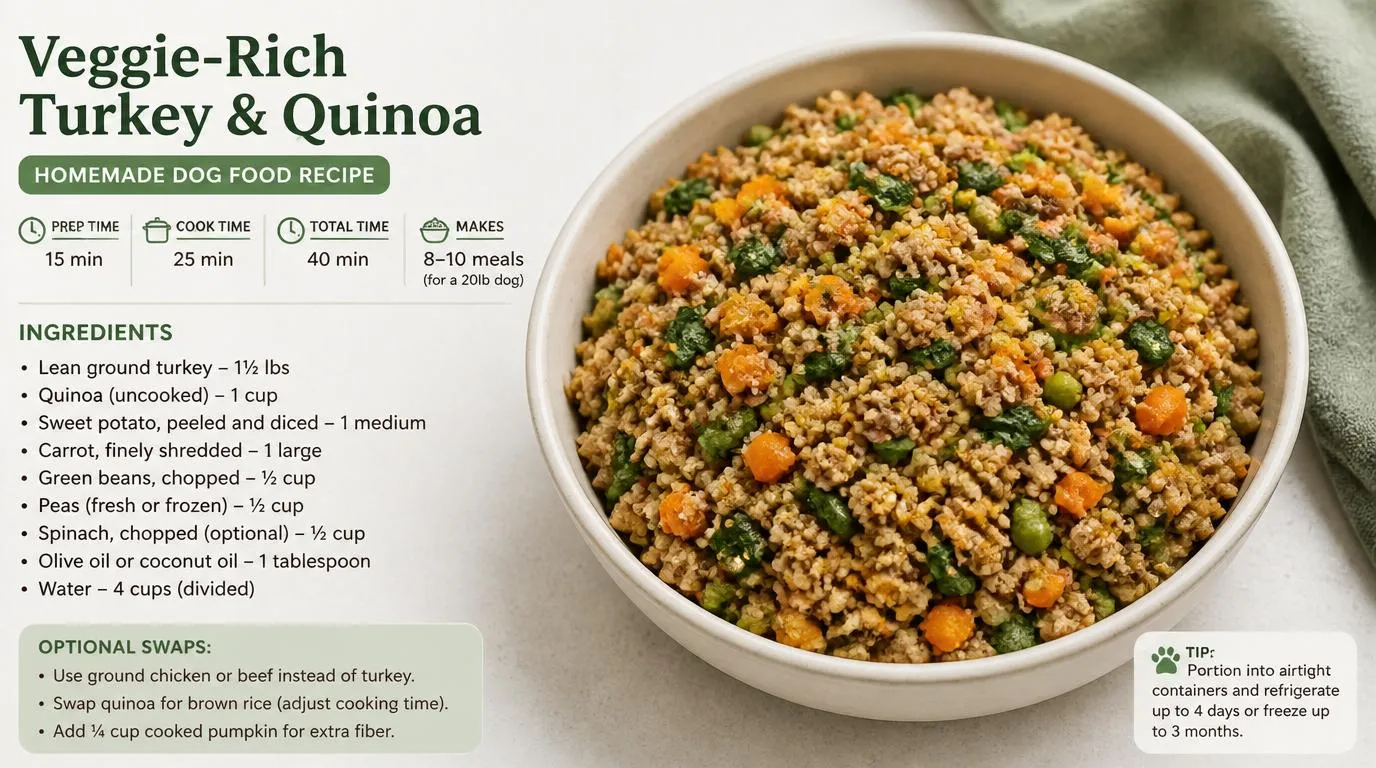
Ingredients
- Lean ground turkey 1½ lbs
- Quinoa (uncooked) 1 cup
- Sweet potato, peeled and diced 1 medium
- Carrot, finely shredded 1 large
- Green beans, chopped ½ cup
- Peas (fresh or frozen) ½ cup
- Spinach, chopped (optional) ½ cup
- Olive oil or coconut oil 1 tablespoon
- Water 4 cups (divided)
Optional swaps: Use ground chicken or beef instead of turkey. Swap quinoa for brown rice (adjust cooking time). Add ¼ cup cooked pumpkin for extra fiber.
Nutritional Info (per ½ cup serving)
Approximate values. Add a canine multivitamin if used as a complete diet.
Step-by-Step Cooking Instructions
- Cook the quinoa: Rinse quinoa under cool water. In a medium pot, combine quinoa with 2 cups of water. Bring to a boil, then reduce heat, cover, and simmer for 15 minutes. Remove from heat and let stand covered for 5 minutes, then fluff with a fork.
- Brown the turkey: In a large skillet or pot, cook the ground turkey over medium heat until fully browned. Drain any excess fat.
- Cook vegetables: In the same pot, add sweet potato and carrot with 1 cup of water. Simmer for 10 minutes until slightly tender. Add green beans, peas, and spinach (if using). Cook for another 5 minutes until all vegetables are tender.
- Combine everything: Add the cooked quinoa and browned turkey to the vegetables. Stir in olive oil and mix thoroughly. If needed, add a little water to reach desired consistency.
- Cool completely: Let the food cool before serving. Spread on a baking sheet to speed up cooling.
Pros and Cons of Vegetable‑Rich Homemade Dog Food
Pros
- High in fiber – supports healthy digestion and weight management.
- Packed with vitamins – sweet potatoes, carrots, spinach provide beta‑carotene, vitamin A, and iron.
- Low in fat – lean turkey keeps calories in check.
- Variety of textures – appealing to dogs who enjoy crunch and softness.
- Supports immune health – diverse phytonutrients from vegetables.
Cons
- May cause gas if vegetables are introduced too quickly.
- Requires careful chopping – larger pieces may be hard to digest.
- Not a complete protein – needs animal protein for balanced amino acids.
- Shorter shelf life than kibble.
- Some dogs may be picky about vegetable pieces.
Nutritional Tips – Why These Ingredients Are Good for Your Dog
Ingredient Benefits
- Ground turkey: Lean source of protein, rich in selenium and B vitamins. Supports muscle health without excess fat.
- Quinoa: Complete protein (unusual for a grain) plus fiber, magnesium, and iron. Gentle on digestion.
- Sweet potato: Excellent source of beta‑carotene, vitamin A, and dietary fiber. Supports vision and immune function.
- Carrots: Beta‑carotene for skin and coat health, plus natural crunch that helps clean teeth.
- Green beans & peas: Low‑calorie sources of vitamins K, C, and fiber. Great for weight management.
- Spinach: Iron, calcium, and antioxidants. Use in moderation.
Serving Suggestions
Portion sizes depend on your dog's size and activity level. Use these guidelines as a starting point:
- Small dogs (under 20 lbs): ¼ to ½ cup per day, split into two meals.
- Medium dogs (20-50 lbs): ¾ to 1½ cups per day, split into two meals.
- Large dogs (50+ lbs): 2 to 3 cups per day, split into two meals.
Serve at room temperature. Use as a complete meal or mix with kibble. Monitor your dog's weight and adjust portions accordingly.
Recipe Variations
Try These Swaps
- Chicken & Sweet Potato: Replace turkey with boneless chicken breast, and use brown rice instead of quinoa.
- Beef & Pumpkin: Use lean ground beef and add ¼ cup cooked pumpkin for extra fiber.
- Grain‑Free Veggie Bowl: Omit quinoa and add 1 cup of finely chopped kale or zucchini.
- Senior Dog Recipe: Mash the vegetables and use ground chicken for easier chewing.
Always introduce new ingredients gradually and watch for any adverse reactions.
Must-Have Kitchen Items
Recommended Tools
- Digital Kitchen Scale – for precise portioning. Check price on Amazon (our top pick)
- Large Stock Pot or Dutch Oven – for cooking large batches. Check price on Amazon
- Chef's Knife – for chopping vegetables. Check price on Amazon
- Large Storage Containers – freezer‑safe for meal prep. Check price on Amazon
- Food Thermometer – ensures meat is cooked safely. Check price on Amazon
We participate in the Amazon Services LLC Associates Program, an affiliate advertising program designed to provide a means for us to earn fees by linking to Amazon.com and affiliated sites. As an Amazon Associate, we earn from qualifying purchases.
Storage and Safety Tips
Keep It Fresh
- Refrigerator: Store in an airtight container for up to 4 days.
- Freezer: Portion into individual servings and freeze for up to 3 months. Use silicone muffin trays for easy portions.
- Thawing: Thaw frozen portions in the refrigerator overnight. Never leave at room temperature.
- Signs of spoilage: Sour smell, mold, or if it's been in the fridge more than 4 days – discard immediately.
Conclusion
There you have it – a vibrant, nutrient‑dense vegetable and turkey recipe that will introduce your dog to the benefits of whole‑food vegetables. The fiber and phytonutrients in this meal support digestion, immune health, and can even help maintain a healthy weight.
Start with the basic version, monitor your dog's energy and stool quality, and feel free to experiment with the variations once you're comfortable. Every dog is unique, and homemade food lets you tailor meals to their individual needs.
If you prepare this for your furry friend, I hope you enjoy the satisfaction of feeding them real, wholesome food. Happy cooking, and give your dog an extra treat from me!
Frequently Asked Questions
Can I use frozen vegetables instead of fresh?
Absolutely! Frozen vegetables are just as nutritious and often more convenient. Just be sure to avoid any with added salt or sauces.
Are there any vegetables I should avoid?
Yes. Never feed onions, garlic, chives, or leeks – they can damage red blood cells. Also avoid raw potatoes (especially green parts), and keep mushrooms limited to safe varieties.
How long does this vegetable dog food last in the fridge?
Properly stored in an airtight container, it will keep for up to 4 days. For longer storage, freeze portions for up to 3 months.
Is this recipe balanced for everyday feeding?
This recipe provides a good foundation, but for long‑term feeding we recommend adding a canine multivitamin and consulting your veterinarian to ensure it meets your dog's specific needs.
My dog doesn't like vegetables – what can I do?
Try finely shredding or pureeing the vegetables and mixing them thoroughly with the meat and grains. You can also start with a smaller amount and gradually increase it.
How do I transition my dog to this homemade food?
Start by mixing 20% homemade with 80% current food, then gradually increase the proportion over 7‑10 days. Watch for any digestive changes and slow down if needed.