Recipe Introduction
Spinach is a powerhouse green packed with iron, calcium, and vitamins A, C, and K – nutrients that support immune function, vibrant colors, and healthy growth in aquarium fish. This homemade fish food with spinach uses fresh spinach as the star ingredient, combined with other vegetables and optional protein to create a balanced gel food suitable for herbivorous and omnivorous fish.
Whether you keep plecos that need plant matter, goldfish that benefit from fiber, or mbuna cichlids that graze on algae, this spinach‑based recipe provides a natural source of essential nutrients. It's easy to prepare, stays together in the water, and is readily accepted by most fish that enjoy vegetable matter.
Table of Contents
Spinach & Vegetable Gel Food
Iron‑Rich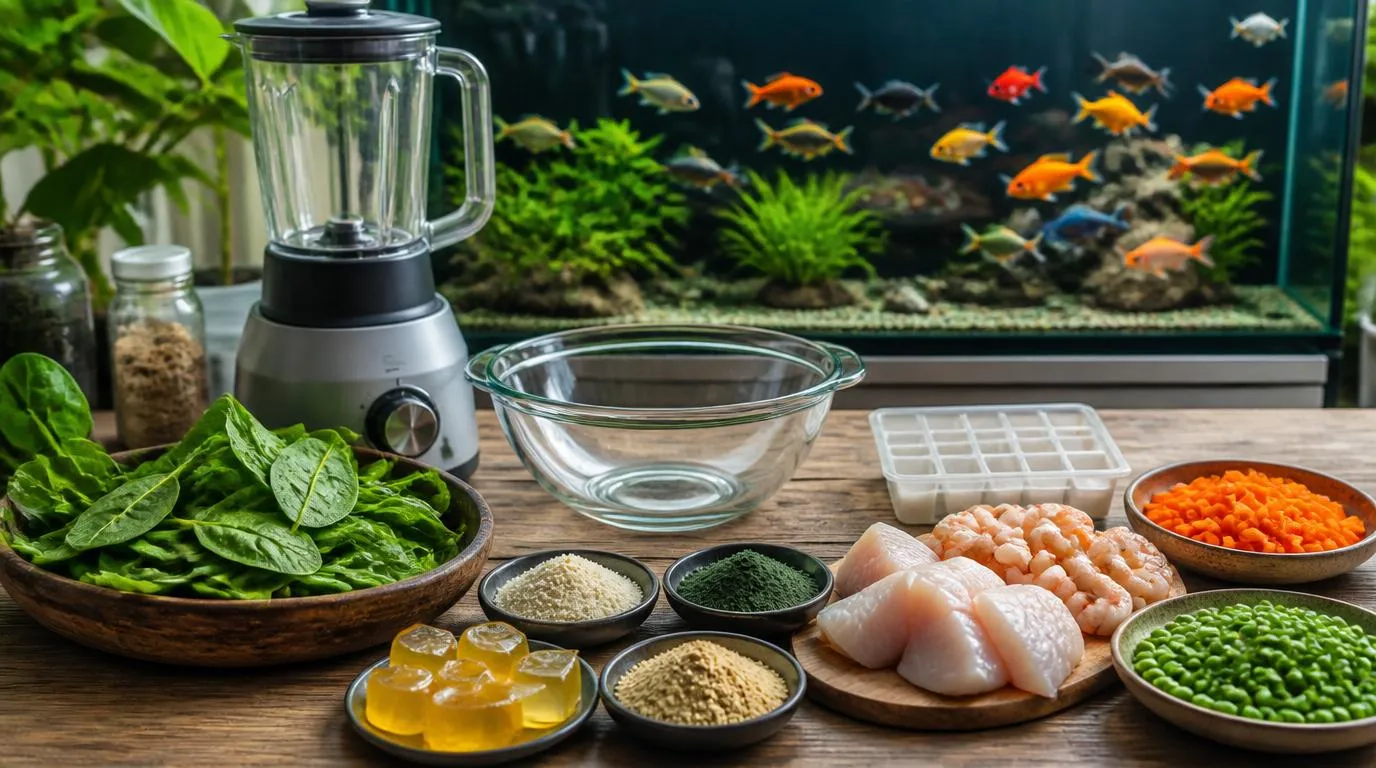
Ingredients
- Fresh spinach (or frozen, thawed) ½ cup
- Zucchini (grated or chopped) ¼ cup
- Peas (fresh or frozen, shelled) ¼ cup
- Carrot (finely grated) ¼ cup
- Spirulina powder (optional) 1 tsp
- Unflavored gelatin (or agar‑agar for vegan) 1 packet (7g)
- Water ½ cup
- Garlic (optional) 1 clove, crushed
Optional additions: For omnivorous fish, add ¼ cup of cooked shrimp or white fish. For color enhancement, add a pinch of paprika or astaxanthin.
Approximate Nutritional Profile (per teaspoon)
Spinach is rich in iron and calcium. For carnivorous fish, supplement with protein sources.
Step-by-Step Cooking Instructions
- Prepare spinach: If using fresh spinach, wash thoroughly. If using frozen, thaw and drain excess water. Chop roughly.
- Prepare other vegetables: Grate zucchini and carrot finely. If using fresh peas, blanch briefly to soften.
- Blend the base: In a food processor or blender, combine spinach, zucchini, peas, carrot, spirulina, and garlic. Pulse until you get a smooth paste. Add a tablespoon of water if needed.
- Prepare gelatin: In a small saucepan, sprinkle gelatin over ½ cup of cold water. Let sit for 2 minutes to bloom. Heat gently over low flame, stirring constantly, until gelatin dissolves (do not boil).
- Combine and heat: Add the vegetable paste to the gelatin mixture. Stir well over low heat for 2‑3 minutes to combine. Remove from heat.
- Pour and set: Pour into a shallow dish or ice cube trays. Spread evenly to about ½‑inch thickness. Refrigerate for at least 2 hours until firm.
- Portion and store: Once set, cut into small cubes or score into bite‑sized pieces. Store in an airtight container in the refrigerator for up to 2 weeks, or freeze for longer.
- Feeding: Offer a small amount once or twice a day, removing any uneaten food after a few minutes.
Pros and Cons of Spinach‑Based Fish Food
Pros
- High in iron and calcium – supports blood health and bone development.
- Rich in vitamins – natural source of A, C, and K for immune support.
- Excellent for herbivores – mimics natural grazing on aquatic plants.
- Promotes vibrant colors – carotenoids from spinach and spirulina enhance pigmentation.
- Low in fat – ideal for fish prone to obesity.
Cons
- Not a complete protein source – for carnivores, additional protein is needed.
- May cause gas in some fish if introduced too quickly.
- Shorter shelf life – must be refrigerated or frozen.
- Some fish may reject it – start with small amounts mixed with their regular food.
Nutritional Tips – Why Spinach Is Great for Fish
Ingredient Benefits
- Spinach: Excellent source of iron (prevents anemia), calcium (bone health), and vitamins A, C, K. The antioxidants support immune function.
- Zucchini: Hydrating, low‑calorie vegetable rich in vitamins B and C; easy to digest.
- Peas: High in fiber, helps prevent constipation – especially beneficial for goldfish.
- Carrot: Beta‑carotene enhances orange/red coloration and supports vision.
- Spirulina: Protein‑rich algae that boosts color and immunity.
- Garlic: Natural immune booster and appetite stimulant; may help deter parasites.
Feeding Guidelines for Spinach Food
Spinach‑based foods are ideal for fish that naturally consume plant matter. Follow these guidelines:
- Herbivorous fish (plecos, otocinclus, mbuna): Can be fed this as a staple, supplemented with algae wafers or fresh vegetables.
- Omnivorous fish (goldfish, mollies, angelfish): Offer as part of a varied diet; supplement with protein sources like brine shrimp or bloodworms.
- Feed small amounts: Offer only what your fish can consume in 2‑3 minutes. Remove any uneaten food after 10 minutes.
- For bottom feeders: The gel cubes sink slowly, making them accessible to plecos, corydoras, and loaches.
- Fast one day a week: Helps clear the digestive system, especially important for goldfish.
Recipe Variations for Different Fish
Customize for Your Tank
- For plecos and catfish: Add a small amount of shrimp or white fish for protein, and increase spirulina.
- For goldfish: Increase pea content; consider adding a small amount of cooked pumpkin for extra fiber.
- For mbuna (African cichlids): Add extra spirulina and a pinch of paprika for color; use agar‑agar for a plant‑based binder.
- For carnivorous fish (bettas, oscars): This recipe is too low in protein; use a high‑protein recipe with shrimp/fish and only a small amount of spinach.
- Vegan version: Substitute gelatin with agar‑agar (follow package instructions; typically 1 tbsp per cup of liquid).
Always research your fish's specific dietary needs before altering the recipe.
Must‑Have Kitchen Items
Recommended Tools
- Food Processor or Blender – for creating a smooth paste. Check price on Amazon
- Small Saucepan – for dissolving gelatin. Check price on Amazon
- Sharp Knife – for portioning the gel. Check price on Amazon
- Ice Cube Trays or Silicone Molds – for easy portioning. Check price on Amazon
- Feeding Clip or Cone – for attaching gel foods to the tank wall. Check price on Amazon
We participate in the Amazon Services LLC Associates Program, an affiliate advertising program designed to provide a means for us to earn fees by linking to Amazon.com and affiliated sites. As an Amazon Associate, we earn from qualifying purchases.
Storage and Safety Tips
Keep It Fresh & Safe
- Refrigerator: Store in an airtight container for up to 2 weeks.
- Freezer: Portion into cubes and freeze for up to 6 months. Thaw only what you'll use within a few days.
- Thawing: Thaw frozen portions in the refrigerator or in a small cup of tank water.
- Water quality: Spinach‑based foods can decompose quickly if overfed. Remove uneaten food after 10‑15 minutes.
- Hygiene: Wash all equipment thoroughly after handling fresh produce to prevent cross‑contamination.
Conclusion
Spinach is a nutritional powerhouse for aquarium fish, providing iron, calcium, and essential vitamins that support overall health. This gel‑based recipe makes it easy to incorporate this leafy green into your fish's diet. Whether you have herbivorous plecos or omnivorous goldfish, this spinach‑rich food is a healthy, natural addition to their feeding routine.
Experiment with different vegetable combinations based on what your fish enjoy. For added variety, you can also blanch fresh spinach leaves and clip them to the side of the tank as an occasional treat. Homemade spinach food is a fantastic way to boost nutrition and promote vibrant colors in your aquarium.
Happy fish keeping!
Frequently Asked Questions
Can I feed this to my carnivorous fish?
This recipe is primarily for herbivorous and omnivorous fish. Carnivorous fish (like bettas, oscars, and puffers) need much more protein. For them, use a high‑protein recipe with shrimp/fish and only a small amount of spinach.
How often should I feed spinach‑based food?
For herbivores, this can be a daily staple. For omnivores, offer 3‑4 times a week as part of a varied diet. Always monitor water quality and remove uneaten food promptly.
Can I use frozen spinach?
Yes, frozen spinach is just as nutritious as fresh and often more convenient. Thaw and drain excess water before blending.
Will this food cloud my aquarium water?
When fed in appropriate amounts, gel foods are less likely to cloud water than flake foods. However, overfeeding or leaving uneaten food will always cause water quality issues.
My fish aren't eating the spinach food – what should I do?
Start by mixing a small amount with their regular food. Gradually increase the proportion over a week. Garlic can help stimulate appetite. For picky fish, try making the pieces smaller or adding a small amount of protein to the mix.
Can I use agar‑agar instead of gelatin?
Yes. Agar‑agar is a plant‑based gelatin substitute. Use about 1 tablespoon per cup of liquid. Follow package instructions; agar sets at room temperature and is firmer than gelatin.