
Recipe Introduction
Backyard birds bring life and color to any garden – but today we’re focusing on a different kind of small companion: hamsters! Making your own homemade hamster food mix is an easy, rewarding way to ensure your pet gets wholesome, natural ingredients without fillers, preservatives, or added sugars. This recipe combines the seeds, grains, and protein sources that hamsters naturally forage for in the wild, creating a balanced base that can be customized for Syrian, dwarf, and Roborovski hamsters.
This all‑purpose mix uses millet, oats, barley, and healthy seeds, plus optional mealworms for protein. Serve it as a staple dry food, supplement with fresh veggies a few times a week, and watch your hamster thrive. With just a few pantry staples, you can create a nutritious buffet that supports dental health, natural foraging behavior, and overall vitality.
Table of Contents
Balanced Hamster Food Mix
All‑Natural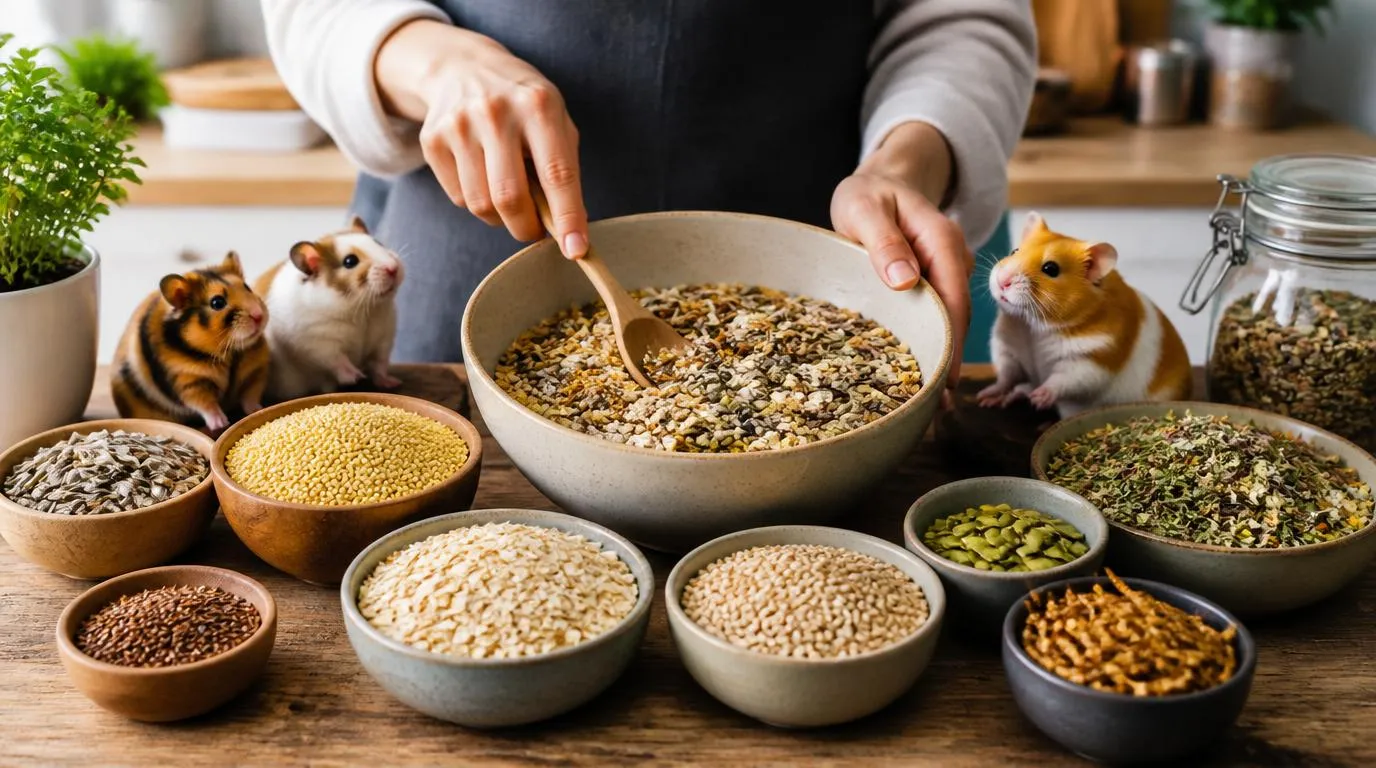
Ingredients
- Millet (spray or whole)¼ cup
- Rolled oats (unsweetened)¼ cup
- Barley pearls3 tbsp
- Sunflower seeds (shelled, unsalted)2 tbsp
- Pumpkin seeds (unsalted)1 tbsp
- Flax seeds1 tsp
- Dried mealworms (protein boost)1 tbsp (optional)
- Dried chamomile flowers or dandelion root1 tsp
Tip: Use only unsalted, unflavored ingredients. Avoid any products with artificial sweeteners, citrus seeds, or raw kidney beans (toxic).
Approximate Nutritional Profile (per tablespoon of dry mix)
Values are approximate. This mix provides a balanced diet when supplemented with fresh vegetables and occasional protein.
Step-by-Step Instructions
- Combine dry ingredients: In a large bowl, combine millet, oats, barley, sunflower seeds, pumpkin seeds, flax, and optional mealworms. Stir until evenly mixed.
- Add botanicals: Mix in chamomile or dandelion for enrichment. Do not add fresh fruits or vegetables to the dry mix – serve those separately.
- Store properly: Transfer to an airtight container (glass jar or BPA-free plastic). Keep in a cool, dry pantry.
- Serving size: Syrian hamsters: 1–2 tbsp per day. Dwarf hamsters: 1 tbsp per day. Adjust based on activity level and weight.
- Fresh supplements: Offer a small piece of cucumber, carrot, or broccoli 2–3 times a week. Never give sugary fruits daily.
- Remove uneaten fresh food after 4–6 hours to prevent spoilage.
Pros and Cons of Homemade Hamster Food
Pros
- No fillers or preservatives – every ingredient is wholesome.
- Customizable – adjust seeds, protein, and herbs for your hamster’s needs.
- Cost‑effective – bulk ingredients are often cheaper than premium blends.
- Encourages natural foraging – scatter feeding mimics wild behavior.
Cons
- Requires careful nutritional balance – must include protein and avoid excess fat.
- Needs proper storage – seeds can spoil if damp.
- May lead to picky eating – if treats are overused.
- Not a complete diet alone – supplement with fresh veggies and protein.
Nutritional Tips – Why These Ingredients Are Great for Hamsters
Ingredient Benefits
- Millet: Light, easily digestible grain that hamsters love; low in fat.
- Rolled oats: Excellent source of fiber and complex carbohydrates.
- Barley pearls: Provides energy and promotes dental health through chewing.
- Sunflower seeds (limited): High in vitamin E and healthy fats; offer in moderation to prevent obesity.
- Pumpkin seeds: Rich in zinc and antioxidants; supports immune function.
- Flax seeds: Omega-3 fatty acids for a healthy coat and skin.
- Mealworms (optional): High-quality animal protein essential for growth and maintenance.
- Dried herbs: Chamomile and dandelion add variety and may have calming properties.
Feeding Guidelines for Hamsters
Follow these best practices to keep your hamster healthy and happy:
- Choose the right bowl: Use a heavy ceramic bowl to prevent tipping, or scatter feed directly on the bedding to encourage foraging.
- Provide fresh water daily: A water bottle with a sipper tube is ideal; check for leaks and clean regularly.
- Limit sugary treats: Fresh fruit should be offered only once or twice a week in tiny amounts.
- Monitor weight: Hamsters can become obese quickly – adjust portions if your pet starts gaining excess weight.
- Remove uneaten fresh food: After a few hours to prevent mold and bacterial growth.
- Introduce new foods gradually: Over 5–7 days to avoid digestive upset.
Recipe Variations for Specific Hamster Breeds
Customize for Your Hamster
- For Syrian hamsters: Slightly increase sunflower seeds and add a few more mealworms; they need more fat and protein.
- For dwarf hamsters (Campbell’s, Winter White, Roborovski): Reduce sunflower seeds to 1 tbsp, increase millet and oats; they are prone to diabetes, so avoid any dried fruit in the mix.
- For senior hamsters: Softer grains like rolled oats and barley; consider grinding some seeds to make chewing easier.
- Protein‑booster blend: Add dried shrimp, cooked unsalted chickpeas, or a small amount of hard-boiled egg (fresh, not in the dry mix).
- Herbal enrichment: Add dried rose petals, calendula, or raspberry leaves for variety and foraging interest.
Observe your hamster’s preferences and adjust the blend accordingly. Keeping a feeding journal helps you fine‑tune the mix over time.
Must‑Have Items
Recommended Tools & Supplies
- Large Mixing Bowl & Spoon – for combining ingredients. Check price on Amazon
- Airtight Storage Container – to keep dry mix fresh. Check price on Amazon
- Digital Kitchen Scale – for precise portioning. Check price on Amazon
- Small Ceramic Bowl – for fresh vegetables. Check price on Amazon
We participate in the Amazon Services LLC Associates Program, an affiliate advertising program designed to provide a means for us to earn fees by linking to Amazon.com and affiliated sites. As an Amazon Associate, we earn from qualifying purchases.
Storage and Safety Tips
Keep It Fresh & Safe
- Dry mix: Store in an airtight container in a cool, dry place for up to 3 months. Freeze for longer storage (up to 6 months).
- Check for moisture or pests: Before each refill, inspect the mix for any signs of mold, weevils, or off smells.
- Never feed moldy seeds: They can produce toxins harmful to hamsters.
- Clean food bowls daily: Wash with hot soapy water to prevent bacterial buildup.
- Introduce new mix gradually: Over 5–7 days to avoid digestive upset.
- Safe placement: Keep the food container away from direct sunlight and heat sources.
Conclusion
Feeding your hamster a homemade mix is a wonderful way to connect with your pet and ensure they receive high‑quality, natural ingredients. With just a few seeds, grains, and a bit of protein, you can create a nutritious staple that supports their health and happiness. Whether you stick to the base recipe or customize it for your hamster’s specific needs, you’ll enjoy watching them forage, stash, and thrive.
Take time to observe your hamster’s eating habits and adjust portions accordingly. By providing fresh, balanced food and maintaining a clean habitat, you’ll enjoy a healthy, active companion for years to come.
Happy hamster keeping!

Frequently Asked Questions
Can hamsters eat this mix exclusively?
It’s a great staple, but supplement with fresh vegetables and a protein source like boiled egg or mealworms twice weekly to ensure complete nutrition. A small amount of high‑quality lab block can also help balance vitamins and minerals.
Is this recipe safe for dwarf hamsters?
Yes, but reduce portion size (1 tbsp/day) and limit high‑fat seeds. Dwarf species are prone to diabetes, so avoid adding dried fruit to the mix and offer sugary treats very sparingly.
How long does homemade hamster food last?
Properly stored in an airtight container in a cool, dry place: up to 3 months. Freezing extends shelf life to 6 months. Always smell before feeding – discard if rancid.
What vegetables are safe for hamsters?
Small amounts of cucumber, zucchini, bell pepper, kale, and broccoli are safe. Avoid iceberg lettuce, onion, garlic, and rhubarb. Introduce new veggies one at a time to check for tolerance.
Can I add commercial pellets to this mix?
Absolutely – many owners combine a high‑quality lab block with this seed mix to ensure balanced vitamins and minerals. Just adjust total portion size to avoid overfeeding.
