
Recipe Introduction
Fruits can be a delightful and healthy addition to your hamster’s diet when offered in moderation. Making your own homemade hamster food with fruits allows you to control sugar content and ensure your pet gets natural vitamins and antioxidants. This guide provides two simple recipes: a dried fruit & seed mix for occasional treats, and a fresh fruit salad for enrichment. Both are designed to complement a balanced staple diet of high-quality pellets or seed mixes.
Always introduce new fruits slowly, and remember that dwarf hamsters (especially Campbell’s and Winter White) are prone to diabetes, so fruit should be given sparingly. Syrian and Roborovski hamsters can enjoy small amounts a few times a week. Let’s dive into safe fruit choices and easy preparation methods.
Table of Contents
Hamster Fruit Treat Mix
Occasional Treat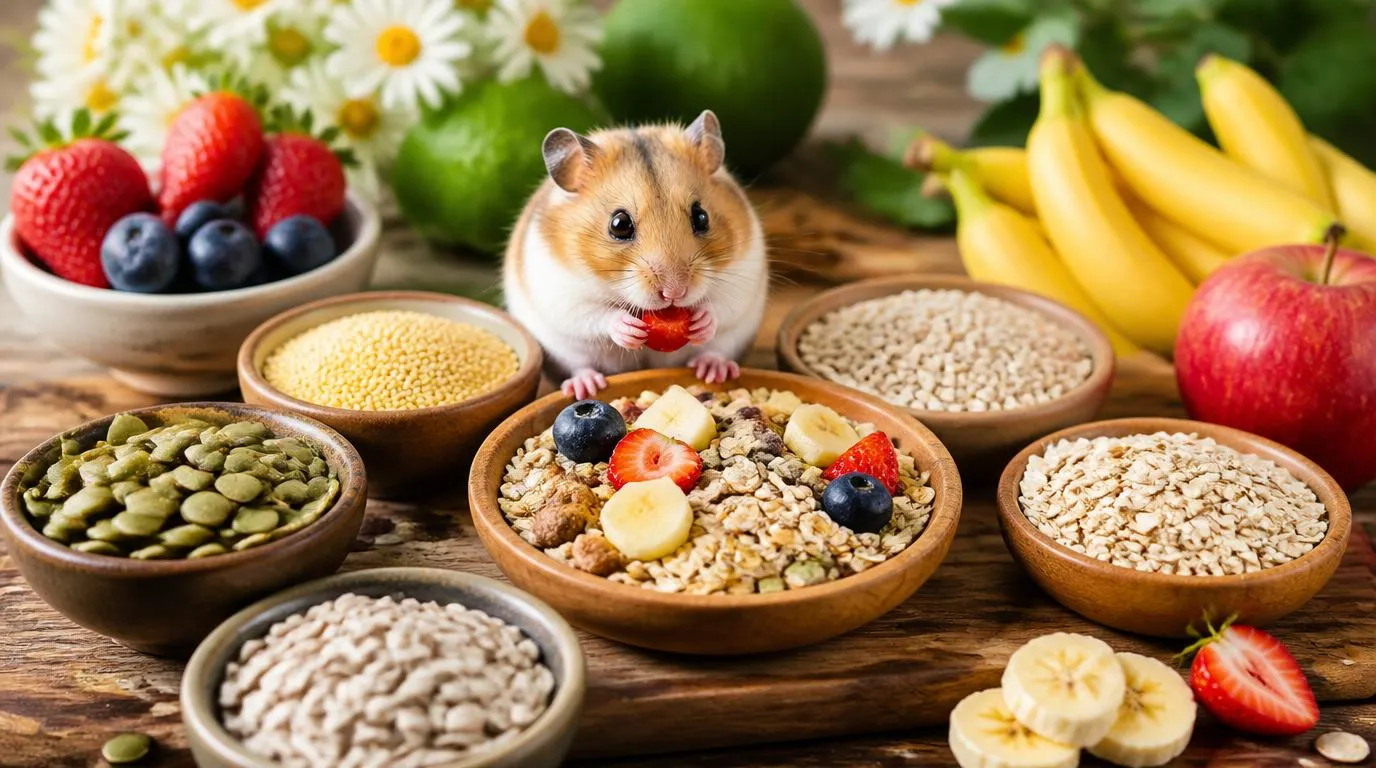
Ingredients
- Apple (cored, thinly sliced)½ small
- Blueberries (fresh or frozen)¼ cup
- Banana (sliced)½ small
- Raspberries (optional)2–3 berries
- Rolled oats (unsweetened)2 tbsp
- Millet spray (for texture)1 small bunch
Safe fruits only: apple (no seeds), pear, strawberry, blueberry, raspberry, melon. Avoid citrus, grapes (high sugar), and any fruit with pits.
Approximate Nutritional Profile (per teaspoon of dried mix)
Values are approximate. Offer fruit treats 1–2 times per week only.
Step-by-Step Instructions
- Prepare fresh fruit: Wash all fruit thoroughly. Core apple and remove seeds; slice thinly. Peel banana and slice into small coins. Keep blueberries whole or halve for dwarf hamsters.
- Dehydrate (option 1 – oven): Arrange fruit slices on a baking sheet lined with parchment. Dry at 170°F (75°C) for 2–3 hours, flipping halfway, until leathery but not crispy. Let cool completely.
- Dehydrate (option 2 – food dehydrator): Follow manufacturer’s instructions, usually 4–6 hours at 135°F (57°C).
- Mix with grains: In a small bowl, combine dried fruit, rolled oats, and millet spray. Stir gently.
- Store: Place in an airtight container and keep in a cool, dry place. Use within 1 month.
- Serving: For Syrian hamsters, offer 1–2 small pieces of dried fruit or a teaspoon of mix per week. For dwarfs, offer a tiny piece (size of your pinky nail) once a week.
Fresh Fruit Salad Variation: Instead of drying, serve a tiny portion of fresh fruit (1–2 small cubes) alongside their regular meal. Remove any uneaten fresh fruit after 4 hours.
Pros and Cons of Fruit Treats for Hamsters
Pros
- Natural source of vitamins and antioxidants – supports immune health.
- Encourages foraging and mental stimulation – variety keeps hamsters engaged.
- Bonding opportunity – hand‑feeding small fruit pieces can build trust.
- Customizable – use seasonal safe fruits.
Cons
- High sugar content – can lead to obesity and diabetes, especially in dwarf hamsters.
- Risk of digestive upset if introduced too quickly or given in excess.
- Fresh fruit spoils rapidly – must be removed promptly.
- Not a dietary necessity – hamsters thrive on a balanced pellet/seed mix with occasional protein.
Nutritional Tips – Safe Fruits & Why They Matter
Fruit Benefits & Precautions
- Apple (no seeds): Provides fiber and vitamin C. Remove seeds – they contain trace amounts of amygdalin (cyanogenic compound).
- Blueberries: Rich in antioxidants; low in sugar compared to other fruits. Safe for dwarfs in tiny amounts.
- Banana: High in potassium but also high in sugar. Offer only a thin slice once a week.
- Raspberries/Strawberries: Excellent vitamin C and fiber; low in sugar. Good for occasional treats.
- Melon (cantaloupe, honeydew): Hydrating and low in sugar; remove rind and seeds.
- Fruits to avoid: Citrus (too acidic), grapes (high sugar, potential toxicity concerns), cherries/peaches/apricots (pits contain cyanide compounds), rhubarb (toxic).
Feeding Guidelines for Fruit Treats
Follow these best practices to keep your hamster healthy while offering fruit:
- Moderation is key: Fruits should make up no more than 5% of the total diet. For Syrians, that’s about a thumbnail-sized piece 2–3 times a week. For dwarfs, a pea-sized piece once a week.
- Introduce slowly: Offer a tiny piece of one fruit at a time and wait 24 hours to check for any digestive issues.
- Remove uneaten fresh fruit: After 4–6 hours to prevent mold and bacterial growth.
- Dried fruit caution: Dried fruit concentrates sugar; use even more sparingly than fresh.
- Balance with staples: Always ensure your hamster has access to a high‑quality pellet or seed mix and fresh water.
- Monitor weight: If your hamster gains weight, reduce fruit frequency.
Recipe Variations & Enrichment Ideas
Creative Ways to Serve Fruit
- Fruit & Herb Mix: Add dried chamomile or dandelion leaves to the dried fruit mix for extra foraging fun.
- Frozen Fruit Pops: Freeze a small piece of blueberry or raspberry in a tiny ice cube with water – offer on a warm day (supervised).
- Hide & Seek: Tuck a small dried fruit piece inside a cardboard tube or a foraging toy to encourage natural behavior.
- Protein-Fruit Combo: Mix a tiny amount of mashed banana with a pinch of plain cooked egg or mealworms – serve as a rare enrichment mash.
- For dwarf hamsters: Use only low-sugar fruits like raspberry or blueberry, and offer no more than once a week.
Always prioritize your hamster’s staple diet – fruits are treats, not meal replacements.
Must‑Have Items
Recommended Tools & Supplies
- Sharp Knife & Cutting Board – for safely preparing fruit. Check price on Amazon
- Food Dehydrator or Oven – for drying fruit treats. Check price on Amazon
- Airtight Glass Jar – to store dried mixes. Check price on Amazon
- Digital Kitchen Scale – for precise portioning. Check price on Amazon
- Foraging Toys – to hide fruit treats and encourage natural behavior. Check price on Amazon
We participate in the Amazon Services LLC Associates Program. As an Amazon Associate, we earn from qualifying purchases.
Storage and Safety Tips
Keep Treats Safe
- Dried fruit mix: Store in an airtight container in a cool, dark place for up to 1 month. Refrigerate for longer shelf life (up to 3 months).
- Fresh fruit: Never leave in the cage for more than 4–6 hours. Discard any uneaten pieces immediately.
- Check for mold: Before offering dried fruit, inspect for any signs of moisture or mold.
- Wash all fruit thoroughly: Even organic fruit may have pesticide residues; scrub under running water.
- No added sugar: Never use canned fruit in syrup, fruit juice concentrates, or dried fruit with added sugar.
Conclusion
Adding fruit to your hamster’s diet can be a wonderful way to provide variety, mental enrichment, and a bonding experience. By following safe guidelines – choosing the right fruits, limiting portions, and ensuring freshness – you can offer these sweet treats without compromising your pet’s health. Remember that every hamster is unique; observe your pet’s reaction to new foods and adjust accordingly.
Whether you make a batch of dried fruit mix for occasional foraging or share a tiny piece of fresh berry, your hamster will appreciate the thoughtfulness. Always prioritize a balanced staple diet, and let fruit be the occasional highlight.
Happy hamster treating!

Frequently Asked Questions
What fruits are safe for hamsters?
Safe fruits include apple (no seeds), pear, blueberry, raspberry, strawberry, banana (small amount), melon, and peach (no pit). Always introduce one at a time and in tiny portions.
Can dwarf hamsters eat fruit?
Yes, but very sparingly. Dwarf hamsters (especially Campbell’s and Winter White) are prone to diabetes. Offer a piece the size of a pea no more than once a week, and choose low‑sugar fruits like raspberries or blueberries.
How often can I give my hamster fruit?
For Syrian hamsters: 2–3 times a week, a small piece. For dwarf hamsters: once a week, a tiny amount. Never replace their main diet with fruit.
Is dried fruit safe for hamsters?
Dried fruit is safe but more concentrated in sugar, so use even less than fresh. Ensure it has no added sugar or preservatives. Store properly to avoid mold.
Can I give my hamster fruit every day?
No, daily fruit can lead to obesity, diabetes, and digestive issues. Treat fruit as an occasional enrichment, not a daily staple.
