
Recipe Introduction
Hamsters are natural foragers, and a varied diet of seeds, grains, and occasional protein keeps them happy and healthy. Making your own homemade hamster food with seeds and grains allows you to skip the fillers and preservatives found in many commercial blends. This recipe is carefully crafted to provide balanced nutrition for Syrian, dwarf, and Roborovski hamsters while appealing to their instinct to hoard and explore.
This mix combines rolled oats, millet, barley, pumpkin seeds, sunflower seeds, flax, and quinoa – all rich in fiber, essential fatty acids, and vitamins. It's easy to prepare in bulk, stores well, and can be customized for different species. Whether you're a first‑time hamster parent or an experienced owner, this DIY seed and grain mix will become your go‑to staple.
Table of Contents
Homemade Hamster Seed & Grain Mix
Staple Diet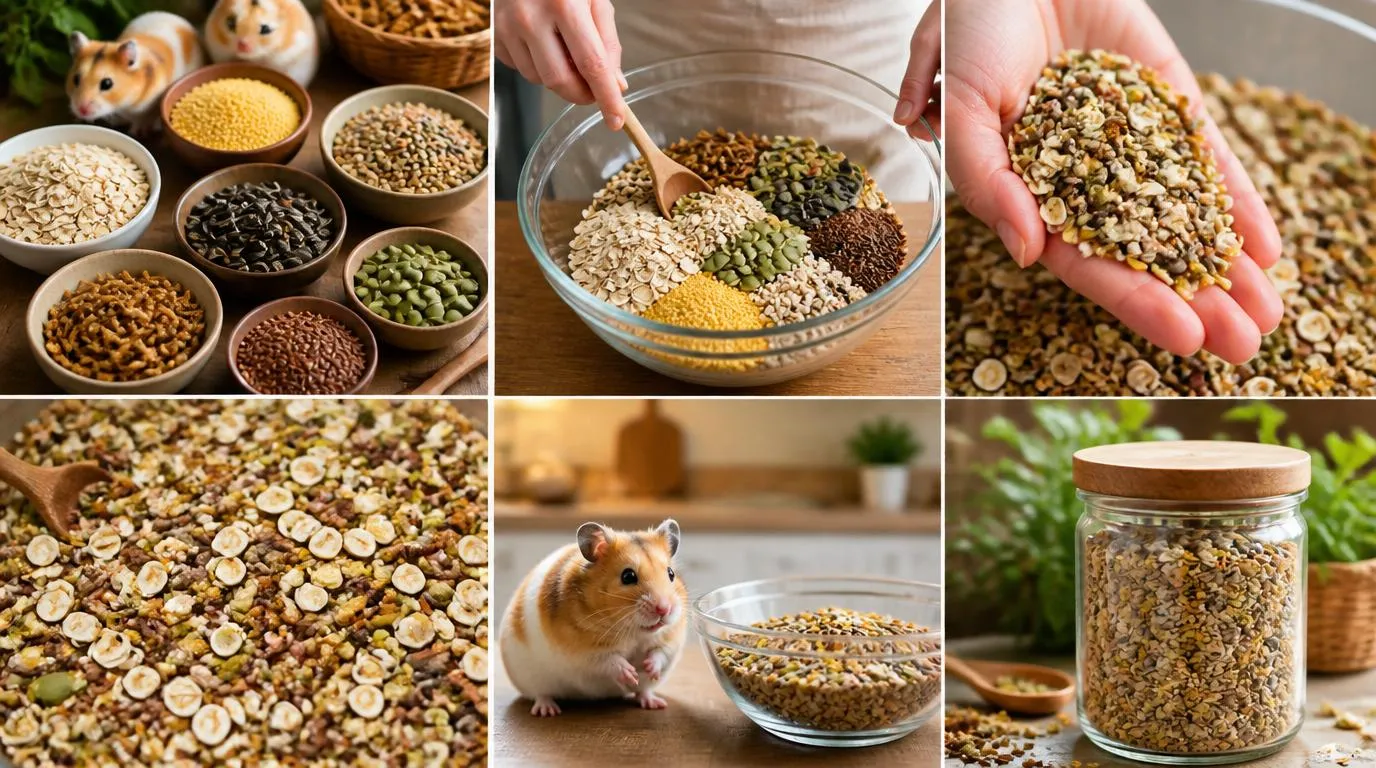
Ingredients
- Rolled oats ½ cup
- Millet (hulled or whole) ½ cup
- Barley flakes ¼ cup
- Raw pumpkin seeds ¼ cup
- Raw sunflower seeds (shelled) ¼ cup
- Flax seeds (brown or golden) 2 tbsp
- Quinoa (uncooked) 2 tbsp
- Dried mealworms (optional) 2 tbsp
Tip: Use only unsalted, unflavored ingredients. Avoid apple seeds, raw kidney beans, and any citrus.
Approximate Nutritional Profile (per tablespoon of dry mix)
Values are approximate. This mix provides a balanced foundation; supplement with fresh vegetables.
Step-by-Step Instructions
- Combine dry ingredients: In a large bowl, mix rolled oats, millet, barley flakes, pumpkin seeds, sunflower seeds, flax seeds, and quinoa. Stir until evenly distributed.
- Add optional protein: If using mealworms, fold them in gently. Store in an airtight container.
- Portion for feeding: Offer 1–2 tablespoons daily depending on species (1 tbsp for dwarfs, 2 tbsp for Syrians) in a heavy ceramic bowl.
- Supplement fresh foods: Alongside the dry mix, provide tiny amounts of fresh vegetables (cucumber, carrot, broccoli) 2–3 times weekly. Remove uneaten fresh food after 4–6 hours.
- Store leftovers: Keep dry mix in a cool, dry place for up to 3 months, or refrigerate for longer freshness.
Pros and Cons of Homemade Hamster Food
Pros
- No fillers or preservatives – pure, wholesome ingredients.
- Customizable for species – adjust seeds for Syrian or dwarf hamsters.
- Cost‑effective – buying in bulk saves money.
- Encourages natural foraging – scattering the mix mimics wild behavior.
- Freshness control – you know exactly what your hamster eats.
Cons
- Requires proper storage – seeds can spoil if not kept airtight.
- Must avoid toxic ingredients – careful selection needed.
- Potential for picky eaters – some hamsters may selectively eat only favorite seeds.
- Need for supplementation – fresh vegetables and protein must be added separately.
Nutritional Tips – Why These Ingredients Are Great for Hamsters
Ingredient Benefits
- Rolled oats & barley: Digestible fiber and B vitamins for steady energy.
- Millet & quinoa: Rich in protein, magnesium, and essential amino acids.
- Pumpkin seeds: Zinc and healthy fats support coat and immune system.
- Sunflower seeds (moderate): Vitamin E, but limit to prevent obesity.
- Flax seeds: Omega‑3 fatty acids for heart and skin health.
- Mealworms (optional): Excellent animal protein for nursing mothers and young hamsters.
⚠️ Avoid: almonds (bitter varieties toxic), chocolate, garlic, onions, rhubarb, and any moldy seeds.
Feeding Guidelines for Healthy Hamsters
Follow these best practices to keep your hamster thriving:
- Provide fresh water daily – use a bottle or shallow bowl and change water every day.
- Feed once per day – hamsters are nocturnal, so offer food in the evening.
- Remove uneaten fresh food after 4–6 hours to prevent spoilage.
- Weigh your hamster weekly – sudden weight loss may indicate illness.
- For dwarf hamsters: limit high‑sugar seeds (corn, sweet fruits) to reduce diabetes risk.
- Introduce new mix gradually – mix with old food over 7 days to avoid digestive upset.
Recipe Variations for Specific Hamster Species
Customize for Your Hamster
- Syrian hamsters: Increase protein by adding 1 tbsp mealworms or cooked unseasoned chicken weekly. Offer 2 tbsp of mix daily.
- Dwarf hamsters (Campbell’s, Winter White, Roborovski): Reduce sunflower seeds and omit dried fruits. Focus on millet, oats, and flax. Add a few hemp seeds for balanced fats.
- Enrichment feeding: Scatter the mix across the enclosure to encourage natural foraging. Use treat puzzles or cardboard tubes with hidden seeds.
- Senior hamsters: Soak a small portion of the grains in water to soften them if dental issues arise.
Observe your hamster's preferences and adjust the blend. Keeping a food journal helps you refine the mix over time.
Must‑Have Items
Recommended Tools & Supplies
- Sharp Knife & Cutting Board – for safely preparing fruit. Check price on Amazon
- Food Dehydrator or Oven – for drying fruit treats. Check price on Amazon
- Airtight Glass Jar – to store dried mixes. Check price on Amazon
- Digital Kitchen Scale – for precise portioning. Check price on Amazon
- Foraging Toys – to hide fruit treats and encourage natural behavior. Check price on Amazon
We participate in the Amazon Services LLC Associates Program. As an Amazon Associate, we earn from qualifying purchases.
Storage and Safety Tips
Keep It Fresh & Safe
- Dry mix: Store in an airtight container in a cool, dry place for up to 3 months. Refrigeration extends freshness to 6 months.
- Outdoor use (if feeding wild animals): Not applicable for indoor pets, but always check for mold before offering.
- Clean food bowl daily: Wash with mild soap and hot water to prevent bacterial growth.
- Discard old food: Remove any uneaten fresh vegetables within a few hours to prevent spoilage.
- Prevent obesity: Measure portions carefully, especially for dwarf breeds.
Conclusion
Creating your own homemade hamster food with seeds and grains is a rewarding way to provide optimal nutrition while saving money. This versatile mix serves as the foundation of a healthy diet, and by adding fresh vegetables and occasional protein, you can meet all your hamster's needs. Watch your little friend forage, hoard, and thrive – the joy of seeing a healthy, active hamster is unmatched.
Take time to observe which seeds your hamster prefers, and adjust the blend accordingly. With proper storage and feeding practices, this recipe will keep your furry companion happy for months to come.
Happy hamster keeping!

Frequently Asked Questions
Can I feed this seed mix to my dwarf hamster?
Absolutely. For dwarfs, reduce sunflower seeds and omit sugary dried fruits. The base mix with millet, oats, and barley is ideal. Limit high‑fat seeds to occasional treats.
How much homemade hamster food should I give daily?
Syrians: about 1.5–2 tablespoons per day; dwarfs: 1 tablespoon. Adjust based on whether they stash or eat everything. Remove uneaten fresh food daily.
What seeds are toxic to hamsters?
Apple seeds (cyanide), raw lima beans, bitter almonds, and any moldy seeds. Stick to safe seeds: sunflower, pumpkin, flax, sesame, millet.
Do I need to add fresh vegetables?
Yes! Fresh veggies like cucumber, broccoli, carrot, and leafy greens provide hydration and vitamins. Introduce slowly and avoid iceberg lettuce.
How long does homemade hamster food last?
Stored in an airtight container in a cool pantry, up to 3 months. For longer shelf life, keep in the refrigerator (up to 6 months).
