Why Vegetables Are Essential for Hamsters
Fresh vegetables provide vital vitamins, hydration, and enrichment that dry seed mixes alone cannot offer. A well‑balanced homemade hamster food includes a high‑quality seed and grain base supplemented with small, regular portions of safe vegetables. This guide will teach you how to safely incorporate veggies into your hamster's diet, which vegetables are best, and how to prepare them for Syrian, dwarf, and Roborovski hamsters.
Whether you're looking to boost nutrition, add variety, or simply treat your furry friend, this vegetable‑focused approach ensures your hamster thrives. We'll also provide a simple base mix recipe that pairs perfectly with fresh produce.
Table of Contents
Veggie‑Ready Hamster Base Mix
+ Vegetable Add‑ins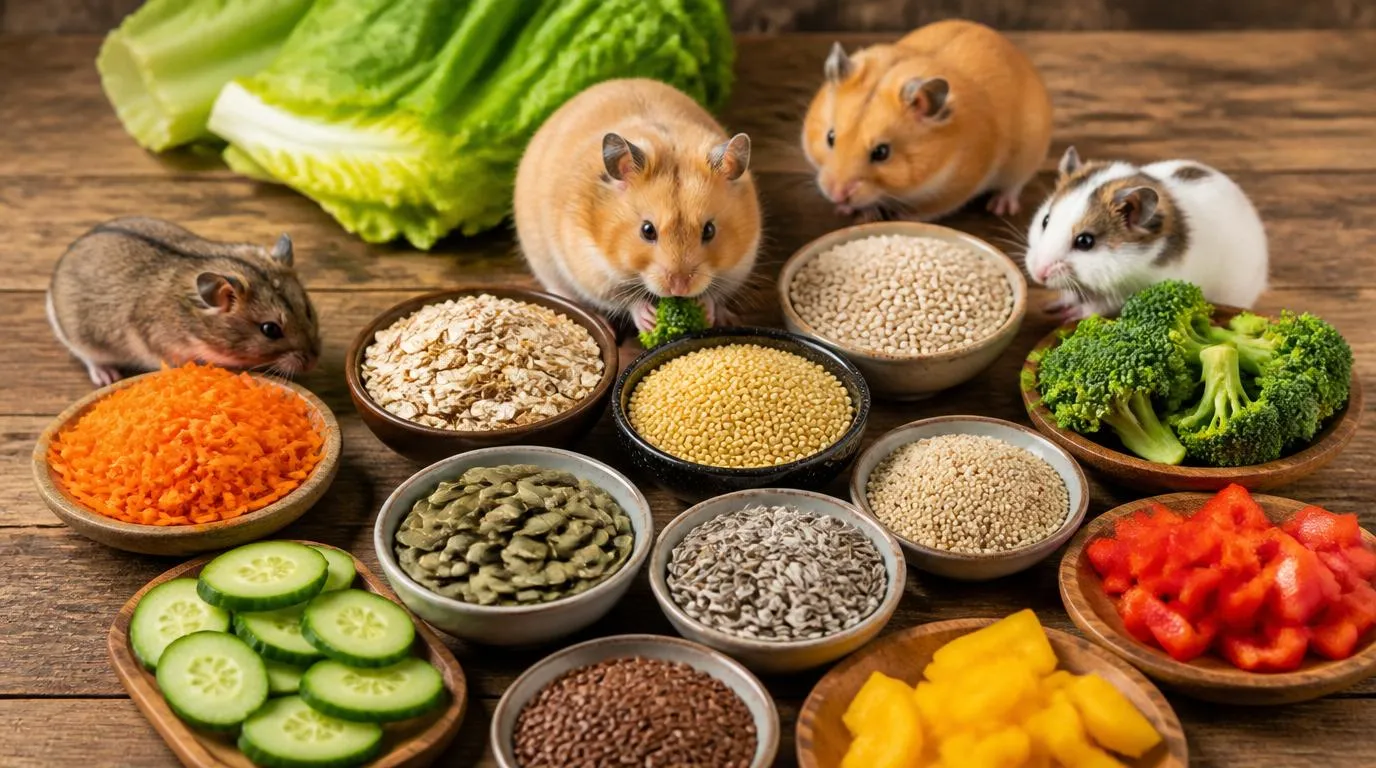
Base Dry Mix Ingredients
- Rolled oats ½ cup
- Millet ½ cup
- Barley flakes ¼ cup
- Raw pumpkin seeds ¼ cup
- Raw sunflower seeds ¼ cup
- Flax seeds 2 tbsp
- Quinoa 2 tbsp
Safe Vegetables (fresh add‑ins)
- Carrot (small piece, grated) 1 tsp
- Cucumber (thin slice) 1 tsp
- Broccoli (tiny floret) ½ tsp
- Bell pepper (red/yellow) ½ tsp
- Romaine lettuce 1 small leaf
⚠️ Important: Introduce one vegetable at a time. Never feed onion, garlic, raw potato, or rhubarb.
Nutritional Boost from Vegetables
How to Prepare & Serve
- Make the base mix: Combine oats, millet, barley, pumpkin seeds, sunflower seeds, flax, and quinoa in an airtight container. Store in a cool, dry place.
- Prepare vegetables: Wash thoroughly. Cut into tiny, hamster‑sized pieces (no bigger than a pea). Remove any seeds or tough stems.
- Serve daily: Offer 1–2 tablespoons of base mix per day (depending on species). Add a small portion of 1–2 fresh vegetables (about the size of your hamster's ear) in a separate bowl or scattered in the enclosure.
- Remove uneaten fresh food: Take out any leftover vegetables after 4–6 hours to prevent spoilage and bacterial growth.
- Rotate vegetables: Offer variety throughout the week to ensure balanced nutrition and prevent pickiness.
Safe & Unsafe Vegetables for Hamsters
Safe Vegetables (serve in small amounts)
- Carrot: Rich in vitamin A – offer a small slice 2‑3 times a week.
- Cucumber: Hydrating and low in calories – good for hot days.
- Broccoli: High in vitamin C and fiber – tiny florets only.
- Bell pepper (red, yellow, green): Excellent vitamin C – remove seeds.
- Romaine lettuce: Safe leafy green – avoid iceberg (too watery, low nutrients).
- Zucchini: Mild and easy to digest.
- Cauliflower: Similar to broccoli – offer sparingly to avoid gas.
- Peas (fresh or frozen, thawed): Good protein source – limit to 2‑3 peas.
Unsafe / Toxic Vegetables
- Onion & garlic: Can cause anemia.
- Raw potato & rhubarb: Contain oxalates and solanine – toxic.
- Avocado: Toxic to many small animals.
- Chili peppers: Irritating and unsafe.
- Pickled or canned vegetables: High in salt and preservatives.
Pros and Cons of Adding Vegetables to Hamster Food
Pros
- Provides essential vitamins and minerals.
- Increases hydration, especially for dry‑food diets.
- Adds enrichment and variety.
- Supports dental health through chewing.
- Encourages natural foraging behavior.
Cons
- Risk of digestive upset if introduced too quickly.
- Fresh produce spoils rapidly – must be removed promptly.
- Some vegetables can cause gas or diarrhea if overfed.
- Picky hamsters may ignore veggies at first.
Best Practices for Feeding Vegetables
- Start slow: Introduce one vegetable at a time, offering a pea‑sized piece. Wait 24‑48 hours to check for any adverse reactions.
- Portion size: For dwarfs, a piece the size of their ear; for Syrians, about the size of your thumbnail. Vegetables should make up no more than 10% of the total diet.
- Wash thoroughly: Remove pesticides – organic is ideal.
- Serve at room temperature: Cold veggies straight from the fridge may cause stomach upset.
- Combine with base mix: Offer the dry seed/grain mix daily and fresh veggies 3‑4 times per week (not daily for dwarfs prone to diabetes).
- Observe your hamster: If you notice soft stool or lethargy, reduce vegetable portions and consult a vet.
Customizing Vegetable Offerings by Species
Syrian Hamsters
Larger hamsters can enjoy a slightly wider variety. Offer 2‑3 different veggies per week, up to 3‑4 times weekly. They love crunchy carrots and bell peppers.
Dwarf Hamsters (Campbell’s, Winter White, Roborovski)
Prone to diabetes – avoid high‑sugar vegetables like carrots and corn. Stick to low‑sugar options: cucumber, zucchini, bell pepper, and leafy greens. Limit to 2‑3 times per week in very small amounts.
Enrichment Idea
Hang a small piece of vegetable from the cage bars using a clean clip, or hide tiny veggie pieces in cardboard tubes to encourage natural foraging.
Must‑Have Items for Vegetable Preparation
Recommended Tools & Supplies
- Sharp Knife & Cutting Board – for safely preparing fruit. Check price on Amazon
- Food Dehydrator or Oven – for drying fruit treats. Check price on Amazon
- Airtight Glass Jar – to store dried mixes. Check price on Amazon
- Digital Kitchen Scale – for precise portioning. Check price on Amazon
- Foraging Toys – to hide fruit treats and encourage natural behavior. Check price on Amazon
We participate in the Amazon Services LLC Associates Program. As an Amazon Associate, we earn from qualifying purchases.
Storage and Safety Tips
Keep Vegetables Fresh & Safe
- Store dry base mix: In an airtight container in a cool, dark place for up to 3 months. Refrigerate for longer life.
- Fresh vegetables: Keep in the refrigerator, wash just before serving.
- Remove leftovers: After 4‑6 hours, discard any uneaten fresh vegetables to prevent mold and bacterial growth.
- Watch for spoilage: Never offer wilted, slimy, or moldy vegetables.
- Introduce gradually: Stick to one new vegetable at a time to monitor for allergies or digestive issues.
Final Thoughts: A Healthier Hamster Starts with You
Making homemade hamster food with vegetables is one of the most rewarding ways to care for your small pet. By taking control of what goes into their bowl, you ensure they receive fresh, nutrient-rich ingredients free from unnecessary fillers and preservatives. The key is balance – a high-quality seed base paired with carefully selected, safe vegetables in the right portions.
Remember to introduce new foods gradually, watch your hamster's reactions, and always remove uneaten fresh produce after a few hours. Every hamster is unique – what works for one may not suit another, so pay attention to your pet's preferences and health signals.
Quick Recap
- Use a balanced seed/grain base
- Add 1–2 safe veggies 3–4x weekly
- Portion size = hamster's ear
- Remove leftovers after 4–6 hours
Top Safe Veggies
- 🥕 Carrot (small amounts)
- 🥒 Cucumber (hydrating)
- 🥦 Broccoli (vitamin C)
- 🫑 Bell pepper (seedless)
Your hamster's health is in your hands. With a little preparation and care, you can provide a varied, nutritious diet that supports a long, active, and happy life. Start small, stay consistent, and enjoy the bond that grows when you nourish your pet with wholesome, homemade food.

Frequently Asked Questions
Can I feed my hamster vegetables every day?
For most hamsters, 3‑4 times a week is sufficient. Dwarf hamsters, especially, should have vegetables only a few times weekly due to diabetes risk. Always pair with a high‑quality seed/grain base mix.
What vegetables are best for dwarf hamsters?
Low‑sugar options like cucumber, zucchini, bell pepper, and leafy greens (romaine, kale) are ideal. Avoid carrots, corn, and sweet peas for dwarfs.
Can I feed frozen vegetables?
Yes, if they are plain (no added salt or sauces). Thaw completely and bring to room temperature before serving. Avoid frozen mixes with onion or garlic.
My hamster isn't eating vegetables. What should I do?
Try offering a tiny piece mixed with their favorite seeds, or hand‑feed to encourage curiosity. Some hamsters take time to accept new foods. Persistence and patience usually work.
Can I feed my hamster herbs?
Yes! Fresh herbs like parsley, cilantro, basil, and dill are safe and nutritious. Offer in small amounts as a treat.