Recipe Introduction
Rabbits are natural foragers that thrive on a diet rich in fresh, leafy greens. Providing a variety of safe, nutrient‑dense greens not only mimics their wild diet but also supports dental health, digestion, and overall vitality. This simple homemade rabbit food mix combines several rabbit‑friendly greens to create a balanced, appealing meal that complements unlimited hay and a small portion of high‑quality pellets.
I've worked with rabbit rescues for over a decade, and this blend is a favorite among foster bunnies. It’s easy to customize based on what’s in season, and it encourages rabbits to eat a wider range of vegetables, reducing the risk of picky eating. Always introduce new greens gradually to avoid digestive upset.
Table of Contents
Fresh Leafy Green Mix for Rabbits
Daily Greens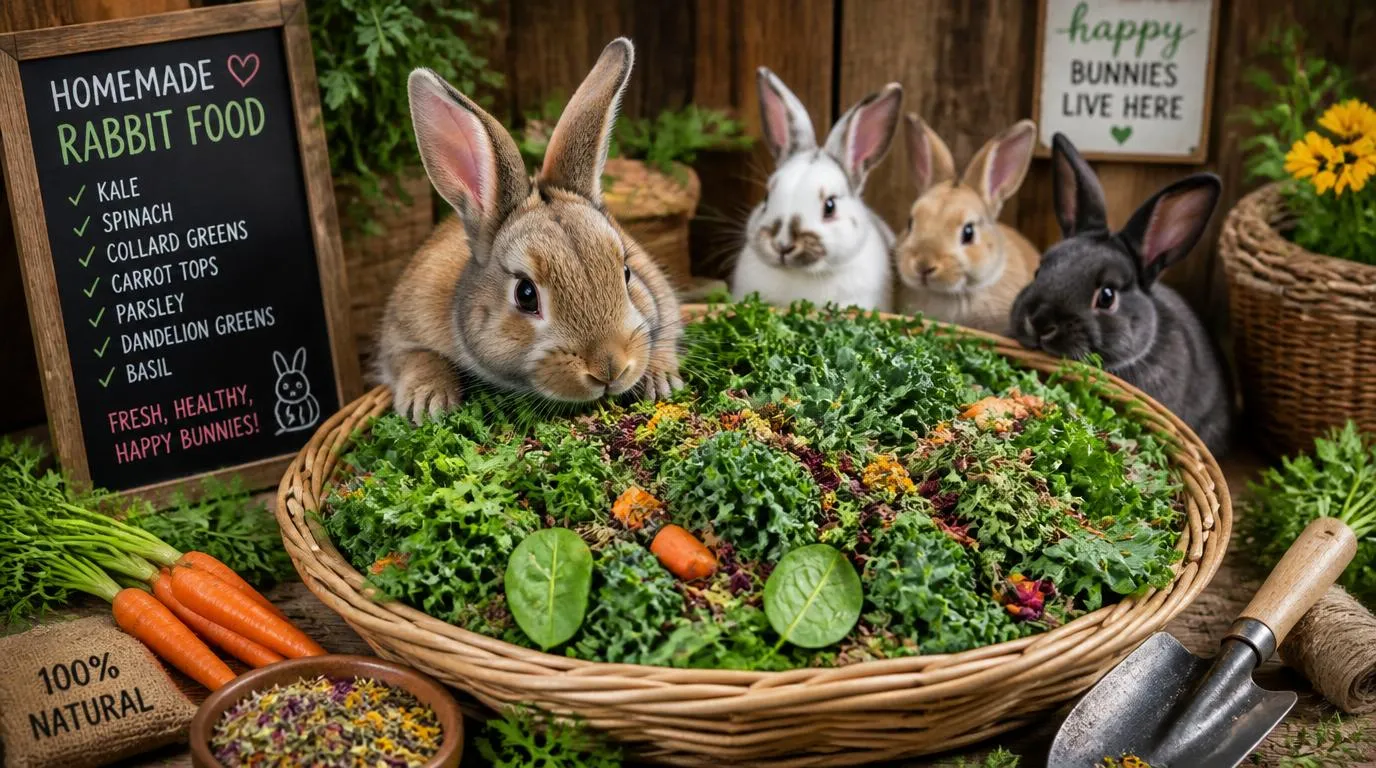
Ingredients
- Romaine lettuce (dark green) 1 cup, chopped
- Red leaf lettuce ½ cup, chopped
- Carrot tops (fresh) ½ cup, chopped
- Fresh cilantro (coriander) ½ cup, leaves and stems
- Flat‑leaf parsley ½ cup, chopped
- Optional: fresh mint, dill, or basil ¼ cup
Important: Always wash greens thoroughly. Avoid iceberg lettuce, spinach in large amounts, and any greens that are wilted or spoiled.
Approximate Nutritional Profile (per 1 cup serving)
Values are estimates. Fresh greens should be fed alongside unlimited grass hay (timothy, orchard, oat) and a small amount of pellets.
Step-by-Step Instructions
- Select fresh greens: Choose crisp, brightly colored leaves without brown spots or slime. If using organic produce, it's ideal, but always wash thoroughly.
- Wash thoroughly: Rinse each green under cool running water, gently rubbing to remove dirt. Use a salad spinner or pat dry with paper towels. Excess moisture can cause greens to spoil quickly.
- Chop to size: Cut greens into bite‑sized pieces about 1–2 inches long. Rabbits enjoy variety in texture, but avoid large stems that may be tough.
- Combine and serve: Mix all greens in a clean bowl. Place the daily portion in your rabbit’s food dish or scatter in their enclosure to encourage natural foraging.
- Store leftovers: Keep the remaining mix in an airtight container or zip‑top bag lined with a paper towel to absorb moisture. Refrigerate and use within 2–3 days.
Pros and Cons of Homemade Leafy Green Mixes
Pros
- Fresh, whole food – no preservatives or fillers.
- Hydration boost – greens have high water content, aiding digestion.
- Encourages foraging – mimics natural behavior.
- Customizable – rotate greens for variety and nutrition.
- Cost‑effective – often cheaper than commercial mixes.
Cons
- Short shelf life – must be used within a few days.
- Requires careful selection – some greens are unsafe (e.g., iceberg, rhubarb).
- Must be balanced with hay – cannot replace hay.
- Potential for gas or diarrhea if introduced too quickly.
Nutritional Tips – Why These Greens Are Great for Rabbits
Ingredient Benefits
- Romaine & red leaf lettuce: Low in oxalates, high in fiber, vitamins A and K. Safe daily greens.
- Carrot tops: Rich in antioxidants and flavor; many rabbits love them.
- Cilantro & parsley: Aromatic herbs that stimulate appetite; parsley is high in vitamin C.
- Mint/dill/basil: Provide variety and may help with digestion; introduce in moderation.
Greens to avoid or limit: Iceberg lettuce (low nutrition, can cause diarrhea), spinach and kale (high oxalates – feed sparingly), rhubarb, avocado, and any wilted or spoiled leaves.
Feeding Guidelines for Leafy Greens
- Amount: Provide about 1 packed cup of mixed greens per 2 pounds of body weight daily. Adjust based on your rabbit’s size and activity.
- Always offer unlimited hay: Timothy, oat, or orchard grass hay should be 80% of the diet. Greens are a supplement.
- Introduce slowly: When adding a new green, start with a small amount and monitor for soft stools or gas over 24 hours.
- Wash thoroughly: Remove any pesticides and dirt. Wet greens can be offered, but dry them if storing.
- Remove uneaten greens: After 4–6 hours, discard any leftover fresh food to prevent spoilage and bacteria.
Recipe Variations for Different Rabbits
Customize for Your Bunny
- For young rabbits (under 6 months): Introduce greens slowly; start with small amounts of romaine and herbs.
- For senior rabbits: Softer greens like red leaf lettuce and finely chopped herbs are easier to chew.
- For rabbits prone to gas: Avoid cabbage, broccoli, and kale initially; stick to romaine, cilantro, and mint.
- Seasonal swaps: In summer, add fresh dandelion greens (pesticide‑free) and basil. In winter, use more parsley and carrot tops.
- Treat mix: For a special snack, add a few slices of bell pepper, cucumber, or a small piece of apple (no seeds).
Always research any new vegetable before feeding. The House Rabbit Society provides excellent safe‑food lists.
Must‑Have Items
Recommended Tools & Supplies
- Large Mixing Bowl & Colander – for washing greens. Check price on Amazon
- Ceramic Food Bowl – heavy base to prevent tipping. Check price on Amazon
- Airtight Storage Container – keep hay treats fresh. Check price on Amazon
- Herb Scissors / Salad Spinner – for efficient prep. Check price on Amazon
We participate in the Amazon Services LLC Associates Program, an affiliate advertising program designed to provide a means for us to earn fees by linking to Amazon.com and affiliated sites. As an Amazon Associate, we earn from qualifying purchases.
Storage and Safety Tips
Keep Greens Fresh & Safe
- Refrigerate immediately: Store washed, dried greens in a breathable container (or plastic bag with paper towel) in the crisper drawer.
- Use within 2–3 days: Fresh greens lose nutrients and can spoil quickly. Prepare smaller batches more often.
- Check for spoilage: Wilted, slimy, or foul‑smelling greens should be discarded.
- Wash before serving: Even pre‑washed greens should be rinsed to remove any residual bacteria.
- Avoid cross‑contamination: Use clean hands and utensils when handling rabbit food.
Conclusion
Feeding your rabbit a variety of fresh leafy greens is one of the best ways to support their health and happiness. This simple mix provides essential nutrients, hydration, and enrichment that commercial diets alone cannot offer. Remember that greens should always be accompanied by unlimited grass hay and a measured amount of high‑quality pellets.
Observe your rabbit’s preferences and digestion as you experiment with different greens. Every bunny is unique, and a diverse diet will keep mealtime exciting. With proper handling and storage, you can easily provide safe, nutritious homemade rabbit food year‑round.
Happy hopping!
Frequently Asked Questions
Can I feed my rabbit only leafy greens?
No. Rabbits require unlimited grass hay (timothy, orchard, oat) for proper digestion and dental wear. Leafy greens should be a daily supplement, not the main diet. Pellets can be offered in small amounts.
What greens are safe for rabbits every day?
Romaine, red leaf lettuce, green leaf lettuce, carrot tops, cilantro, and parsley are safe daily greens. Rotate varieties for balanced nutrition.
Why is iceberg lettuce bad for rabbits?
Iceberg lettuce has very little nutritional value and high water content, which can cause diarrhea. It also contains lactucarium, which may be harmful in large quantities.
How much leafy greens should I give my rabbit daily?
A good rule is 1 packed cup of greens per 2 pounds of body weight per day. Adjust based on your rabbit’s size, age, and overall health.
Can I feed wild‑picked greens to my rabbit?
Only if you are absolutely certain they are safe (e.g., dandelion greens, plantain) and free from pesticides, herbicides, and pollution. Never feed unknown plants.
My rabbit refuses to eat greens – what should I do?
Start with one familiar green (like romaine) and chop it finely, mixing with a small amount of their favorite herb. Be patient and persistent; some rabbits take time to accept new foods. Always ensure hay is available.