Recipe Introduction
Lettuce is a staple in many rabbit diets, but not all lettuce is created equal. This recipe focuses on the safest, most nutritious lettuces for rabbits: romaine, red leaf, and green leaf. These varieties are low in oxalates and high in fiber and vitamins, making them ideal for daily feeding. Combined with a few complementary greens and herbs, this homemade mix provides variety and encourages your rabbit to eat a wide range of healthy foods.
Many rabbit owners mistakenly feed iceberg lettuce, which has little nutritional value and can cause digestive upset. This guide will show you how to select, prepare, and serve lettuce-based meals that support your rabbit’s health. As always, unlimited grass hay should remain the foundation of your rabbit’s diet.
Table of Contents
Safe Lettuce Mix for Rabbits
Daily Greens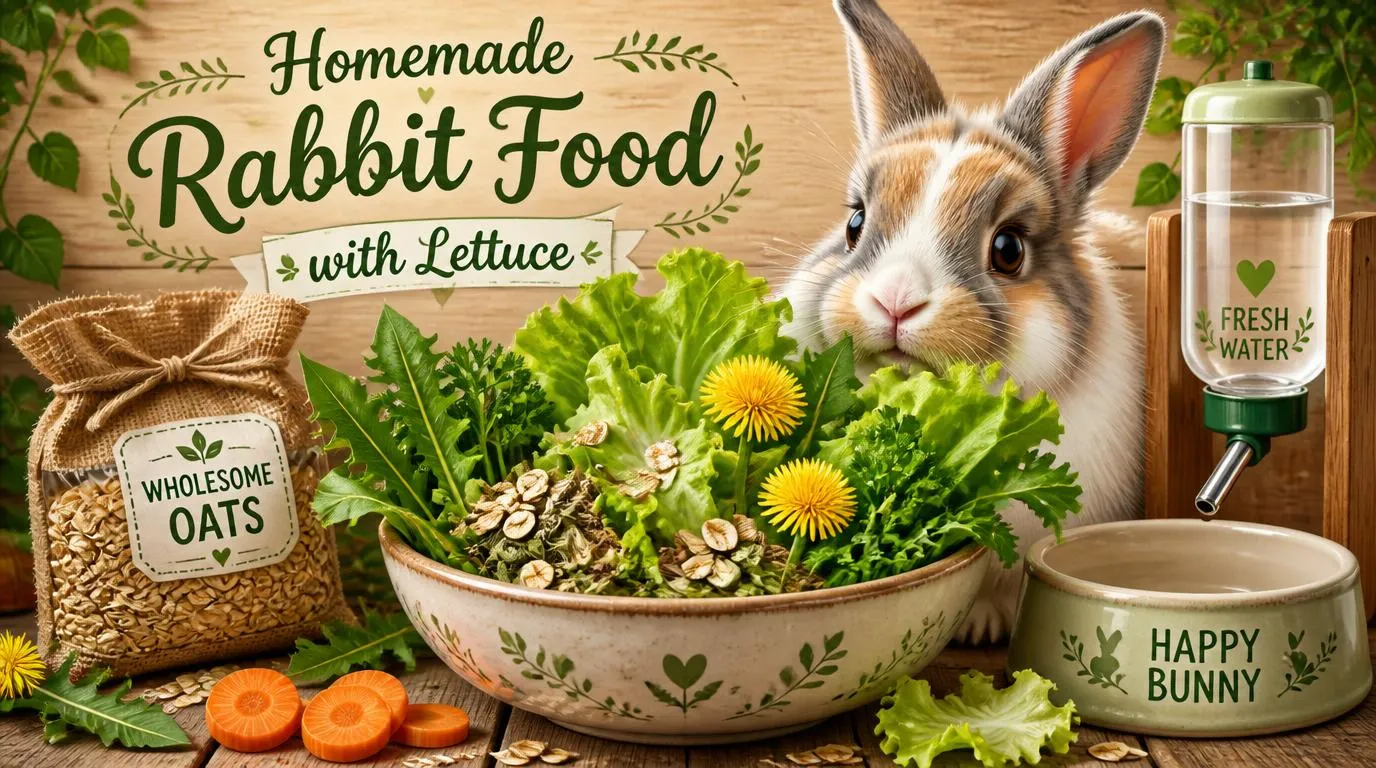
Ingredients
- Romaine lettuce 1 cup, chopped
- Red leaf lettuce ½ cup, chopped
- Green leaf lettuce ½ cup, chopped
- Fresh cilantro ¼ cup, chopped
- Flat‑leaf parsley ¼ cup, chopped
- Optional: carrot tops, dill, or mint ¼ cup
Important: Do NOT use iceberg lettuce – it lacks nutrition and can cause diarrhea. Always wash all greens thoroughly.
Approximate Nutritional Profile (per 1 cup serving)
Values are estimates. Fresh greens should complement unlimited grass hay (timothy, orchard) and a small amount of pellets.
Step-by-Step Instructions
- Select safe lettuce: Choose crisp romaine, red leaf, or green leaf lettuce. Avoid any wilted, slimy, or discolored leaves.
- Wash thoroughly: Rinse each leaf under cool running water, gently rubbing to remove dirt. Use a salad spinner or pat dry with paper towels.
- Chop into bite-sized pieces: Cut lettuce and herbs into pieces about 1–2 inches long. Rabbits enjoy variety in texture.
- Combine and serve: Mix all ingredients in a clean bowl. Offer the daily portion in a heavy ceramic dish or scatter to encourage foraging.
- Store leftovers: Place unused greens in an airtight container lined with a paper towel to absorb moisture. Refrigerate and use within 2–3 days.
Pros and Cons of Feeding Lettuce to Rabbits
Pros
- High water content – helps hydration.
- Low in calories – safe for daily feeding.
- Good source of vitamins A and K – supports vision and bone health.
- Encourages natural foraging behavior.
- Widely available and affordable.
Cons
- Not all lettuce is safe – iceberg is harmful.
- Short shelf life – must be used quickly.
- May cause loose stools if introduced too fast or fed in excess.
- Must be balanced with hay – cannot replace fiber.
Nutritional Tips – Why Safe Lettuces Are Good for Rabbits
Lettuce Benefits
- Romaine lettuce: Rich in fiber, vitamins A, C, K, and folate. One of the best daily greens.
- Red leaf lettuce: Contains anthocyanins (antioxidants) and similar nutrients to romaine.
- Green leaf lettuce: Good source of vitamin K and low in oxalates.
- Cilantro & parsley: Add flavor and provide additional vitamins; parsley is high in vitamin C.
- Carrot tops: High in antioxidants and a favorite treat for many rabbits.
Lettuce to avoid: Iceberg lettuce (high water, low nutrients, can cause diarrhea). Also limit spinach and kale due to oxalates.
Feeding Guidelines for Lettuce-Based Meals
- Amount: Offer about 1 packed cup of mixed greens per 2 pounds of body weight daily. Adjust based on activity and health.
- Always provide unlimited hay: Timothy, oat, or orchard grass hay should be 80% of the diet.
- Introduce new greens slowly: If your rabbit is not used to lettuce, start with a small amount and monitor for soft stools over 24 hours.
- Wash thoroughly: Remove pesticides and dirt. Wet greens are fine to serve, but dry them for storage.
- Remove uneaten greens: After 4–6 hours, discard any leftover fresh food to prevent spoilage and bacterial growth.
Recipe Variations for Different Rabbits
Customize for Your Bunny
- For young rabbits (under 6 months): Introduce small amounts of romaine only, mixed with their usual pellets.
- For senior rabbits: Finely chop lettuce and herbs to make chewing easier; consider adding softer greens like red leaf.
- For rabbits prone to gas: Stick to romaine and cilantro initially; avoid cabbage family greens.
- Seasonal swaps: In summer, add fresh dandelion greens (pesticide‑free). In winter, use more parsley and carrot tops.
- Treat mix: For a special snack, add a few slices of bell pepper, cucumber, or a small piece of apple (no seeds).
Always research any new vegetable before feeding. The House Rabbit Society provides excellent safe‑food lists.
Must‑Have Items
Recommended Tools & Supplies
- Large Mixing Bowl & Colander – for washing greens. Check price on Amazon
- Ceramic Food Bowl – heavy base to prevent tipping. Check price on Amazon
- Airtight Storage Container – keep hay treats fresh. Check price on Amazon
- Herb Scissors / Salad Spinner – for efficient prep. Check price on Amazon
We participate in the Amazon Services LLC Associates Program, an affiliate advertising program designed to provide a means for us to earn fees by linking to Amazon.com and affiliated sites. As an Amazon Associate, we earn from qualifying purchases.
Storage and Safety Tips
Keep Lettuce Fresh & Safe
- Refrigerate immediately: Store washed, dried greens in a breathable container (or plastic bag with paper towel) in the crisper drawer.
- Use within 2–3 days: Fresh greens lose nutrients and can spoil quickly. Prepare smaller batches more often.
- Check for spoilage: Wilted, slimy, or foul‑smelling greens should be discarded.
- Wash before serving: Even pre‑washed greens should be rinsed to remove any residual bacteria.
- Avoid cross‑contamination: Use clean hands and utensils when handling rabbit food.
Conclusion
Lettuce can be a healthy, hydrating part of your rabbit’s daily diet when you choose the right varieties. Romaine, red leaf, and green leaf lettuces offer valuable nutrients without the risks associated with iceberg. By following this simple recipe and feeding guidelines, you can provide a fresh, appealing meal that supports your rabbit’s overall health.
Remember to always pair greens with unlimited grass hay and fresh water. Observe your rabbit’s preferences and adjust the mix to keep mealtime interesting. With proper handling and storage, homemade lettuce-based rabbit food is an easy and rewarding way to care for your bunny.
Happy feeding!
Frequently Asked Questions
Can rabbits eat lettuce every day?
Yes, as long as it's the right kind. Romaine, red leaf, and green leaf lettuce can be fed daily in appropriate amounts. Iceberg lettuce should never be fed.
Why is iceberg lettuce bad for rabbits?
Iceberg lettuce is mostly water and contains very little fiber or nutrients. It can cause diarrhea and nutritional deficiencies if fed regularly.
How much lettuce should I give my rabbit?
A general guideline is 1 packed cup of mixed greens per 2 pounds of body weight per day. This includes lettuce and other rabbit‑safe greens.
Can I feed my rabbit only lettuce?
No. Rabbits need unlimited grass hay for proper digestion and dental health. Lettuce should be a supplement, not the main diet. Pellets can also be offered in small amounts.
What should I do if my rabbit has soft stool after eating lettuce?
Stop feeding the new green and return to a simple hay‑only diet for 24 hours. Once stools normalize, reintroduce a very small amount of a single safe green (like romaine) and monitor. If the problem persists, consult a veterinarian.
Can baby rabbits eat lettuce?
Baby rabbits should not have vegetables until they are about 12 weeks old and fully weaned. Introduce greens very slowly, one at a time, and in tiny amounts. Always prioritize hay and pellets for young rabbits.