Recipe Introduction
Spinach is a nutrient‑dense leafy green that can be a healthy addition to your rabbit's diet – but only in limited amounts. While spinach is rich in iron, vitamin K, and antioxidants, it also contains oxalates, which can contribute to bladder stones if fed excessively. This recipe combines a small portion of fresh spinach with rabbit‑friendly staples like romaine lettuce, cilantro, and parsley to create a balanced, flavorful mix.
Many rabbits enjoy the slightly earthy taste of spinach, and offering it occasionally adds variety to their daily greens. However, it should never replace hay or make up the majority of their fresh food. Follow this guide to prepare spinach safely and learn how often to serve it.
Table of Contents
Spinach & Greens Mix for Rabbits
Feed 1-2x per week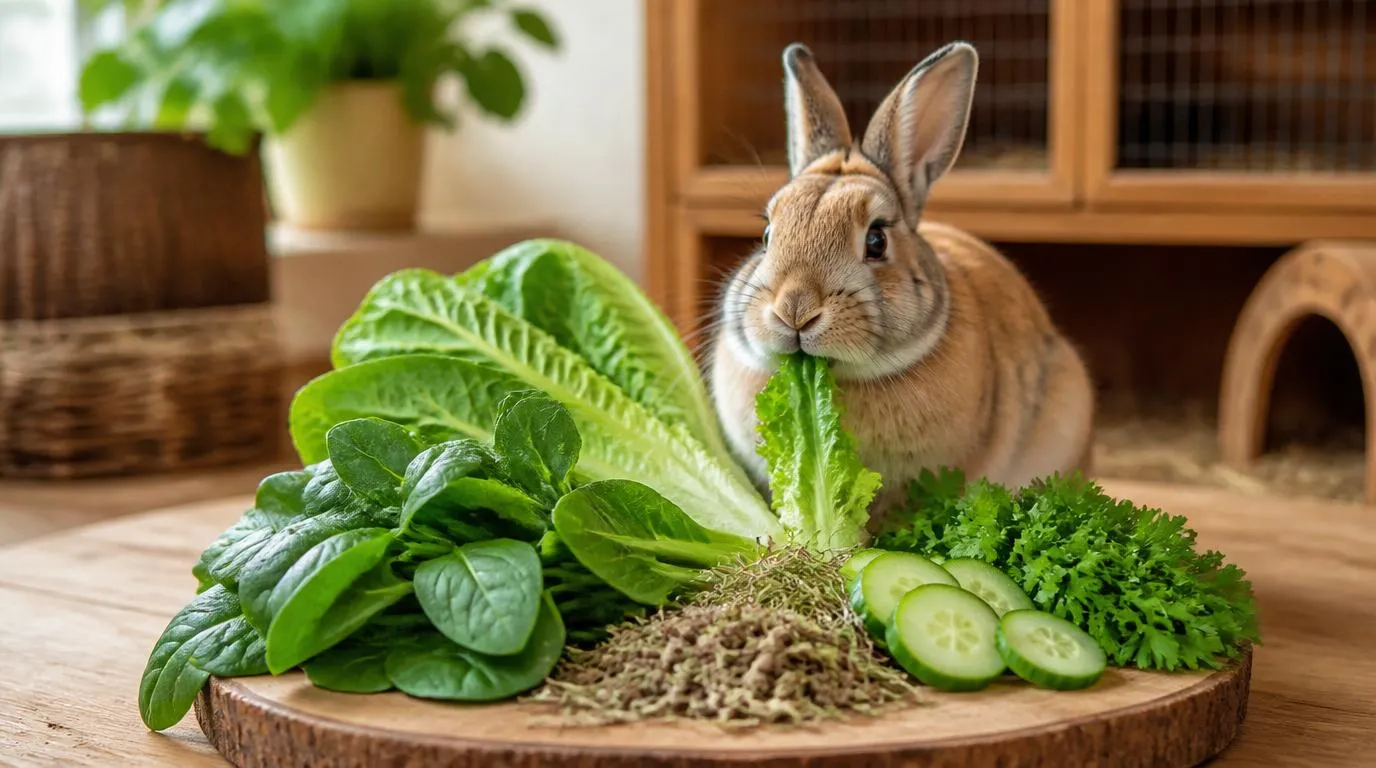
Ingredients
- Fresh spinach (baby or mature) ¼ cup, loosely packed
- Romaine lettuce 1 cup, chopped
- Red leaf or green leaf lettuce ½ cup, chopped
- Fresh cilantro ¼ cup, chopped
- Flat‑leaf parsley ¼ cup, chopped
- Optional: carrot tops or dill 2 tbsp
Important: Spinach should only be fed 1–2 times per week due to oxalates. Always wash all greens thoroughly and remove any wilted leaves.
Approximate Nutritional Profile (per 1 cup serving of mix)
Values are estimates. Oxalate content is moderate; do not feed spinach daily.
Step-by-Step Instructions
- Select fresh spinach: Choose crisp, dark green leaves without yellowing or sliminess. Baby spinach is often more tender.
- Wash all greens: Rinse spinach, lettuce, and herbs under cool running water. Gently rub to remove dirt. Use a salad spinner or pat dry with paper towels.
- Chop into bite-sized pieces: Cut lettuce and spinach into 1–2 inch pieces. Remove any thick stems from spinach if desired.
- Combine in a bowl: Mix the spinach with the other greens. Ensure the spinach is evenly distributed but not the dominant ingredient.
- Serve the daily portion: Place a small handful (about 1 cup per 2 lbs of rabbit) in a heavy ceramic bowl or scatter for foraging.
- Store leftovers: Keep unused mix in an airtight container lined with a paper towel. Refrigerate and use within 2 days.
Pros and Cons of Feeding Spinach to Rabbits
Pros
- Rich in iron and vitamin K – supports blood health and bones.
- High in antioxidants – beneficial for immune function.
- Low in calories – safe as an occasional treat.
- Adds variety – many rabbits enjoy the taste.
- Readily available – found in most grocery stores.
Cons
- Contains oxalates – can contribute to bladder sludge/stones if overfed.
- Not for daily feeding – limit to 1–2 times per week.
- May cause soft stools if introduced too quickly or fed in large amounts.
- Must be balanced with low‑oxalate greens (like romaine).
Nutritional Tips – Spinach & Other Greens for Rabbits
Spinach Benefits & Cautions
- Spinach: High in oxalic acid, which binds calcium. Offer only as an occasional green (1–2 times weekly) and mix with low‑oxalate greens like romaine, cilantro, and parsley.
- Romaine lettuce: Low oxalate, high fiber – safe daily staple.
- Cilantro & parsley: Add flavor and extra vitamins without excess oxalates.
- Carrot tops: Nutritious and low in oxalates – great for mixing.
Greens to limit due to oxalates: Spinach, kale (in large amounts), beet greens, Swiss chard. Rotate these with safer daily greens.
Feeding Guidelines for Spinach-Based Meals
- Frequency: Feed spinach no more than 1–2 times per week. On other days, offer spinach‑free mixes.
- Amount: For an average 4–5 lb rabbit, use about ¼ cup of fresh spinach (loosely packed) per feeding, combined with other greens.
- Always offer unlimited hay: Timothy, orchard, or oat grass hay should be 80% of the diet.
- Introduce slowly: If your rabbit has never eaten spinach, start with a single small leaf and monitor for soft stools over 24 hours.
- Watch for signs of bladder issues: If your rabbit has a history of urinary stones or sludge, avoid spinach entirely.
- Remove uneaten greens: Discard any fresh food left in the cage after 4–6 hours to prevent spoilage.
Recipe Variations & Alternatives
Customize for Your Rabbit
- For rabbits prone to bladder issues: Omit spinach entirely and use romaine, red leaf lettuce, cilantro, and parsley only.
- For young rabbits (under 6 months): Avoid spinach until fully mature (over 6 months). Stick to simple greens like romaine.
- For senior rabbits: Finely chop spinach to make it easier to chew; serve in very small amounts.
- For picky eaters: Mix a tiny amount of chopped spinach into their favorite greens, gradually increasing over several feedings.
- Spinach‑free daily mix: Combine romaine (1 cup), red leaf lettuce (½ cup), cilantro (¼ cup), parsley (¼ cup), and carrot tops (2 tbsp).
Always consult a rabbit‑savvy vet before introducing new foods, especially if your rabbit has health conditions.
Must‑Have Items
Recommended Tools & Supplies
- Large Mixing Bowl & Colander – for washing greens. Check price on Amazon
- Ceramic Food Bowl – heavy base to prevent tipping. Check price on Amazon
- Airtight Storage Container – keep hay treats fresh. Check price on Amazon
- Herb Scissors / Salad Spinner – for efficient prep. Check price on Amazon
We participate in the Amazon Services LLC Associates Program, an affiliate advertising program designed to provide a means for us to earn fees by linking to Amazon.com and affiliated sites. As an Amazon Associate, we earn from qualifying purchases.
Storage and Safety Tips
Keep Spinach & Greens Fresh
- Refrigerate immediately: Store washed, dried greens in a breathable container (or plastic bag with paper towel) in the crisper drawer.
- Use within 2 days: Spinach wilts faster than lettuce. Prepare smaller batches to avoid waste.
- Check for spoilage: Discard any slimy, yellow, or foul‑smelling leaves.
- Wash before serving: Even pre‑washed spinach should be rinsed.
- Avoid cross‑contamination: Use clean hands and utensils when handling rabbit food.
- Never feed cooked spinach: Rabbits should only eat raw, fresh greens.
Conclusion
Spinach can be a healthy, occasional addition to your rabbit's diet when fed in moderation and mixed with low‑oxalate greens. Its rich nutrient profile offers benefits, but the risk of oxalate buildup means it should never be a daily food. By following this recipe and feeding guidelines, you can safely introduce spinach as a treat that adds variety without compromising your rabbit's urinary health.
Remember that unlimited grass hay remains the most important part of your rabbit's diet. Fresh greens – including spinach – are supplements that provide hydration, vitamins, and enrichment. Observe your rabbit's response and adjust portions accordingly. When in doubt, consult a veterinarian who specializes in exotic pets.
Happy and healthy feeding!
Frequently Asked Questions
Can rabbits eat spinach every day?
No. Spinach is high in oxalates, which can lead to bladder stones if fed daily. Offer it only 1–2 times per week, mixed with other greens.
Is baby spinach safer than mature spinach for rabbits?
Baby spinach has slightly lower oxalate levels than mature spinach, but the difference is minimal. Both should be fed in moderation.
How much spinach can I give my rabbit?
For an average 4–5 lb rabbit, offer about ¼ cup of loosely packed fresh spinach per serving, no more than twice a week. Always combine with other low‑oxalate greens.
Can rabbits eat cooked spinach?
No. Rabbits should only eat raw, fresh greens. Cooking destroys nutrients and can make the food less digestible.
My rabbit has a history of bladder stones – can I feed spinach?
It's best to avoid spinach entirely for rabbits with urinary issues. Stick to low‑oxalate greens like romaine, red leaf lettuce, cilantro, and parsley.
What are signs that my rabbit ate too much spinach?
Signs include soft stools, diarrhea, lethargy, or changes in urination (straining, bloody urine). If you notice any of these, stop feeding spinach and consult a vet.