Recipe Introduction
Vegetables are an excellent way to add color, texture, and extra nutrients to your rabbit's diet. While leafy greens should make up the majority of the fresh food portion, a small amount of crunchy vegetables provides enrichment and variety. This recipe combines some of the safest and most popular rabbit‑friendly vegetables – bell pepper, cucumber, carrot, and broccoli – into a colorful mix that most rabbits love.
However, vegetables should always be offered in moderation. They are higher in sugar and starch than leafy greens, so portion control is important. This guide will help you prepare a balanced vegetable mix that complements unlimited hay and a base of leafy greens.
Table of Contents
Rabbit Vegetable Mix
Small Portions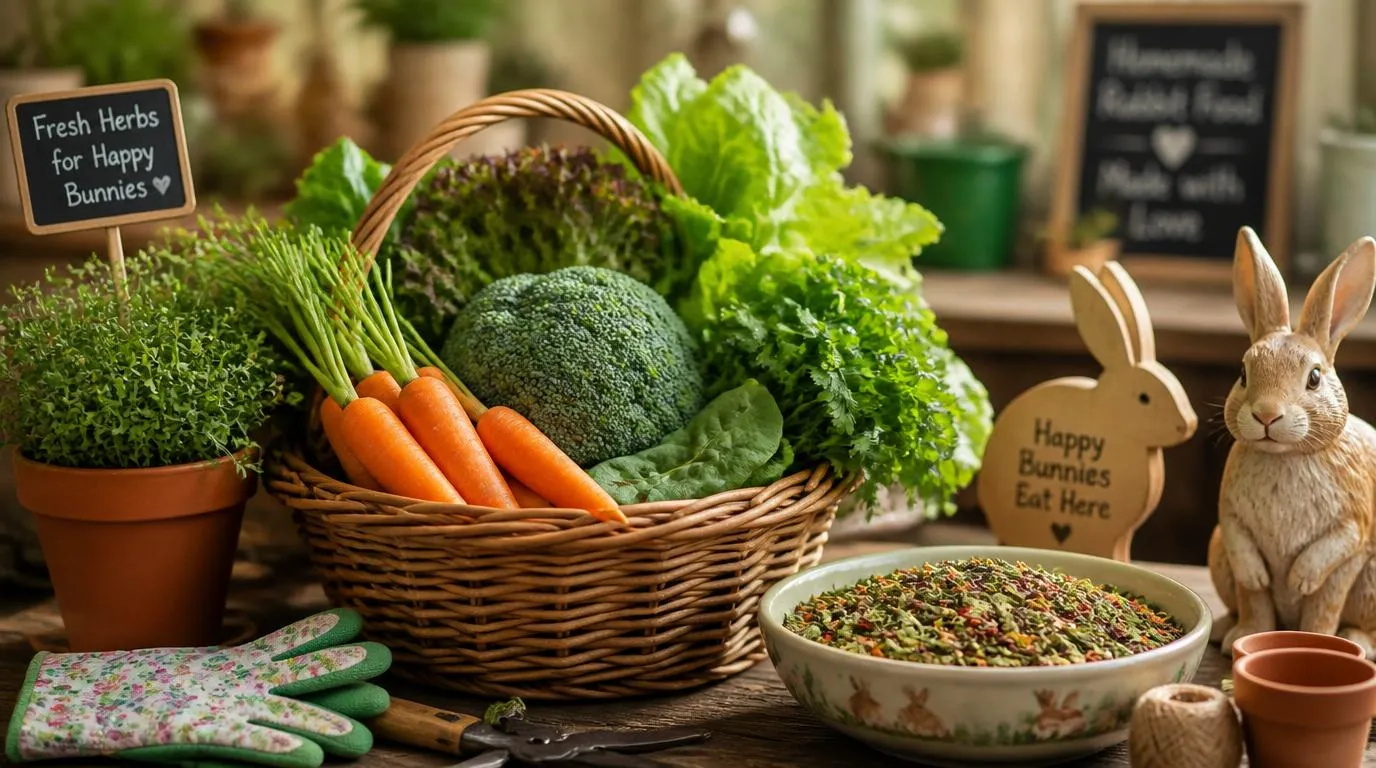
Ingredients
- Bell pepper (red, yellow, or orange) ¼ cup, diced
- Cucumber (peeled if waxed) ¼ cup, diced
- Carrot 2 tbsp, grated or finely diced
- Broccoli (florets and stems) 2 tbsp, chopped small
- Zucchini ¼ cup, diced (optional)
- Celery (chopped into small pieces) 2 tbsp (optional)
Important: Vegetables should only be a small part of the diet (about 1 tablespoon per 2 lbs of rabbit per day). Always wash all vegetables thoroughly and remove seeds from bell peppers.
Approximate Nutritional Profile (per ¼ cup serving)
Vegetables are treats/supplements. Leafy greens and unlimited hay are the foundation of a healthy rabbit diet.
Step-by-Step Instructions
- Select fresh vegetables: Choose firm, unbruised produce. Avoid any with mold or soft spots.
- Wash thoroughly: Rinse all vegetables under cool running water, scrubbing gently to remove dirt or residues.
- Prepare each vegetable: Remove bell pepper seeds and white pith. Peel cucumber if the skin is waxed (organic cucumber skin is fine). Peel carrot if desired, or scrub well.
- Chop into small, bite‑sized pieces: Dice vegetables into pieces about ½ inch or smaller. This prevents choking and makes them easier to eat.
- Combine in a small bowl: Mix the vegetables together. Do not add any dressings, oils, or seasonings.
- Serve the daily portion: For an average 4–5 lb rabbit, offer about 2 tablespoons of this vegetable mix per day, alongside unlimited hay and a generous portion of leafy greens.
- Store leftovers: Keep unused mix in an airtight container in the refrigerator for up to 2 days.
Pros and Cons of Feeding Vegetables to Rabbits
Pros
- Adds variety and enrichment – different textures and flavors.
- Provides extra vitamins – especially vitamin C from bell peppers.
- Low in calories – when portioned correctly.
- Encourages foraging behavior – scatter pieces for mental stimulation.
- Bonding opportunity – hand‑feeding small veggie pieces can build trust.
Cons
- Higher in sugar/starch than leafy greens – can cause obesity or digestive issues if overfed.
- May cause gas – cruciferous vegetables (broccoli, cauliflower) in large amounts.
- Not a substitute for hay – hay must remain 80% of the diet.
- Short shelf life – must be used within 1–2 days.
Nutritional Tips – Why These Vegetables Are Rabbit‑Safe
Vegetable Benefits & Cautions
- Bell pepper: Excellent source of vitamin C; remove seeds and white pith. Red/yellow/orange are sweeter and higher in nutrients than green.
- Cucumber: High water content, low calories – great for hydration. Peel if waxed.
- Carrot: High in vitamin A but also sugar – feed only 1–2 small pieces per day.
- Broccoli: Safe in small amounts; can cause gas in sensitive rabbits. Offer florets and stems.
- Zucchini: Very safe, low in sugar – can be fed more freely.
- Celery: Good crunch, but chop into small pieces to avoid stringy fibers.
Vegetables to AVOID: Onions, garlic, leeks, chives (toxic), rhubarb (toxic), raw potatoes (solanine), avocado (toxic), and any moldy or spoiled produce.
Feeding Guidelines for Vegetables
- Portion size: Offer no more than 1 tablespoon of vegetables per 2 pounds of body weight per day. For a 4 lb rabbit, that's about 2 tablespoons total.
- Frequency: Vegetables can be offered daily as long as portions are small. Rotate types to prevent pickiness.
- Always serve with leafy greens: Vegetables should accompany a larger portion of low‑oxalate greens (romaine, cilantro, parsley, etc.).
- Introduce one at a time: When trying a new vegetable, offer a tiny piece and monitor for soft stools or gas over 24 hours.
- Remove uneaten vegetables: After 4–6 hours, discard any leftover fresh food to prevent spoilage.
- Never feed cooked vegetables: Rabbits need raw, fresh produce.
Recipe Variations & Vegetable Swaps
Customize for Your Rabbit
- For rabbits with sensitive stomachs: Omit broccoli and use only bell pepper, cucumber, and zucchini.
- For rabbits prone to weight gain: Reduce or eliminate carrot; increase cucumber and zucchini.
- For young rabbits (under 6 months): Avoid vegetables until 12 weeks, then introduce very tiny amounts one at a time.
- For senior rabbits: Finely grate or purée vegetables if chewing is difficult.
- Seasonal swaps: Summer – add fresh herbs (mint, basil). Winter – use more root vegetables (small amounts of parsnip, turnip).
- Treat vegetables (very limited): A thin slice of apple (no seeds), a small piece of strawberry, or a blueberry – once or twice a week.
Always research any new vegetable. The House Rabbit Society provides comprehensive safe food lists.
Must‑Have Items
Recommended Tools & Supplies
- Large Mixing Bowl & Colander – for washing greens. Check price on Amazon
- Ceramic Food Bowl – heavy base to prevent tipping. Check price on Amazon
- Airtight Storage Container – keep hay treats fresh. Check price on Amazon
- Herb Scissors / Salad Spinner – for efficient prep. Check price on Amazon
We participate in the Amazon Services LLC Associates Program, an affiliate advertising program designed to provide a means for us to earn fees by linking to Amazon.com and affiliated sites. As an Amazon Associate, we earn from qualifying purchases.
Storage and Safety Tips
Keep Vegetables Fresh & Safe
- Refrigerate immediately: Store chopped vegetables in an airtight container. Use within 1–2 days for best quality.
- Do not wash before storing: Wash vegetables just before chopping to prevent premature spoilage.
- Check for spoilage: Discard any slimy, discolored, or foul‑smelling pieces.
- Remove seeds and pits: Bell pepper seeds are safe but can be bitter; remove them. Apple seeds (if feeding apple) are toxic – never feed.
- Avoid cross‑contamination: Use clean cutting boards and utensils, especially after handling raw meat or other foods.
Conclusion
Adding a small amount of fresh vegetables to your rabbit's diet is a wonderful way to provide enrichment, variety, and extra nutrients. This vegetable mix – featuring bell pepper, cucumber, carrot, and broccoli – is safe and appealing to most rabbits when fed in proper portions. Remember that vegetables should never replace unlimited hay or a daily serving of leafy greens; they are a supplement, not a staple.
Observe your rabbit's individual tolerance and preferences. Some rabbits may be gassy after broccoli, while others love it. Adjust the mix accordingly, and always introduce new vegetables slowly. With mindful feeding, your bunny will enjoy a colorful, healthy diet that supports their overall well‑being.
Happy feeding!
Frequently Asked Questions
Can rabbits eat vegetables every day?
Yes, in small amounts. Offer about 1 tablespoon of vegetables per 2 pounds of body weight daily. Leafy greens should be the main fresh food, not starchy vegetables.
What vegetables are toxic to rabbits?
Toxic vegetables include onions, garlic, leeks, chives, rhubarb, raw potatoes, and avocado. Also avoid any moldy or spoiled produce.
Can rabbits eat broccoli stems?
Yes, both florets and stems are safe. However, broccoli can cause gas in some rabbits, so start with a small piece and monitor.
How much carrot can I give my rabbit?
Carrot is high in sugar. A 4–5 lb rabbit should get no more than 1–2 thin slices (about 1 tablespoon) per day, and not every day. Carrot tops (greens) are much healthier and can be fed more freely.
My rabbit won't eat vegetables – what should I do?
Start with very small pieces of a mild vegetable like cucumber or bell pepper. Mix them into their favorite leafy greens. Be patient; some rabbits take weeks to accept new foods. Never force‑feed.
Can baby rabbits eat vegetables?
Baby rabbits should not have vegetables until they are at least 12 weeks old and fully weaned. Even then, introduce only tiny amounts of leafy greens first, and wait until 6 months for most vegetables.