Recipe Introduction
Fruits are a delightful, nutrient-rich addition to your pet rat's diet. They provide natural sugars for energy, vitamins, and antioxidants. However, because fruits are high in sugar, they should be offered in moderation as treats or as part of a balanced homemade mix. This guide shows you how to safely prepare fruit-based rat food, including a simple dried fruit and seed blend, and a fresh fruit salad that can be served as an occasional enrichment.
Always introduce new fruits gradually and watch for signs of digestive upset. Remember: the bulk of your rat's diet should still come from a quality lab block and a grain‑based staple mix. Fruits should make up no more than 10% of their daily food intake.
Table of Contents
Fruit & Seed Mix + Fresh Fruit Salad
Occasional Treat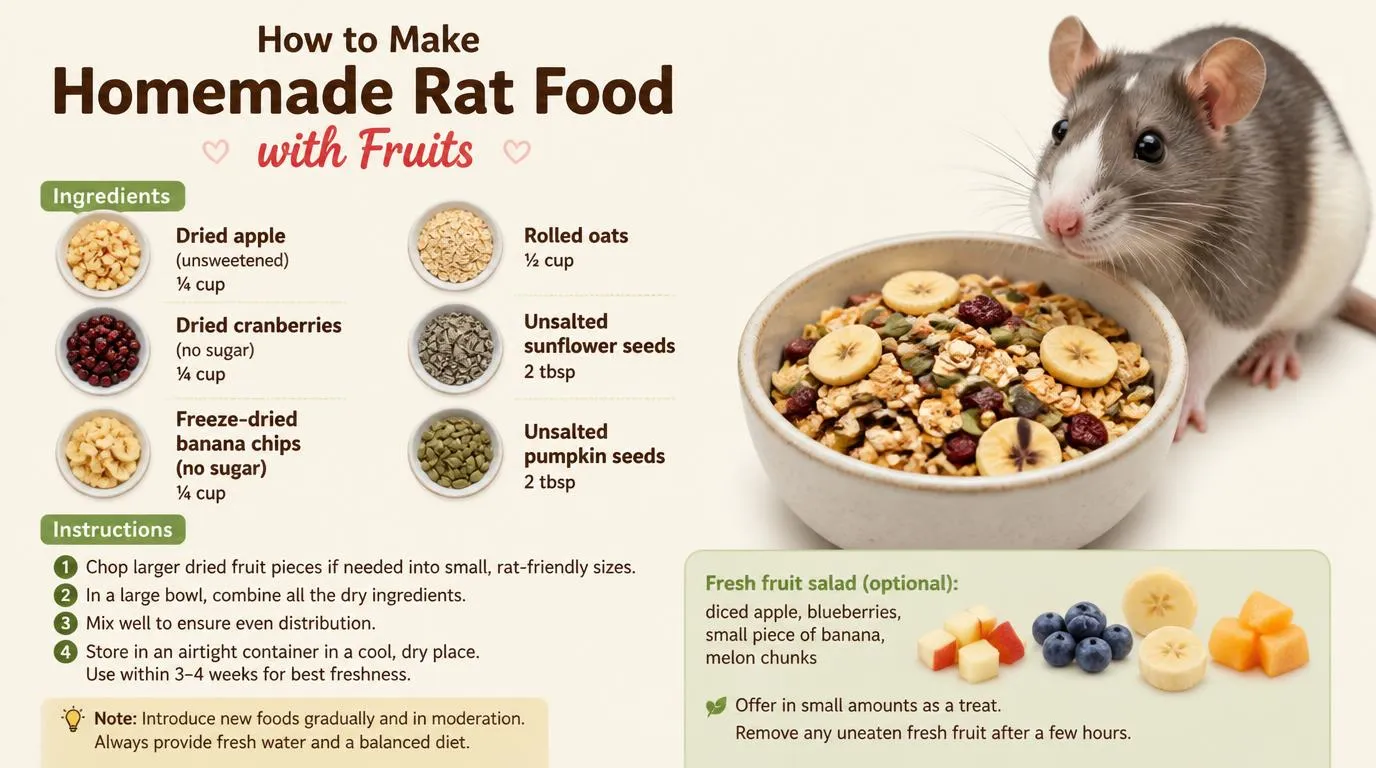
Ingredients
- Dried apple (unsweetened) ¼ cup
- Dried cranberries (no sugar) ¼ cup
- Freeze‑dried banana chips (no sugar) ¼ cup
- Rolled oats ½ cup
- Unsalted sunflower seeds 2 tbsp
- Unsalted pumpkin seeds 2 tbsp
- Fresh fruit salad (optional): diced apple, blueberries, small piece of banana, melon chunks mixed to ½ cup
Safety note: Avoid citrus (especially for males), grapes (whole can be choking hazard; slice), and never give processed fruits with added sugar or preservatives.
Approximate Nutritional Profile (per 1 tbsp dried mix)
Fruits are high in natural sugars – feed sparingly.
Step-by-Step Instructions
- Make dried fruit & seed mix: In a bowl, combine dried apple, dried cranberries, banana chips, rolled oats, sunflower seeds, and pumpkin seeds. Stir well.
- Store dry mix: Place in an airtight container in a cool, dry place. Use within 2 months.
- Prepare fresh fruit salad (optional): Dice safe fruits into small, bite‑sized pieces. Mix together.
- Serving size: Offer no more than 1 teaspoon of the dry fruit mix OR 1–2 teaspoons of fresh fruit salad per rat, 2–3 times per week. Remove any uneaten fresh fruit after 2–3 hours.
- Combine with staple diet: Always provide a quality lab block and plain water. Fruits are treats, not a main meal.
Pros and Cons of Fruit-Based Rat Food
Pros
- Rich in vitamins & antioxidants – supports immune health.
- Natural sweetness – great for bonding and training treats.
- Enrichment – variety encourages foraging and mental stimulation.
- Hydration – fresh fruits add moisture to the diet.
Cons
- High sugar content – can lead to obesity and diabetes if overfed.
- Risk of digestive upset if introduced too quickly or in large amounts.
- Spoilage – fresh fruits must be removed promptly.
- Not a complete diet – should never replace staple foods.
Nutritional Tips – Best Fruits for Rats & What to Avoid
Rat‑Safe Fruits
- Apple (seedless): Great source of fiber and vitamin C. Remove seeds (contain trace cyanide).
- Blueberries, strawberries, raspberries: Antioxidant‑rich, low sugar compared to other fruits.
- Banana: High in potassium; offer in small amounts due to sugar and starch.
- Melon (cantaloupe, watermelon): Hydrating, low calorie – remove rind and seeds.
- Pear (seedless): Gentle on stomach, similar to apple.
- Cherries (pitted): Antioxidants – never give the pit.
Fruits to Avoid
- Citrus (oranges, lemons, grapefruit): Can cause kidney damage in male rats; avoid entirely.
- Grapes (whole): Potential choking hazard; slice thinly if offered.
- Rhubarb: Toxic to rats.
- Dried fruit with added sugar or sulfites: Always choose unsweetened, preservative‑free.
Feeding Guidelines & Safety
Follow these rules when offering fruit to your rats:
- Portion control: A rat's treat portion should be about the size of their paw – roughly 1–2 teaspoons of fresh fruit or 1 teaspoon of dried fruit mix, 2–3 times weekly.
- Introduce slowly: Try one new fruit at a time and monitor for loose stool or allergies.
- Always wash fresh fruit: Remove any pesticides or contaminants.
- Remove uneaten fresh fruit: After 2–3 hours to prevent spoilage and bacterial growth.
- Balance with protein & grains: Fruits should never exceed 10% of the total diet.
- Watch for obesity: If your rat gains weight, reduce fruit treats and increase exercise.
Fruit Combinations to Try
Customize for Taste & Season
- Berry blast: Fresh blueberries, raspberries, and a few chopped strawberries.
- Tropical treat: Small pieces of mango, papaya, and banana (all unsweetened).
- Apple‑oat bites: Mix grated apple with a little rolled oats and shape into tiny balls – refrigerate.
- Dried fruit foraging mix: Combine unsweetened dried apple, cranberries, and banana chips with a few sunflower seeds – scatter in the cage for enrichment.
- Frozen fruit cubes: Blend safe fruits with water, freeze in small ice cube trays, and offer one cube as a cool treat on hot days.
Always use fresh, ripe fruits and wash thoroughly. For dried fruits, choose brands with no added sugar, oil, or sulfur dioxide.
Must‑Have Items
Recommended Tools & Supplies
- Large Mixing Bowl & Spoon – for combining ingredients. Check price on Amazon
- Airtight Storage Container – keeps dry mix fresh for months. Check price on Amazon
- Digital Kitchen Scale – for precise portion control. Check price on Amazon
- Silicone Mini Molds – for shaping veggie bites. Check price on Amazon
- Stainless Steel Bowls – heavy, tip‑proof dishes for food. Check price on Amazon
We participate in the Amazon Services LLC Associates Program, an affiliate advertising program designed to provide a means for us to earn fees by linking to Amazon.com and affiliated sites. As an Amazon Associate, we earn from qualifying purchases.
Storage and Safety Tips
Keep Fruit Treats Safe
- Dried fruit mix: Store in an airtight container in a cool, dark place for up to 2 months. Do not store in direct sunlight.
- Fresh fruit: Store in the refrigerator and use within 2–3 days. Wash just before serving.
- Frozen fruit cubes: Keep frozen for up to 3 months. Thaw slightly before offering.
- Hygiene: Remove any uneaten fresh fruit from the cage within a few hours to prevent mold and bacterial growth.
- Watch for spoilage signs: Discoloration, mushiness, or bad odor – discard immediately.
Conclusion
Fruits can be a healthy, enjoyable part of your pet rat's diet when offered correctly. They provide variety, essential nutrients, and mental enrichment. By using this fruit and seed mix or fresh fruit salad, you can safely incorporate fruit into your rat's feeding routine. Remember: moderation is key, and always prioritize a balanced staple diet. Your rats will thank you with happy boggles and healthy, active lives!
Frequently Asked Questions
What fruits are safe for rats?
Safe fruits include apple (seedless), blueberries, strawberries, raspberries, banana, melon, pear, and cherries (pitted). Always remove seeds, pits, and tough skins.
Can rats eat citrus fruits?
No, citrus fruits (oranges, lemons, grapefruit) can cause kidney damage in male rats and are not recommended for females either. Avoid citrus entirely.
How often can I give my rat fruit?
Fruit should be an occasional treat, 2–3 times per week, in small amounts (1–2 teaspoons). The majority of the diet should be a quality lab block and grain/vegetable mix.
Can rats eat dried fruit?
Yes, but choose unsweetened, unsulfured varieties. Dried fruit is more concentrated in sugar, so offer even smaller portions than fresh fruit.
Are grapes safe for rats?
Grapes are not toxic, but they pose a choking hazard if whole. Always slice grapes into thin pieces, and feed only occasionally due to high sugar content.
My rat has diarrhea after eating fruit. What should I do?
Stop offering fruit immediately. Provide plain water and their regular staple diet. If diarrhea persists for more than 24 hours, consult an exotic veterinarian.