Recipe Introduction
Rats are intelligent, social creatures that thrive on a varied diet. In the wild, they are omnivores, eating grains, seeds, fruits, vegetables, and even small insects. A good quality commercial rat food can provide balanced nutrition, but making your own allows you to control the ingredients and avoid preservatives, artificial colors, and excessive fat. This homemade rat food with grains is a staple mix that can be offered daily alongside fresh vegetables and occasional protein treats.
This recipe focuses on whole grains as the foundation – oats, barley, quinoa, and millet – combined with seeds for healthy fats and a small amount of dried herbs for flavor and variety. It’s easy to prepare in bulk and store, saving you money while giving your rats a wholesome, natural diet.
Table of Contents
Whole Grain Rat Food Mix
Staple Diet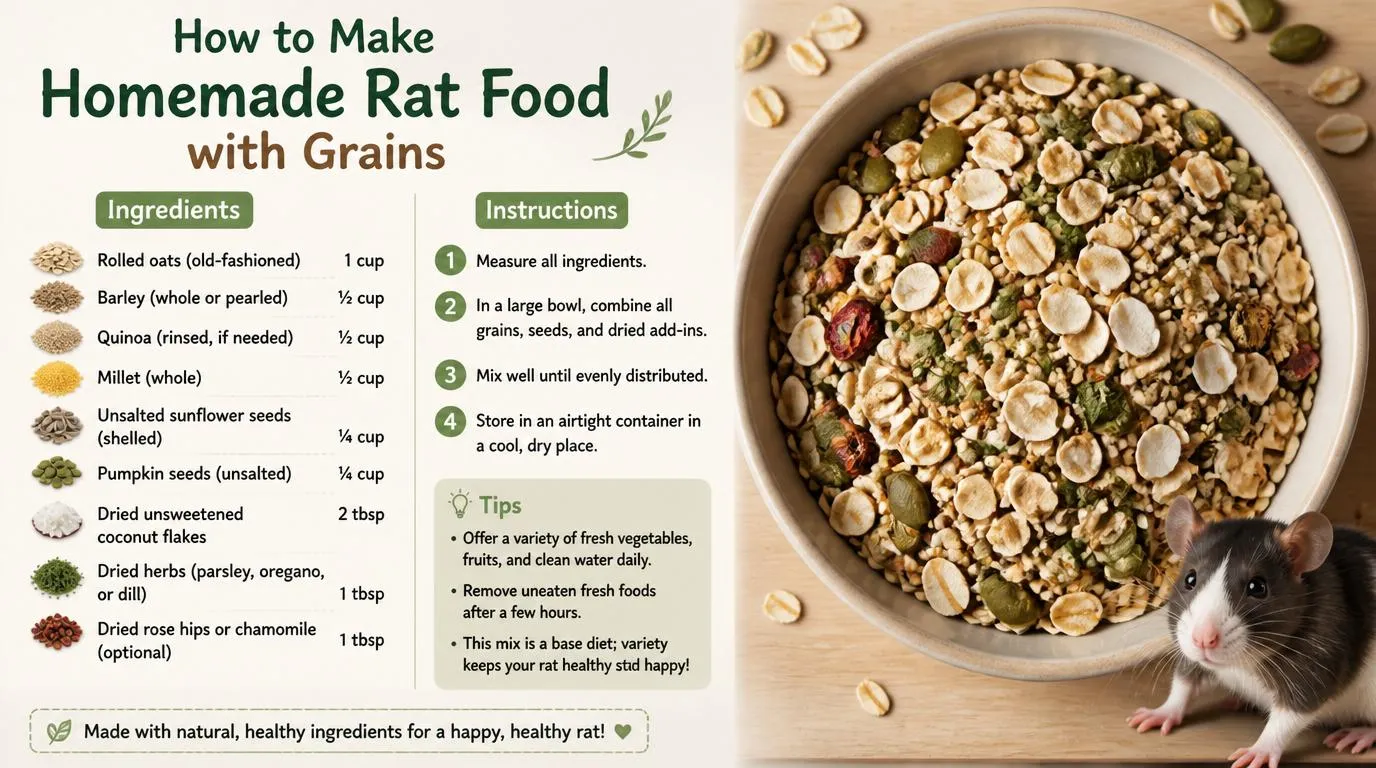
Ingredients
- Rolled oats (old‑fashioned) 1 cup
- Barley (whole or pearled) ½ cup
- Quinoa (rinsed, if needed) ½ cup
- Millet (whole) ½ cup
- Unsalted sunflower seeds (shelled) ¼ cup
- Pumpkin seeds (unsalted) ¼ cup
- Dried unsweetened coconut flakes 2 tbsp
- Dried herbs (parsley, oregano, or dill) 1 tbsp
- Dried rose hips or chamomile (optional) 1 tbsp
Tip: All ingredients should be unsalted and free from added sugars or preservatives. Avoid raw beans or large whole grains that could be a choking hazard.
Approximate Nutritional Profile (per ¼ cup dry mix)
Values are approximate. This mix is designed to be part of a varied diet including fresh vegetables, fruits, and protein sources.
Step-by-Step Instructions
- Combine dry grains and seeds: In a large bowl, mix rolled oats, barley, quinoa, millet, sunflower seeds, and pumpkin seeds.
- Add coconut and herbs: Stir in dried coconut flakes, dried herbs, and any optional ingredients like rose hips. Mix thoroughly.
- Store: Transfer to an airtight container. Keep in a cool, dry place away from direct sunlight.
- Serve: Offer a small amount (about 1-2 tablespoons per rat per day) in a heavy ceramic bowl to prevent tipping. Supplement with fresh vegetables, fruits, and a source of animal protein (like cooked eggs, mealworms, or small pieces of cooked chicken) a few times a week.
Pros and Cons of Homemade Rat Food
Pros
- Control over ingredients – no fillers, preservatives, or artificial colors.
- Cost‑effective – buying in bulk reduces long‑term expense.
- Customizable – you can adjust grains and seeds based on your rats’ preferences and health needs.
- Encourages natural foraging – whole grains and seeds promote mental stimulation.
- Freshness – you know exactly how old the food is.
Cons
- Requires supplementation – this mix alone does not provide complete nutrition; fresh vegetables, fruits, and protein must be added.
- Risk of selective eating – rats may pick out favorites and leave the rest.
- Proper storage needed – grains can spoil if exposed to moisture or pests.
- Time investment – requires regular mixing and monitoring.
Nutritional Tips – Why These Ingredients Are Great for Rats
Ingredient Benefits
- Rolled oats: Excellent source of soluble fiber, helps maintain digestive health.
- Barley: Provides complex carbohydrates for sustained energy; contains selenium and B vitamins.
- Quinoa: A complete protein, rich in amino acids and magnesium.
- Millet: Easily digestible, offers iron and phosphorus.
- Sunflower seeds (unsalted): Healthy fats and vitamin E; use in moderation to prevent obesity.
- Pumpkin seeds: Zinc and antioxidants; support immune function.
- Coconut flakes: Adds healthy medium‑chain triglycerides; small amount adds flavor.
- Dried herbs: Provide trace nutrients and aromatic enrichment.
Feeding Guidelines for Pet Rats
Rats are opportunistic eaters and can easily become overweight. Follow these guidelines to keep them healthy:
- Portion control: Offer about 1‑2 tablespoons of dry mix per rat per day, depending on size and activity level.
- Fresh foods daily: Provide a variety of fresh vegetables (leafy greens, carrots, broccoli) and a small amount of fruit (apple, berries) every day.
- Protein 2‑3 times a week: Boiled egg, cooked chicken, mealworms, or plain yogurt.
- Remove uneaten fresh food: Take out any fresh leftovers after a few hours to prevent spoilage.
- Always have clean water: Use a water bottle with a sipper tube, changed daily.
- Monitor body condition: Rats should have a visible waist when viewed from above; if they become round, reduce portions.
Recipe Variations for Specific Needs
Customize for Your Rats
- For young or growing rats: Add a little more protein – increase pumpkin seeds or supplement with cooked lentils.
- For senior rats: Use rolled oats as a base (easier to chew) and consider soaking the mix in warm water to soften.
- For picky eaters: Reduce the amount of less‑preferred grains and offer them separately; mix in a tiny bit of unsweetened applesauce to bind the mix.
- Baked treats: Blend the mix with a mashed banana and a little water, form small cookies, and bake at 200°F until dry for a crunchy snack.
- Herbal variety: Add dried chamomile, dandelion root, or mint for added enrichment.
Always introduce new foods gradually to avoid digestive upset.
Must‑Have Items
Recommended Tools & Supplies
- Large Mixing Bowl & Spoon – for combining ingredients. Check price on Amazon
- Airtight Storage Container – keeps dry mix fresh for months. Check price on Amazon
- Digital Kitchen Scale – for precise portion control. Check price on Amazon
- Silicone Mini Molds – for shaping veggie bites. Check price on Amazon
- Stainless Steel Bowls – heavy, tip‑proof dishes for food. Check price on Amazon
We participate in the Amazon Services LLC Associates Program, an affiliate advertising program designed to provide a means for us to earn fees by linking to Amazon.com and affiliated sites. As an Amazon Associate, we earn from qualifying purchases.
Storage and Safety Tips
Keep It Fresh & Safe
- Dry mix: Store in an airtight container in a cool, dry cupboard for up to 3 months. For longer storage, refrigerate or freeze.
- Check for spoilage: Discard if you see mold, insects, or a rancid smell.
- Fresh foods: Remove any uneaten fresh vegetables or fruits within 4‑6 hours to prevent bacterial growth.
- Clean bowls daily: Wash food and water bowls with hot, soapy water every day.
- Avoid toxic foods: Never feed chocolate, caffeine, raw beans, onion, garlic (in large amounts), or citrus (males are sensitive to d‑limonene).
- Monitor for allergies: Some rats may have sensitivities to certain grains; watch for scratching or loose stool when introducing new ingredients.
Conclusion
Making your own rat food at home is a rewarding way to provide your pets with wholesome, natural nutrition. This grain‑based mix is a great foundation, but remember that variety is key – fresh vegetables, occasional fruit, and a source of animal protein will ensure your rats get all the nutrients they need. Your rats will enjoy the mental stimulation of foraging through a diverse mix, and you’ll have peace of mind knowing exactly what they’re eating.
Take time to observe your rats’ preferences and adjust the recipe accordingly. With a little experimentation, you’ll create a diet that keeps them healthy, active, and happy for years to come.
Frequently Asked Questions
Can I feed this to my rats as their only food?
No. This grain mix provides a good base but lacks sufficient protein, vitamins, and minerals. You must supplement with fresh vegetables, a small amount of fruit, and a source of animal protein (like cooked egg, chicken, or mealworms) several times a week. A commercially available fortified block can also be offered alongside for balance.
How much should I feed my rat per day?
Adult rats typically need about 15‑25 grams of dry food per day, depending on size and activity. This equates to roughly 1‑2 tablespoons of the dry mix plus a generous portion of fresh vegetables. Monitor your rats’ weight and adjust portions if they become overweight.
How long does homemade rat food last?
Stored in an airtight container in a cool, dry place, the dry mix stays fresh for up to 3 months. You can extend shelf life by storing in the refrigerator or freezer. Always check for signs of spoilage before feeding.
My rats are picky and only eat the sunflower seeds. What should I do?
Selective eating is common. Try offering the mix in a foraging toy to encourage exploration, or grind the mix slightly so it’s harder to pick out individual seeds. You can also reduce the amount of high‑value items (like sunflower seeds) and introduce them gradually as treats. In the meantime, ensure they still get balanced nutrition from fresh foods and a lab block.
Can I use this recipe for other small pets?
This mix is formulated for rats. It may be suitable for mice or gerbils with adjustments, but always research the specific dietary needs of your pet. Hamsters, for example, require higher protein and different seed ratios. Never feed this mix to guinea pigs or chinchillas, which have very different nutritional requirements.
What fresh vegetables are safe for rats?
Safe vegetables include kale, spinach, broccoli, carrots, bell peppers, cucumber, and peas. Avoid raw sweet potato, raw beans, and excessive amounts of cruciferous vegetables (can cause gas). Introduce new veggies one at a time to check for tolerance.