Recipe Introduction
Leafy greens are a powerhouse of vitamins and minerals for pet rats. In the wild, rats consume a variety of greens, seeds, and grains, and replicating this variety at home supports their overall health. This homemade rat food with leafy greens combines dried kale, spinach, and parsley with a wholesome grain and seed base. The result is a convenient dry mix that can be stored and offered daily, ensuring your rats get a steady supply of antioxidants, fiber, and essential nutrients.
While fresh greens should always be part of a rat’s diet, dehydrated greens are a fantastic way to add variety, especially for busy owners. This recipe is easy to prepare in bulk and provides a balanced foundation when supplemented with fresh vegetables and a source of animal protein.
Table of Contents
Leafy Green & Grain Rat Mix
Nutrient Boost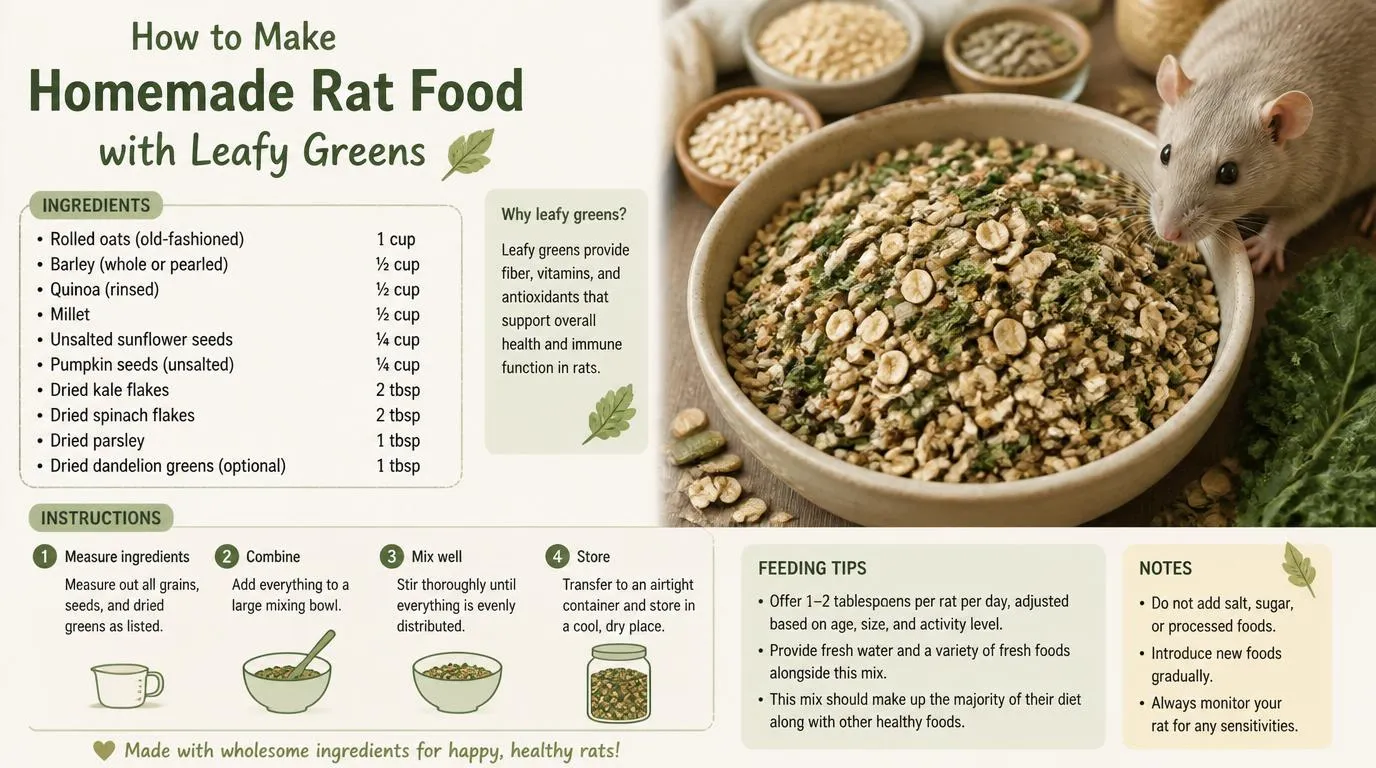
Ingredients
- Rolled oats (old‑fashioned) 1 cup
- Barley (whole or pearled) ½ cup
- Quinoa (rinsed) ½ cup
- Millet ½ cup
- Unsalted sunflower seeds ¼ cup
- Pumpkin seeds (unsalted) ¼ cup
- Dried kale flakes 2 tbsp
- Dried spinach flakes 2 tbsp
- Dried parsley 1 tbsp
- Dried dandelion greens (optional) 1 tbsp
Tip: Use organic dried greens when possible. You can also dehydrate fresh kale and spinach at home in a low oven or dehydrator.
Approximate Nutritional Profile (per ¼ cup dry mix)
Values are approximate. This mix is designed to be part of a varied diet including fresh vegetables, fruits, and protein sources.
Step-by-Step Instructions
- Combine grains and seeds: In a large bowl, mix rolled oats, barley, quinoa, millet, sunflower seeds, and pumpkin seeds.
- Add dried greens: Stir in dried kale flakes, spinach flakes, parsley, and any optional greens like dandelion. Mix thoroughly until evenly distributed.
- Store: Transfer to an airtight container. Keep in a cool, dry place away from direct sunlight.
- Serve: Offer about 1‑2 tablespoons per rat per day in a heavy ceramic bowl. Supplement with fresh leafy greens (such as romaine, kale, or spinach) daily, along with a variety of other vegetables and a small amount of animal protein (cooked egg, chicken, mealworms) 2‑3 times a week.
- For picky eaters: Lightly mist the mix with water before serving to bring out the aroma of the greens, or mix with a tiny amount of plain yogurt.
Pros and Cons of Leafy Green Rat Food
Pros
- High in vitamins and antioxidants – supports immune health and coat condition.
- Encourages natural foraging – the mix of textures and greens stimulates mental activity.
- Convenient dried format – lasts longer than fresh greens and reduces waste.
- Customizable – you can adjust the types of greens and grains based on availability and rat preferences.
- Promotes healthy digestion – fiber from greens and grains aids gut motility.
Cons
- Must be supplemented – dried greens alone do not replace fresh vegetables and protein.
- Potential for selective eating – rats may pick out seeds and leave greens.
- Requires proper storage – dried greens can absorb moisture and spoil if not sealed well.
- May need gradual introduction – sudden large amounts of greens can cause loose stool.
Nutritional Tips – Why Leafy Greens Are Essential for Rats
Ingredient Benefits
- Kale: Rich in vitamins A, C, K, and calcium; supports bone health and vision.
- Spinach: Provides iron, folate, and antioxidants; use in moderation due to oxalates.
- Parsley: Contains vitamin C and acts as a natural breath freshener.
- Dandelion greens: Diuretic properties and high in vitamin A; a natural forage favorite.
- Rolled oats & barley: Provide soluble fiber that helps maintain healthy gut flora.
- Quinoa: A complete protein that complements the greens.
- Sunflower & pumpkin seeds: Healthy fats and vitamin E for skin and coat health.
Always wash fresh greens thoroughly before feeding, and introduce new greens gradually to avoid digestive upset.
Feeding Guidelines for Rats on a Leafy Green Diet
Rats thrive on variety. Follow these guidelines to ensure they get a balanced diet:
- Daily dry mix: 1‑2 tablespoons per rat of the homemade grain and green mix.
- Fresh greens daily: Offer a small handful of washed leafy greens (romaine, kale, spinach, arugula) per rat. Rotate types to provide different nutrients.
- Other vegetables: Add chopped carrots, bell peppers, broccoli, or cucumber for variety.
- Protein 2‑3 times a week: Hard‑boiled egg, cooked chicken, mealworms, or plain yogurt.
- Fruit as a treat: Small pieces of apple, banana, or berries once or twice a week.
- Always have clean water: Use a water bottle changed daily.
- Remove uneaten fresh food: After a few hours, discard any leftover fresh produce to prevent spoilage.
Recipe Variations for Leafy Green Rat Food
Customize for Your Rats
- For extra vitamins: Add dried red bell pepper flakes or crushed rose hips.
- For senior rats: Grind the mix slightly in a food processor to make it easier to chew.
- For picky greens‑eaters: Incorporate the dried greens into a simple baked treat: mix with mashed banana, form small balls, and bake at 200°F until dry.
- Herbal blend: Include dried chamomile, mint, or lemon balm for a calming effect.
- Protein boost: Add a small amount of dried mealworms or shrimp to the mix.
Always monitor your rats when introducing new foods and adjust based on their preferences and health.
Must‑Have Items
Recommended Tools & Supplies
- Large Mixing Bowl & Spoon – for combining ingredients. Check price on Amazon
- Airtight Storage Container – keeps dry mix fresh for months. Check price on Amazon
- Digital Kitchen Scale – for precise portion control. Check price on Amazon
- Silicone Mini Molds – for shaping veggie bites. Check price on Amazon
- Stainless Steel Bowls – heavy, tip‑proof dishes for food. Check price on Amazon
We participate in the Amazon Services LLC Associates Program, an affiliate advertising program designed to provide a means for us to earn fees by linking to Amazon.com and affiliated sites. As an Amazon Associate, we earn from qualifying purchases.
Storage and Safety Tips
Keep It Fresh & Safe
- Dry mix: Store in an airtight container in a cool, dry cupboard for up to 3 months. For longer storage, refrigerate or freeze.
- Dried greens: If you dehydrate your own, ensure they are completely dry before adding to the mix to prevent mold.
- Check for spoilage: Discard if you see mold, insects, or a rancid smell.
- Fresh greens: Always wash thoroughly and remove any wilted or slimy leaves before feeding.
- Avoid toxic plants: Never feed rhubarb leaves, avocado, or raw sweet potato. Limit spinach and chard due to oxalates.
- Monitor stool: When introducing more greens, watch for loose stool and adjust portion sizes accordingly.
Conclusion
Incorporating leafy greens into your rats’ diet is one of the best ways to boost their nutrient intake and support overall health. This homemade mix combines the convenience of a dry staple with the benefits of vitamin‑rich greens. Remember that variety is key – rotate the types of greens you offer and supplement with fresh vegetables and protein to keep meals exciting and nutritionally complete.
Your rats will enjoy foraging through the mix, and you’ll have the satisfaction of knowing you’re providing a wholesome, natural diet. With proper storage and a little creativity, this recipe can become a go‑to foundation for your pets’ meals.
Frequently Asked Questions
Can I feed this mix without fresh greens?
The dried greens in this mix provide some nutrients, but fresh greens offer higher moisture content and a wider range of vitamins. For optimal health, offer fresh leafy greens daily in addition to this dry mix.
How much leafy greens should a rat eat per day?
About a small handful (roughly 1‑2 tablespoons) of chopped fresh greens per rat per day is a good guideline. Rotate between kale, romaine, spinach, and other safe greens to provide variety.
Can I use fresh greens instead of dried in the mix?
Fresh greens will spoil quickly when mixed with dry grains, so they are not suitable for long‑term storage. It's best to offer fresh greens separately, daily. The dried greens in the mix are meant for convenience and extended shelf life.
My rats are ignoring the dried greens. What should I do?
Try misting the mix with water to bring out the aroma, or mix it with a small amount of plain yogurt or applesauce. You can also grind the dried greens into a powder and coat seeds or grains with it. Over time, they may develop a taste for it.
Are there any greens I should avoid feeding rats?
Avoid rhubarb leaves (toxic), and limit spinach, chard, and beet greens due to high oxalates which can contribute to kidney stones. Iceberg lettuce has little nutritional value; opt for darker greens like kale, romaine, and arugula.
Can I use this recipe for other small pets?
This mix is formulated for rats. It may be suitable for mice or gerbils with adjustments, but always research the dietary needs of your specific pet. Guinea pigs and chinchillas have very different requirements and should not be fed this mix.