Recipe Introduction
Oats are one of the most beneficial grains you can feed your pet rats. They are packed with soluble fiber, which helps regulate digestion and maintain stable blood sugar levels. Oats are also gentle on the stomach, making them an excellent choice for young rats, senior rats, or those with sensitive digestive systems. This homemade rat food with oats uses rolled oats as the main ingredient, combined with other wholesome grains, seeds, and a touch of dried fruit for natural sweetness. The result is a balanced, easy‑to‑eat mix that rats love.
Unlike some commercial mixes that contain high‑fat seeds as the primary ingredient, this oat‑based recipe provides slow‑release energy and helps prevent obesity. It’s simple to prepare, stores well, and can be easily customized. For best results, serve this dry mix alongside fresh vegetables and a source of animal protein.
Table of Contents
Oat‑Based Rat Food Mix
Digestive Health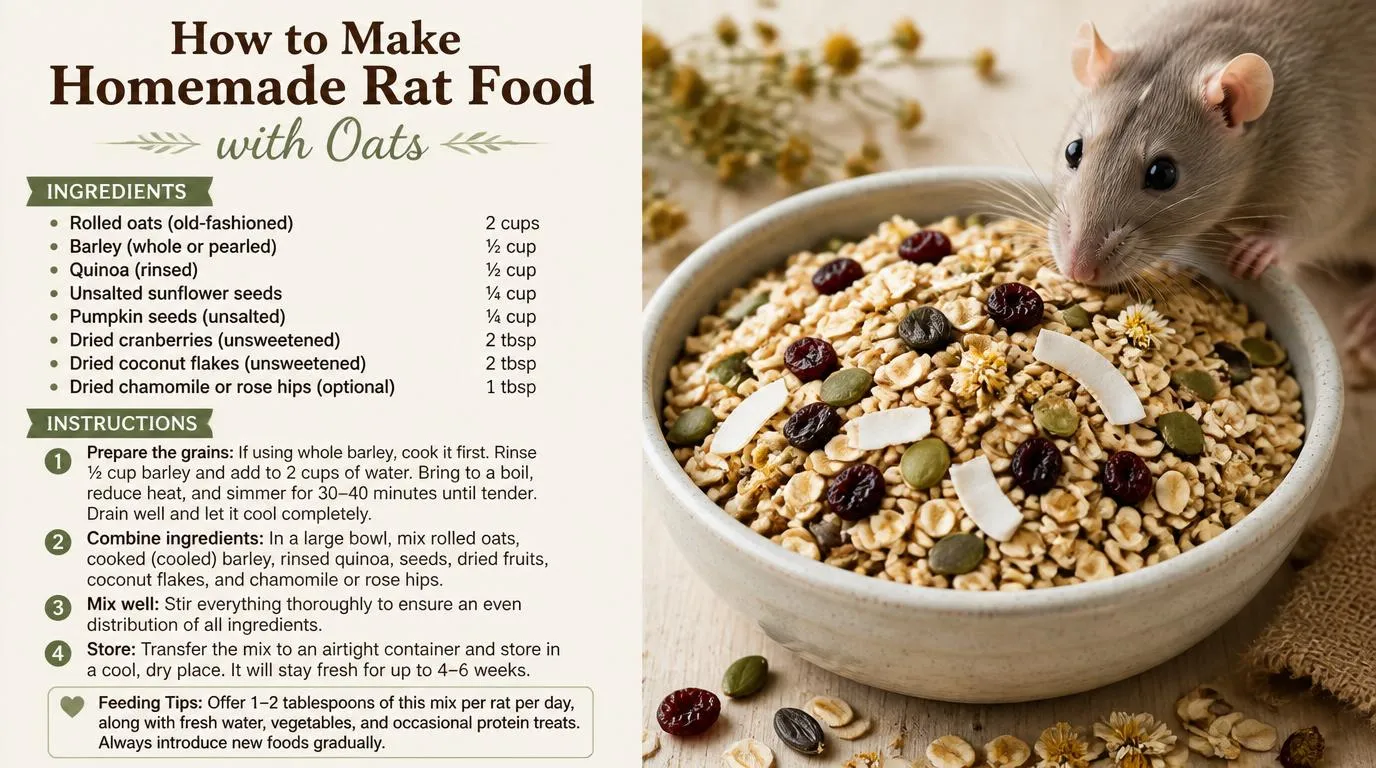
Ingredients
- Rolled oats (old‑fashioned) 2 cups
- Barley (whole or pearled) ½ cup
- Quinoa (rinsed) ½ cup
- Unsalted sunflower seeds ¼ cup
- Pumpkin seeds (unsalted) ¼ cup
- Dried cranberries (unsweetened) 2 tbsp
- Dried coconut flakes (unsweetened) 2 tbsp
- Dried chamomile or rose hips (optional) 1 tbsp
Tip: Use only plain, unsweetened rolled oats. Avoid instant oats or flavored oatmeal packets, which may contain sugar and additives.
Approximate Nutritional Profile (per ¼ cup dry mix)
Values are approximate. Oats provide slow‑release energy and are lower in fat than many seed‑based mixes.
Step-by-Step Instructions
- Combine dry grains: In a large bowl, mix rolled oats, barley, and quinoa.
- Add seeds and dried fruit: Stir in sunflower seeds, pumpkin seeds, dried cranberries, coconut flakes, and optional herbs. Mix thoroughly.
- Store: Transfer to an airtight container. Keep in a cool, dry place away from direct sunlight.
- Serve: Offer about 1‑2 tablespoons per rat per day in a heavy ceramic bowl. Supplement with fresh vegetables (leafy greens, carrots, broccoli) daily and a source of animal protein (cooked egg, chicken, mealworms) 2‑3 times a week.
- For senior rats: You can lightly crush the mix or soak it in a small amount of warm water to soften the oats.
Pros and Cons of Oat‑Based Rat Food
Pros
- Gentle on digestion – soluble fiber in oats soothes the gut.
- Low in fat – helps prevent obesity compared to seed‑heavy mixes.
- Steady energy – complex carbohydrates provide lasting fuel.
- Ideal for seniors and young rats – easy to chew and digest.
- Readily accepted – most rats love the mild, slightly sweet taste of oats.
Cons
- Lower protein than some mixes – must be supplemented with protein sources.
- May be too low in fat for very active or pregnant rats – add extra seeds or protein as needed.
- Can become mushy if exposed to moisture – store carefully.
- Not a complete diet alone – requires fresh vegetables and protein.
Nutritional Tips – Why Oats Are Great for Rats
Ingredient Benefits
- Rolled oats: Rich in beta‑glucan, a type of soluble fiber that supports healthy cholesterol levels and gut bacteria.
- Barley: Adds chewy texture and provides selenium, which supports thyroid function.
- Quinoa: A complete protein that balances the lower protein content of oats.
- Sunflower & pumpkin seeds: Provide healthy fats and vitamin E in moderate amounts.
- Dried cranberries: Natural source of antioxidants and a small amount of fruit sugar for variety.
- Coconut flakes: Adds healthy medium‑chain triglycerides; use sparingly.
- Chamomile/rose hips: Calming properties and extra vitamin C.
Oats are also naturally low in phytic acid compared to other grains, meaning nutrients are more bioavailable to your rats.
Feeding Guidelines for Rats on an Oat‑Based Diet
Oats are healthy, but balance is key. Follow these guidelines for optimal rat nutrition:
- Daily dry mix: 1‑2 tablespoons per rat of the oat mix.
- Fresh vegetables daily: Offer a variety of leafy greens (kale, romaine), plus other veggies like bell pepper, cucumber, or cooked sweet potato.
- Protein 2‑3 times a week: Hard‑boiled egg, plain cooked chicken, mealworms, or a small piece of fish.
- Fruit as a treat: A small piece of apple, banana, or berries 1‑2 times per week.
- Water: Always provide fresh, clean water in a bottle or heavy bowl.
- Remove uneaten fresh food: After a few hours, discard any fresh leftovers to prevent spoilage.
- Monitor weight: Oats are calorie‑dense but healthy; adjust portions if rats become overweight.
Recipe Variations for Oat‑Based Rat Food
Customize for Your Rats
- For senior rats (soft food): Soak the mix in warm water or unsweetened almond milk for 10 minutes before serving to create a soft porridge.
- For underweight or nursing rats: Increase sunflower seeds and add a tablespoon of crushed walnuts or pecans.
- For picky eaters: Mix in a teaspoon of plain yogurt or a mashed banana to bind the oats.
- Baked oat treats: Combine the mix with a beaten egg and a little water, form small cookies, and bake at 200°F until crisp.
- Herbal oat blend: Add dried lavender, mint, or lemon balm for a calming effect.
Always introduce new ingredients gradually and observe your rats for any digestive changes.
Must‑Have Items
Recommended Tools & Supplies
- Large Mixing Bowl & Spoon – for combining ingredients. Check price on Amazon
- Airtight Storage Container – keeps dry mix fresh for months. Check price on Amazon
- Digital Kitchen Scale – for precise portion control. Check price on Amazon
- Silicone Mini Molds – for shaping veggie bites. Check price on Amazon
- Stainless Steel Bowls – heavy, tip‑proof dishes for food. Check price on Amazon
We participate in the Amazon Services LLC Associates Program, an affiliate advertising program designed to provide a means for us to earn fees by linking to Amazon.com and affiliated sites. As an Amazon Associate, we earn from qualifying purchases.
Storage and Safety Tips
Keep It Fresh & Safe
- Dry mix: Store in an airtight container in a cool, dry cupboard for up to 3 months. For longer storage, refrigerate or freeze.
- Oats are prone to moisture: Ensure the container is completely sealed; humidity can cause oats to spoil or attract pests.
- Check for rancidity: If the mix smells off or you see any mold, discard immediately.
- Fresh vegetables: Always wash and chop fresh produce, and remove uneaten portions after a few hours.
- Avoid toxic foods: Never feed raw sweet potato, onion, garlic (in large amounts), citrus (for males), or chocolate.
Conclusion
Oats are a wonderful, nutritious base for homemade rat food. They are gentle, energy‑sustaining, and highly palatable. This oat‑based mix is especially suitable for rats with sensitive stomachs, older rats, or any rat that needs a lower‑fat diet. As with any homemade diet, remember to supplement with fresh vegetables and a source of animal protein to ensure complete nutrition. Your rats will enjoy the mild flavor and satisfying texture of this wholesome mix, and you’ll love how easy it is to prepare.
Experiment with the variations to keep mealtime interesting, and always monitor your rats’ health and weight. With a little care, you can provide a diet that supports their well‑being for years to come.
Frequently Asked Questions
Can rats eat raw oats?
Yes, rolled oats (old‑fashioned) are safe and nutritious for rats when fed raw. They can also be soaked or cooked, but raw oats are fine and help keep teeth trimmed. Avoid instant oats, which are highly processed and may contain sugar.
Is this oat mix suitable for baby rats?
Yes, but young rats need extra protein and fat for growth. For babies (under 4 months), supplement this mix with additional protein sources like cooked egg, kitten food (soaked), or mealworms, and consider adding a few more seeds for healthy fats.
How much oat mix should I feed my rat daily?
Adult rats typically need about 1‑2 tablespoons of dry mix per day, depending on size and activity. Offer this alongside a generous portion of fresh vegetables. Adjust portions if your rat becomes overweight or loses condition.
Can I use steel‑cut oats instead of rolled oats?
Steel‑cut oats are harder and may be difficult for rats to chew, especially seniors. Rolled oats are preferred for texture and digestibility. If you only have steel‑cut oats, you can grind them slightly in a food processor.
Will this recipe cause weight gain in rats?
Oats are calorie‑dense but healthy. Weight gain depends on portion sizes and overall diet. This mix is lower in fat than many seed‑based commercial foods, making it a good choice for rats prone to obesity. Monitor portions and ensure plenty of exercise.
Can I feed this to other small pets like mice or gerbils?
Mice and gerbils can eat small amounts of oats, but their nutritional needs differ. For mice, a higher protein mix is often recommended. For gerbils, a lower sugar content is ideal. Always research the specific dietary requirements of your pet before using this mix as a staple.