Recipe Introduction
Vegetables are a cornerstone of a healthy rat diet. They provide essential vitamins, minerals, antioxidants, and fiber that support everything from immune function to skin and coat health. While fresh vegetables should be offered daily, adding dried vegetables to your rats’ staple dry mix ensures they get a consistent vegetable boost even on busy days. This homemade rat food with vegetables combines a variety of colorful dried veggies – carrots, bell peppers, zucchini, and more – with whole grains and a moderate amount of seeds. The result is a nutrient‑dense, flavorful mix that rats love to forage through.
Dried vegetables retain most of their nutritional value and add texture variety to the diet. This recipe is easy to prepare in bulk and can be stored for months. Remember that dried vegetables are a supplement to, not a replacement for, fresh produce. For best health, continue offering fresh vegetables daily alongside this mix.
Table of Contents
Vegetable‑Rich Rat Food Mix
Vitamin Boost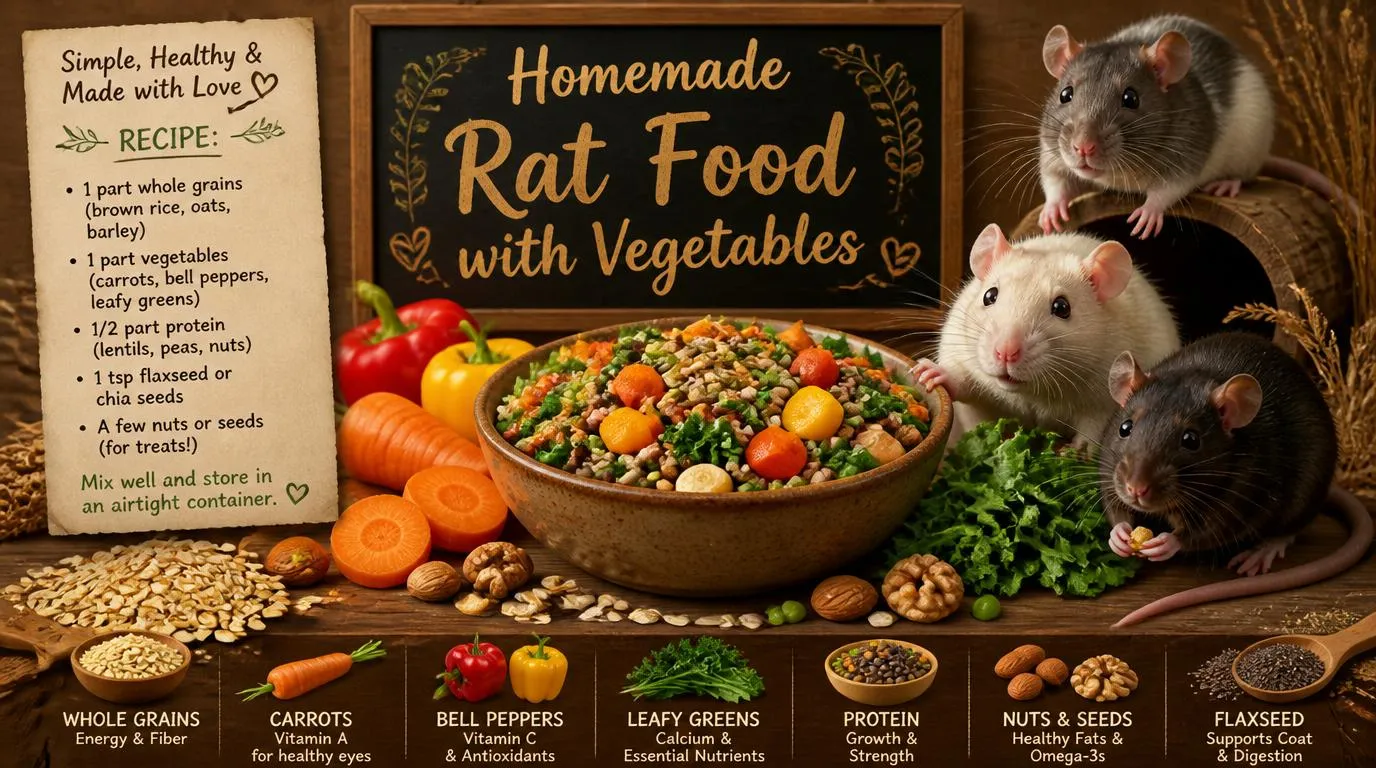
Ingredients
- Rolled oats 1 cup
- Barley ½ cup
- Quinoa ½ cup
- Millet ½ cup
- Unsalted sunflower seeds ¼ cup
- Pumpkin seeds ¼ cup
- Dried carrot flakes 2 tbsp
- Dried bell pepper flakes (red/yellow) 2 tbsp
- Dried zucchini or squash flakes 1 tbsp
- Dried parsley 1 tbsp
Tip: You can use store‑bought dried vegetable flakes or dehydrate your own at home. Avoid mixes with added salt, sugar, or preservatives.
Approximate Nutritional Profile (per ¼ cup dry mix)
Values are approximate. Dried vegetables concentrate nutrients; a little goes a long way.
Step-by-Step Instructions
- Combine grains: In a large bowl, mix rolled oats, barley, quinoa, and millet.
- Add seeds: Stir in sunflower seeds and pumpkin seeds.
- Add dried vegetables and herbs: Add carrot flakes, bell pepper flakes, zucchini flakes, and dried parsley. Mix thoroughly to distribute evenly.
- Store: Transfer to an airtight container. Keep in a cool, dry place away from sunlight.
- Serve: Offer about 1‑2 tablespoons per rat per day. Supplement with fresh leafy greens (kale, romaine), other fresh vegetables, and a source of animal protein (cooked egg, chicken, mealworms) 2‑3 times per week.
- Hydration tip: If your rats are reluctant to eat the dried vegetables, mist the mix lightly with water before serving to rehydrate slightly and enhance aroma.
Pros and Cons of Vegetable‑Based Rat Food
Pros
- Rich in vitamins and antioxidants – supports immune health and prevents disease.
- Encourages natural foraging – different shapes, colors, and textures keep rats engaged.
- Convenient dried format – vegetables last longer and reduce waste.
- Customizable – use whatever safe vegetables you have on hand.
- Low in fat – helps maintain healthy weight.
Cons
- Must be supplemented with protein – vegetables alone don’t provide enough protein for rats.
- Potential for picky eating – some rats may ignore certain dried vegetables.
- Drying vegetables at home takes time – requires a dehydrator or low oven.
- Not a substitute for fresh vegetables – fresh produce still needed for hydration and variety.
Nutritional Tips – Why These Vegetables Are Great for Rats
Ingredient Benefits
- Carrots: Excellent source of beta‑carotene (vitamin A) for eye health and immune function.
- Bell peppers (red/yellow): High in vitamin C, which rats cannot produce on their own.
- Zucchini/squash: Provides potassium and B vitamins with low calories.
- Parsley: Rich in vitamin K and acts as a natural breath freshener.
- Rolled oats & barley: Soluble fiber helps regulate blood sugar and digestion.
- Quinoa: Adds complete protein to balance the mix.
- Sunflower & pumpkin seeds: Healthy fats and vitamin E for skin and coat health.
Remember to rotate vegetable types over time to provide a wide range of nutrients.
Feeding Guidelines for Rats on a Vegetable‑Rich Diet
Vegetables should be a significant part of your rats’ daily intake. Follow these guidelines for optimal health:
- Daily dry mix: 1‑2 tablespoons per rat of this vegetable‑grain mix.
- Fresh vegetables daily (very important): Offer a generous handful of fresh leafy greens (kale, romaine, arugula) plus other chopped vegetables like bell pepper, cucumber, broccoli, or cooked sweet potato.
- Protein 2‑3 times a week: Hard‑boiled egg, plain cooked chicken, mealworms, or a small piece of fish.
- Fruit as a treat: Small amounts of apple, banana, or berries 1‑2 times per week.
- Water: Always provide fresh, clean water.
- Remove uneaten fresh food: After a few hours, discard any fresh leftovers to prevent spoilage.
Recipe Variations for Vegetable Rat Food
Customize for Your Rats
- Different vegetable blends: Try dried broccoli, cauliflower, green beans, or peas. Avoid corn in large amounts (too much sugar).
- Herbal addition: Add dried dandelion, nettle, or raspberry leaf for extra nutrients.
- For rats with diabetes risk: Reduce dried carrots (higher natural sugar) and increase leafy greens like kale and parsley.
- Dehydrated veggie chips: Make your own by thinly slicing vegetables and drying at 135°F until crisp. Crumble into the mix.
- Protein boost: Add a tablespoon of dried mealworms or shrimp to the mix for extra protein.
Always wash fresh vegetables thoroughly before feeding, and introduce new vegetables one at a time to monitor for digestive issues.
Must‑Have Items
Recommended Tools & Supplies
- Large Mixing Bowl & Spoon – for combining ingredients. Check price on Amazon
- Airtight Storage Container – keeps dry mix fresh for months. Check price on Amazon
- Digital Kitchen Scale – for precise portion control. Check price on Amazon
- Silicone Mini Molds – for shaping veggie bites. Check price on Amazon
- Stainless Steel Bowls – heavy, tip‑proof dishes for food. Check price on Amazon
We participate in the Amazon Services LLC Associates Program, an affiliate advertising program designed to provide a means for us to earn fees by linking to Amazon.com and affiliated sites. As an Amazon Associate, we earn from qualifying purchases.
Storage and Safety Tips
Keep It Fresh & Safe
- Dry mix: Store in an airtight container in a cool, dry cupboard for up to 3 months. Refrigerate or freeze for longer storage.
- Dried vegetables: Ensure they are completely dry before adding to the mix to prevent mold.
- Check for spoilage: Discard if you see mold, off smells, or insects.
- Fresh vegetables: Always wash thoroughly. Remove uneaten fresh veggies after 4‑6 hours.
- Avoid toxic vegetables: Never feed raw potato, rhubarb, onion, or garlic in large amounts. Limit spinach and chard due to oxalates.
- Citrus caution: Male rats are sensitive to d‑limonene in citrus peels; avoid orange, lemon, and grapefruit.
Conclusion
Adding a variety of vegetables to your rats’ diet is one of the most impactful things you can do for their health. This homemade vegetable‑grain mix makes it easy to provide a daily vegetable boost, even when fresh options are limited. The dried vegetables retain important nutrients and add interest to the bowl, encouraging natural foraging behavior. Remember that this mix works best as part of a balanced diet that includes fresh vegetables daily and regular protein sources. Your rats will thank you with bright eyes, soft coats, and playful energy.
Experiment with different vegetable combinations based on seasonal availability and your rats’ preferences. With a little preparation, you can ensure your pets enjoy a colorful, nutritious, and delicious diet every day.
Frequently Asked Questions
Can I use fresh vegetables instead of dried in this mix?
Fresh vegetables will spoil quickly when mixed with dry grains, so they are not suitable for long‑term storage. Offer fresh vegetables separately every day. The dried vegetables in this mix are meant for convenience and extended shelf life.
How do I dry vegetables at home?
Wash and thinly slice vegetables (carrots, bell peppers, zucchini, etc.). Arrange in a single layer on a dehydrator tray or baking sheet. Dry at 135°F (57°C) for 6‑12 hours until crisp. Alternatively, use an oven on the lowest setting with the door slightly ajar. Store dried vegetables in an airtight container before adding to the mix.
How much fresh vegetables should my rat eat daily?
Offer a generous handful (about 2‑3 tablespoons) of mixed fresh vegetables per rat per day. Focus on leafy greens (kale, romaine, arugula) and add small amounts of other colorful vegetables. Remove uneaten fresh food after a few hours.
My rats are ignoring the dried vegetables. What can I do?
Lightly mist the mix with water before serving to rehydrate the vegetables and release their aroma. You can also grind the dried vegetables into a powder and coat the grains and seeds. Some rats need time to accept new textures; be patient and keep offering small amounts mixed with familiar foods.
Can I feed this mix to mice or gerbils?
This mix is formulated for rats. Mice and gerbils have different nutritional requirements (e.g., mice need higher protein, gerbils need lower sugar). It may be suitable as a small part of a varied diet, but always research the specific needs of your pet before making it a staple.
What are the best fresh vegetables for rats?
Excellent choices include kale, romaine lettuce, arugula, bok choy, bell peppers, broccoli, cauliflower, cucumber, zucchini, carrots (small amounts), and cooked sweet potato. Avoid raw potato, rhubarb, onion, and garlic. Limit spinach and chard due to oxalates.