Recipe Introduction
Geckos are a diverse group with varying dietary needs – crested geckos thrive on fruit‑based diets, while leopard geckos are strict insectivores. Making homemade reptile food for geckos allows you to provide fresh, preservative‑free meals tailored to your species. This guide includes a fruit puree recipe for crested geckos and detailed instructions for gut‑loading insects for leopard geckos, plus calcium supplementation advice.
Proper nutrition prevents metabolic bone disease, obesity, and other common health issues. Follow these recipes and tips to keep your gecko healthy and active.
Table of Contents
Crested Gecko Fruit Puree
For Frugivorous Species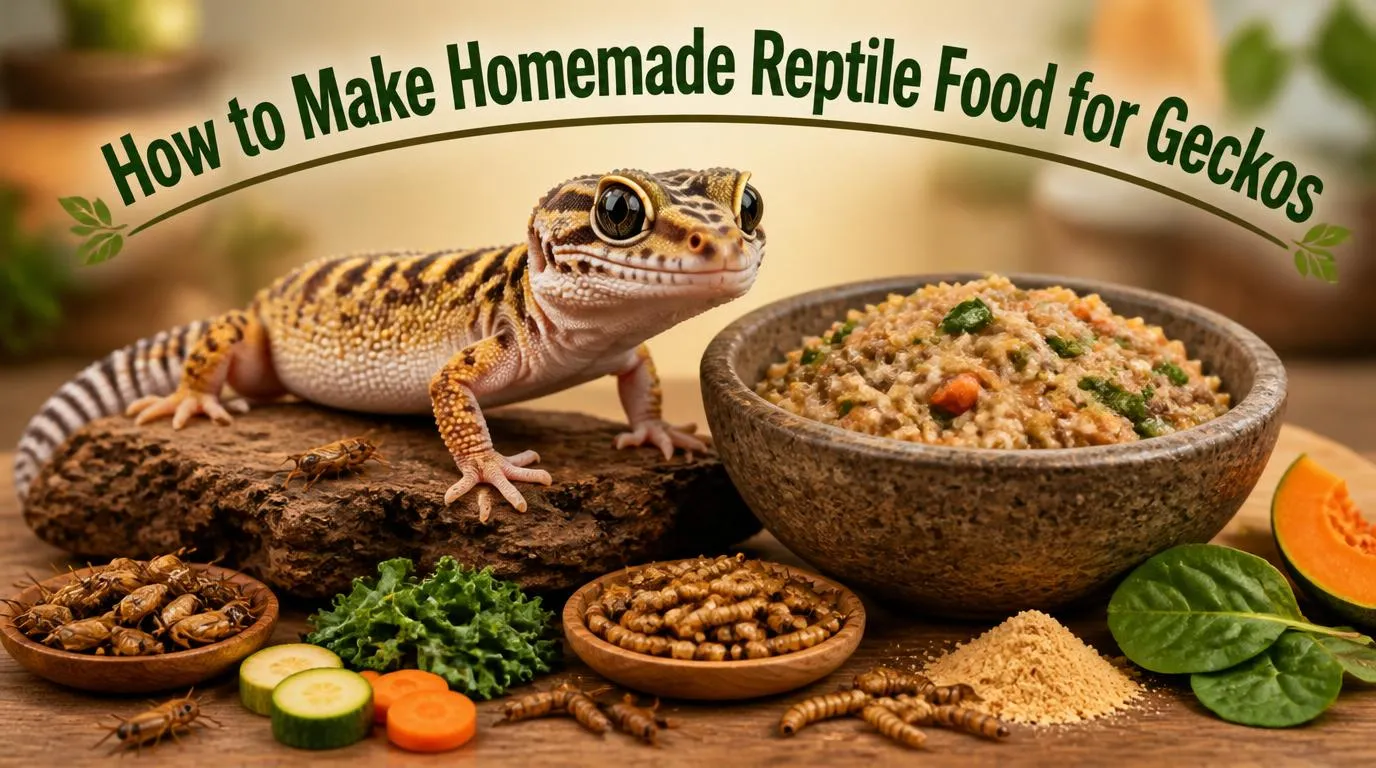
Ingredients
- Mango or papaya (ripe) ½ cup (mashed)
- Banana ½ small
- Peach or apricot (fresh or frozen, no syrup) ¼ cup
- Calcium powder (without D3) ½ tsp
- Reptile multivitamin ⅛ tsp (optional, once weekly)
- Filtered water as needed
For insectivorous geckos (leopard geckos, etc.): No fruit puree. Instead, offer gut‑loaded crickets, dubia roaches, or mealworms dusted with calcium. See variations below.
Approximate Nutritional Profile (per teaspoon puree)
Values approximate. Puree should be supplemented with calcium at every feeding for crested geckos.
Step-by-Step Instructions
- Select ripe, organic fruit when possible. Wash thoroughly.
- Mash or blend mango, banana, and peach until smooth. Add a little filtered water to achieve a thin, sauce‑like consistency.
- Stir in calcium powder (and multivitamin if using). Mix well.
- Serve immediately in a shallow dish. Remove uneaten puree after 12‑24 hours to prevent spoilage.
- Store leftovers in an airtight container in the refrigerator for up to 3 days or freeze in ice cube trays for single portions.
Pros and Cons of Homemade Gecko Food
Pros
- Fresh ingredients – no preservatives or artificial additives.
- Customizable – adjust fruit types and supplements to your gecko's needs.
- Cost‑effective compared to commercial powdered diets.
- Bonding opportunity – you learn your gecko's preferences.
- Control over calcium:phosphorus ratio – critical for bone health.
Cons
- Nutritional gaps if not properly supplemented.
- Short shelf life – must be refrigerated or frozen.
- Time‑consuming to prepare fresh batches regularly.
- Risk of obesity if fruit puree is too high in sugar.
- Insectivores require live insects – puree is not appropriate for leopard geckos.
Nutritional Tips for Geckos
Why These Ingredients Are Great
- Mango/Papaya: Rich in beta‑carotene (vitamin A) and low in oxalates; good calcium:phosphorus ratio.
- Banana: Provides potassium and energy; use in moderation due to higher sugar.
- Peach/Apricot: Adds variety and natural sweetness; source of vitamin C.
- Calcium powder: Essential to prevent metabolic bone disease. Without it, fruit puree is deficient in calcium.
- Multivitamin: Ensures adequate vitamin D3 and other micronutrients (especially for geckos without UVB).
- Insects (for leopard geckos): Gut‑loading insects with nutritious foods improves their nutritional value.
Foods to avoid: Citrus fruits (too acidic), rhubarb, avocado, and any fruit with added sugar or syrup.
Feeding Guidelines by Species
- Crested geckos & gargoyle geckos: Offer fresh fruit puree 2‑3 times per week. A commercial crested gecko diet (CGD) is recommended as a base, with homemade puree as a supplement or treat. Dust puree with calcium at each feeding.
- Leopard geckos (insectivores): Feed live insects 3‑5 times weekly for adults, daily for juveniles. Dust insects with calcium at every feeding and a multivitamin once weekly. Never feed fruit puree.
- Day geckos & tokay geckos: Omnivorous – offer fruit puree occasionally along with insects. Adjust proportions based on species.
- Portion size: For crested geckos, offer about 1‑2 teaspoons of puree; remove after 12‑24 hours.
- Water: Always provide fresh, clean water in a shallow dish. Crested geckos often drink from water droplets, so mist the enclosure regularly.
Variations & Insect Care
Customize for Your Gecko
- Fruit variety: Substitute with berries (blueberries, raspberries), figs, or pear. Avoid citrus.
- Add protein (for omnivorous geckos): Mix in a small amount of plain, cooked chicken baby food or finely chopped insects for added protein.
- Insect gut‑loading: Feed insects fresh greens, carrots, and commercial gut‑load for 24‑48 hours before offering to your gecko. This boosts their nutritional value.
- Calcium dusting: Use a high‑quality calcium powder with D3 if your gecko does not have UVB lighting; otherwise, use calcium without D3.
- Commercial diet blend: For crested geckos, you can mix homemade puree with a small amount of CGD powder to ensure balanced nutrition.
Always introduce new foods gradually and monitor stool consistency. If your gecko refuses a new item, try again after a few days.
Must‑Have Items
Recommended Tools & Supplies
- Fine Grater or Food Processor – for shredding vegetables. Check price on Amazon
- Digital Scale – for precise supplement dosing. Check price on Amazon
- Insect Keeper – for gut‑loading crickets or roaches. Check price on Amazon
- Calcium Powder with D3 – essential supplement. Check price on Amazon
- Feeding Tweezers – for safe insect offering. Check price on Amazon
We participate in the Amazon Services LLC Associates Program, an affiliate advertising program designed to provide a means for us to earn fees by linking to Amazon.com and affiliated sites. As an Amazon Associate, we earn from qualifying purchases.
Storage and Safety Tips
Keep It Fresh & Safe
- Refrigerator: Store puree in an airtight container for up to 3 days. Discard if mold or sour odor appears.
- Freezer: Portion into ice cube trays, freeze, then transfer to a freezer bag. Thaw in the refrigerator before serving. Use within 2 months.
- Never feed spoiled food – it can cause digestive upset.
- Wash hands thoroughly after handling raw ingredients and before handling your gecko (to prevent salmonella risk).
- Sanitize feeding dishes daily with hot soapy water or reptile‑safe disinfectant.
- Remove uneaten insects after 15 minutes to prevent them from stressing or biting your gecko.
Conclusion
Feeding your gecko a homemade diet can be a rewarding way to provide fresh, high‑quality nutrition. For crested geckos, fruit puree offers variety and hydration when supplemented with calcium. For leopard geckos and other insectivores, focusing on gut‑loaded, dusted insects is key. Always research your specific species' needs and consult a reptile veterinarian for personalized advice.
Enjoy the process of learning your gecko's favorite foods and watching them thrive on a diet tailored just for them!
Frequently Asked Questions
Can I feed my leopard gecko fruit puree?
No. Leopard geckos are strict insectivores and cannot digest fruit properly. Feeding fruit can cause digestive upset and nutritional deficiencies. Stick to live, gut‑loaded insects dusted with calcium.
How often should I dust insects with calcium?
For leopard geckos and other insectivores, dust insects with calcium at every feeding. Use a multivitamin once a week. For crested geckos, dust the fruit puree with calcium at each feeding.
Can I use frozen fruit for the puree?
Yes, thawed frozen fruit (without added sugar or syrup) works well. Ensure it is fully thawed and at room temperature before serving. Fresh fruit is preferred but frozen is a convenient alternative.
Do crested geckos need UVB light?
While crested geckos are often kept without UVB, research shows that UVB lighting improves their activity and calcium metabolism. If you use UVB, use calcium powder without D3. If not, use calcium with D3.
What insects are best for leopard geckos?
Crickets, dubia roaches, and black soldier fly larvae are excellent staple feeders. Mealworms and waxworms are higher in fat and should be offered as occasional treats only.
How do I know if my gecko is getting enough calcium?
Signs of calcium deficiency include lethargy, tremors, soft or swollen jaw, and difficulty walking. If you suspect MBD, consult a reptile vet immediately. Prevention through proper supplementation is key.