
Recipe Introduction
Reptiles have diverse dietary needs – from herbivorous bearded dragons to insectivorous geckos and carnivorous snakes. Making homemade reptile food allows you to control ingredient quality, avoid preservatives, and tailor meals to your pet's specific species. This guide provides a base recipe for omnivorous reptiles (like bearded dragons) plus tips to adapt for lizards, turtles, geckos, and snakes.
Our featured recipe is a nutrient‑dense omnivore mix packed with leafy greens, vegetables, and a protein source. With simple preparation, you can create a wholesome diet that supports healthy skin, digestion, and vitality.
Table of Contents
Omnivore Reptile Food Base
For Bearded Dragons, Turtles & Omnivorous Lizards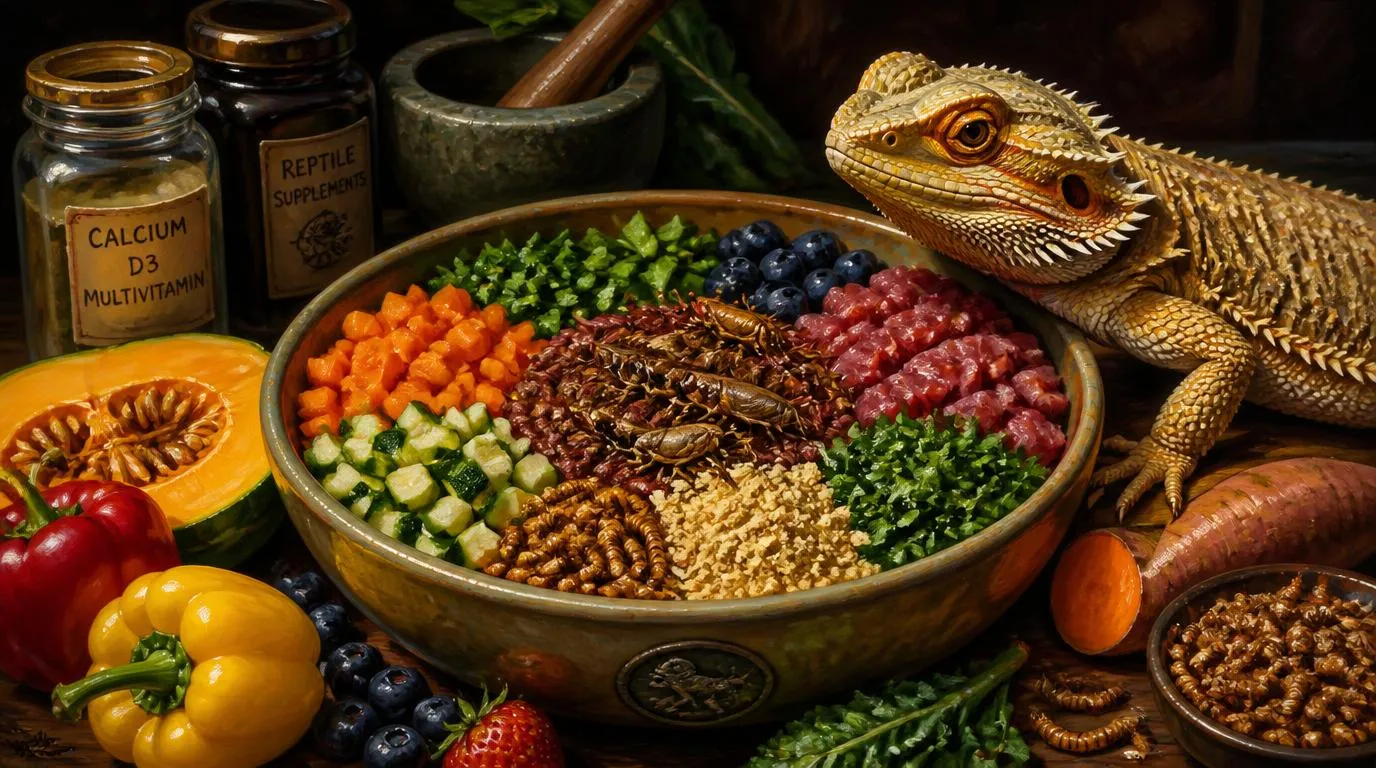
Ingredients
- Collard greens or mustard greens 1 cup (chopped)
- Butternut squash (grated) ½ cup
- Carrot (grated) ¼ cup
- Bell pepper (finely diced) ¼ cup
- Cooked lentils or peas ¼ cup
- Calcium powder (without D3 unless specified) 1 tsp
- Reptile‑safe multivitamin ¼ tsp
- Water or organic vegetable broth as needed
Protein option: Add 2‑3 gut‑loaded crickets or 1 tsp of canned, rinsed insects per serving for insectivorous reptiles. For turtles, add a small piece of cooked, boneless fish.
Approximate Nutritional Profile (per ¼ cup)
Values vary with ingredients. Always dust with calcium before feeding.
Step-by-Step Instructions
- Wash all produce thoroughly to remove pesticides.
- Chop greens into bite‑sized pieces appropriate for your reptile.
- Grate or finely dice squash, carrot, and bell pepper.
- Combine vegetables in a bowl with cooked lentils (or peas).
- Add calcium and multivitamin powder, mixing well. Add a small amount of water to achieve a slightly moist consistency if desired.
- Serve immediately at room temperature. Remove uneaten food after 4‑6 hours.
- For insectivores: Offer the vegetable mix as a small side dish and serve live insects separately.
Pros and Cons of Homemade Reptile Food
Pros
- Complete control over ingredients – no fillers or preservatives.
- Customizable to species, age, and health needs.
- Freshness – higher moisture content supports hydration.
- Cost‑effective compared to premium prepared diets.
- Bonding opportunity – you learn your reptile's preferences.
Cons
- Requires careful calcium:phosphorus balance – improper ratios cause metabolic bone disease.
- Nutritional gaps if not supplemented with vitamins.
- Time‑consuming to prepare fresh meals regularly.
- Shorter shelf life – must be refrigerated or frozen.
- Not suitable for strict carnivores without proper protein sources.
Nutritional Tips – Why These Ingredients Support Reptile Health
Ingredient Benefits
- Collard/mustard greens: Rich in calcium, vitamin A, and fiber; low oxalates.
- Butternut squash: Vitamin A precursor (beta‑carotene) – essential for eye and skin health.
- Carrot: Beta‑carotene and antioxidants.
- Bell pepper: Vitamin C and hydration.
- Lentils/peas: Plant protein and fiber; use cooked to improve digestibility.
- Calcium powder: Crucial for bone development and preventing metabolic bone disease.
Special note: Herbivorous reptiles (e.g., tortoises) need a higher ratio of greens to vegetables; insectivores require live insects dusted with calcium.
Feeding Guidelines for Pet Reptiles
- Portion size: Offer an amount roughly the size of the reptile's head. Adjust based on appetite.
- Frequency: Juveniles daily, adults 3‑5 times per week for most species.
- Supplementation: Dust with calcium at every feeding; use a multivitamin once weekly.
- Remove uneaten food after 4‑6 hours to prevent spoilage.
- Provide fresh water daily in a shallow dish.
- Monitor weight and stool – changes may indicate dietary issues.
Species‑Specific Variations
Customize for Your Reptile
- Bearded dragons: Increase greens (collard, dandelion) and include small amounts of fruit (blueberries) as treats.
- Turtles (aquatic/semi‑aquatic): Add cooked shrimp, fish, or pellets; feed in water to maintain hygiene.
- Leopard geckos (insectivores): Focus on gut‑loaded crickets, mealworms, and waxworms; vegetables are only a very small supplement.
- Crested geckos: Use fruit‑based purees (mango, papaya) with calcium; commercial crested gecko diet is often recommended as base.
- Snakes (carnivores): Do not feed vegetables; provide appropriately sized frozen‑thawed rodents. Homemade food is not appropriate for snakes.
- Iguanas (herbivores): Use a mix of collard greens, mustard greens, and butternut squash; avoid animal protein.
Always research your specific species' dietary requirements before switching to homemade food.
Must‑Have Items
Recommended Tools & Supplies
- Fine Grater or Food Processor – for shredding vegetables. Check price on Amazon
- Digital Scale – for precise supplement dosing. Check price on Amazon
- Insect Keeper – for gut‑loading crickets or roaches. Check price on Amazon
- Calcium Powder with D3 – essential supplement. Check price on Amazon
- Feeding Tweezers – for safe insect offering. Check price on Amazon
We participate in the Amazon Services LLC Associates Program, an affiliate advertising program designed to provide a means for us to earn fees by linking to Amazon.com and affiliated sites. As an Amazon Associate, we earn from qualifying purchases.
Storage and Safety Tips
Keep It Fresh & Safe
- Refrigerator: Store prepared mix in an airtight container for up to 3 days.
- Freezer: Portion into ice cube trays for single servings; freeze for up to 2 months. Thaw before serving.
- Never feed spoiled food – discard if any odor or mold appears.
- Wash hands thoroughly after handling raw ingredients and before handling your reptile.
- Sanitize feeding dishes daily with hot soapy water or reptile‑safe disinfectant.
- Avoid toxic foods – never feed avocado, rhubarb, onion, garlic, or chocolate.
Conclusion
Homemade reptile food gives you the freedom to provide fresh, wholesome meals tailored to your pet's unique needs. Whether you care for a bearded dragon, turtle, or gecko, starting with a balanced base and adjusting for species ensures optimal nutrition. Remember to supplement with calcium and vitamins, monitor your reptile's health, and consult a veterinarian for any dietary concerns.
Enjoy the process of creating nutritious meals that contribute to a long, healthy life for your scaly companion!
Frequently Asked Questions
Can I feed my snake homemade food?
No. Snakes are strict carnivores and require whole prey (rodents, etc.). Homemade diets cannot replicate the nutritional profile of whole prey. Stick to appropriately sized frozen‑thawed rodents from reputable sources.
How often should I dust food with calcium?
For most omnivorous and herbivorous reptiles, dust with calcium (without D3) at every feeding, and use a multivitamin once or twice a week. Species that require high UVB may need D3; consult your vet.
Is this recipe safe for juvenile bearded dragons?
Yes, but juveniles need more protein. Offer the vegetable mix daily along with appropriately sized live insects (crickets, dubia roaches) dusted with calcium. Adjust portion sizes to match growth.
What are the best greens for herbivorous reptiles?
Collard greens, mustard greens, dandelion greens, and turnip greens are excellent. Avoid spinach, kale, and chard in large quantities due to oxalates that bind calcium.
Can I use frozen vegetables?
Yes, thawed frozen vegetables like peas, carrots, and squash are acceptable. Ensure they are free from added salt or sauces. Fresh is preferred for maximum nutrient content.
How do I transition my reptile to homemade food?
Start by mixing a small amount of homemade food with their current diet. Gradually increase the proportion over 10‑14 days while monitoring appetite and stool. Some individuals may need patience.