Recipe Introduction
Aquatic turtles like red‑eared sliders, painted turtles, and map turtles have specific dietary needs that change as they grow. Juveniles require more protein, while adults thrive on a diet rich in leafy greens and vegetables. This homemade reptile food for turtles provides a balanced, gel‑based meal that mimics their natural omnivorous diet – high in fiber, calcium, and essential vitamins.
Commercial turtle foods often contain fillers and artificial colors. By making your own, you control the quality of ingredients and can tailor the recipe to your turtle's life stage. This recipe has been developed with input from reptile veterinarians to support strong shells, clear eyes, and active behavior.
Table of Contents
Turtle Shell‑Support Gel Food
Calcium‑Rich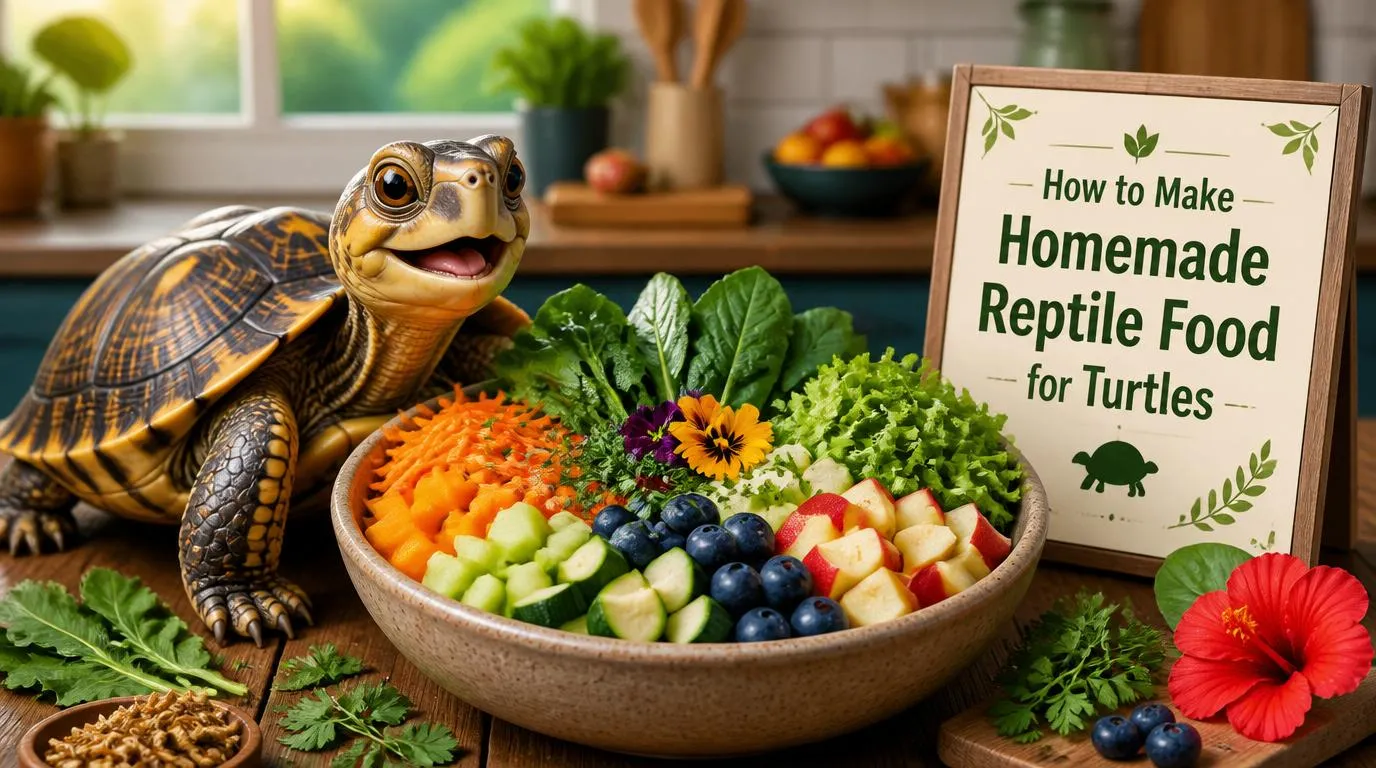
Ingredients
- Collard greens (or mustard greens) 1 cup, chopped
- Romaine lettuce 1 cup, chopped
- Carrot, grated ½ cup
- Zucchini, grated ½ cup
- Cooked shrimp or white fish ½ cup
- Rep-Cal calcium powder (without D3) 2 tsp
- Reptile multivitamin powder 1 tsp
- Unflavored gelatin 1 packet (7g)
- Water ½ cup
- Spirulina powder (optional) 1 tsp
Tip: For juvenile turtles (under 5 inches), increase protein (shrimp/fish) to ¾ cup and reduce greens slightly.
Approximate Nutritional Profile (per tablespoon)
Values are approximate. This recipe is designed to meet the nutritional needs of most aquatic turtles.
Step-by-Step Cooking Instructions
- Prepare greens and veggies: Finely chop collard greens and romaine. Grate carrot and zucchini. If using fresh shrimp, cook and chop finely.
- Blend the base: In a food processor, combine all greens, vegetables, shrimp/fish, spirulina, calcium powder, and multivitamin. Pulse until you have a uniform paste. Add a tablespoon of water if needed to help blending.
- Prepare gelatin: In a small saucepan, sprinkle gelatin over ½ cup of cold water. Let sit for 2 minutes. Warm over low heat, stirring constantly, until gelatin dissolves completely. Do not boil.
- Combine and cook: Add the vegetable‑protein paste to the gelatin mixture. Stir over low heat for 2‑3 minutes until well combined. Remove from heat.
- Pour and set: Pour into a shallow dish or silicone molds (ice cube trays work well). Spread to about ½‑inch thickness. Refrigerate for at least 2 hours until firm.
- Portion and serve: Once set, cut into turtle‑sized cubes. Offer a piece about the size of your turtle's head once daily for adults, twice daily for juveniles.
- Storage: Keep in an airtight container in the refrigerator for up to 2 weeks, or freeze for up to 3 months.
Pros and Cons of Homemade Turtle Food
Pros
- Precise nutrition – control calcium:phosphorus ratio for shell health.
- No artificial additives – pure, whole ingredients.
- High moisture content – helps prevent dehydration.
- Reduces waste – gel food doesn't dissolve quickly in water.
- Customizable – adjust protein for growth or maintenance.
Cons
- Requires supplementation – must add calcium and vitamins.
- Time‑consuming – prep every 2‑3 weeks.
- Can spoil quickly – remove uneaten food after 1‑2 hours.
- Not suitable for all species – strictly carnivorous turtles (snappers) need different ratios.
Nutritional Tips – Why These Ingredients Are Great for Turtles
Ingredient Benefits
- Collard greens & romaine: Excellent sources of calcium, vitamin A, and fiber. Avoid spinach and kale in large amounts (oxalates can bind calcium).
- Carrot & zucchini: Provide beta‑carotene for vibrant colors and immune support.
- Shrimp/fish: High‑quality animal protein essential for growth and tissue repair. Use cooked, unseasoned.
- Calcium powder: Critical for shell development and metabolic function. Choose a calcium supplement without D3 if your turtle has UVB lighting.
- Spirulina: Boosts immune system and provides natural pigments.
- Gelatin: Binds ingredients and adds a small amount of protein; turtles love the texture.
Feeding Guidelines for Turtles
Feeding turtles correctly prevents obesity, shell deformities, and water pollution. Follow these guidelines:
- Feed appropriate amount: Offer a piece of food about the size of your turtle's head. Remove uneaten food after 1‑2 hours.
- Feed in water: Turtles swallow best in water. Place food directly in the tank or in a separate feeding container.
- Age matters: Juveniles (<5 inches) need daily feeding with higher protein; adults (5+ inches) can be fed every other day with more greens.
- Supplement calcium: Even with a balanced diet, dust food with calcium powder 2‑3 times per week.
- Provide UVB lighting: Essential for calcium metabolism. Replace bulbs every 6‑12 months.
- Variety is key: Rotate with live prey (crickets, earthworms) and aquatic plants occasionally.
Recipe Variations for Different Turtles
Customize for Your Species
- For juvenile turtles: Increase animal protein (shrimp/fish) to 1 cup; add a small amount of chopped earthworms.
- For adult sliders/painted turtles: Reduce protein to ¼ cup and add more greens (dandelion greens, mustard greens).
- For musk/mud turtles: These are more carnivorous; use ¾ cup protein and add calcium‑rich snails or krill.
- For box turtles (semi‑aquatic): Add fruits like berries or mango for variety; keep the recipe slightly more protein‑heavy.
- To boost shell strength: Increase calcium powder and add a small amount of crushed cuttlebone into the mix.
Always research the specific dietary requirements of your turtle species, as needs vary widely.
Must‑Have Items
Recommended Tools & Supplies
- Fine Grater or Food Processor – for shredding vegetables. Check price on Amazon
- Digital Scale – for precise supplement dosing. Check price on Amazon
- Insect Keeper – for gut‑loading crickets or roaches. Check price on Amazon
- Calcium Powder with D3 – essential supplement. Check price on Amazon
- Feeding Tweezers – for safe insect offering. Check price on Amazon
We participate in the Amazon Services LLC Associates Program, an affiliate advertising program designed to provide a means for us to earn fees by linking to Amazon.com and affiliated sites. As an Amazon Associate, we earn from qualifying purchases.
Storage and Safety Tips
Keep It Fresh & Safe
- Refrigerator: Store in an airtight container for up to 2 weeks.
- Freezer: Portion into cubes and freeze for up to 3 months. Thaw a few cubes in the refrigerator before feeding.
- Thawing: Do not microwave; thaw at room temperature or in the fridge.
- Water quality: Remove uneaten food within 1‑2 hours to prevent bacterial growth and ammonia spikes.
- Hygiene: Wash all preparation equipment thoroughly after handling raw ingredients.
- Supplement storage: Keep calcium and vitamin powders in a cool, dry place and replace every 6 months for potency.
Conclusion
Making your own turtle food is a rewarding way to ensure your aquatic pet receives the highest quality nutrition. With this gel recipe, you can provide a balanced diet that mimics what turtles eat in the wild – rich in leafy greens, vegetables, and quality protein, all bound in a form that stays intact in water.
Remember that proper lighting (UVB), clean water, and a varied diet are just as important as the food itself. Monitor your turtle's weight, shell condition, and activity level to gauge the success of your homemade diet.
Your turtle will thank you with a strong shell, bright eyes, and active swimming. Happy feeding!
Frequently Asked Questions
Can I feed this to my baby turtle?
Yes, but you should adjust the recipe: increase the protein portion (shrimp/fish) to 1 cup and reduce greens slightly. Juveniles need more protein for growth. Also cut the gel into very small pieces appropriate for their size.
Do I still need to provide calcium supplementation?
Yes. This recipe includes calcium powder, but turtles often benefit from additional dusting 2‑3 times per week, especially growing juveniles and egg‑laying females. Also ensure UVB lighting is present for proper absorption.
How often should I feed my adult turtle this food?
Adult aquatic turtles (over 5 inches) should be fed every other day, with a portion about the size of their head. Offer a variety of foods; you can alternate this gel with live prey or fresh greens.
Will this food cloud the water?
Gel foods are much cleaner than pellets because they don't disintegrate quickly. However, any uneaten food left for too long will decompose. Always remove leftovers within 1‑2 hours to maintain water quality.
Can I use this recipe for my box turtle?
Box turtles (semi‑terrestrial) can eat this recipe, but you'll want to add more variety such as berries, mushrooms, and insects. Reduce the water content slightly and serve in a shallow dish outside the water bowl.
What if my turtle won't eat homemade food?
Some turtles are wary of new foods. Try mixing a small amount of the gel with their favorite commercial food, gradually increasing the proportion. You can also add a tiny bit of tuna juice or shrimp scent to entice them.