Going Pellet-Free: A Natural Approach
Many commercial guinea pig pellets contain fillers, preservatives, and heat‑sensitive vitamins that degrade over time. A natural homemade guinea pig food without pellets relies on whole foods: unlimited hay, fresh vegetables, and small amounts of safe grains and seeds. This diet mimics what guinea pigs would eat in nature and gives you complete control over quality. Follow this guide to create a balanced, pellet‑free meal plan.
Table of Contents
Pellet-Free Whole Food Bowl
100% Natural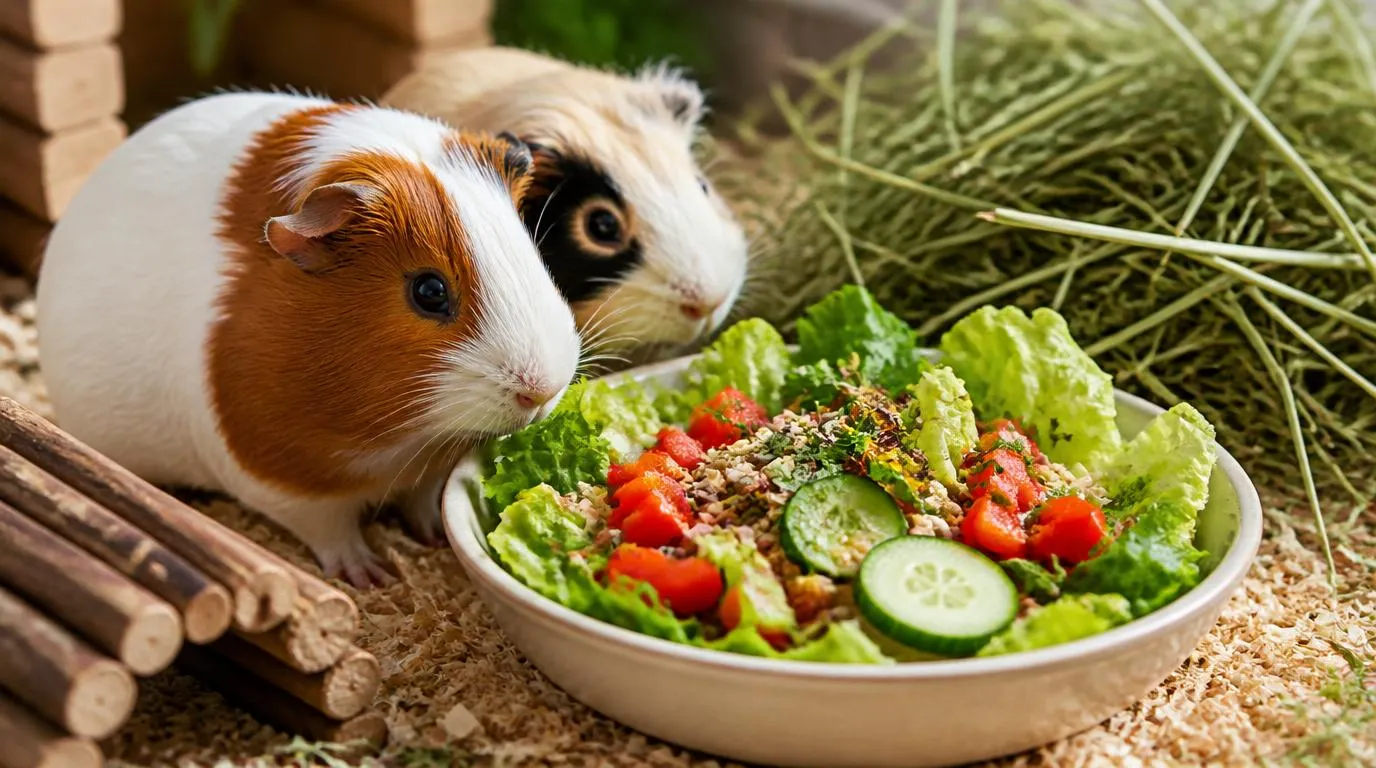
Natural Ingredients (Daily)
- Unlimited timothy/orchard hay 80% of diet
- Red bell pepper (diced) 1 slice (20g)
- Romaine lettuce 1 large leaf
- Cilantro or parsley 4-5 sprigs
- Cucumber slices 2 thin rounds
- Zucchini (optional) 2 small pieces
- Rolled oats (soaked) 1 tbsp
- Flaxseed meal 1 tsp
- Dried herbs (chamomile, dandelion) sprinkle
No pellets, no dried fruit, no seeds (except ground flax).
Nutritional Highlights
Step-by-Step Pellet-Free Meal Prep
- Unlimited hay first: Ensure a fresh pile of timothy hay is always available.
- Wash & chop vegetables: Dice bell pepper, tear romaine, slice cucumber and zucchini.
- Prepare grain mix: Soak 1 tbsp rolled oats in water for 5 minutes (softens, easier to digest). Drain excess water. Stir in 1 tsp flaxseed meal.
- Arrange the bowl: Place soaked oats/flax on one side, vegetables on the other. Sprinkle dried herbs on top.
- Serve and remove: Give the meal in the morning. Remove any uneaten fresh food after 4-6 hours.
- Evening check: Refresh hay and water. No evening vegetables needed unless your pig is underweight.
Tip: Rotate vegetables weekly – try endive, radicchio, or small amount of carrot. Avoid spinach/kale daily.
Pros & Cons of a Pellet-Free Diet
Pros
- No artificial preservatives or binders.
- Higher water content from fresh veggies supports urinary health.
- Encourages natural foraging and grazing.
- You control every ingredient.
Cons
- Requires careful planning to meet Vitamin C & mineral needs.
- More daily preparation time.
- Not suitable for all guinea pigs (some may need pellet supplementation).
Replacing Nutrients Normally Found in Pellets
Essential Nutrients & Whole Food Sources
- Vitamin C: Red bell pepper, guava, cilantro, kale (small amounts).
- Calcium & Phosphorus: Parsley, dandelion greens, arugula (rotate to avoid excess).
- Omega-3 fatty acids: Ground flaxseed, chia seeds (tiny amount).
- Fiber: Unlimited hay is non-negotiable.
- Vitamin E: Wheat germ, sunflower seeds (rare treat only).
⚠️ Without pellets, you must provide a Vitamin C source daily – bell pepper is the safest choice.
Daily Feeding Schedule for Pellet-Free Guinea Pigs
- Morning (7-8 AM): Fresh vegetable mix (1 cup) + soaked oats/flax + hay top-up.
- Midday: Check hay; remove any leftover veggies after 4 hours.
- Evening (6-7 PM): Only fresh hay and water – no additional vegetables or grains.
- Weekly: Weigh your guinea pig to ensure stable weight.
- Vet check: Annual wellness exam to assess nutritional status.
Seasonal & Herbal Enrichment
Natural Add-Ins
- Spring/Summer: Fresh dandelion leaves, clover, basil, mint (small amounts).
- Fall/Winter: Butternut squash (steamed, cooled), endive, radicchio.
- Herbal mix: Dried chamomile, calendula, or rose petals for foraging fun.
- Grain alternatives: Quinoa flakes (soaked), barley flakes (soaked) – use sparingly.
Essential Tools for Pellet-Free Prep
Recommended Tools
- Large mixing bowl & spoon – Check price on Amazon
- Airtight glass jar – Check price on Amazon
- Kitchen scale (optional) – Check price on Amazon
- Small ceramic serving bowl – Check price on Amazon
As an Amazon Associate we earn from qualifying purchases.
Keeping Natural Ingredients Fresh
Storage Guidelines
- Store vegetables in crisper drawer, unwashed until use (to prevent mold).
- Pre-chop only 2 days worth of veggies max.
- Keep flaxseed meal in refrigerator or freezer to prevent rancidity.
- Hay should be stored in a dry, breathable bag away from sunlight.
- Discard any wilted or discolored produce immediately.
Embrace the Natural Diet
A natural homemade guinea pig food without pellets is entirely possible with commitment and knowledge. By focusing on unlimited hay, a rotating variety of fresh vegetables, and small amounts of whole grains, you can provide a diet that supports dental health, digestion, and natural foraging instincts. Always monitor your guinea pig's weight and droppings, and consult your exotic vet before making major dietary changes. Your cavy will reward you with vitality and joy.
Frequently Asked Questions
Is it safe to completely remove pellets?
Yes, if you provide a balanced variety of vegetables and a reliable Vitamin C source daily. Some guinea pigs with special needs may still benefit from pellets – consult your vet.
How do I ensure enough Vitamin C without pellets?
Feed red bell pepper daily (1 slice = ~15mg Vitamin C). Supplement with cilantro, guava, or a vet-recommended liquid Vitamin C if needed.
Can I feed this to a pregnant guinea pig?
Pregnant/nursing sows have higher calcium and protein needs. Consider adding alfalfa hay and a small amount of alfalfa-based pellets for safety.
How much soaked oats should I give?
1 tablespoon of soaked rolled oats per adult guinea pig, 2-3 times a week. Oats are a treat, not a staple.
What are signs my pellet-free diet is unbalanced?
Weight loss, dull coat, lethargy, soft droppings, or reduced appetite. If you notice any, reintroduce high-quality pellets and consult a vet.